Artwork
Ignudo (after Michelangelo)
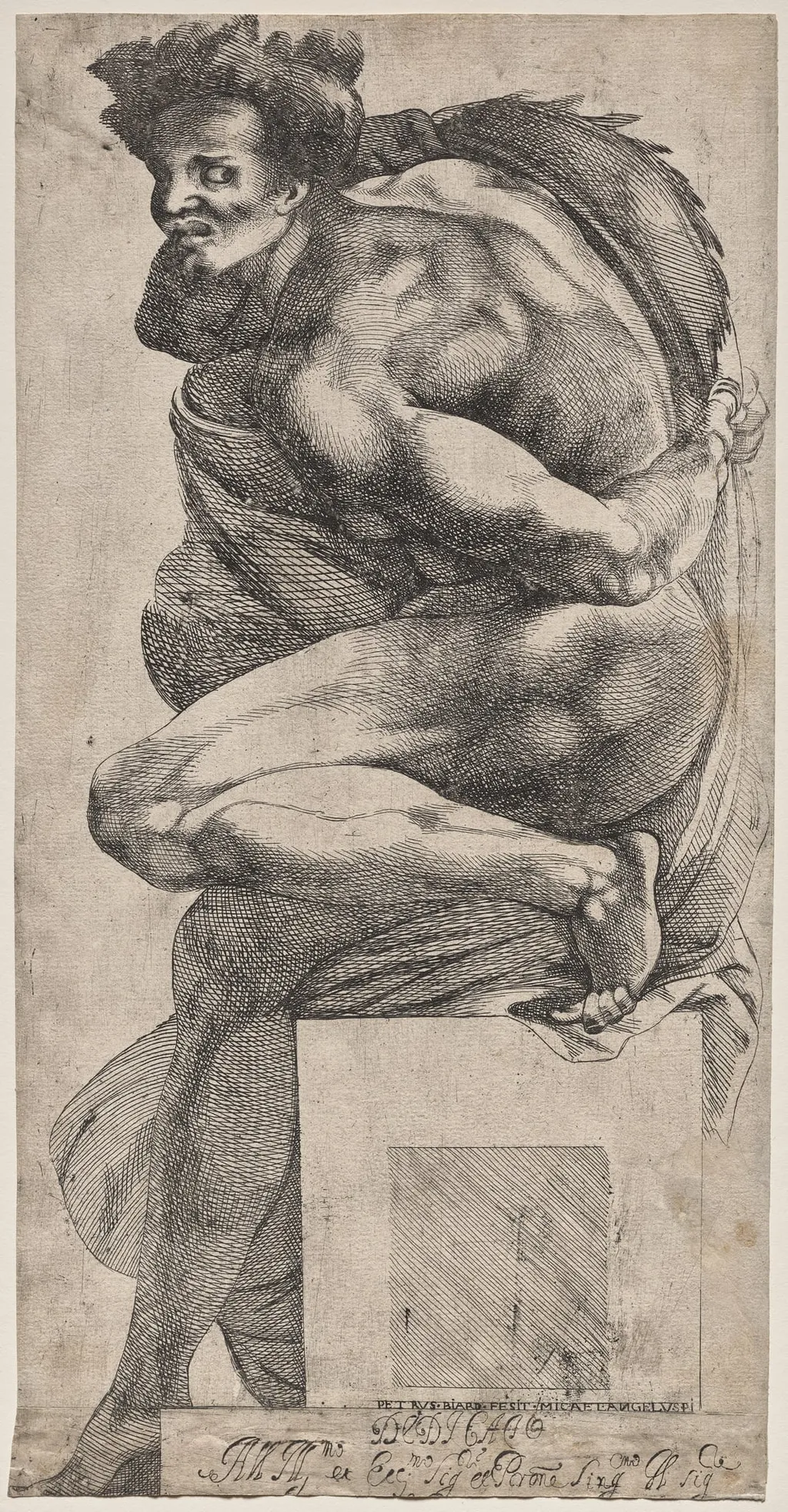
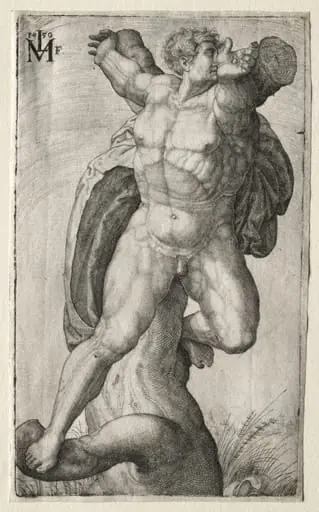
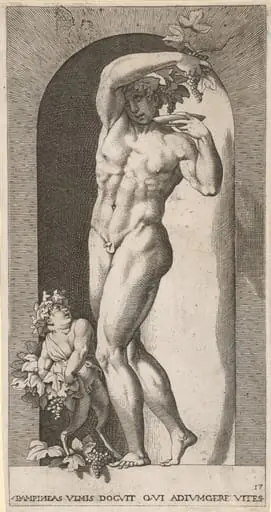
Ignudo (after Michelangelo) is a print by the Renaissance artist Pierre Biard the Younger. It dates from 1628 and is held in the collection of the Cleveland Museum of Art.
About this work
Overview
Ignudo (after Michelangelo) is a 1628 print by French sculptor and architect Pierre Biard the Younger, reinterpreting Michelangelo’s *ignudi* from the Sistine Chapel ceiling.
Subject & Meaning
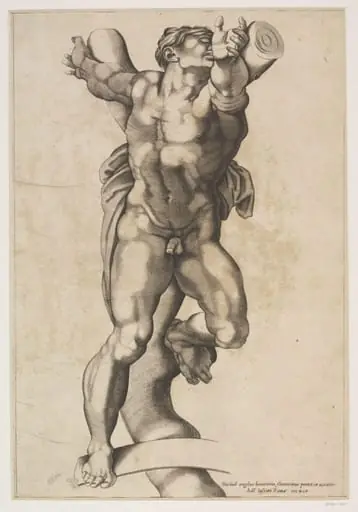
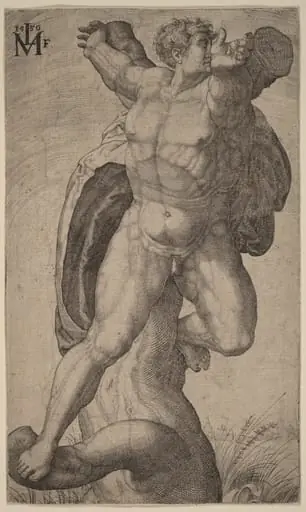
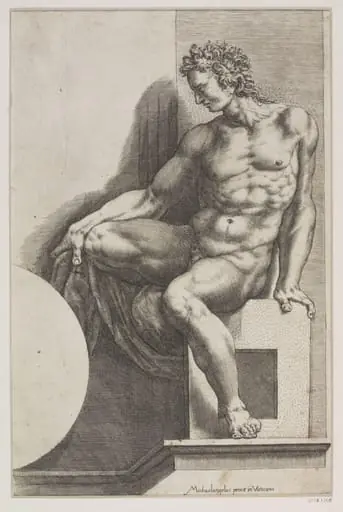
The work depicts a nude male figure in a twisted pose, exploring the human form with subtle play of light and shadow, adding depth and volume.
Technique & Style
The piece showcases a careful study of light and shadow, likely employing chiaroscuro to create a sense of volume, reflecting Renaissance influences in 17th-century French art.
History & Provenance
Created in 1628, the print is part of The Cleveland Museum of Art’s collection, highlighting the enduring impact of Michelangelo’s work on later artists.
Artist & collection
Artist
Pierre II Biard also called Pierre Biard the younger (1592 – May 28, 1661),was a French sculptor and architect of the seventeenth century, part of a lineage of prominent sculptors.

![The Farnese Hercules, seen from behind [plate 4], by François Perrier](https://artifactworldgallery.com/img/francois-perrier--the-farnese-hercules-seen-from-behind-plate-4--075576b9459929be-w320.webp)
![The Farnese Hercules, three-quarter view turned to left [plate 3], by François Perrier](https://artifactworldgallery.com/img/francois-perrier--the-farnese-hercules-three-quarter-view-turned-to-left-plate--b0564bebaad016fa-w320.webp)
![The Borghese Gladiator, back view [plate 29], by François Perrier](https://artifactworldgallery.com/img/francois-perrier--the-borghese-gladiator-back-view-plate-29--e76fdd1927ce2d52-w320.webp)