Artwork
Christ on the Cross Adored by Saints Thomas Aquinas and Catherine of Siena
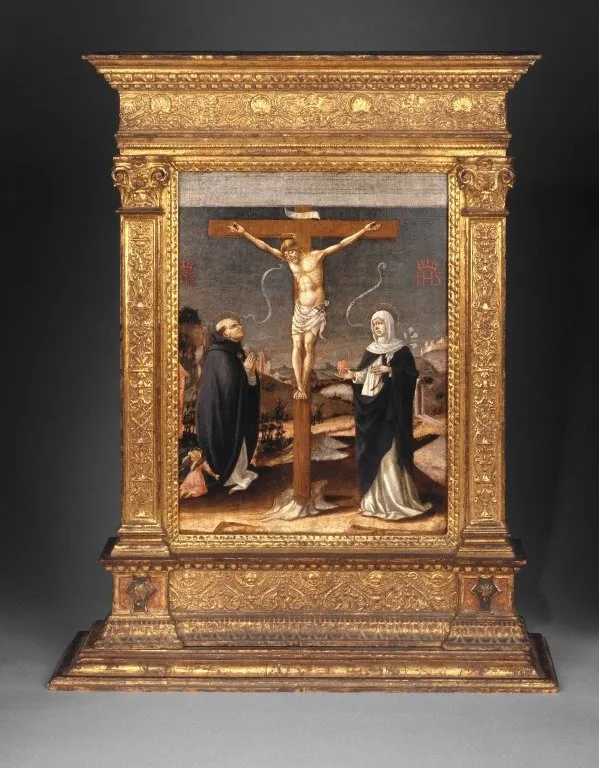
Christ on the Cross Adored by Saints Thomas Aquinas and Catherine of Siena is a tempera painting by the Early Renaissance artist Lorenzo d'Alessandro. It dates from 1496 and is held in the collection of the Brooklyn Museum. Painted in 1496 by Lorenzo d’Alessandro, this tempera-on-panel work belongs to the late Gothic tradition of Italian religious art.
About this work
Overview
Painted in 1496 by Lorenzo d’Alessandro, this tempera-on-panel work belongs to the late Gothic tradition of Italian religious art.
Painted in 1496 by Lorenzo d’Alessandro, this tempera-on-panel work belongs to the late Gothic tradition of Italian religious art. It presents a devotional scene centered on the crucified Christ, flanked by two revered figures of the Church. The painting’s small scale and formal composition reflect its function as an object of private or monastic contemplation, typical of late 15th-century devotional imagery in central Italy.
Subject & Meaning
The central figure of Christ on the cross is surrounded by Saint Thomas Aquinas, identifiable by his Dominican habit, and Saint Catherine of Siena, recognized by her Franciscan tertiary veil and modest dress. Their presence beside the crucifixion underscores the theological significance of Christ’s sacrifice, while also honoring these two influential thinkers whose writings shaped medieval Christian doctrine. The composition invites viewers to join the saints in reverence.
Technique & Style
Executed in tempera, a medium using pigment mixed with egg yolk, the painting exhibits fine linear detail and flat, luminous coloration characteristic of late Gothic aesthetics. Figures are rendered with elongated proportions and restrained gestures, emphasizing spiritual solemnity over naturalism. The dark, atmospheric sky and distant architectural elements provide minimal depth, focusing attention on the sacred group and the gilded frame that encloses them.
History & Provenance
Created in 1496, the painting remained within religious or private collections in Italy before entering the Brooklyn Museum’s holdings. Its survival through centuries suggests it was carefully preserved, likely due to its devotional importance. The original frame, elaborately decorated with ornamental patterns, has been retained, offering insight into how such works were displayed and venerated in their time.
Context
In late 15th-century Italy, devotional paintings featuring Christ and prominent saints were common in both public churches and private chapels. The pairing of Aquinas and Catherine reflects the enduring influence of their teachings—Aquinas as a theologian and Catherine as a mystic—within Dominican and Franciscan circles. This work aligns with a broader trend of integrating intellectual and spiritual figures into sacred narratives to reinforce doctrinal authority.
Legacy
Though Lorenzo d’Alessandro was not a major figure in the broader Renaissance canon, this painting preserves a quiet example of late Gothic devotional art transitioning into early Renaissance sensibilities. Its preservation in a major museum allows continued study of regional Italian practices, offering insight into how faith, intellect, and artistic form intersected in everyday religious life before the full emergence of High Renaissance ideals.
Artist & collection

Artist
Lorenzo d’Alessandro (c. 1455 – 1503) was an Italian painter and interpreter of late gothic style. He is known by different authorities and authors by different names, including: Lorenzo da San Severino or…

 Crucifixion with the Virgin and St John
 The Crucifixion with the Virgin, Saint John, Saint Jerome, and Saint Mary Magdalene
 Crucifixion
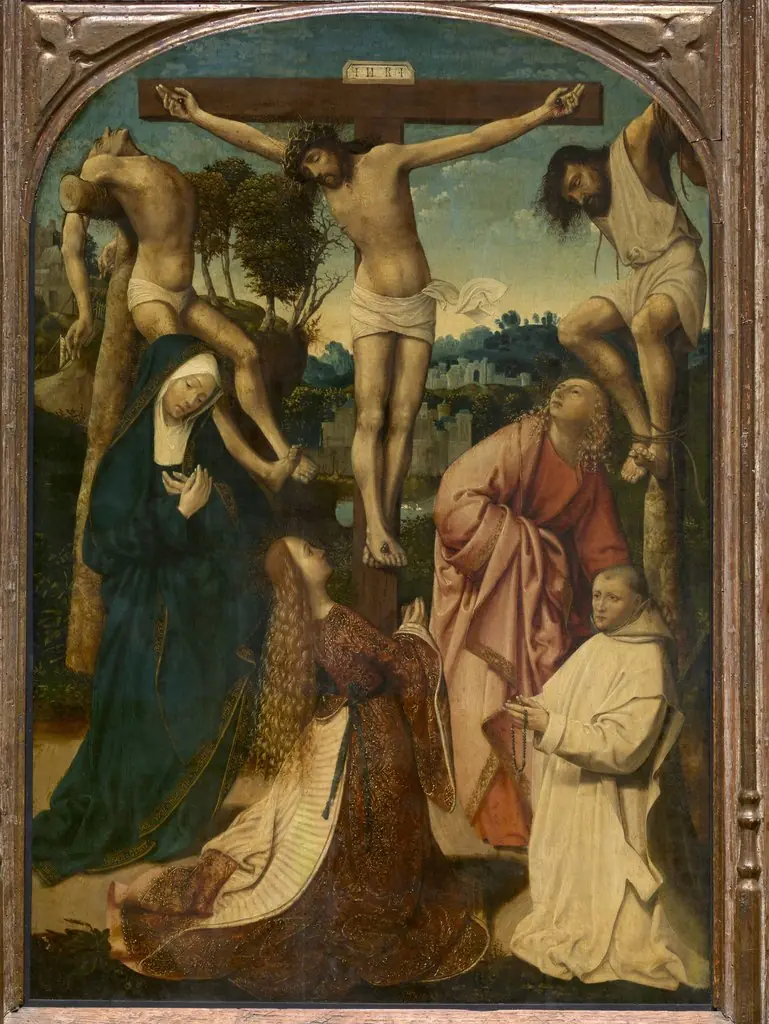 Crucifixion
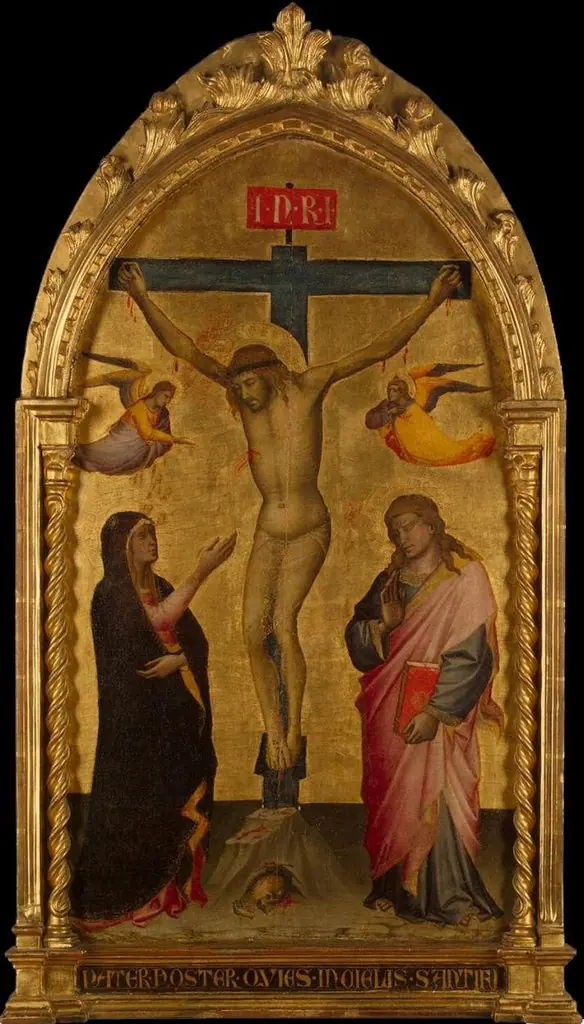 Crucifixion with the Virgin and St John
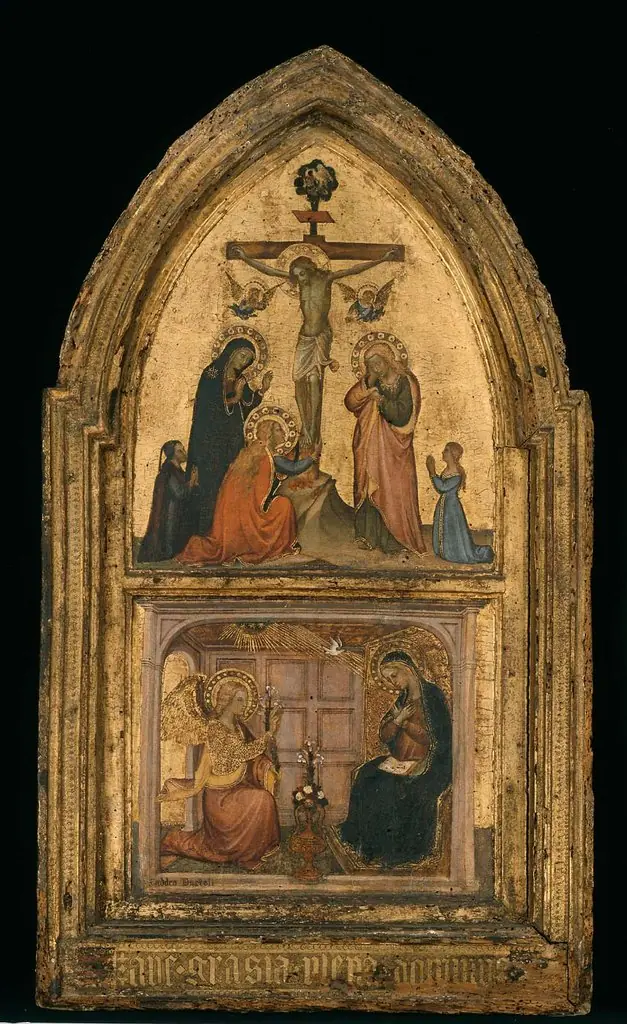 Annunication; Crucifixion
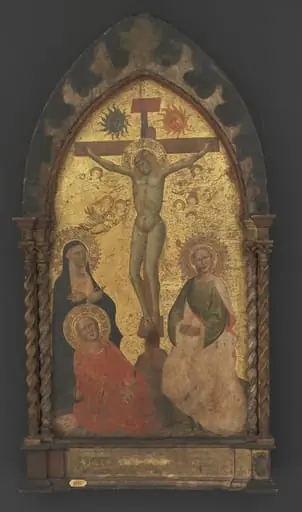 Christ on the Cross mourned by the Virgin Mary and Saints Mary Magdalene and John
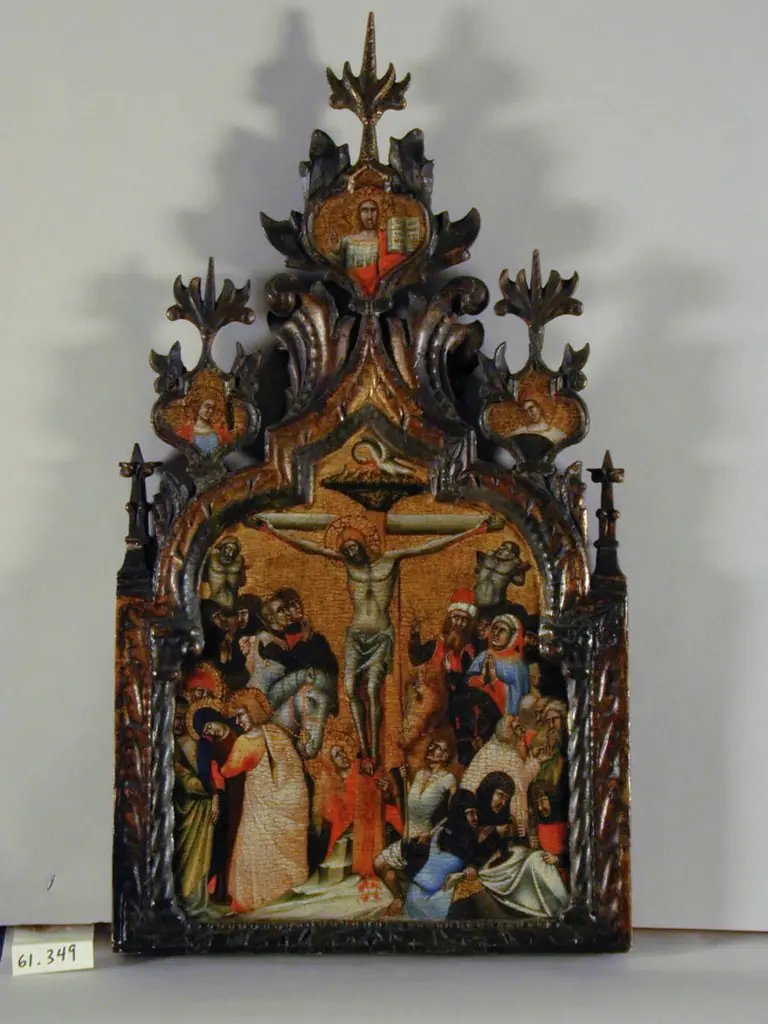 The Crucifixion
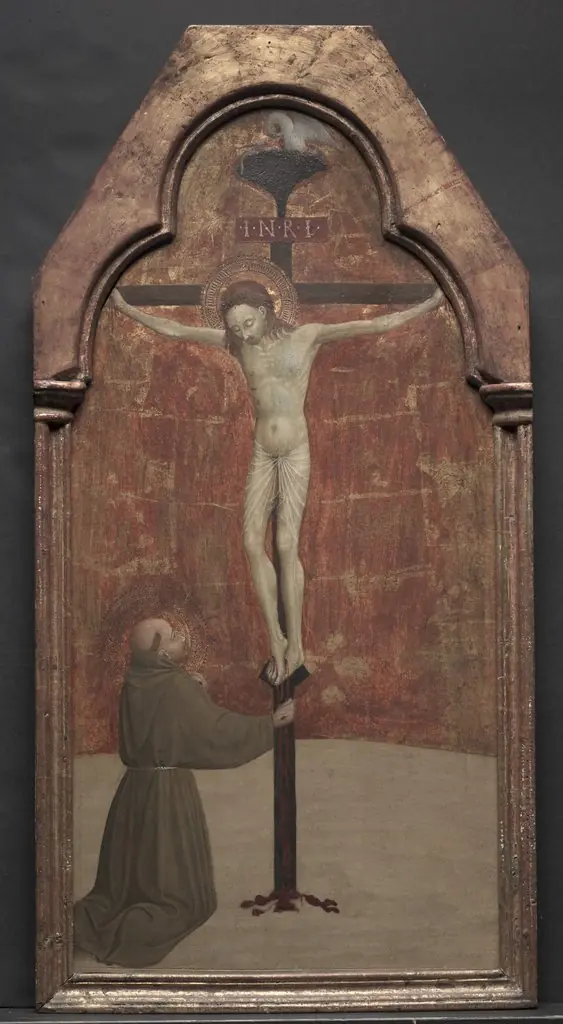 St. Francis Kneeling before Christ on the Cross
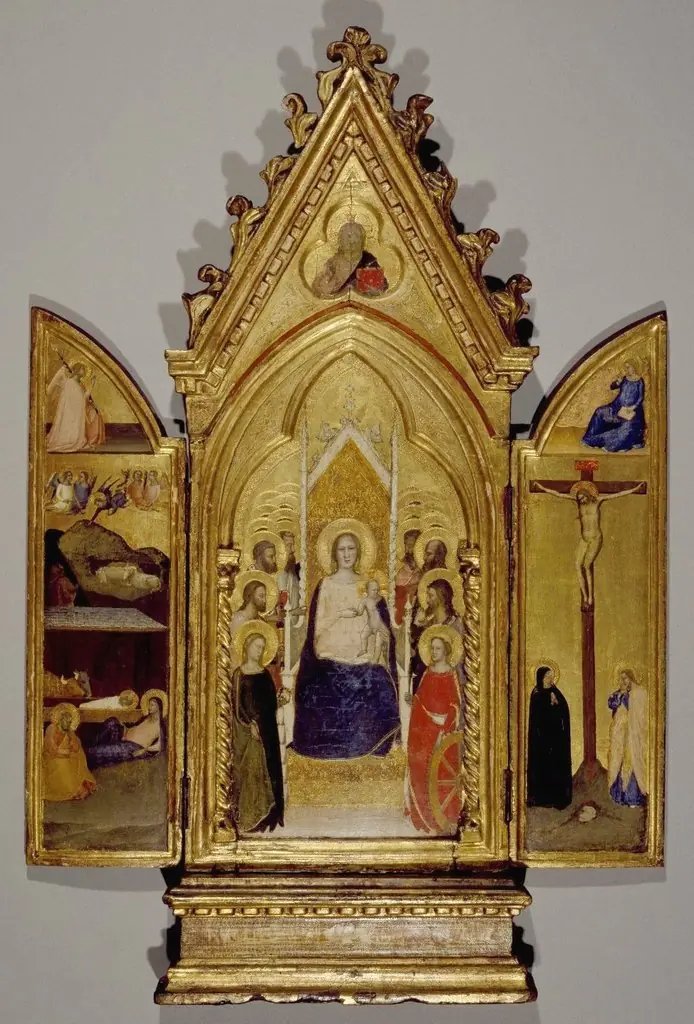 Triptych: Madonna with Saints and Christ Blessing (Center); The Nativity and the Annunciate Angel (Left Wing); Crucifixion and the Virgin Annunciate (Right Wing)
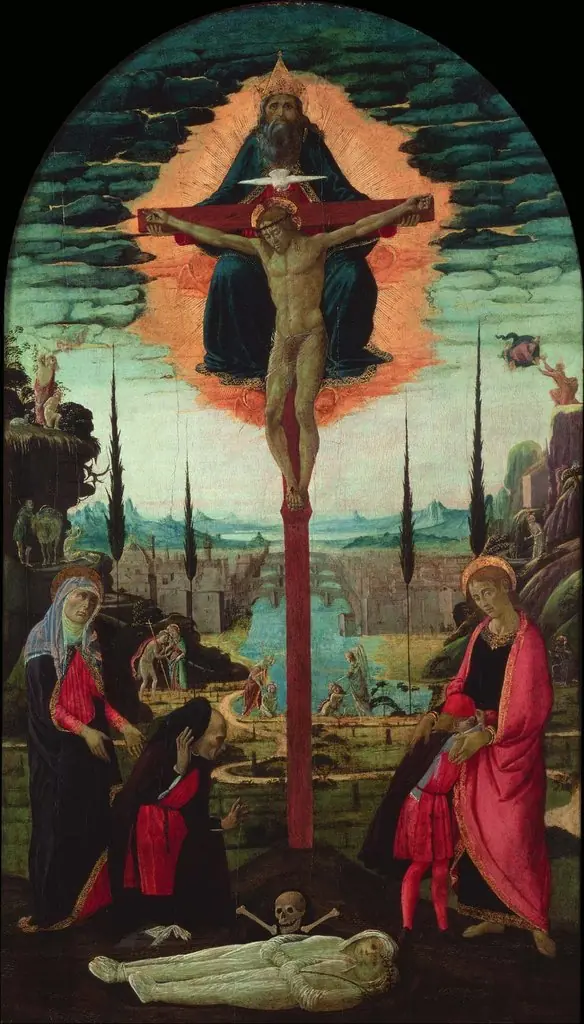 Votive Altarpiece: the Trinity, the Virgin, St. John and Donors
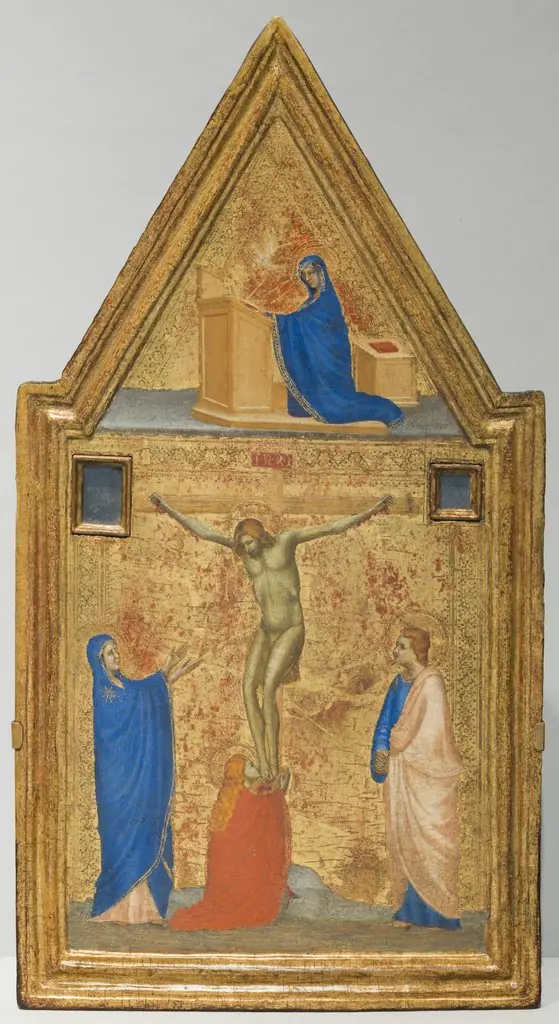 Crucifixion