Artwork
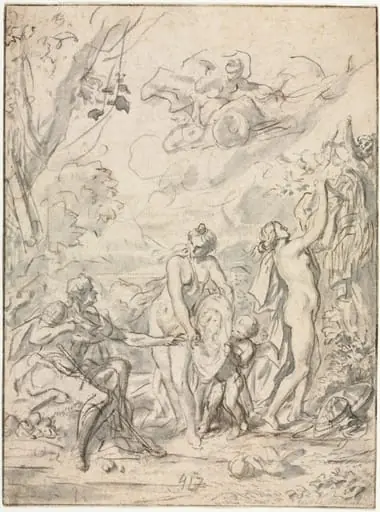
The Judgment of Paris
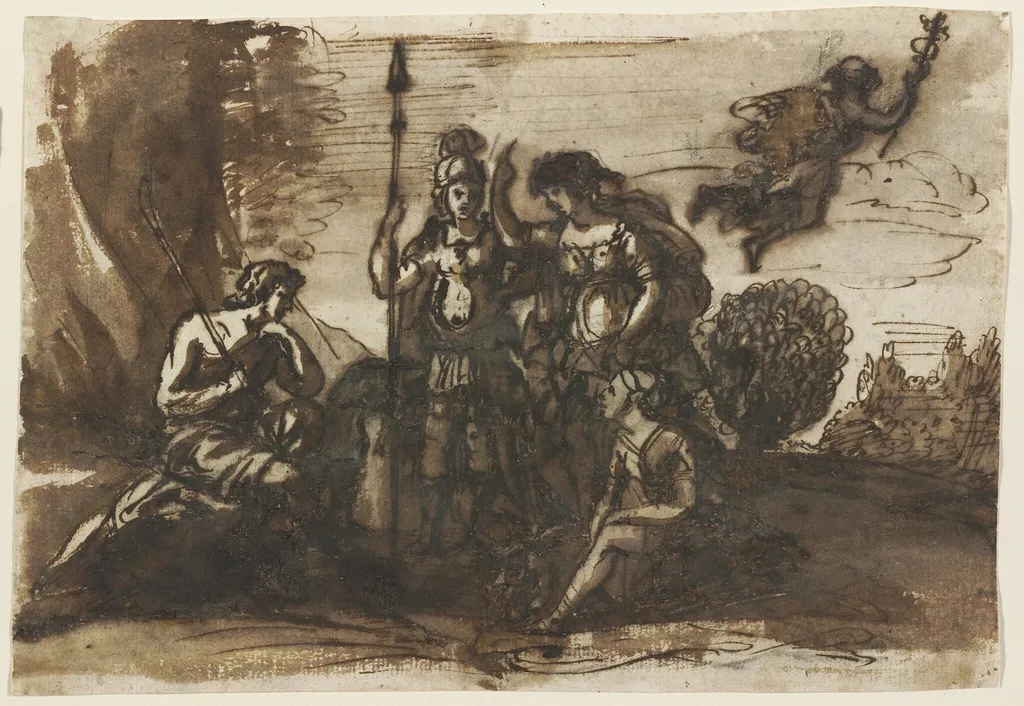
The Judgment of Paris is a chalk drawing by the Baroque artist Claude Lorrain. It dates from 1645 and is held in the collection of the National Gallery of Art.
About this work
Overview
Created around 1645, this drawing by Claude Lorrain is executed in pen and brown ink with brown wash over black chalk on laid paper, later mounted on a support.
Created around 1645, this drawing by Claude Lorrain is executed in pen and brown ink with brown wash over black chalk on laid paper, later mounted on a support. It belongs to a body of work where Lorrain explored mythological narratives through landscape, blending meticulous draftsmanship with atmospheric tone. The medium’s subtlety allowed him to modulate light and depth, characteristic of his approach to composition and spatial harmony.
Subject & Meaning
The scene illustrates the myth of Paris, the Trojan prince, asked to judge which of three goddesses—Hera, Athena, and Aphrodite—was most beautiful. Though figures are small within the landscape, their gestures and arrangement convey the pivotal moment of decision. Lorrain treats the myth not as dramatic spectacle but as a quiet, contemplative event embedded in nature, reflecting classical ideals of balance and restraint.
Technique & Style
Lorrain employed black chalk for initial contours, then layered pen lines and brown wash to define form and shadow. The wash creates soft gradations, enhancing the illusion of atmospheric perspective. Cross-hatching in the ink adds texture to foliage and terrain, while the paper’s grain contributes to the work’s tactile warmth. His technique prioritizes mood over detail, aligning with his broader interest in light’s emotional resonance.
History & Provenance
Lorrain, born in the Duchy of Lorraine, settled in Rome by the 1620s and remained there for the rest of his life. This drawing likely originated in his Roman studio, where he produced numerous preparatory sketches for larger paintings. Its survival in good condition suggests it was valued early by collectors, possibly within circles familiar with his landscape studies and mythological themes.
Context
In mid-17th-century Italy, landscape was gaining status as an independent genre. Lorrain’s drawings helped elevate it by integrating classical narratives into natural settings, bridging history painting and topographical observation. His work responded to humanist interests in antiquity and the poetic potential of nature, distinguishing him from contemporaries who favored theatricality over serenity.
Legacy
Lorrain’s drawings influenced later artists’ approaches to landscape and light, particularly in 18th-century England. His integration of myth into natural settings became a model for the ideal landscape tradition. Though less celebrated than his oil paintings, his ink drawings remain key to understanding his method: a quiet, deliberate translation of vision into paper, where atmosphere and narrative coexist without dominance.
Artist & collection
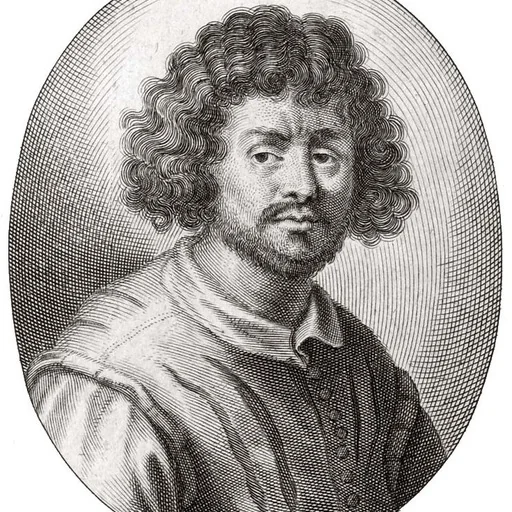
Artist
Claude Lorrain (French: ; born Claude Gellée , called le Lorrain in French; traditionally just Claude in English; c.

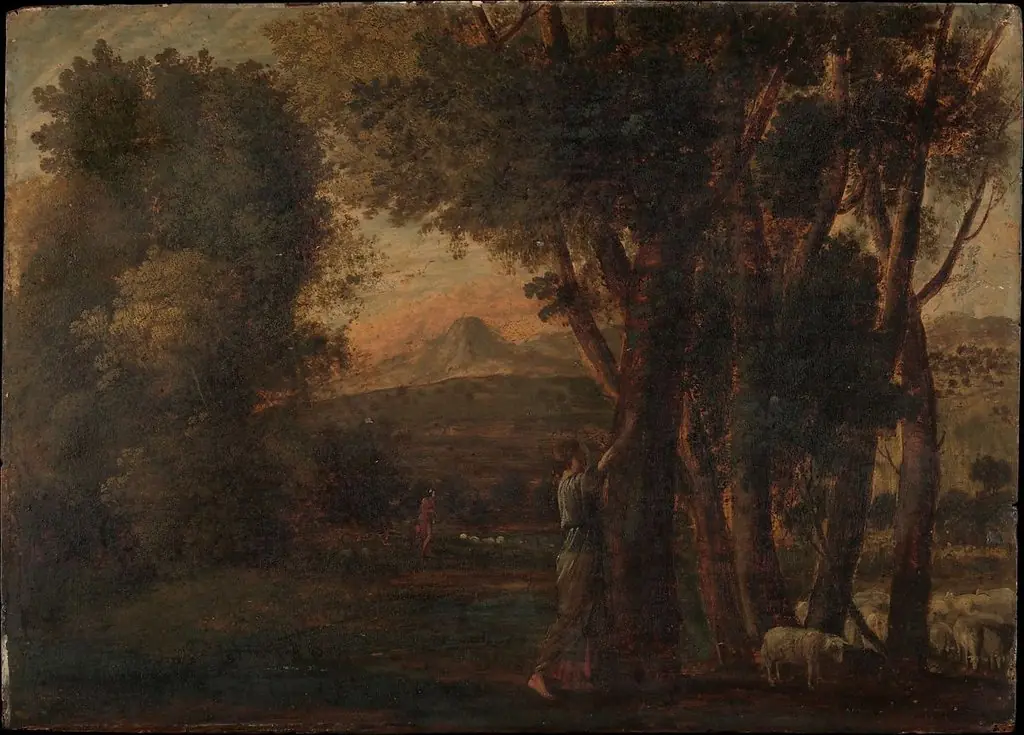
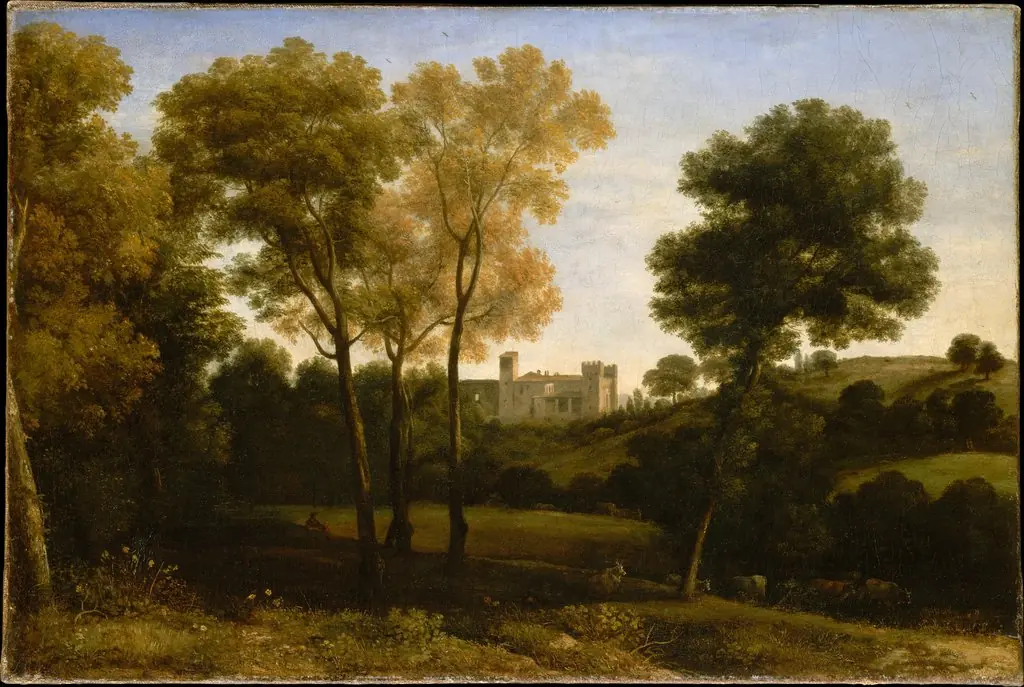
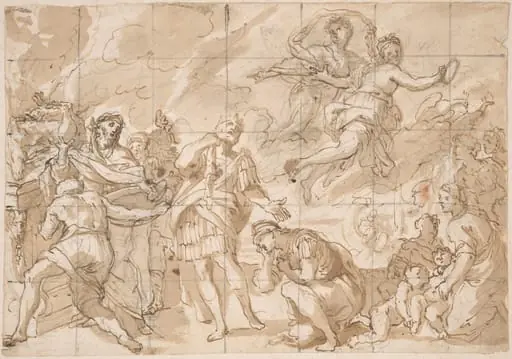 The Sacrifice of Iphigenia
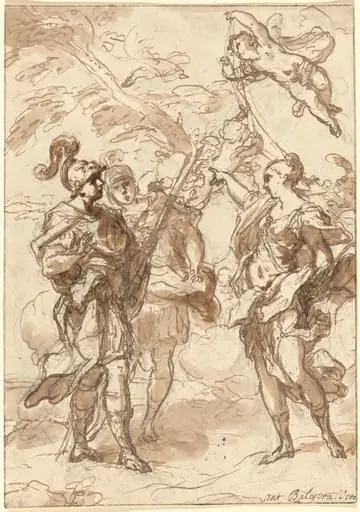 Venus as a Huntress Appearing to Aeneas and Achates
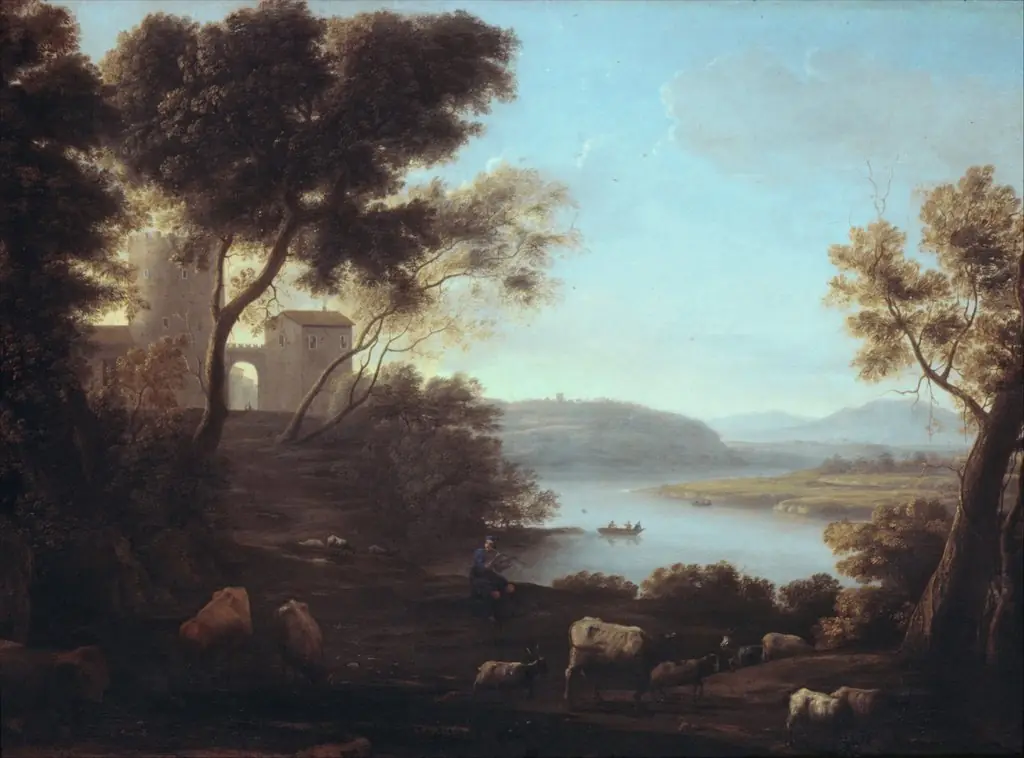
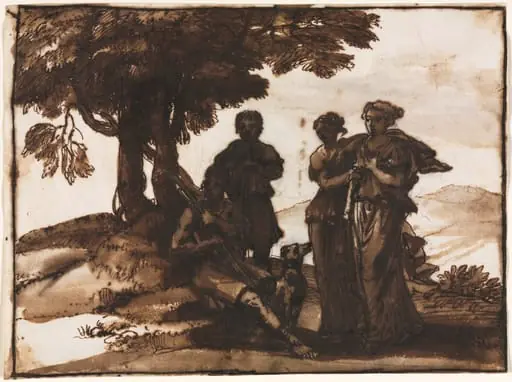 Pastoral Scene with Classical Figures
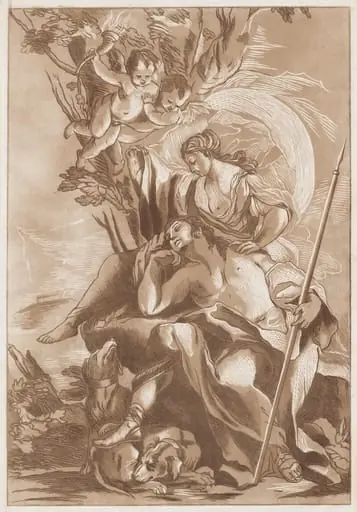 Diana and Endymion
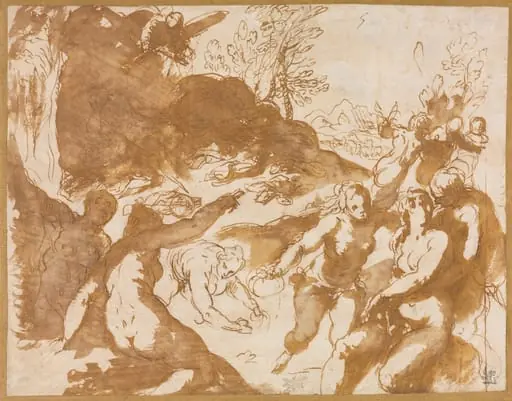 Apollo and the Muses Awakened by the Call of Fame
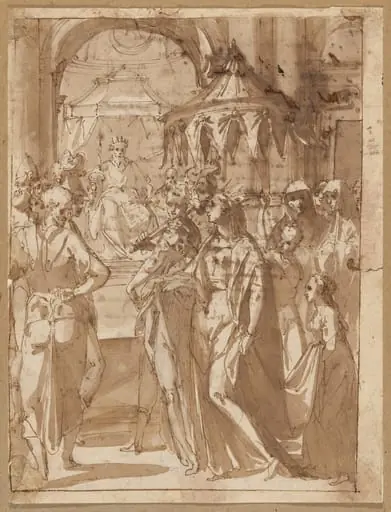 Esther before Ahasuerus
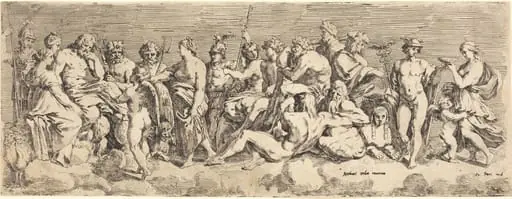 The Admission of Psyche to Olympia
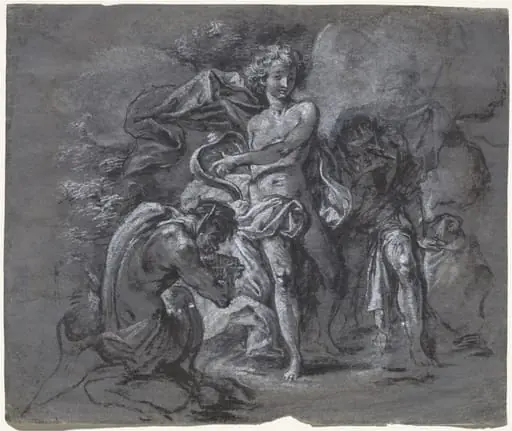 The Contest between Apollo and Pan before King Midas
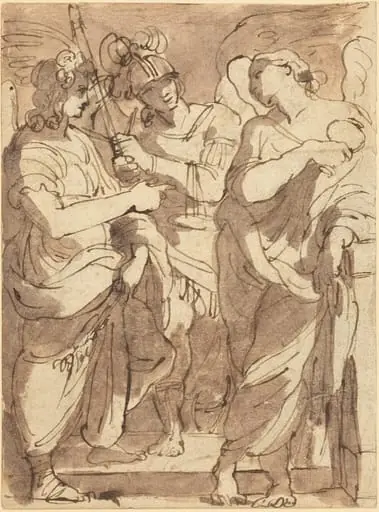 Allegory of Justice
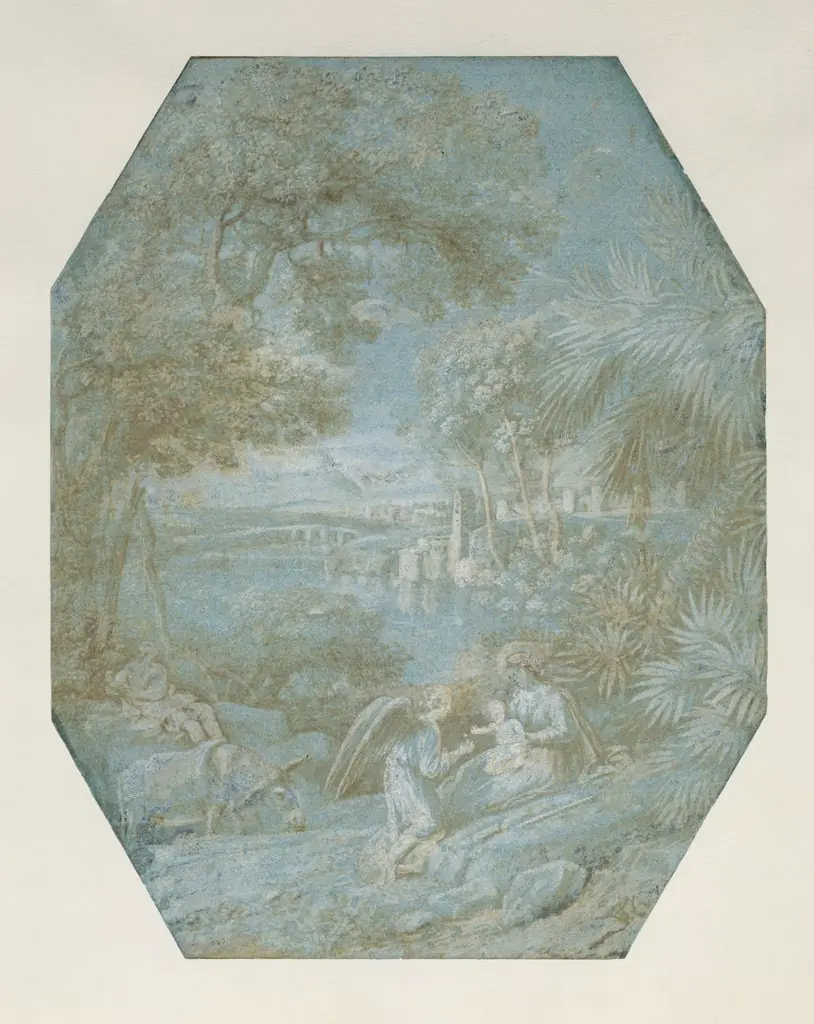
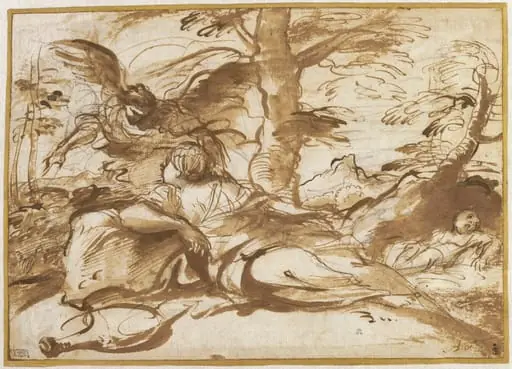 The Angel Appearing to Hagar in the Desert (recto)
 The Baptism of Christ
 The Judgment of Paris