Artwork
Mercur și Argus
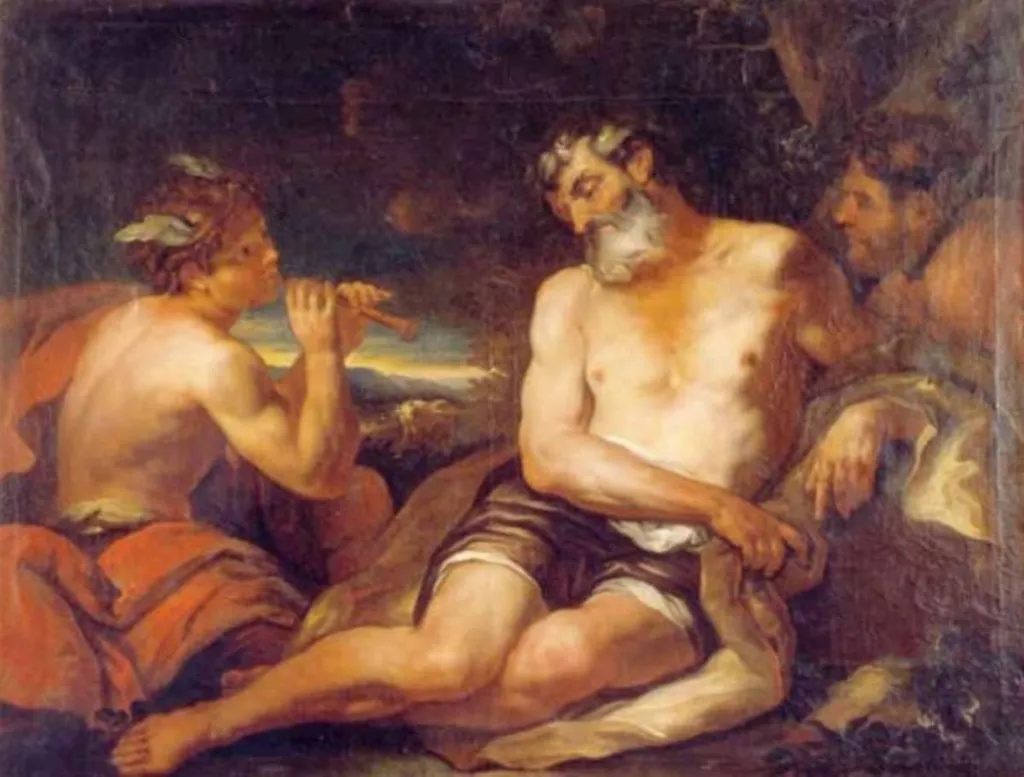
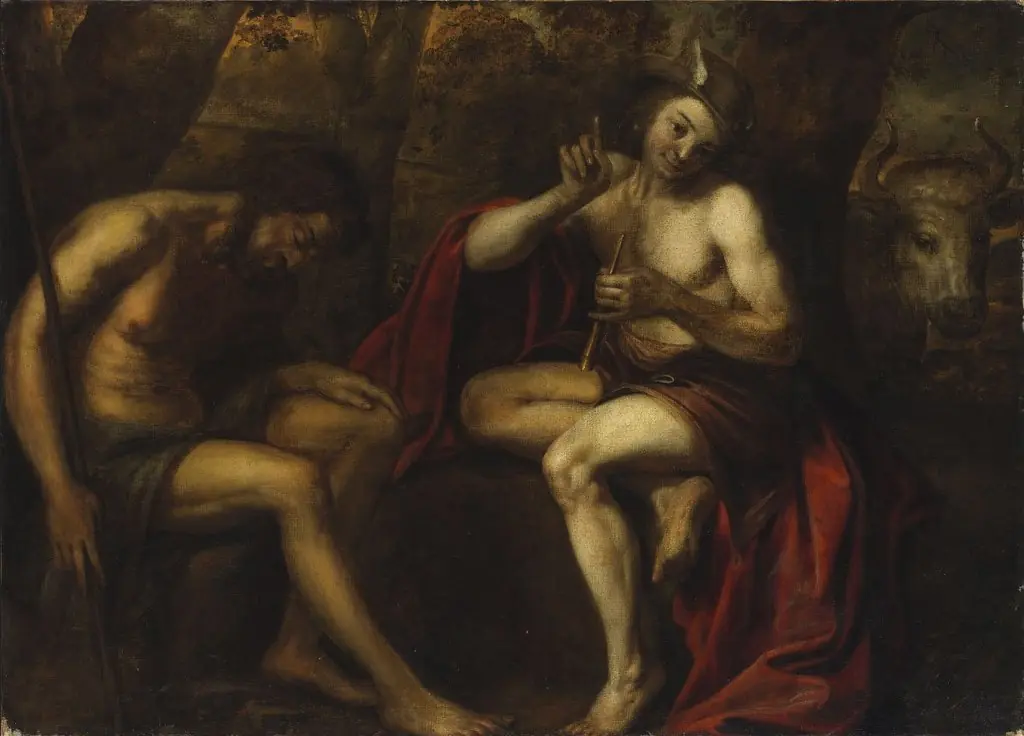
Mercur și Argus is an unspecified painting by the Barbizon school artist Carl Johann, zis Carlotto, zis Carlo Lotti Loth. It dates from 1650 and is held in the collection of the Brukenthal National Museum.
About this work
Overview
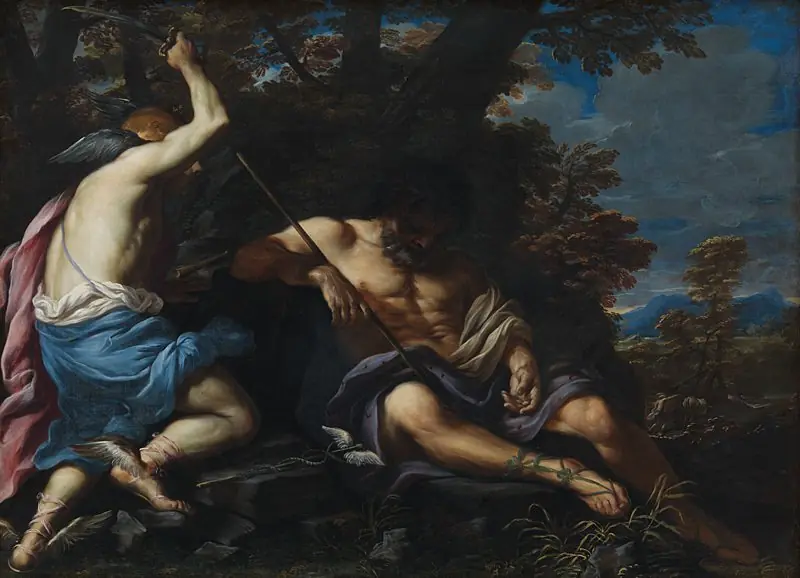
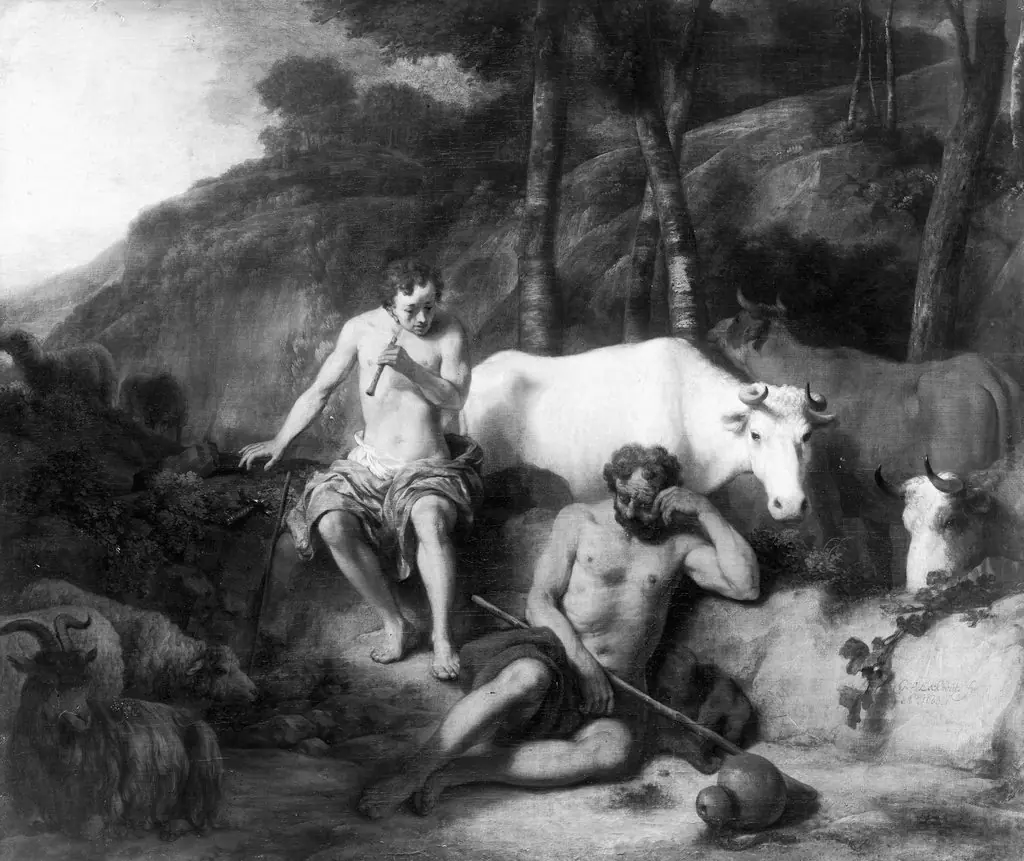
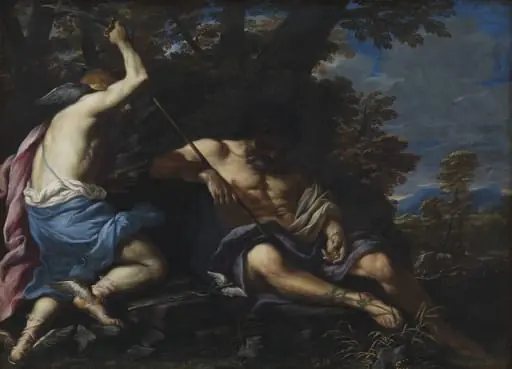
The scene captures the quiet violence of the act, with Argus asleep and Mercury poised above him, his caduceus gently touching the giant’s eyelids.
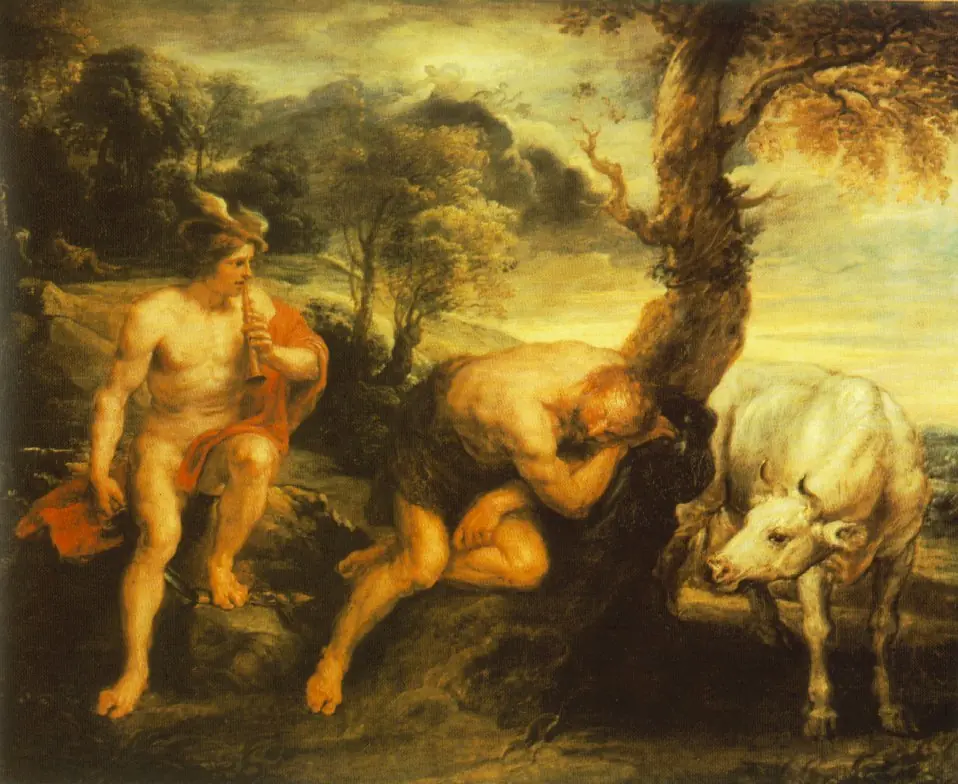
Painted around 1650 by Carl Johann Loth, also known as Carlotto or Carlo Lotti, this work depicts a moment from Greek mythology in which Mercury, the messenger god, fulfills his task of slaying Argus Panoptes. The scene captures the quiet violence of the act, with Argus asleep and Mercury poised above him, his caduceus gently touching the giant’s eyelids. The composition is intimate, focused on the two figures against a dim background.
Subject & Meaning
The painting illustrates the myth in which Hera, jealous of Argus’s vigilance over Io, commands Mercury to kill him. After his death, Hera places Argus’s hundred eyes upon the tail of her sacred peacock. Here, the transformation is shown mid-act: the eyes are already becoming feathers, symbolizing divine reassignment rather than mere destruction. The serene expression on Argus’s face contrasts with the lethality of the act, suggesting fate’s inevitability.
Technique & Style
Loth employs chiaroscuro to model the figures with soft, directional light that glides over skin and fabric, enhancing their three-dimensionality. The glow on Argus’s body and Mercury’s drapery creates a luminous tension against the surrounding shadows. Brushwork is refined but not overly detailed, favoring atmospheric effect over precision. The peacock feathers emerge organically from the eyelids, blending mythic transformation with naturalistic rendering.
History & Provenance
Carl Johann Loth, a German painter active in Italy, produced this work during his time in Venice, where he absorbed the coloristic traditions of the Venetian school. The painting likely entered private collections in Central Europe after its completion. While its early ownership is undocumented, its stylistic ties to Venetian Baroque suggest it was made for a patron interested in classical themes and dramatic lighting.
Context
In mid-17th-century Venice, mythological subjects were popular among collectors seeking intellectual and aesthetic refinement. Loth’s treatment of Mercury and Argus reflects a broader trend of blending narrative clarity with emotional subtlety. Unlike more theatrical Baroque depictions, this work favors stillness and psychological nuance, aligning with a quieter, more introspective phase of Baroque art in northern Italy.
Legacy
The painting remains a quiet example of Loth’s synthesis of German training and Venetian colorism. It does not belong to his most widely known works, but its sensitive handling of myth and light has influenced later interpretations of classical subjects in Central European art. Its restrained drama and poetic atmosphere distinguish it from more bombastic contemporaries, offering a contemplative take on a violent myth.
Artist & collection
Artist
Carl Johann, zis Carlotto, zis Carlo Lotti Loth
Carl Johann Loth painted biblical scenes like *Mercur și Argus* and *Lot și fiilele sale* in the late 1600s, when big dramatic stories from the Bible were popular.