Artwork
The Nymph Amalthea Suckling a Goat
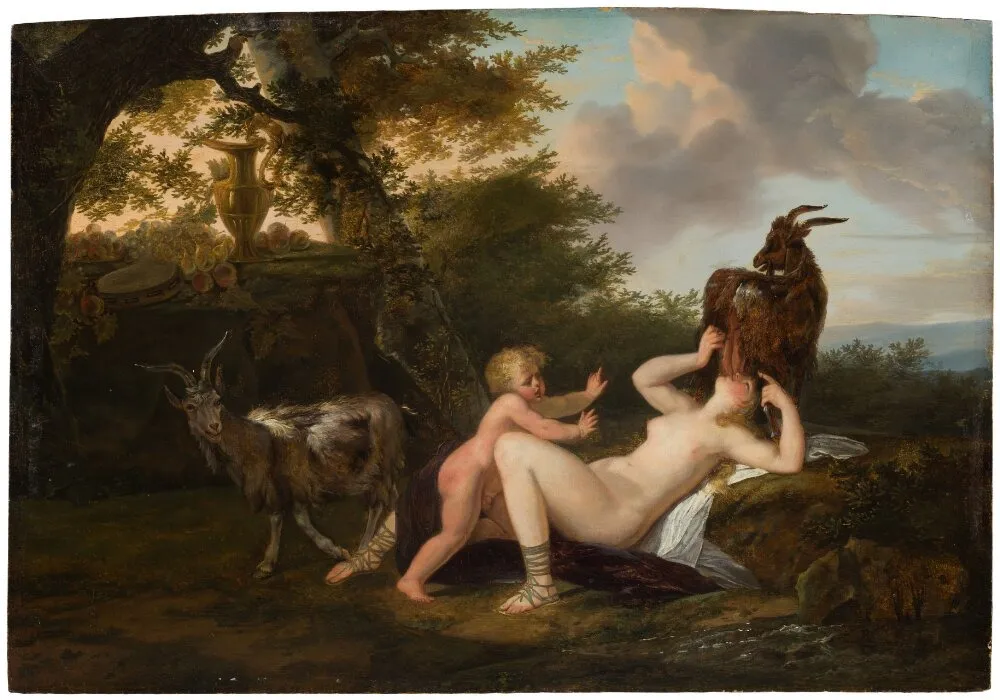
The Nymph Amalthea Suckling a Goat is an oil painting by Louis Benjamin Marie Devouges. It dates from 1816 and is held in the collection of the Nationalmuseum.
About this work
Overview
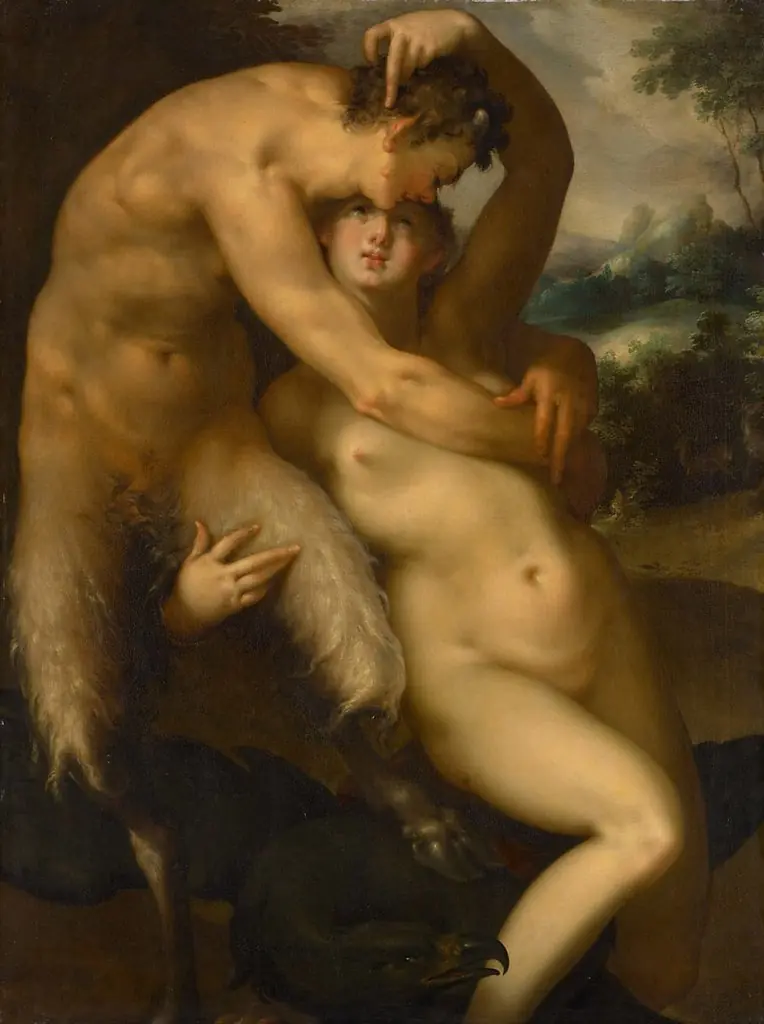
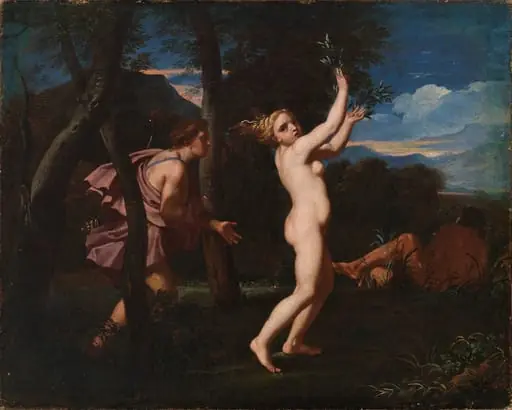
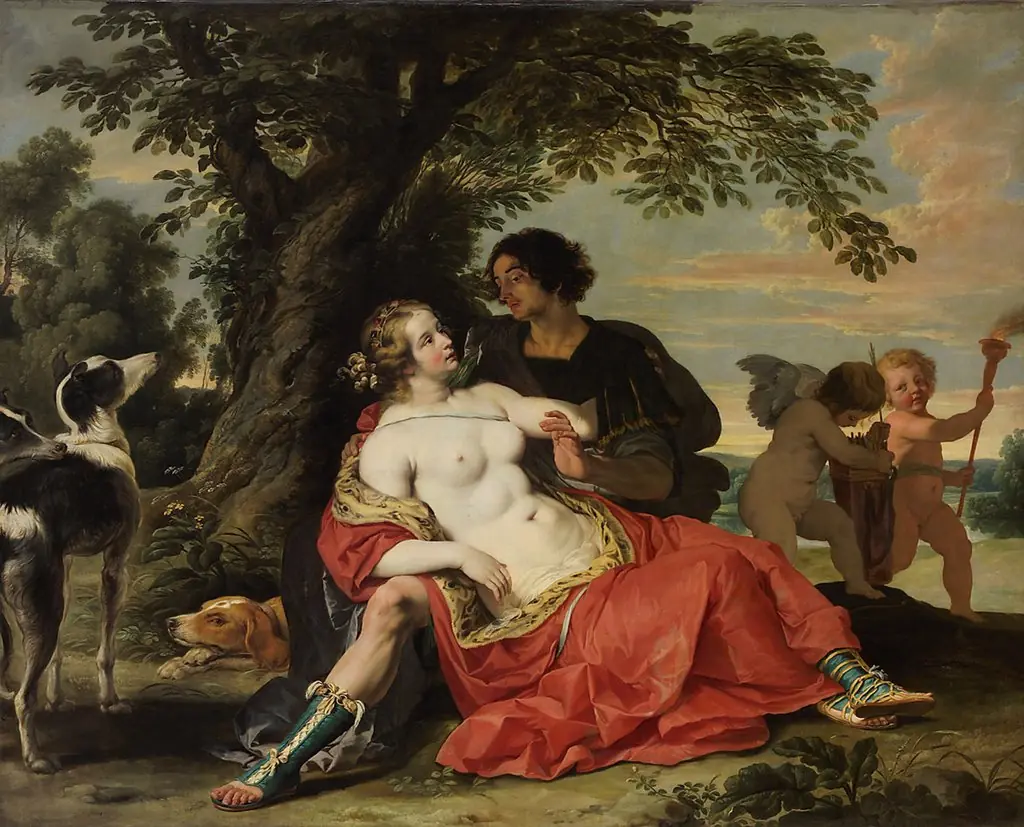
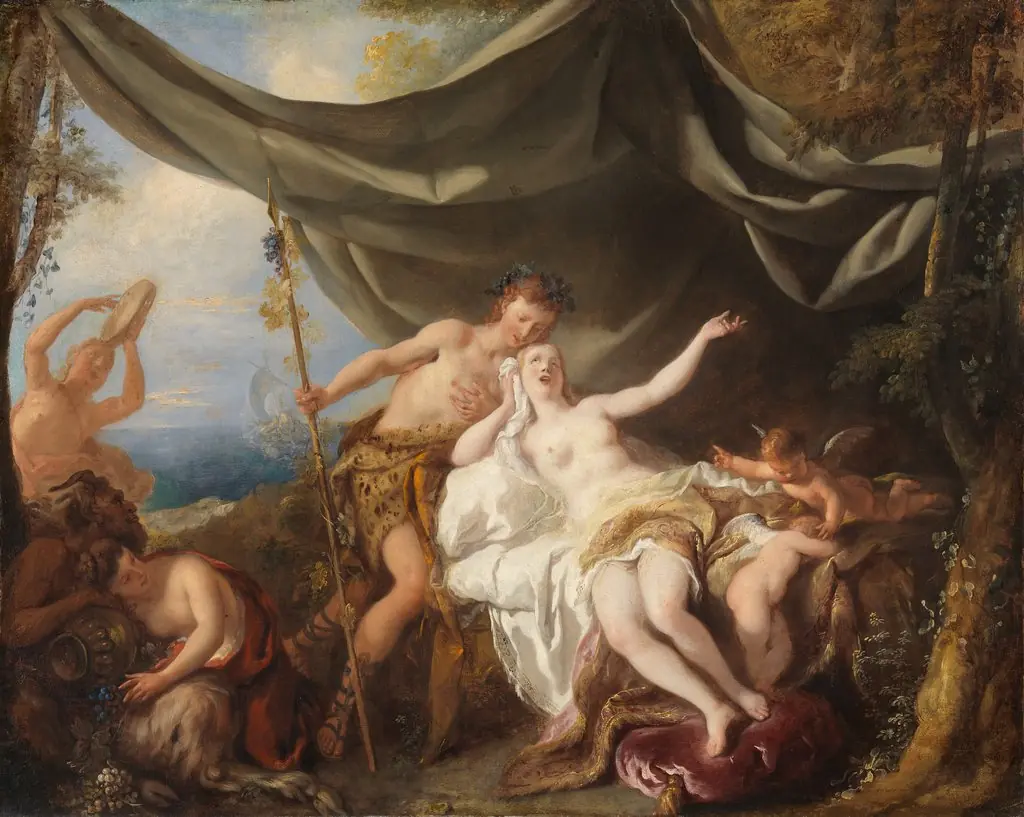
Painted around 1816 by Louis Benjamin Marie Devouges, this oil work depicts a mythological scene centered on the nymph Amalthea. It is part of the collection at the Nationalmuseum in Stockholm. The composition presents a serene yet dramatic interaction between human and animal figures within a natural setting, rendered with careful attention to form and atmosphere.
Subject & Meaning
The painting illustrates Amalthea, a figure from Greek myth who nurtured the infant Zeus with goat’s milk. Her nudity and the presence of a small child—possibly a satyr—evoke classical associations with nature, fertility, and divine care. The goat, central to the myth, symbolizes sustenance and protection, while the child’s gesture suggests a bond between the mortal and the mythical.
Technique & Style
Devouges employs chiaroscuro to model the figures with soft gradations of light and shadow, enhancing their three-dimensionality. The nude form of Amalthea is rendered with smooth, idealized contours, consistent with Neoclassical ideals. The landscape background, though detailed, remains subdued, directing focus to the central group and reinforcing the scene’s quiet intimacy.
History & Provenance
The painting was completed in the early 19th century and entered the Nationalmuseum’s collection in Sweden. Its provenance before acquisition is not widely documented, but its style aligns with French academic traditions of the period. It reflects the continued interest in classical mythology among European artists following the Napoleonic era.
Context
Created during a time when Neoclassicism still dominated academic art, the work responds to revived interest in ancient myths as vehicles for moral and aesthetic ideals. Devouges, though less known than his contemporaries, participated in this broader cultural current, blending mythological narrative with naturalistic observation favored by the French Academy.
Legacy
The painting remains a modest example of early 19th-century French academic art, preserved for its technical execution and mythological subject. While not widely exhibited outside Sweden, it contributes to understanding how classical themes persisted in regional collections and how lesser-known artists engaged with dominant artistic conventions of the era.
Artist & collection
Artist
Louis Benjamin Marie Devouges (1770–1842) was an artist, born in Paris.