Artwork
The Artist's Wife in His Studio
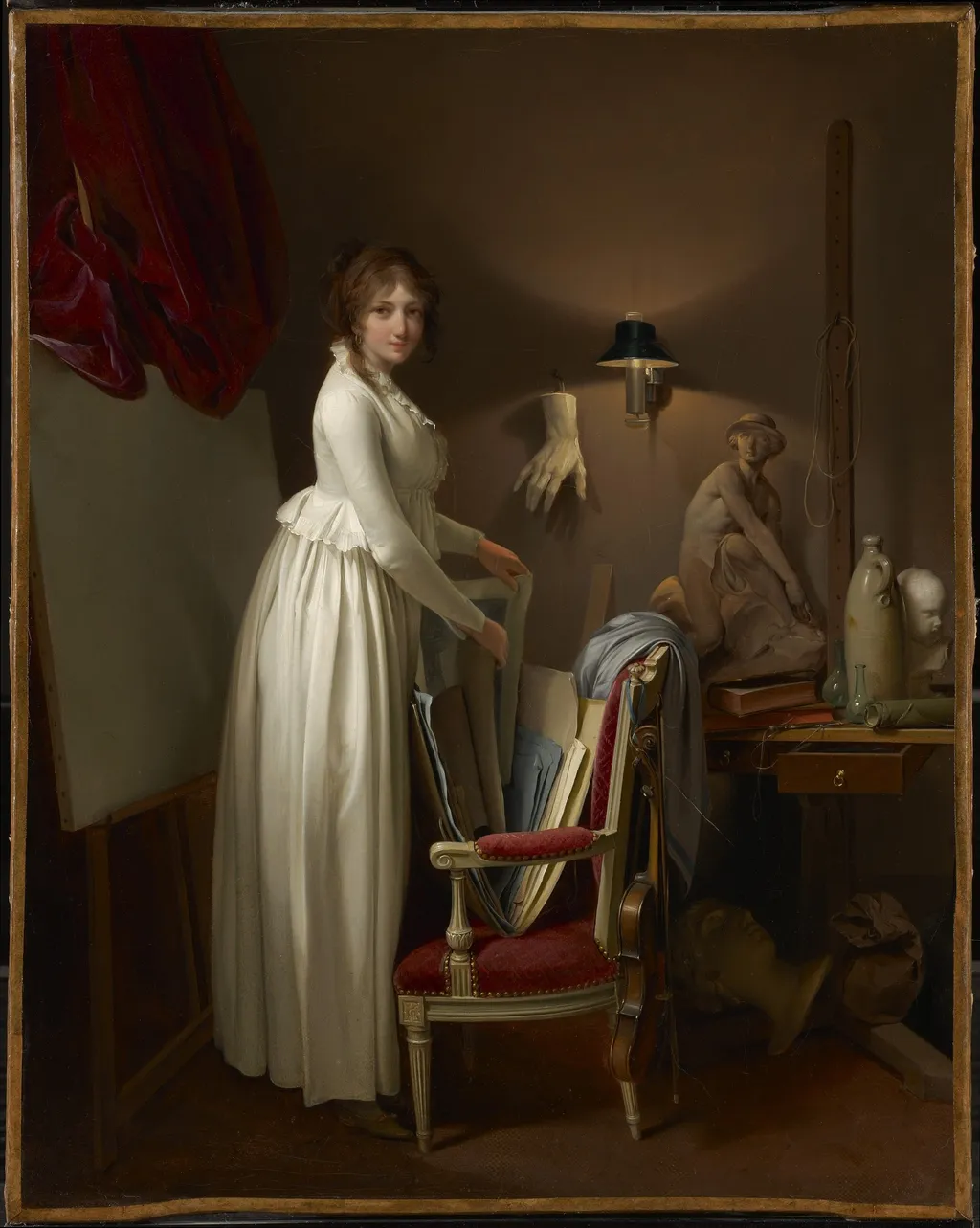
The Artist's Wife in His Studio is an oil painting by Louis-Léopold Boilly. It dates from 1799 and is held in the collection of the Clark Art Institute.
About this work
Overview
The composition centers on a woman in a flowing white gown, holding a portfolio, gazing directly at the viewer.
Painted in 1799 by Louis-Léopold Boilly, this oil work depicts his wife within the confines of his studio. The composition centers on a woman in a flowing white gown, holding a portfolio, gazing directly at the viewer. The space around her is modestly furnished with art tools, a seated chair, and a small sculptural figure, suggesting a working environment rather than a formal portrait setting. The painting’s quiet intimacy distinguishes it from grander contemporary works.
Subject & Meaning
The figure is both a personal portrait and a representation of the artist’s domestic world. Her poised stance and direct gaze convey agency, positioning her not merely as a muse but as an active participant in the creative process. The portfolio she holds implies engagement with his work, while the studio’s cluttered yet orderly arrangement reflects the daily reality of artistic labor. The absence of overt symbolism invites interpretation grounded in lived experience rather than allegory.
Technique & Style
Boilly employs precise brushwork and subtle tonal contrasts to render textures: the softness of fabric, the sheen of wood, the matte surface of plaster. The dim lighting, enhanced by a red curtain on the left, creates a focused atmosphere, drawing attention to the figure’s form and expression. His use of chiaroscuro is restrained, avoiding dramatic effects in favor of naturalistic illumination, characteristic of his Neoclassical-influenced realism.
History & Provenance
The painting remained in the Boilly family until the 19th century, later entering private collections in France before being acquired by the Clark Art Institute. Its survival through multiple ownerships reflects its modest stature among Boilly’s oeuvre, yet its preservation underscores its value as a personal document. No significant alterations or restorations are documented, preserving its original condition.
Context
Created during the post-Revolutionary period in France, the painting reflects a shift toward intimate, domestic subjects in art. While grand historical narratives dominated official salons, artists like Boilly turned to everyday scenes, capturing the quiet dignity of private life. The studio setting, common in genre painting, here becomes a space of collaboration and quiet observation, mirroring broader cultural changes in artistic identity.
Legacy
Though not widely exhibited in its time, the painting has come to represent a quiet milestone in the depiction of women within artistic spaces. It avoids idealization, presenting the artist’s wife as a grounded, observant presence. Contemporary scholars cite it as an early example of the studio as a site of gendered labor, influencing later realist and domestic genre works in 19th-century European art.
Artist & collection
Artist
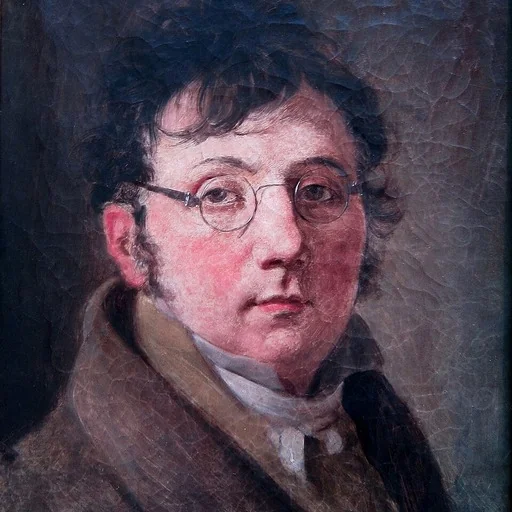
Louis-Léopold Boilly was a French painter and draftsman. A creator of popular portrait paintings, he also produced a vast number of genre paintings documenting French middle-class social life. His life and work spanned…

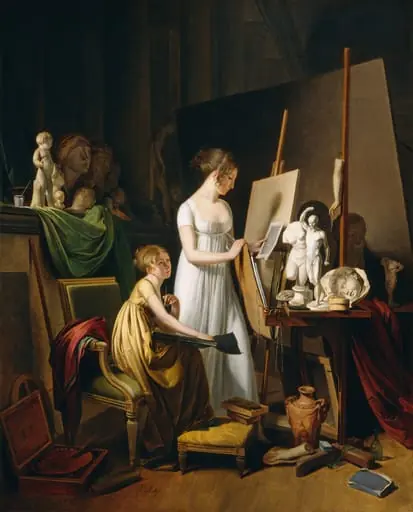 A Painter's Studio
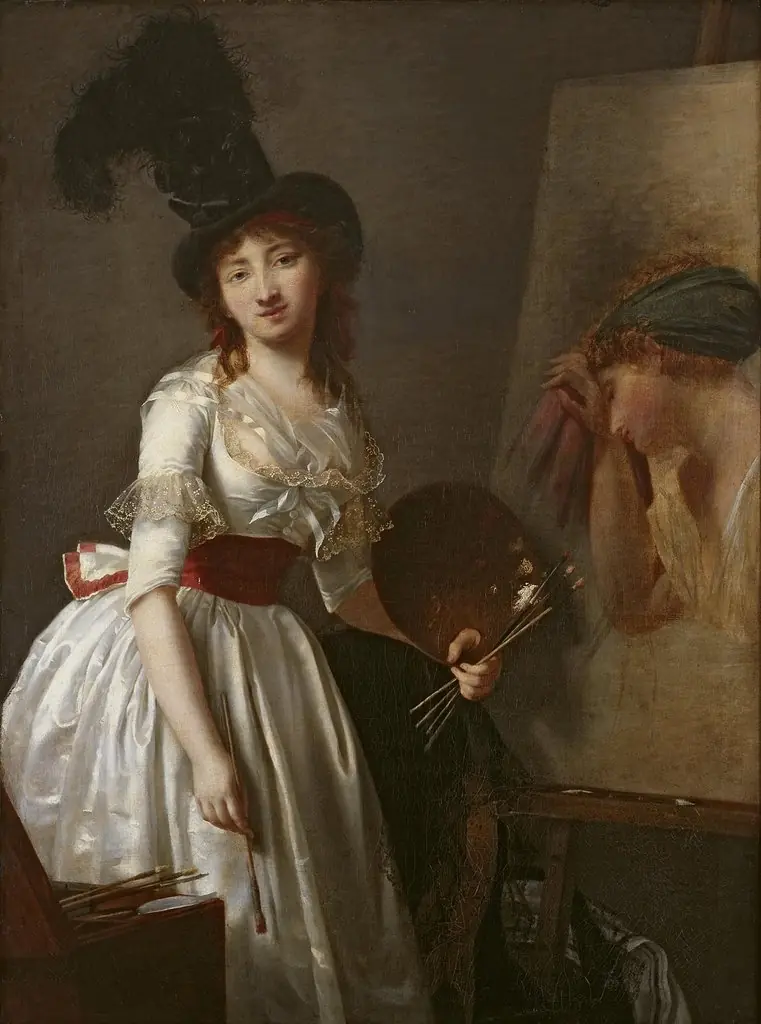 Portrait of a Female Painter, Pupil of David
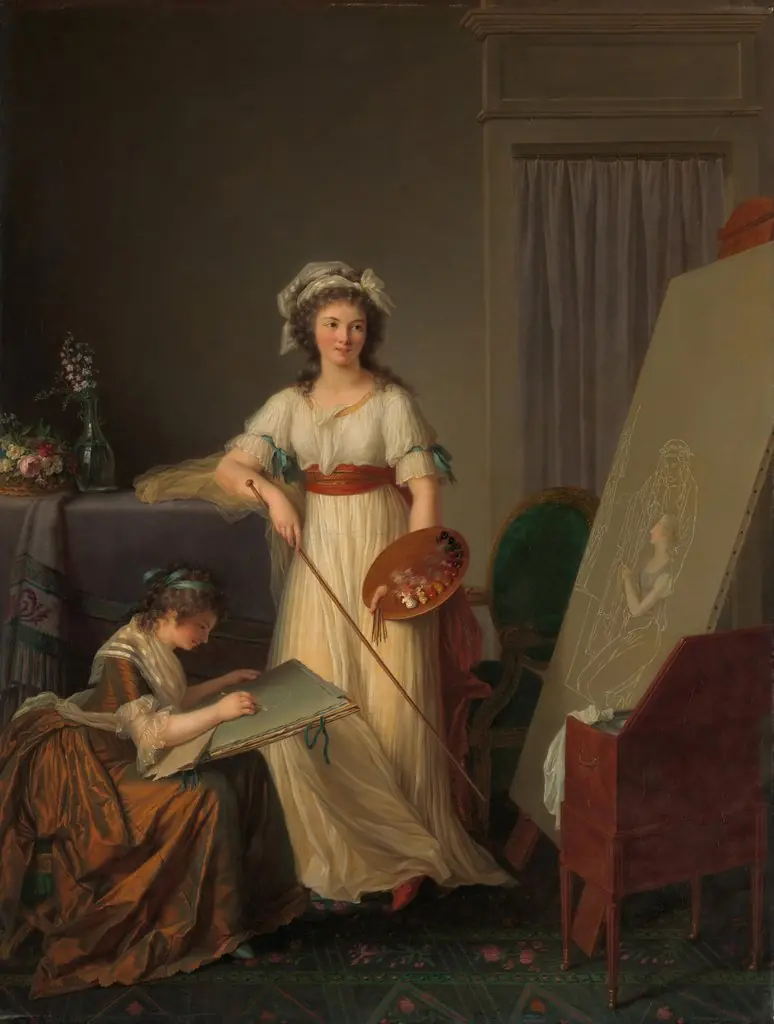 The Interior of an Atelier of a Woman Painter
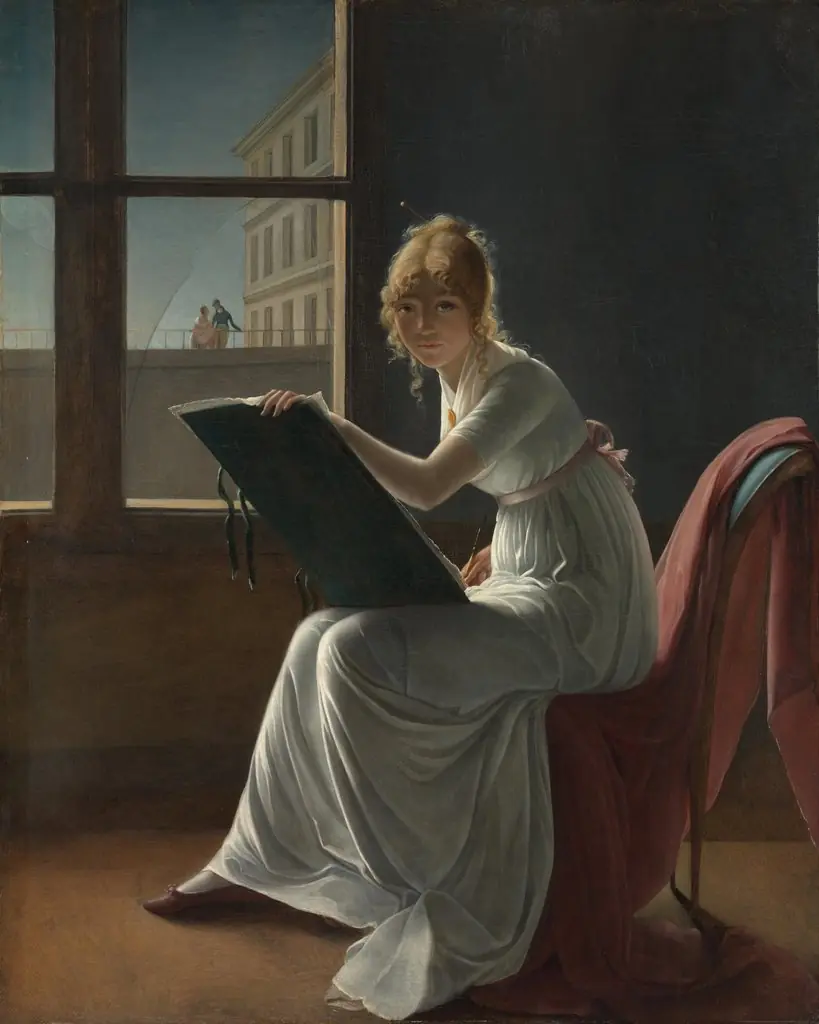 Portrait of Charlotte du Val d'Ognes
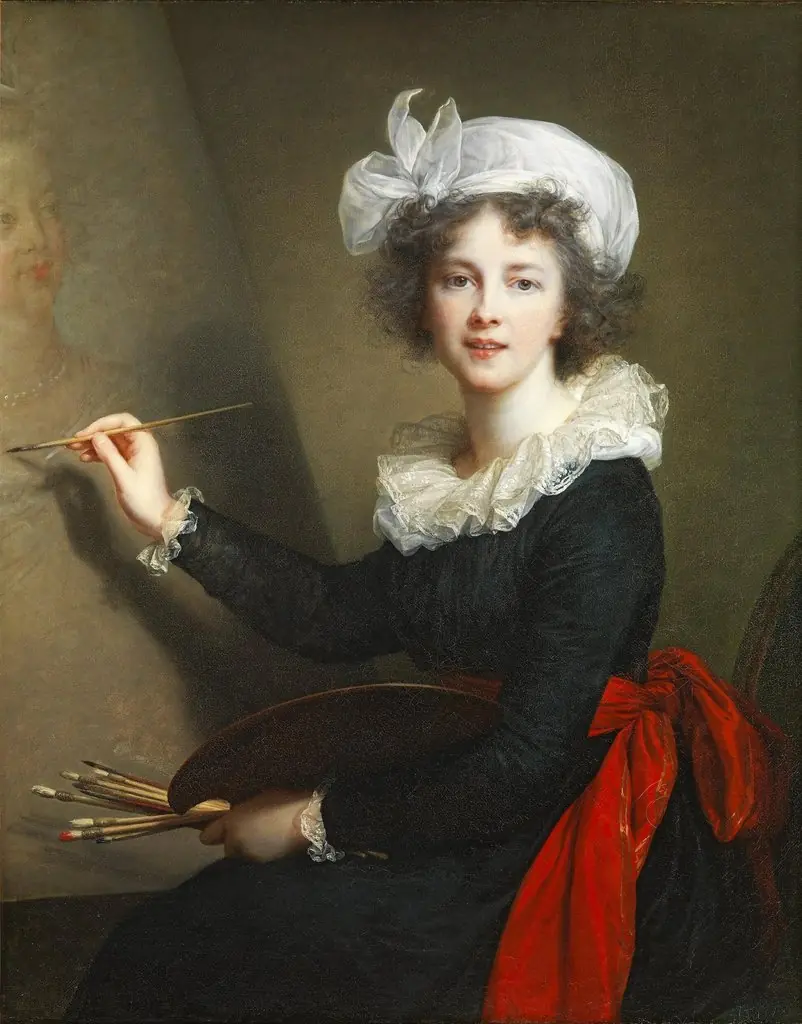 Self-portrait of Élisabeth Louise Vigée Le Brun
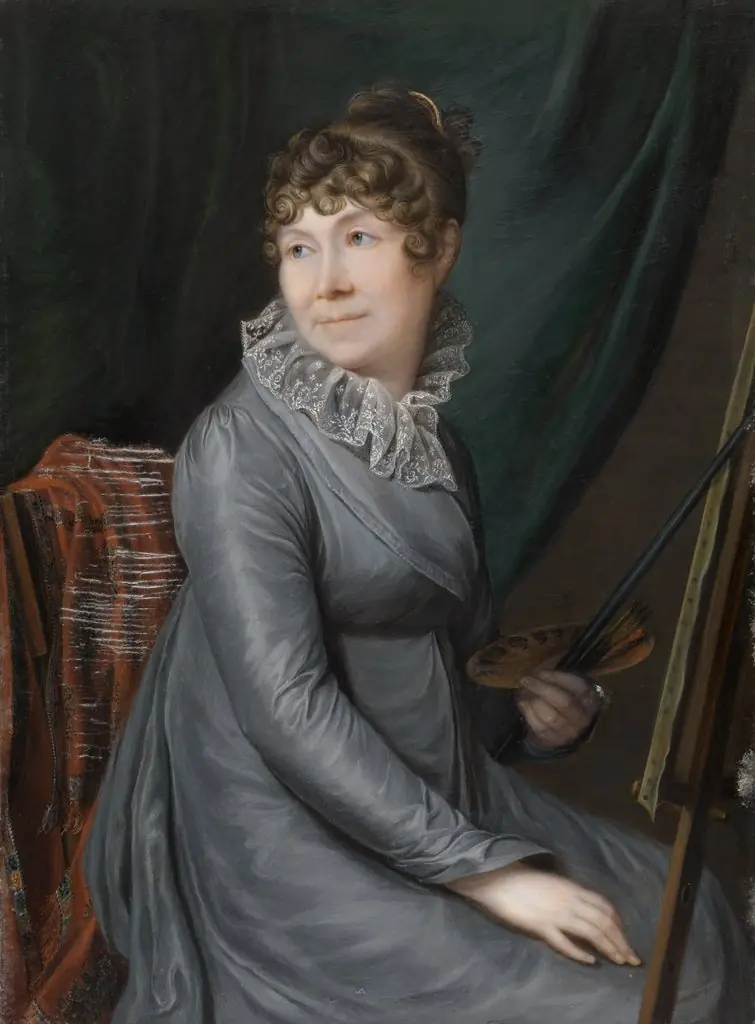 Marie Simons, Mother of the Artist
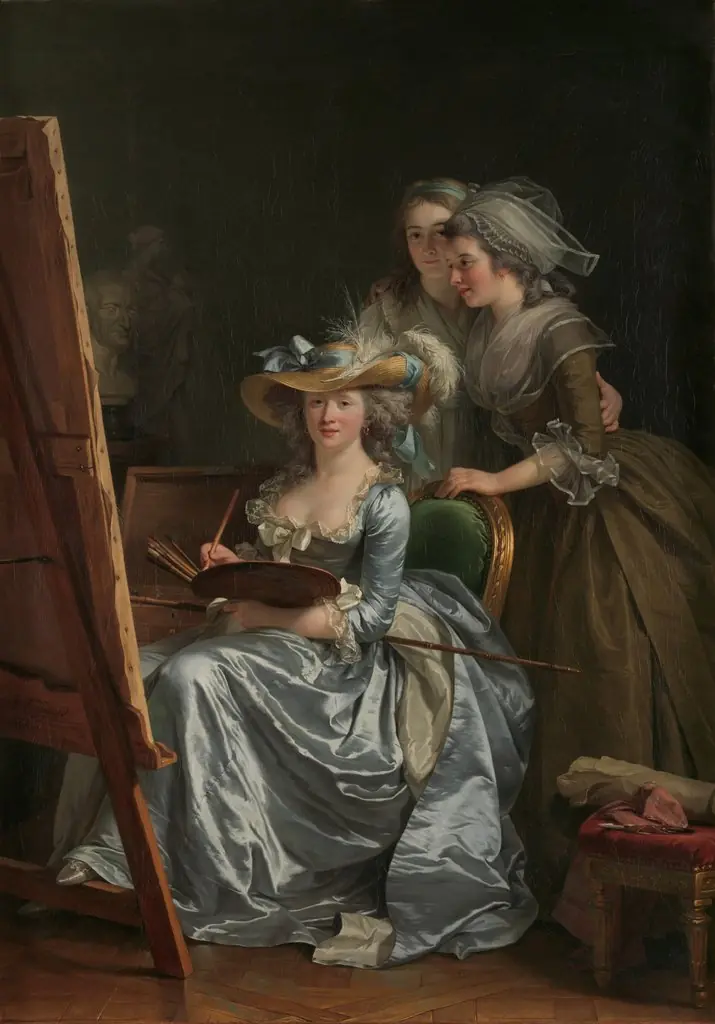 Self-Portrait with Two Pupils
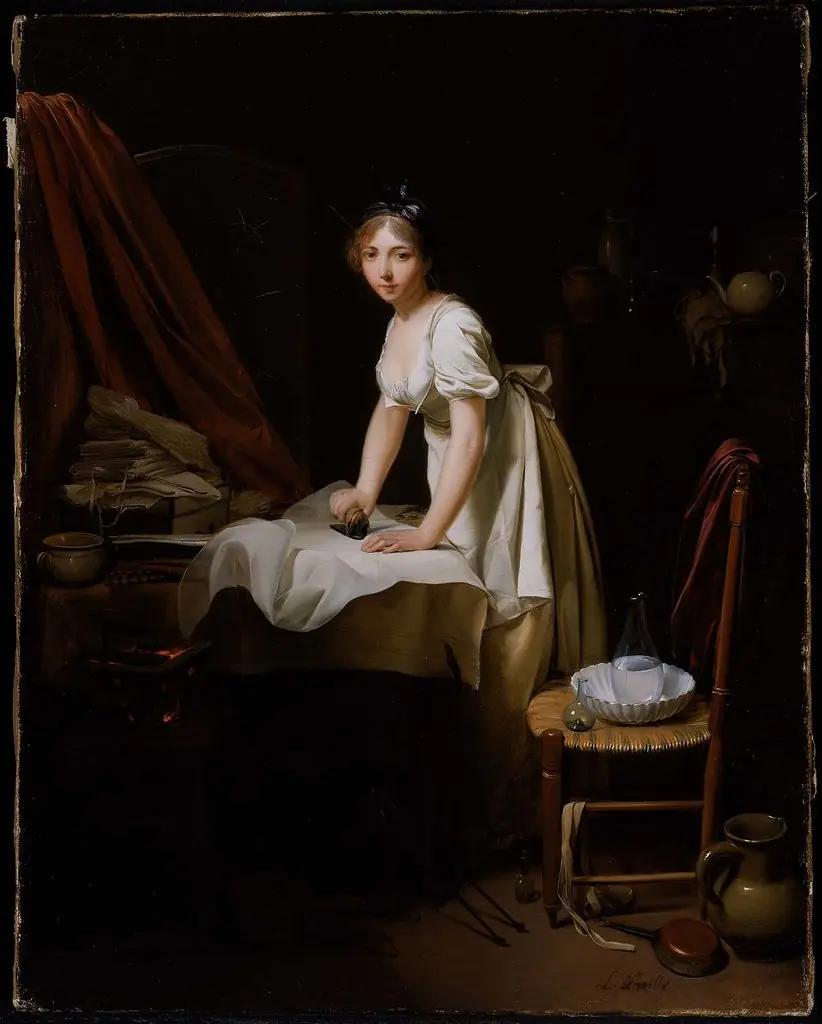 Young Woman Ironing
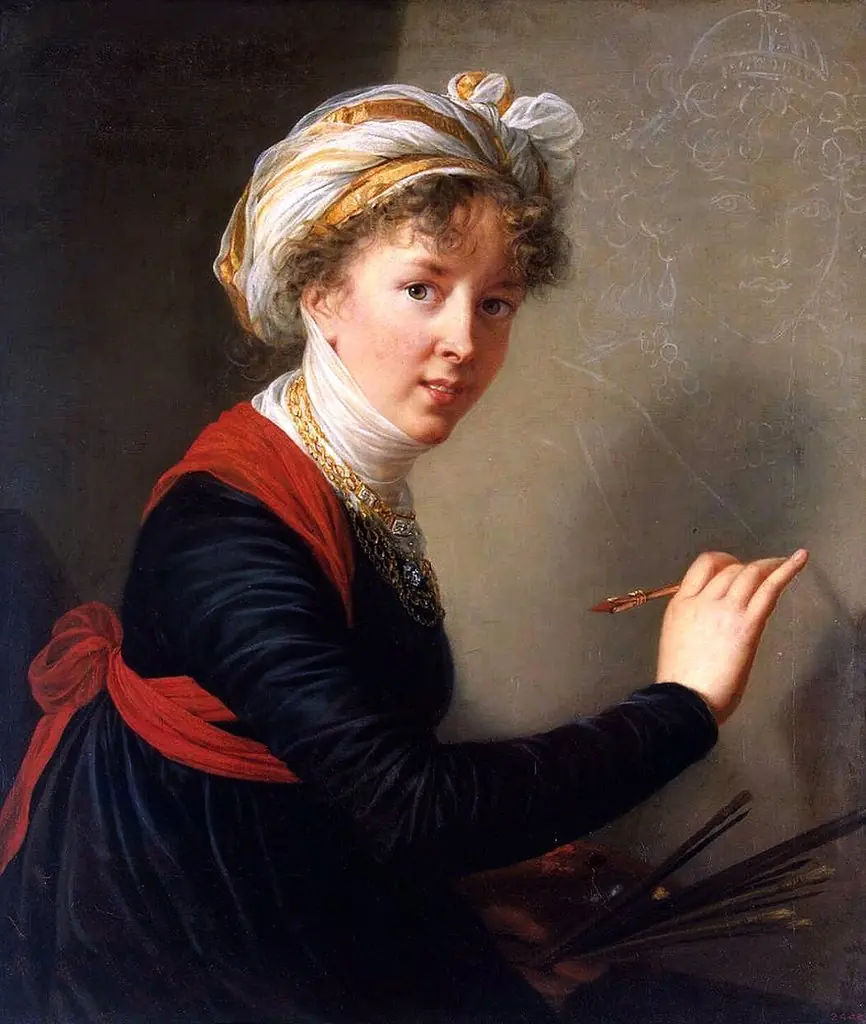 Self-portrait
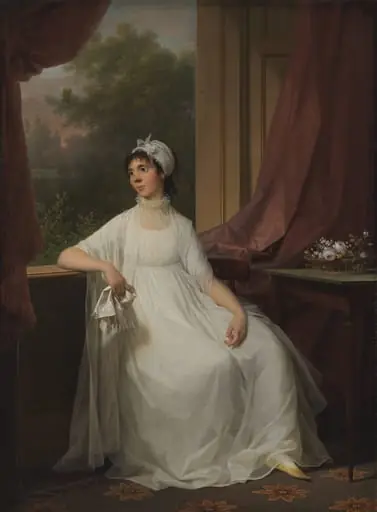 Portrait of Gertrud Hage, née Heitmann
 The Artist and his Wife Rosine, née Dørschel
 Comtesse de la Châtre (Marie Charlotte Louise Perrette Aglaé Bontemps, 1762–1848)