Artwork
The Rest on the Flight into Egypt (recto); Sketch of a Sphinx [?] (verso)
![The Rest on the Flight into Egypt (recto); Sketch of a Sphinx [?] (verso), by Luc-Olivier Merson, 1880](https://artifactworldgallery.com/img/luc-olivier-merson--the-rest-on-the-flight-into-egypt-recto-sketch-of-a-sphinx-v--25f9a663b49091e6-w1024.webp)
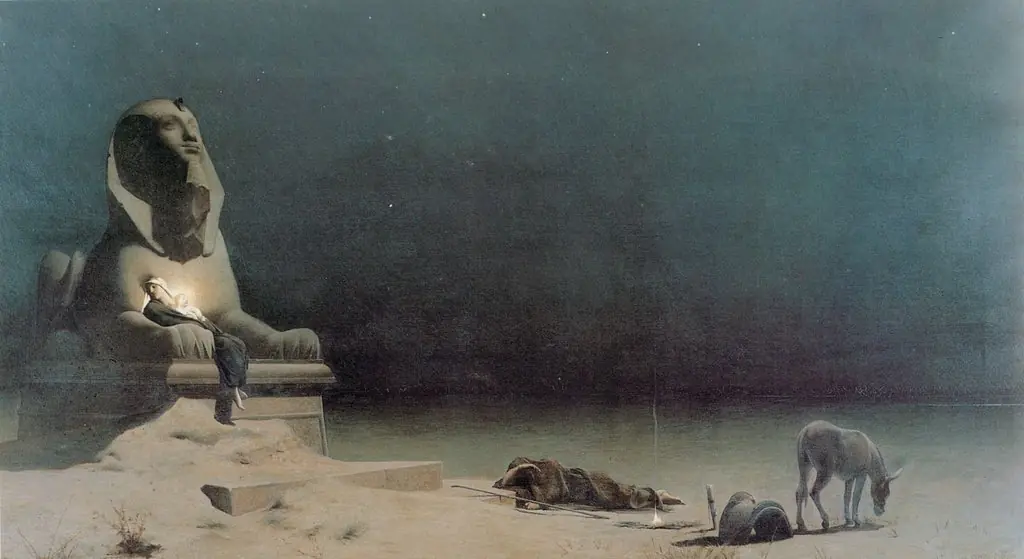
The Rest on the Flight into Egypt (recto); Sketch of a Sphinx [?] (verso) is a drawing by the Impressionist artist Luc-Olivier Merson. It dates from 1880 and is held in the collection of the Cleveland Museum of Art.
About this work
You see Mary and baby Jesus curled up inside the giant stone paws of a sphinx, while Joseph naps by a dying fire.
You see Mary and baby Jesus curled up inside the giant stone paws of a sphinx, while Joseph naps by a dying fire.
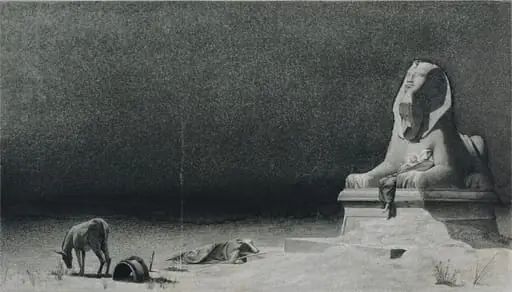
Most artists show the Holy Family fleeing danger, but Merson paints them safe inside ancient Egyptian ruins. The sphinx feels like a guardian, not a monster. The drawing is a mirror image of his famous painting—maybe a quick test before he flipped the scene.
To see how he turned this sketch into glowing oil paint, look up the subject: france, 19th century.
Overview
This drawing, titled 'The Rest on the Flight into Egypt', is a mirror-image composition of Luc-Olivier Merson's celebrated 1879 Salon piece. It depicts an unconventional scene from the biblical narrative where Mary and the infant Christ seek refuge within the stone paws of a sphinx, while Joseph rests nearby, tending a fading fire.
Subject & Meaning
Contrasting traditional depictions of the Holy Family's perilous escape, Merson's work emphasizes safety and serenity. The sphinx, typically a symbol of menace, is reinterpreted as a protective guardian, underscoring themes of refuge and tranquility in the face of adversity.
Technique & Style
The drawing's reversed composition relative to the final painting suggests it may have been a preliminary test or alternative concept. The dreamlike quality, characteristic of Merson's approach, is evident even in this preparatory stage.
History & Provenance
Created in the aftermath of the painting's 1879 Salon success, this drawing is one of several replicas and studies Merson produced. Its direct relationship to the original painting is highlighted by the mirrored composition.
Context
Emerging from 19th-century France, this work reflects the era's artistic explorations of historical and biblical themes with innovative twists. Merson's choice of an Egyptian setting adds a layer of exoticism and antiquity.
Legacy
While the painting gained widespread acclaim, this drawing provides insight into Merson's creative process, illustrating the evolution of his unique interpretation of a biblical scene into a celebrated work of late 19th-century art.
Artist & collection
Artist
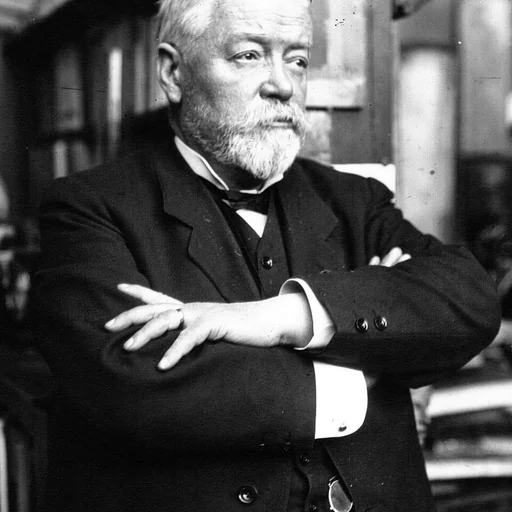
Luc-Olivier Merson (21 May 1846 - 13 November 1920) was a French academic painter and illustrator. He was also known for his postage stamp and currency designs.

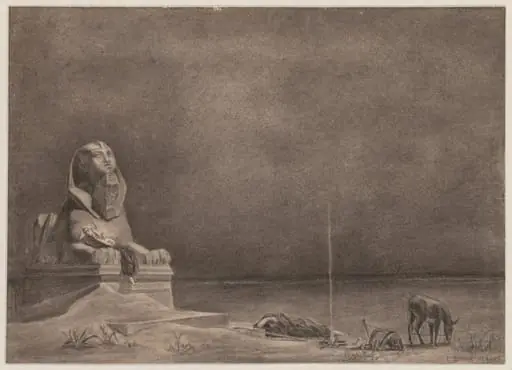
![Sketch of a Sphinx [?] (verso), by Luc-Olivier Merson](https://artifactworldgallery.com/img/luc-olivier-merson--sketch-of-a-sphinx-verso--01aae5545d384a57-w320.webp)
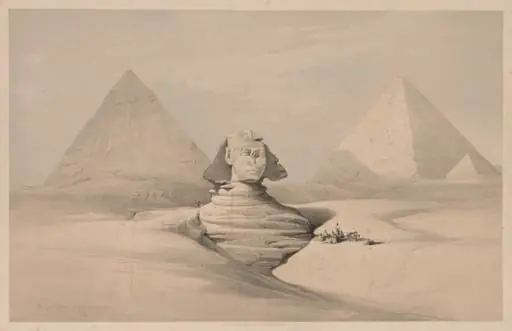 Egypt and Nubia: Volume I - No. 18, The Great Sphinx, Pyramids of Gizeh, Front View
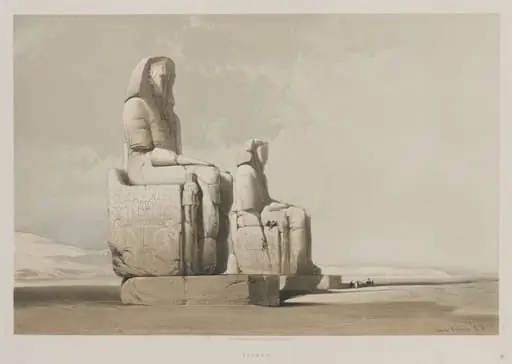 Egypt and Nubia, Volume I: Thebes
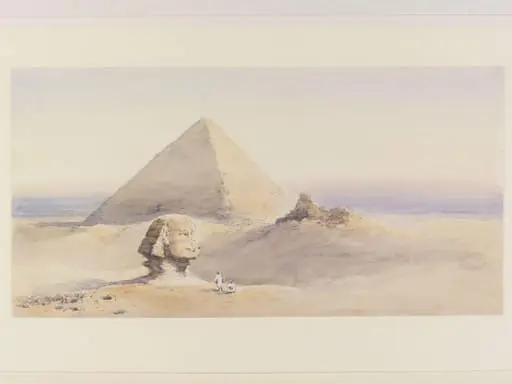 Sphinx & Great Pyramid
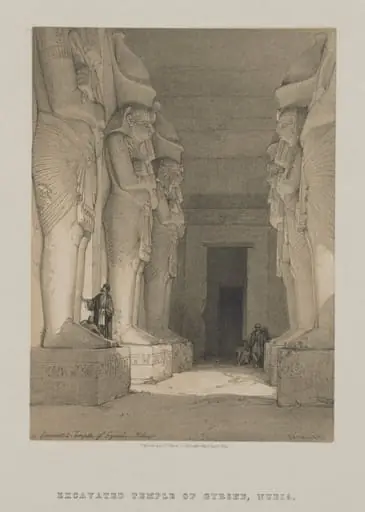 Egypt and Nubia, Volume I: Excavated Temple of Gyrshe, Nubia
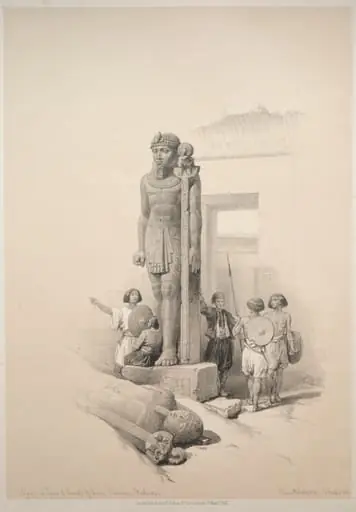 Egypt and Nubia: Volume II - No. 7, Colossi at Wady Saboua
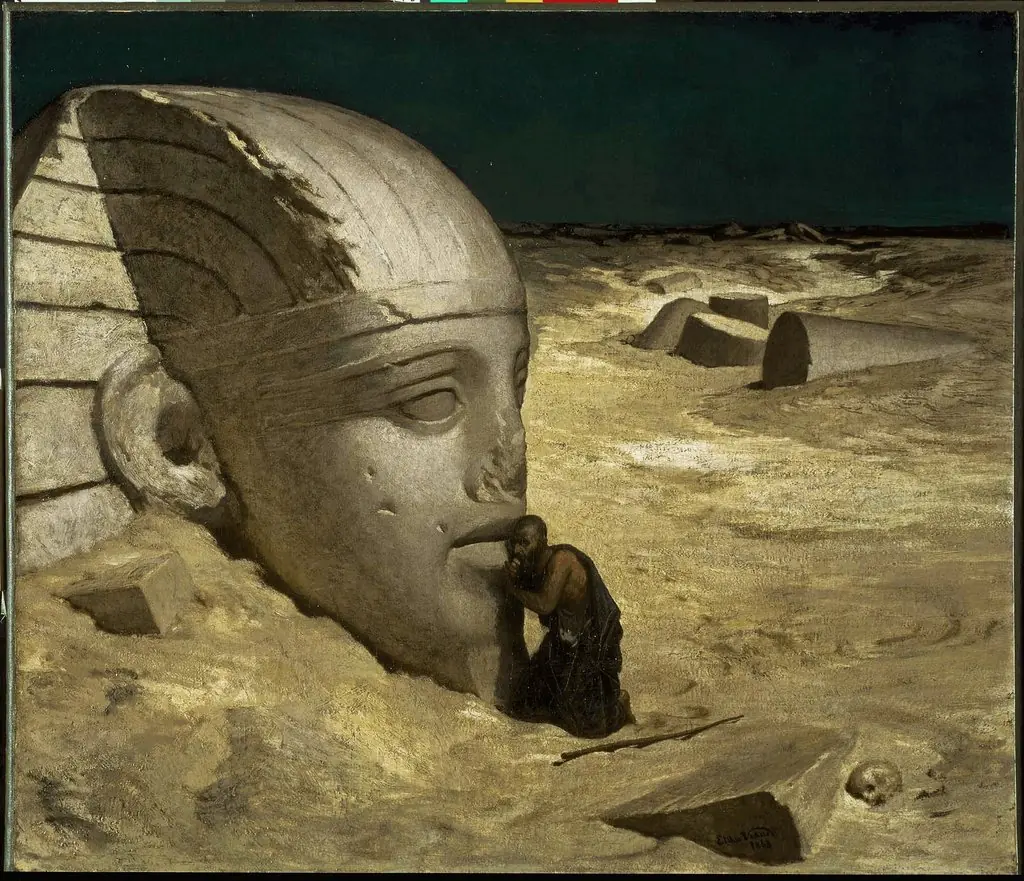 The Questioner of the Sphinx
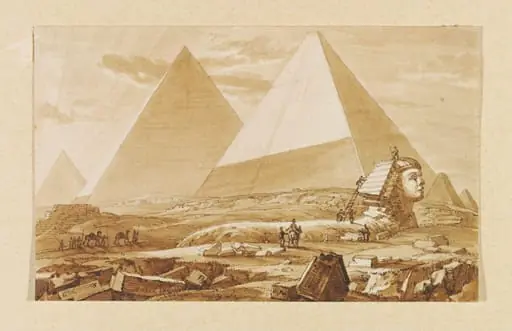 Pyramids and Sphinx - Sun setting
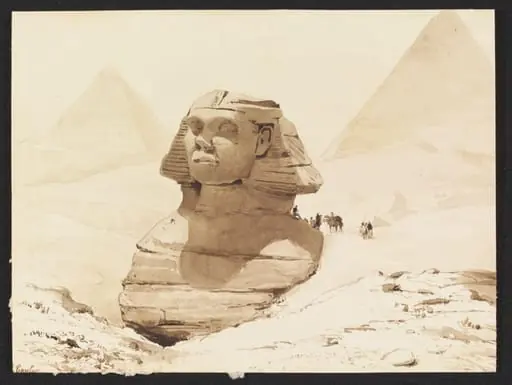 Le Sphinx
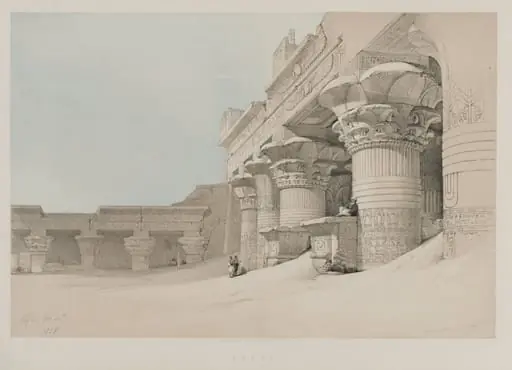 Egypt and Nubia, Volume II: Edfou
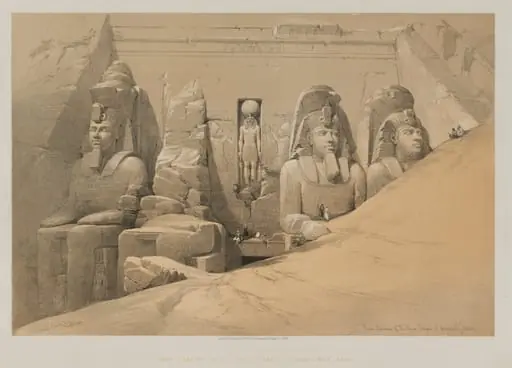 Egypt and Nubia, Volume II: Front Elevation of the Great Temple of Aboo Simbel, Nubia