Artwork
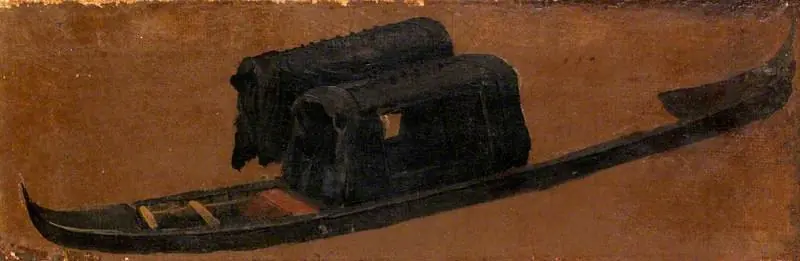
A Gondola

A Gondola is an oil painting by the Rococo painting artist Luca Carlevarijs. It dates from 1705 and is held in the collection of the Victoria and Albert Museum.
About this work
Overview
Unlike typical cityscapes of the period, this piece omits architectural context and human figures, concentrating solely on the form of the gondola.
Painted in 1705 by Luca Carlevarijs, *A Gondola* is an oil on canvas work that isolates a single Venetian watercraft against a uniform background. Unlike typical cityscapes of the period, this piece omits architectural context and human figures, concentrating solely on the form of the gondola. Carlevarijs, known for his detailed depictions of Venice’s urban environment, here adopts a minimalist approach that emphasizes silhouette and presence over narrative.
Subject & Meaning
The gondola, a symbol of Venetian life and transport, is rendered without passengers or context, transforming it into a solitary object of contemplation. Its dark, elongated form dominates the composition, suggesting both utility and elegance. By stripping away surrounding detail, Carlevarijs invites attention to the boat’s structure and cultural significance, treating it not merely as a vessel but as an emblem of the city’s identity.
Technique & Style
Carlevarijs employs a restrained palette and smooth brushwork to define the gondola’s curved silhouette. The background is rendered in a single, flat tone, eliminating depth and directing focus to the boat’s contours. Details such as the oarlock or gondolier’s stance are omitted, resulting in a stylized, almost abstract representation. This reduction aligns with early Rococo tendencies toward elegance and simplification, though it diverges from his usual topographical precision.
History & Provenance
The painting entered the collection of the Victoria and Albert Museum in the 19th century, where it remains today. While Carlevarijs produced numerous views of Venice’s canals and landmarks, this work stands apart for its singular focus. Its provenance is not extensively documented prior to its acquisition by the museum, but its stylistic qualities align with his lesser-known intimate studies of Venetian subjects, distinct from his larger commissioned views.
Context
In early 18th-century Venice, painted views of the city were gaining popularity among travelers and collectors. Carlevarijs was among the first to systematically document Venice’s architecture and waterways, laying groundwork for later vedutisti like Canaletto. *A Gondola* reflects a quieter, more introspective strand within this tradition—one that prioritizes the object over the spectacle, hinting at a shift from panoramic record to poetic abstraction.
Legacy
Though less celebrated than his panoramic cityscapes, *A Gondola* illustrates Carlevarijs’s capacity for formal experimentation. Its stripped-down composition anticipates later artistic interests in isolated subjects and atmospheric economy. While it did not directly influence contemporaries, it now serves as a quiet counterpoint to the bustling vedute of his successors, offering insight into the evolving perception of Venetian identity in art.
Artist & collection
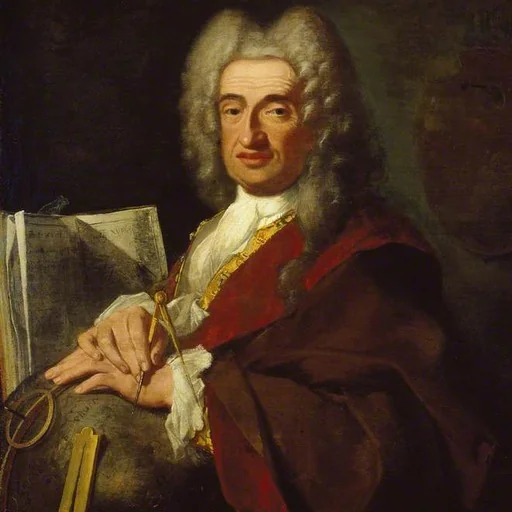
Artist
Luca Carlevarijs or Carlevaris (20 January 1663 – 12 February 1730) was an Italian painter and engraver working mainly in Venice.

 Copy of Painting inside the Caves of Ajanta (cave 6)
 Copy of Painting inside the Caves of Ajanta (cave 6)
 Icoana de factură catolică îl reprezintă pe sfântul Teodor Tiron (306 d. Hr) sărbătorit pe 17 februarie.Sf. Teodor înveșmântat ca oștean: coif cu pene, armura și mantie roșie. În dreapta ține un coif cu stânga sulița. În planul doi o biserică catolică. Pe fondul alb, de o parte și alta a sfântului câte tulpină cu o floare roșie. Cromatica: predomină roșul(inclusiv ca desen) albastru, bleu, negru, maro, auriu, verde deschis, verde închis, fond alb.Ramă îngustă, patru stinghiii îmbinate oblic la colțuri.
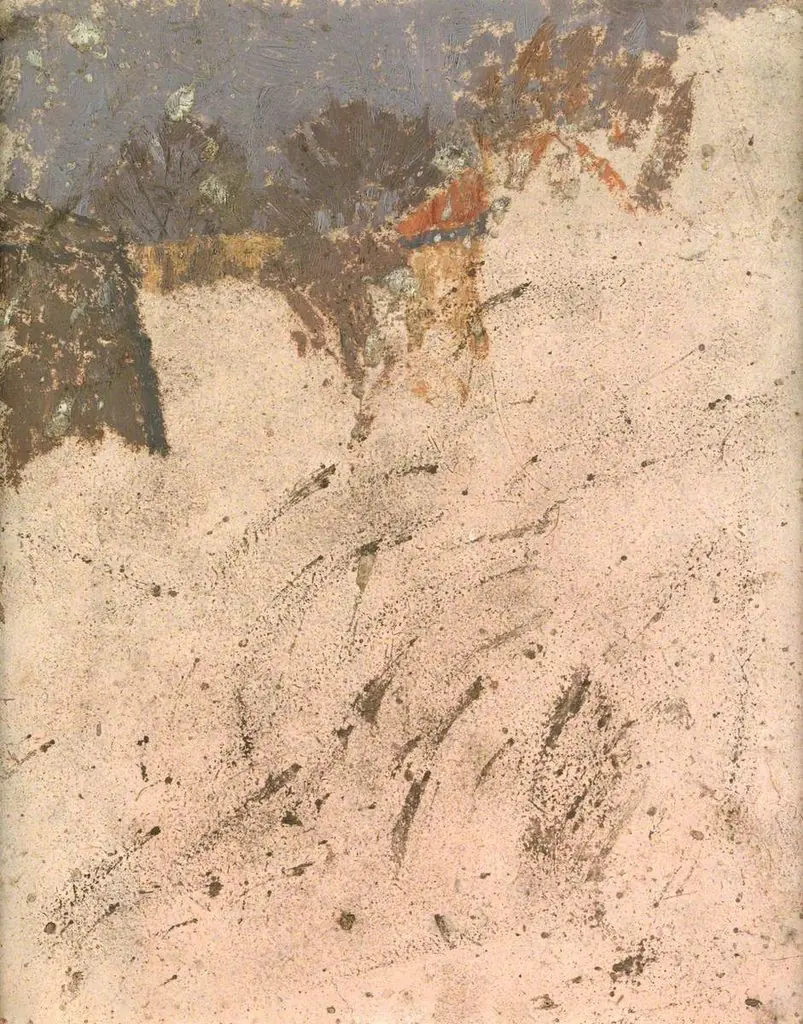 Hut with Sky and Trees: View from the Artist's Studio
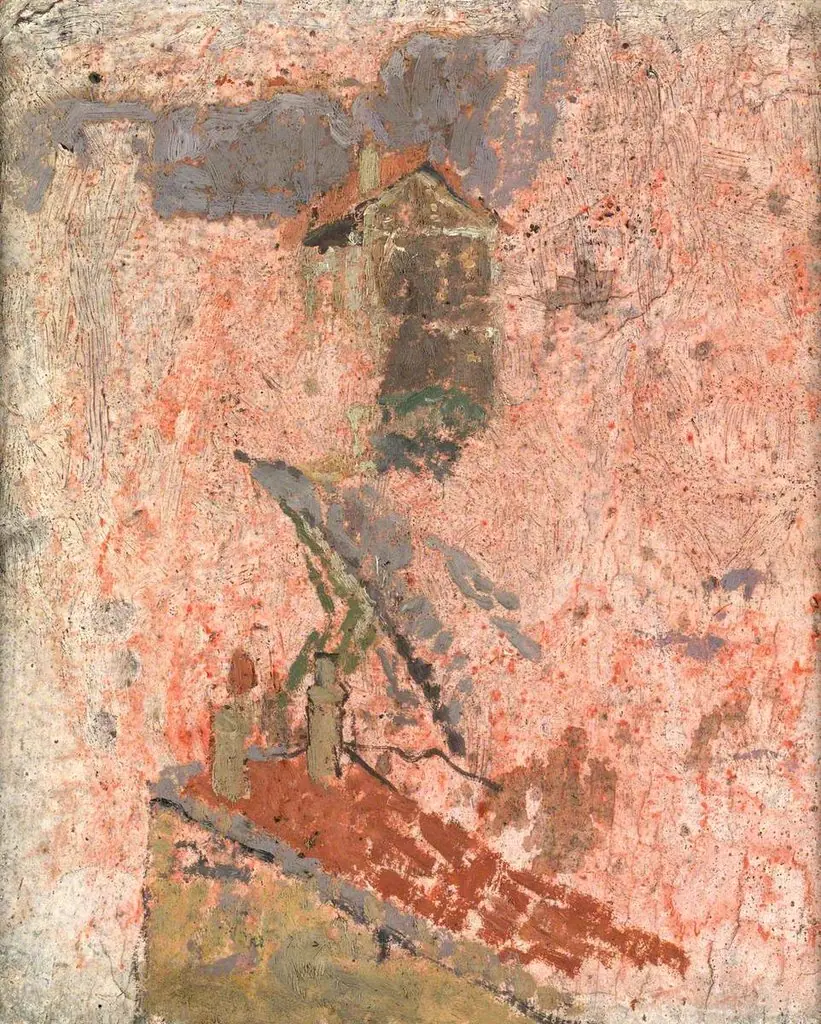 Hut with Sky, Trees and Rooftops: View from the Artist's Studio
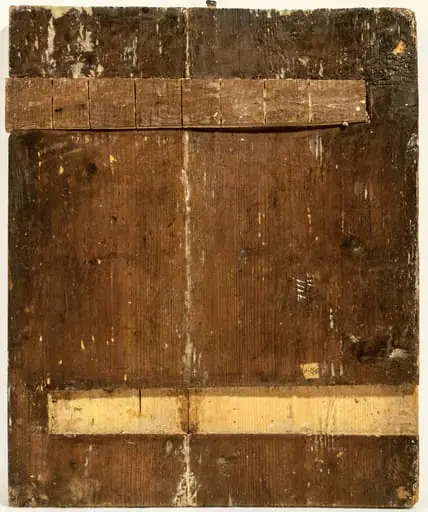 Compoziție complexă, (13 scene), centrată pe scena Învierii redată în varianta coborârii lui Iisus la Iad, episod biblic cunoscut și sub denumirea de Anastasis sau Învierea.Mântuitorul încadrat de o mandorlă îl scoate pe Adam și pe alți drepți(sfinți, prooroci) din gura gheenei. Deasupra este pictată scena ridicării din mormânt a Mântuitorului, lângă piatra mormântului, îngerul. În celelalte casete sunt reprezentate scene din viața lui Iisus Hristos și a Maicii Domnului, cu un număr redus de personaje (3 – 4, maxim 5): „Sfânta Treime”(ospitalitatea lui Avraam), Nașterea Fecioarei Maria”, „Intrarea Maicii Domnului în biserică(Ovidenia), „Buna Vestire”, „Nașterea lui Iisus Hristos”, Întâmpinarea Domnului(Stretenia), „Botezul lui Hristos” „Schimbarea la față” „Intrarea Domnului în Ierusalim”, , „Înălțarea Domnului, Adormirea Maicii Domnului, „Înălțarea Sfintei Cruci”. Toate personajele au nimburi trasate cu alb.Desen schematic, trasat cu finețe, ușor dezordonat, ca și inscripțiile. Cromatica specifică, tonuri calde, brun, galben, roșu în contrast cu verde, albastru, negru, valorate de foița de aur. Chenarul lat, roșu(tipul de icoană krasnushka)
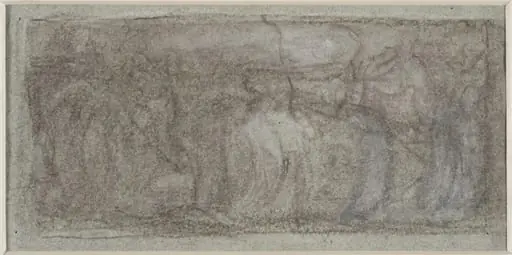 The Harvest Moon.
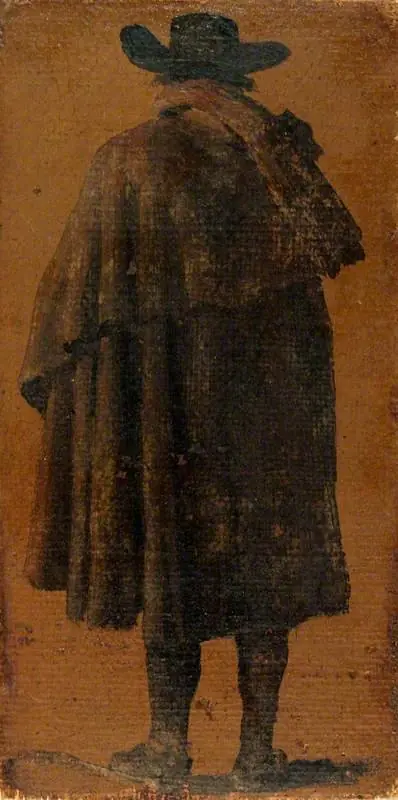 A Man Seen from Behind
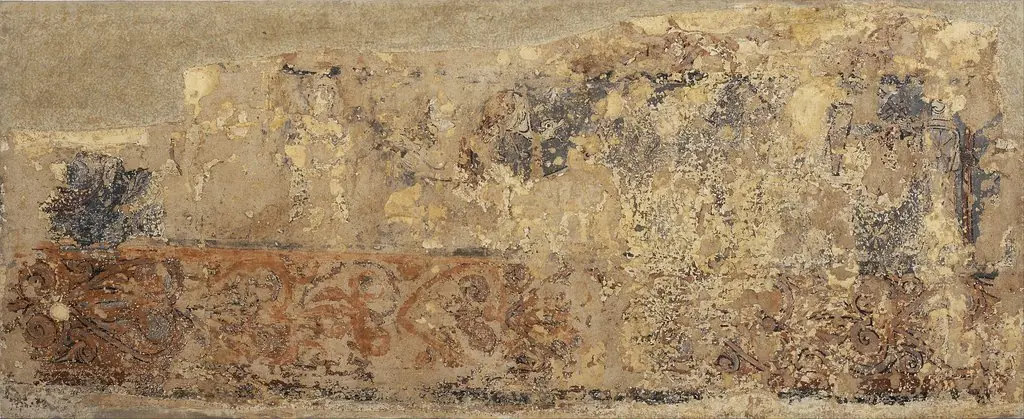 Profane paintings from Sigena: Courtly and battle scenes
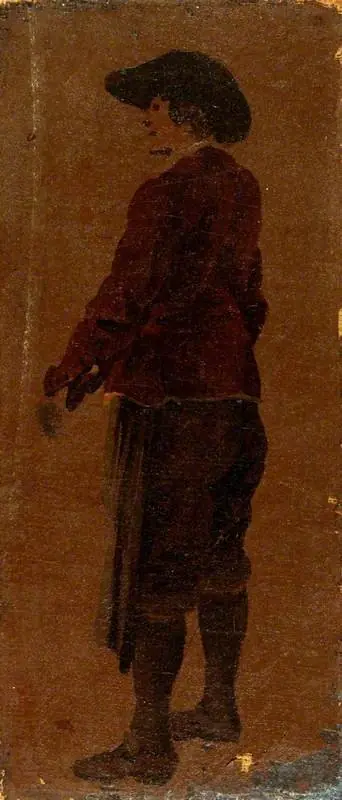 A Man Wearing a Red Jacket
 Aici, sub pântecele roz, aici
 A Gondola