Artwork
Virgin and Child with Saint Anne
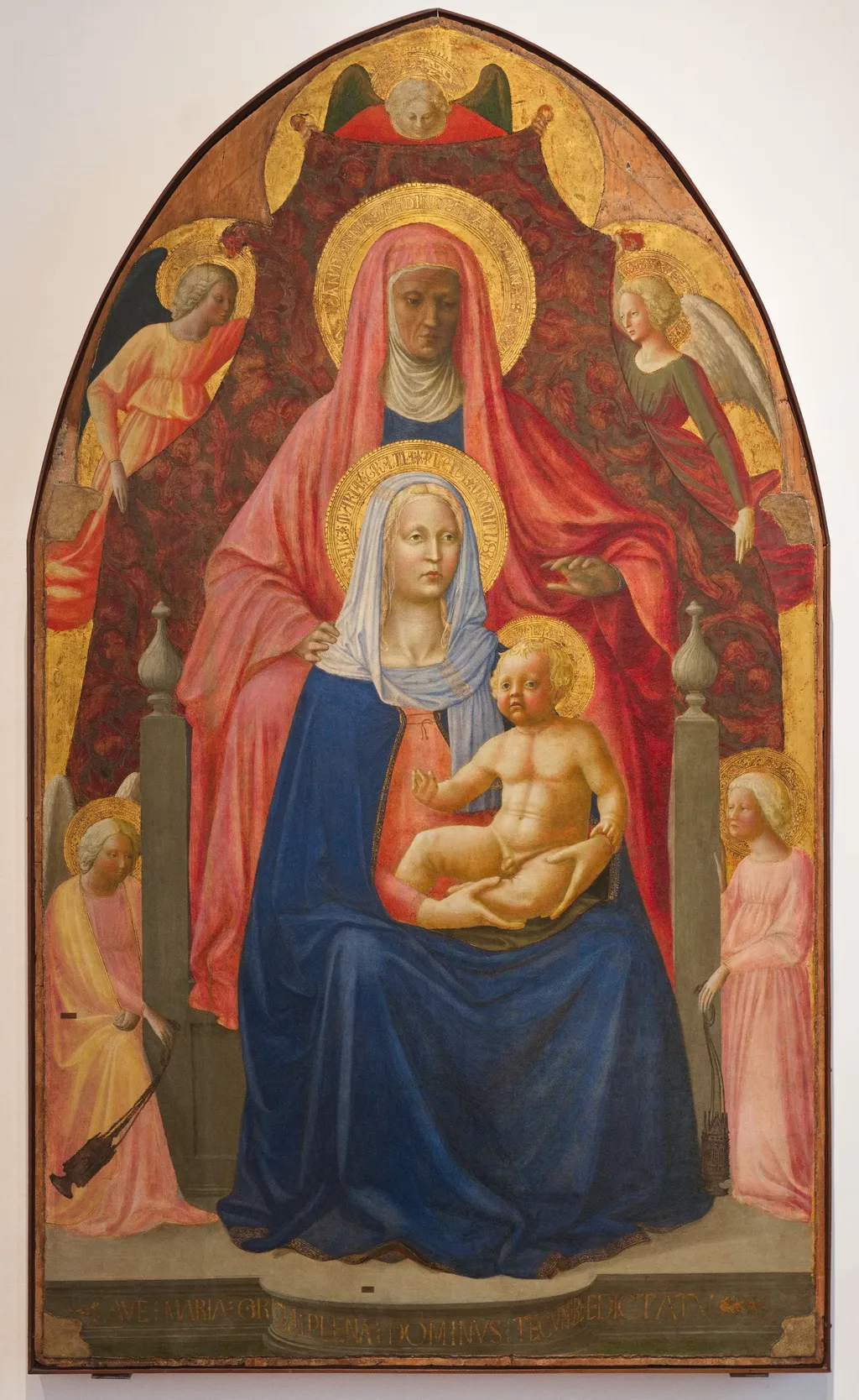
Virgin and Child with Saint Anne is a tempera painting by the High Renaissance artist Masaccio. It dates from 1424 and is held in the collection of the Uffizi Gallery.
About this work
Overview
Created around 1424–1425, the tempera panel known as Virgin and Child with Saint Anne measures roughly 175 by 103 centimetres and is displayed in Florence’s Galleria degli Uffizi. The composition brings together the Virgin, the infant Christ, and Saint Anne within a gold‑framed arch, accompanied by two angels.
Subject & Meaning
The central group presents the Virgin holding the child, who reaches toward her, while Saint Anne stands behind them, her hand extending into the pictorial space. The figures convey a solemn, contemplative atmosphere, emphasizing familial devotion rather than the more decorative Gothic iconography typical of earlier depictions.
Technique & Style
The painting combines Masaccio’s emerging use of linear perspective and volumetric modeling with the delicate, pastel‑toned figures characteristic of Masolino. Masaccio’s hand appears in the upper right angel and in the realistic rendering of light on the child’s flesh, while Masolino’s influence is evident in the softer, Gothic treatment of the remaining angels.
History & Provenance
Originally commissioned for the church of Sant’Ambrogio in Florence, the work was placed near the nuns’ parlour, according to Vasari. Over the centuries it entered the Uffizi collection, where it remains a key example of early Renaissance collaboration between Masaccio and Masolino.
Context
The panel reflects the transitional period between the International Gothic style and the new naturalism of the Renaissance. Influences from Donatello’s rounded forms and realistic textures are visible, especially in the handling of drapery and the three‑dimensional presence of the figures.
Legacy
As one of Masaccio’s earliest signed works, the painting demonstrates his pioneering use of true natural light and spatial depth. These innovations would shape subsequent Florentine painting, marking a decisive move toward the realistic representation that defined High Renaissance art.
Artist & collection


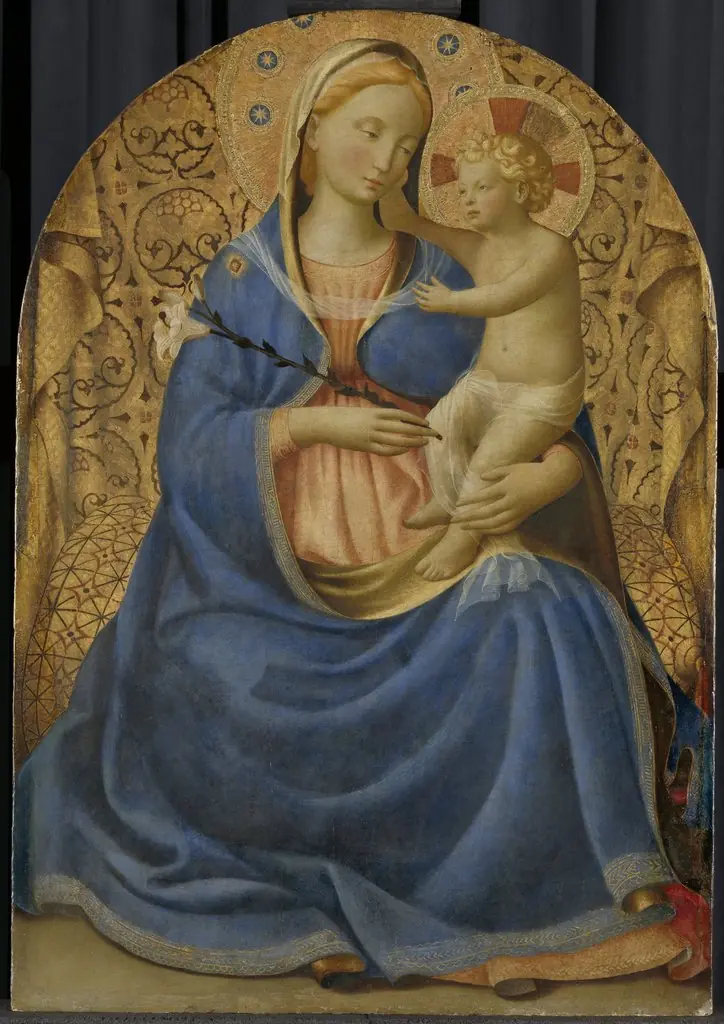 Madonna of Humility
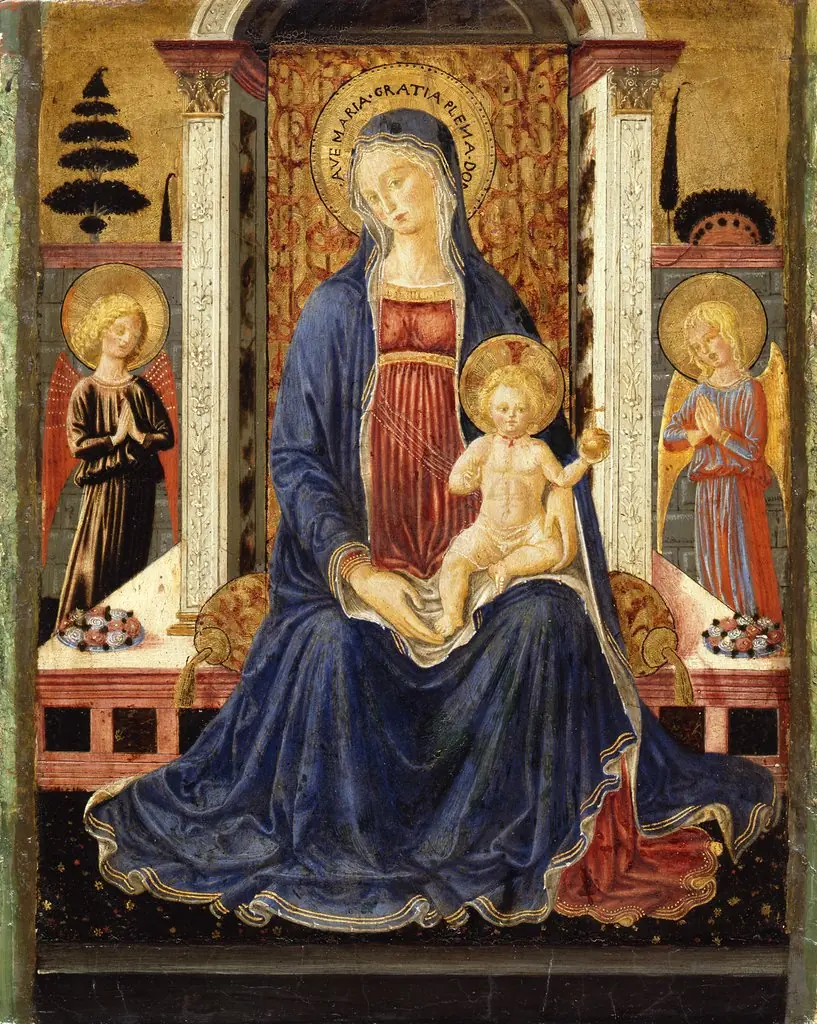 The Virgin and Child enthroned with two angels
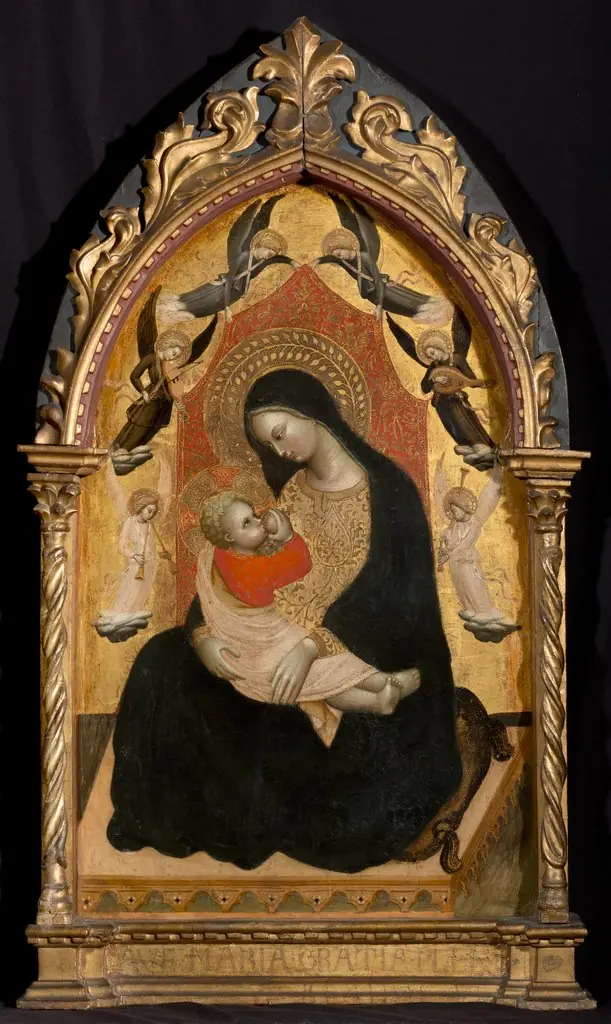 Virgin and Child with Music-Making Angels
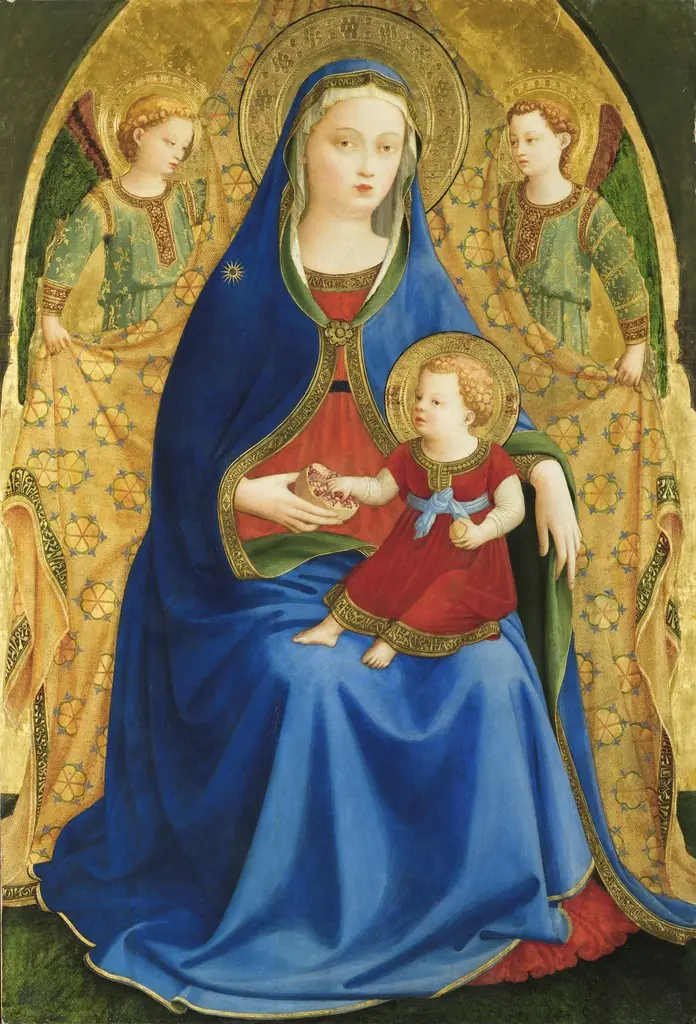 Madonna of the Pomegranate
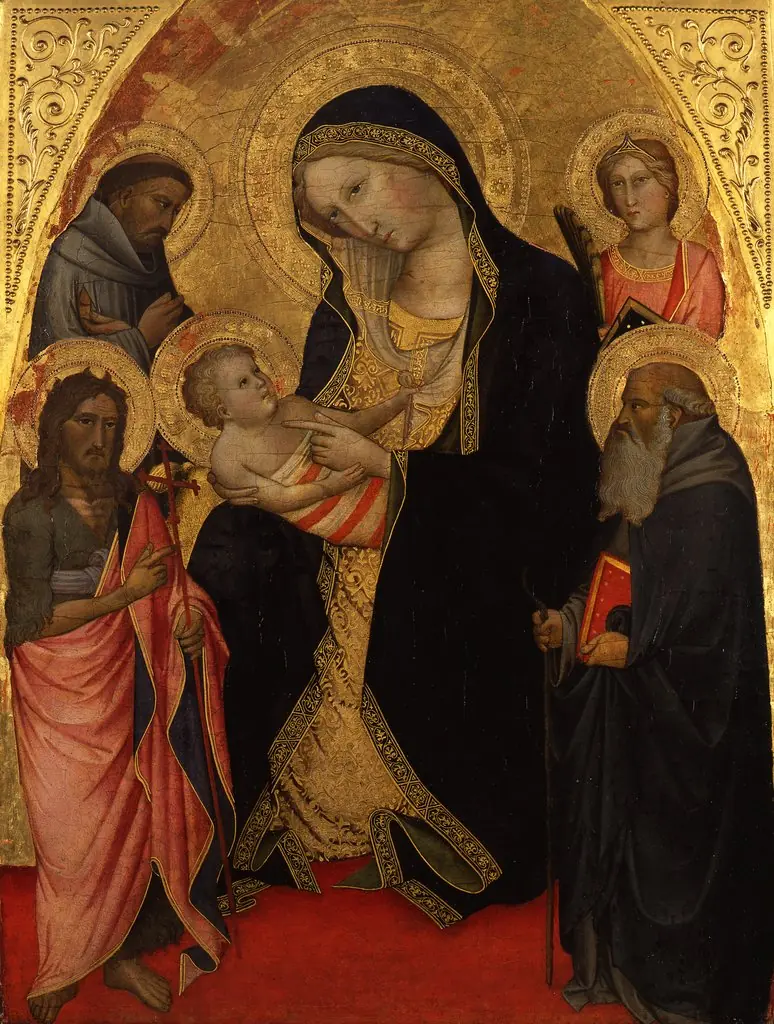 Madonna with the child, St. John the Baptist, St. Francis and St. Anthony and a martyr
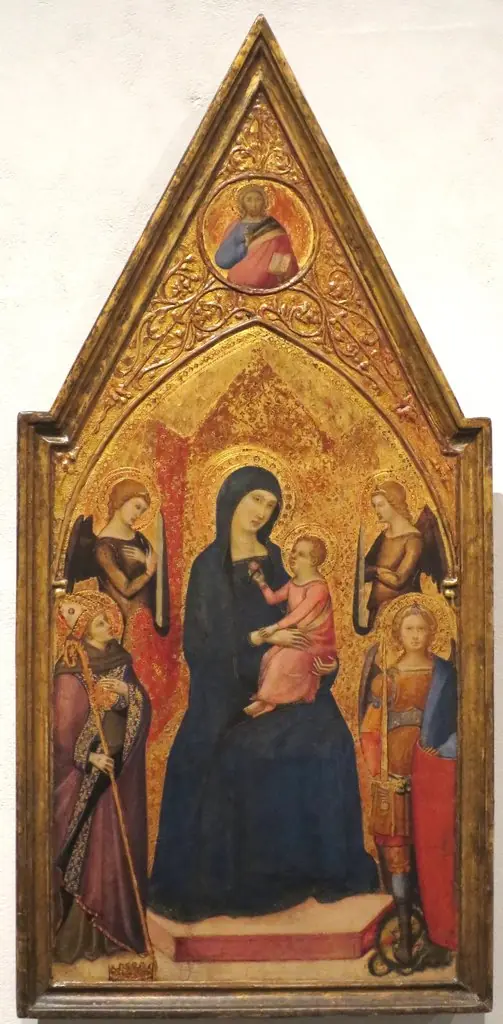 Virgin and Child with Sts. Louis of Toulouse and Michael
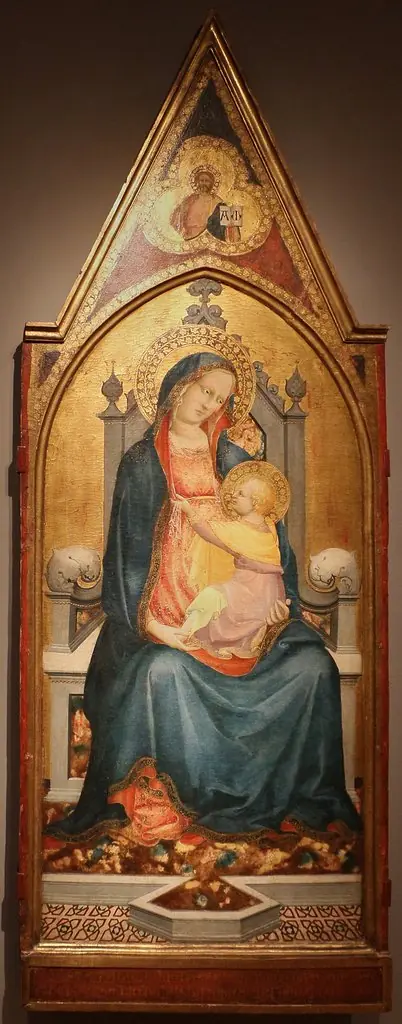 madonna col bambino in trono
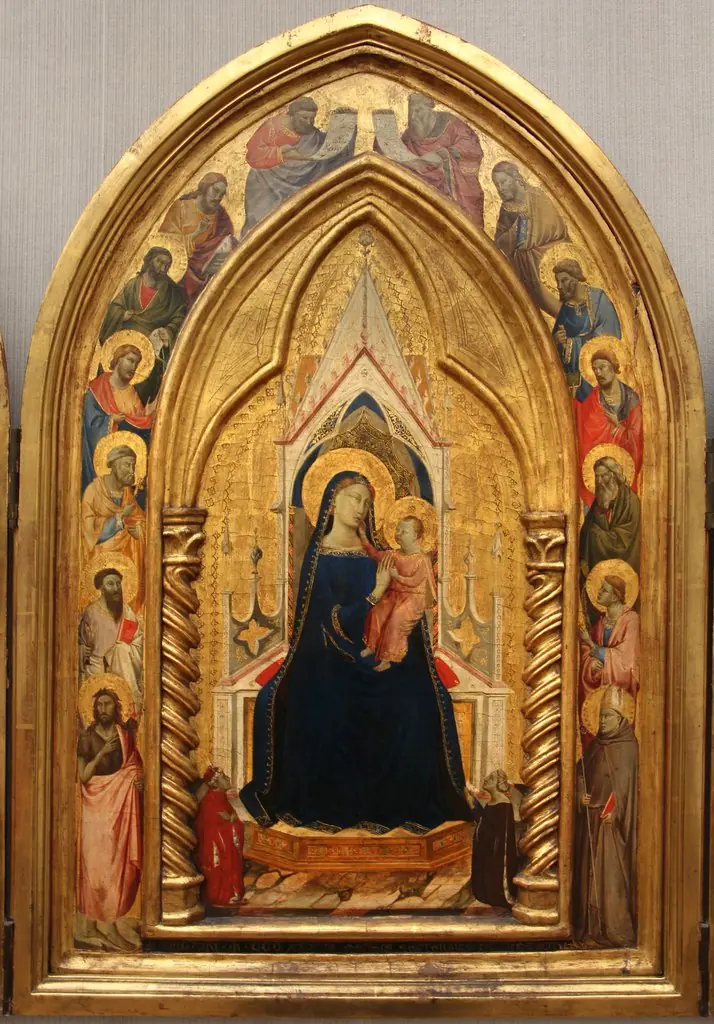 Central panel of the triptych
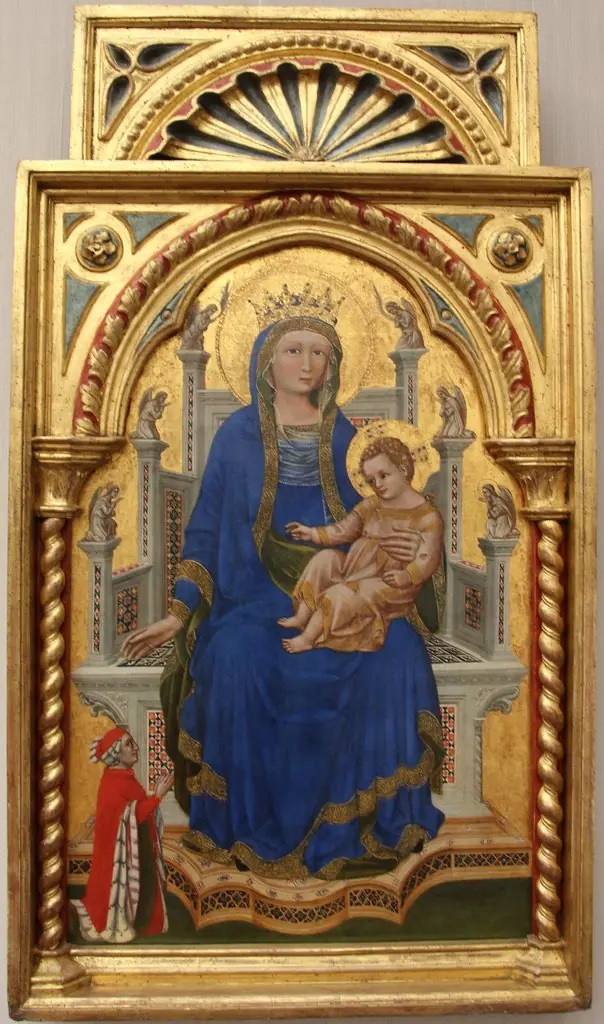 The Virgin and Blessing Child Enthroned with a Donor
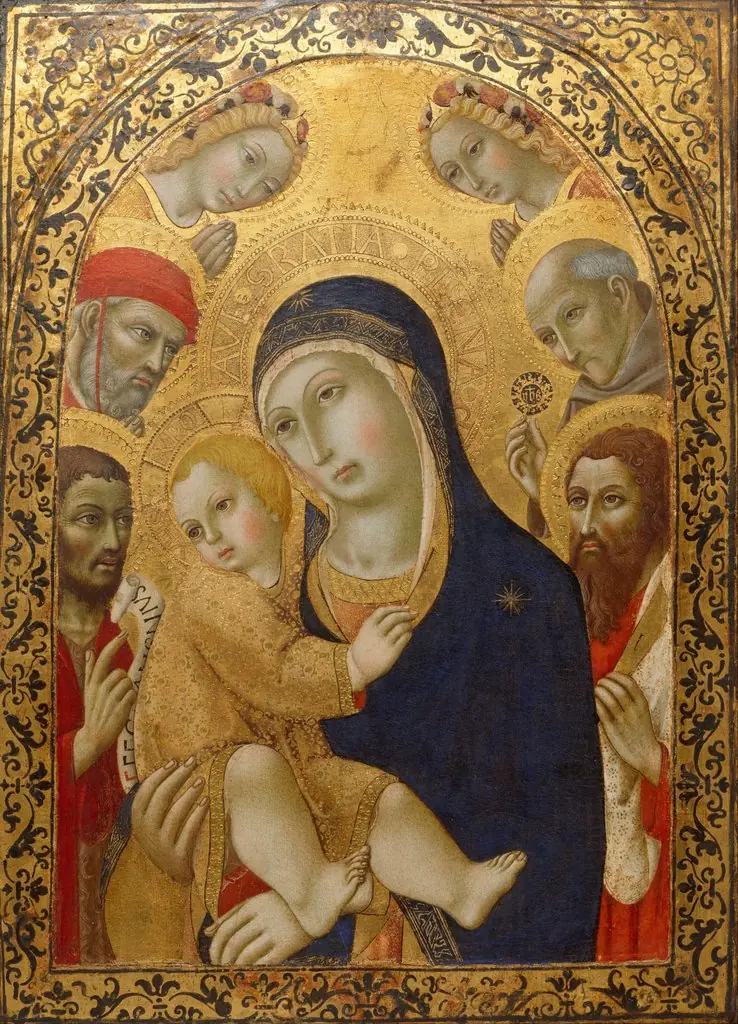 Madonna and Child with Saints Jerome, John the ...
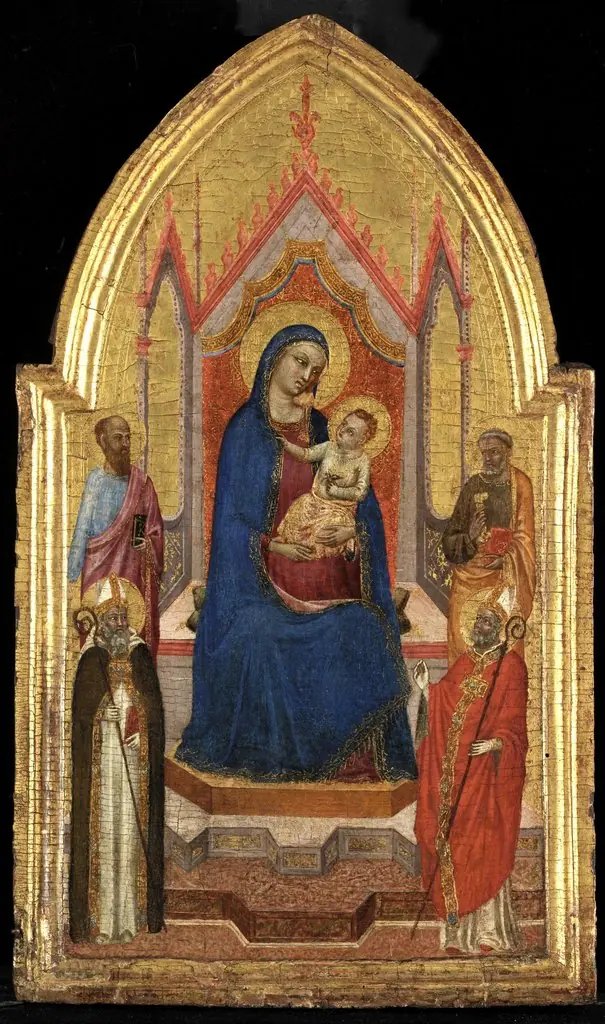 Madonna and Child Enthroned with Four Saints
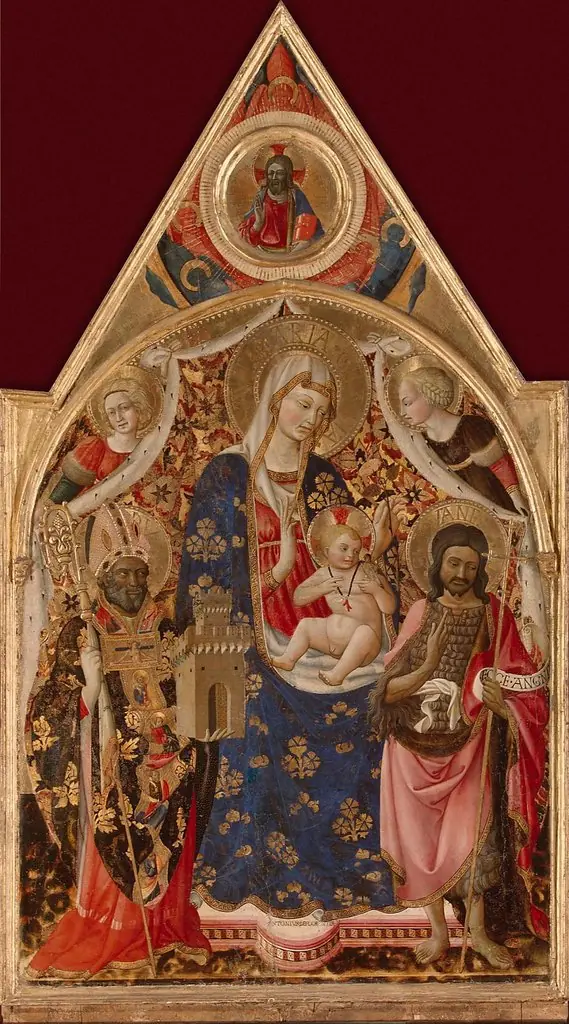 Madonna and Child, with a Bishop, St John The Baptist and Angels