Artwork
Cardinal Albrecht of Brandenburg (1490-1545) as Saint Jerome
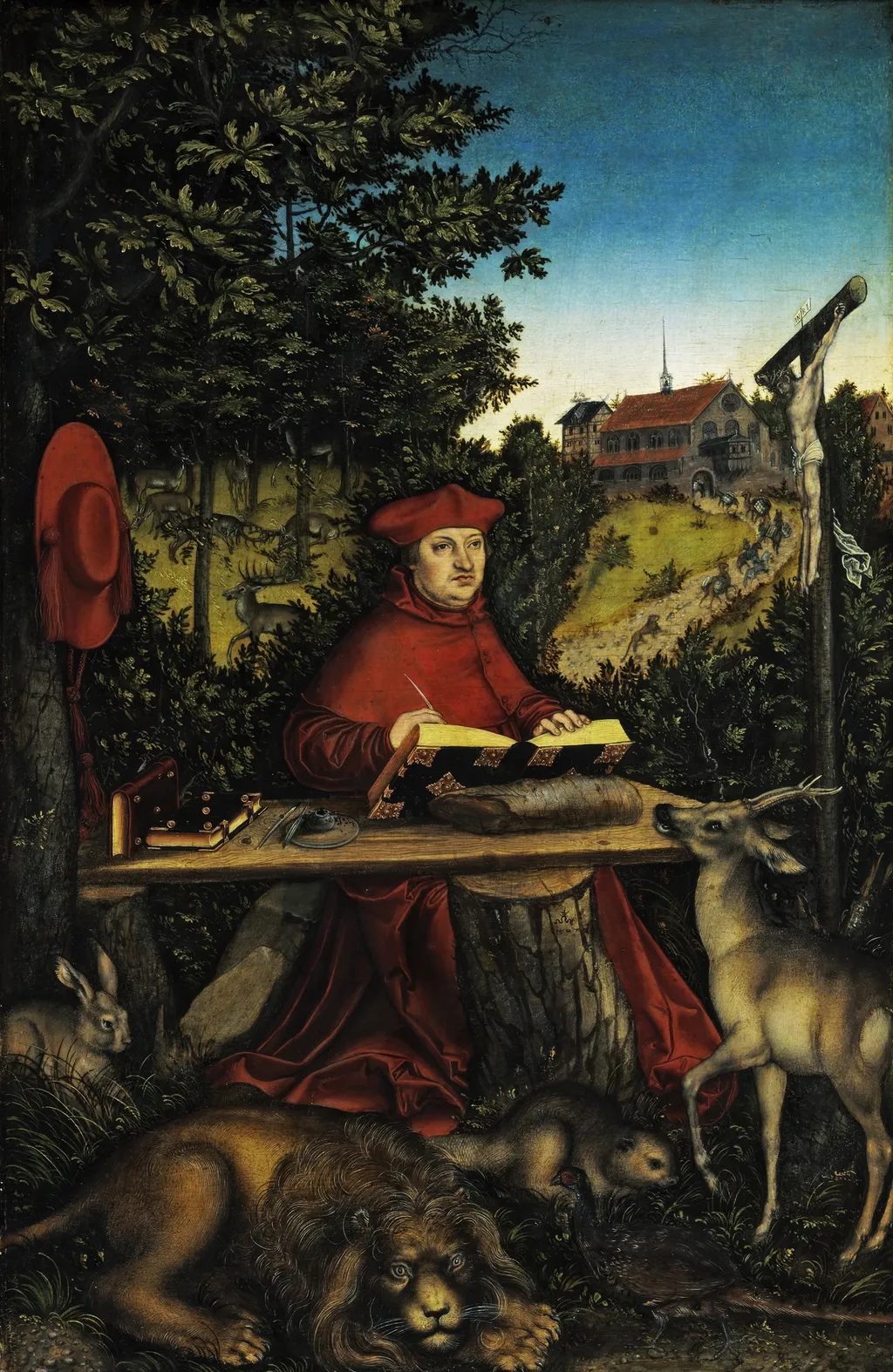
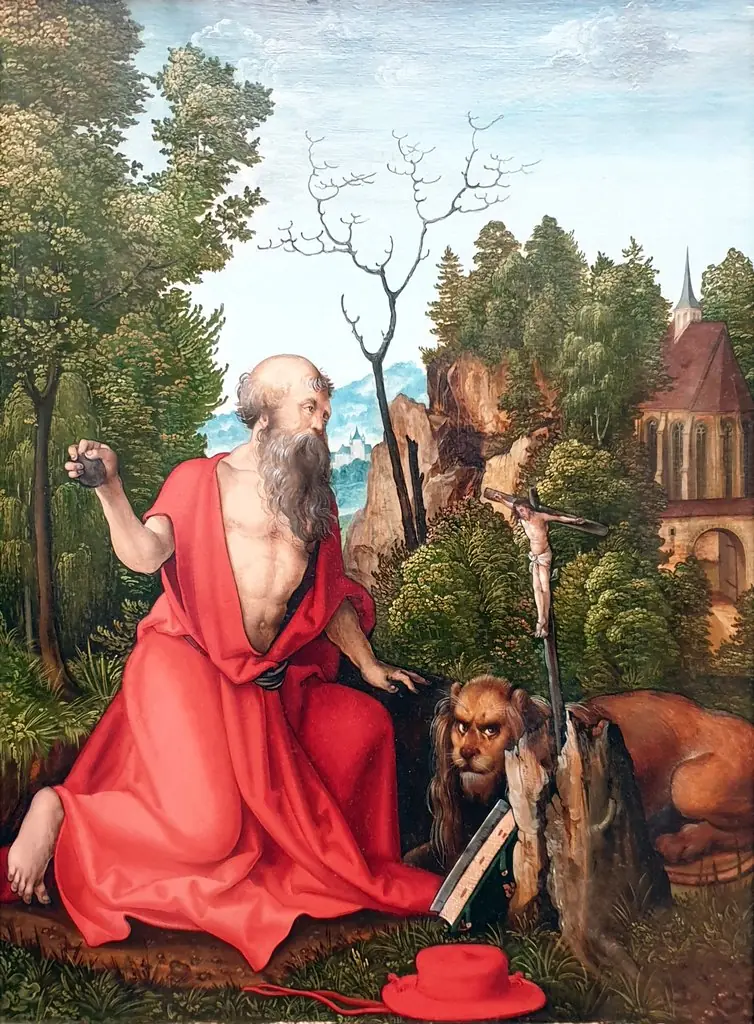
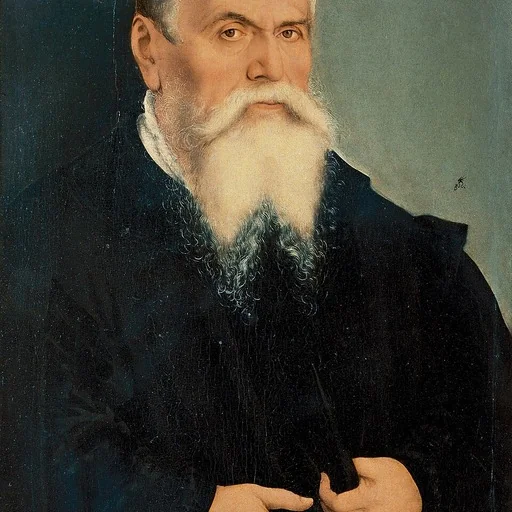
Cardinal Albrecht of Brandenburg (1490-1545) as Saint Jerome is a wood painting by the Northern Renaissance artist Lucas Cranach the Elder. It dates from 1527 and is held in the collection of the Gemäldegalerie Berlin.
About this work
This painting is titled Cardinal Albrecht of Brandenburg as Saint Jerome. It's a work by Lucas Cranach the Elder.
The painting was created in 1527 and is made of beech wood. It shows Albert of Brandenburg, who was depicted as Saint Jerome.
To learn more about the style and techniques used in this painting, look up the artist: Lucas Cranach the Elder.
Overview
Created in 1527, this portrait depicts Cardinal Albrecht of Brandenburg in the guise of Saint Jerome, rendered in oil on beech wood by Lucas Cranach the Elder. Though Cranach aligned with Protestant reformers, he maintained commissions from Catholic elites. The work was acquired by the Kingdom of Prussia in 1821 from Edward Solly’s collection and has resided since in the Gemäldegalerie, Berlin.
Subject & Meaning
The identification merges Albrecht’s ecclesiastical authority with Jerome’s intellectual legacy, suggesting a claim to spiritual and scholarly leadership.
Cardinal Albrecht, a powerful church figure and patron of the arts, is portrayed as Saint Jerome, the scholar-saint who translated the Bible into Latin. The identification merges Albrecht’s ecclesiastical authority with Jerome’s intellectual legacy, suggesting a claim to spiritual and scholarly leadership. The inclusion of a lion, Jerome’s traditional attribute, reinforces the allegory without overtly religious symbolism.
Technique & Style
Cranach employed fine brushwork and muted tones to render the cardinal’s velvet robes and the wooden interior setting with quiet precision. The beech wood panel provided a stable, smooth surface, allowing for detailed textures in fabric and skin. Facial features are rendered with characteristic Cranach sharpness—elongated, stylized, yet psychologically restrained—reflecting his Northern Renaissance approach.
History & Provenance
The painting entered the Prussian royal collection in 1821 as part of the Solly bequest, a significant acquisition of German and Netherlandish art. Prior to this, it remained in private hands, likely within Albrecht’s circle or his ecclesiastical network. Its preservation in Berlin since the early 19th century has ensured its continuity within a major public collection.
Context
Commissioned during the Reformation’s early years, the portrait reflects the complex religious landscape of early 16th-century Germany. Albrecht, a cardinal and archbishop, was both a beneficiary of indulgence sales and a patron of reform-minded artists. His depiction as Jerome—a figure associated with scriptural study—may have subtly aligned him with humanist ideals even as he upheld Catholic hierarchy.
Legacy
The painting endures as an example of how Renaissance portraiture could blend identity and allegory to serve political and spiritual agendas. While Cranach’s religious affiliations shifted, his ability to navigate Catholic and Protestant patronage made him a key chronicler of his era. This work remains a quiet testament to the intersection of power, piety, and artistic representation in Reformation Germany.
Own this work as a print
Artist & collection
Artist
Lucas Cranach the Elder was a German Renaissance painter and printmaker in woodcut and engraving.