Artwork
Christ Crucified between the Two Thieves
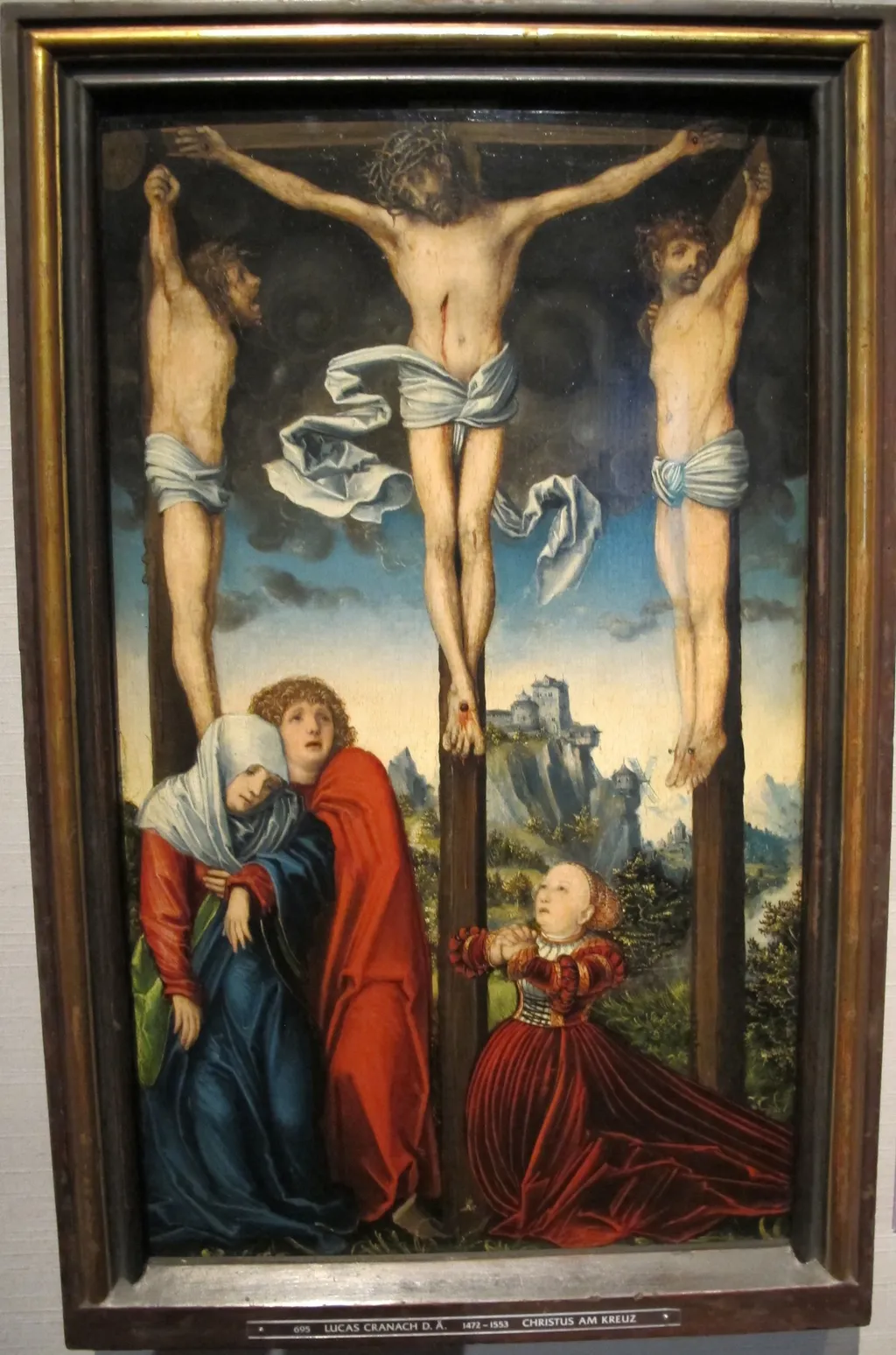
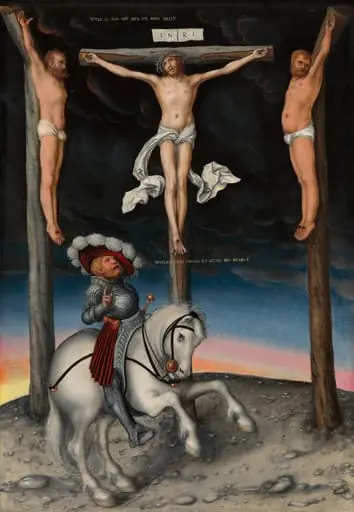
Christ Crucified between the Two Thieves is an unspecified painting by the Northern Renaissance artist Lucas Cranach the Elder. It dates from 1517 and is held in the collection of the Bavarian State Painting Collections.
About this work
Overview
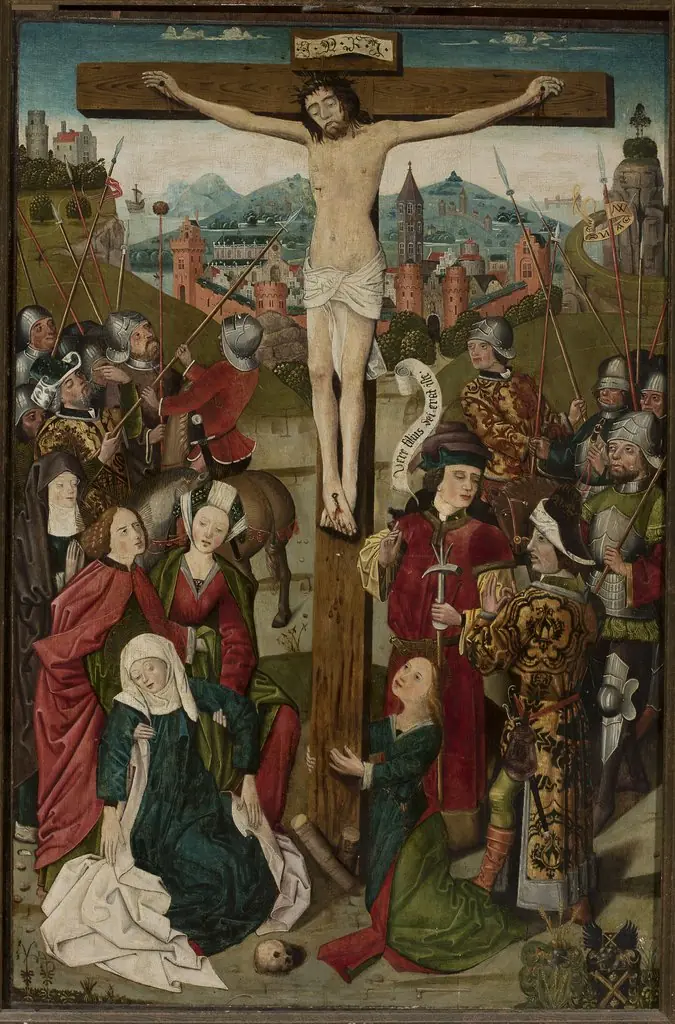
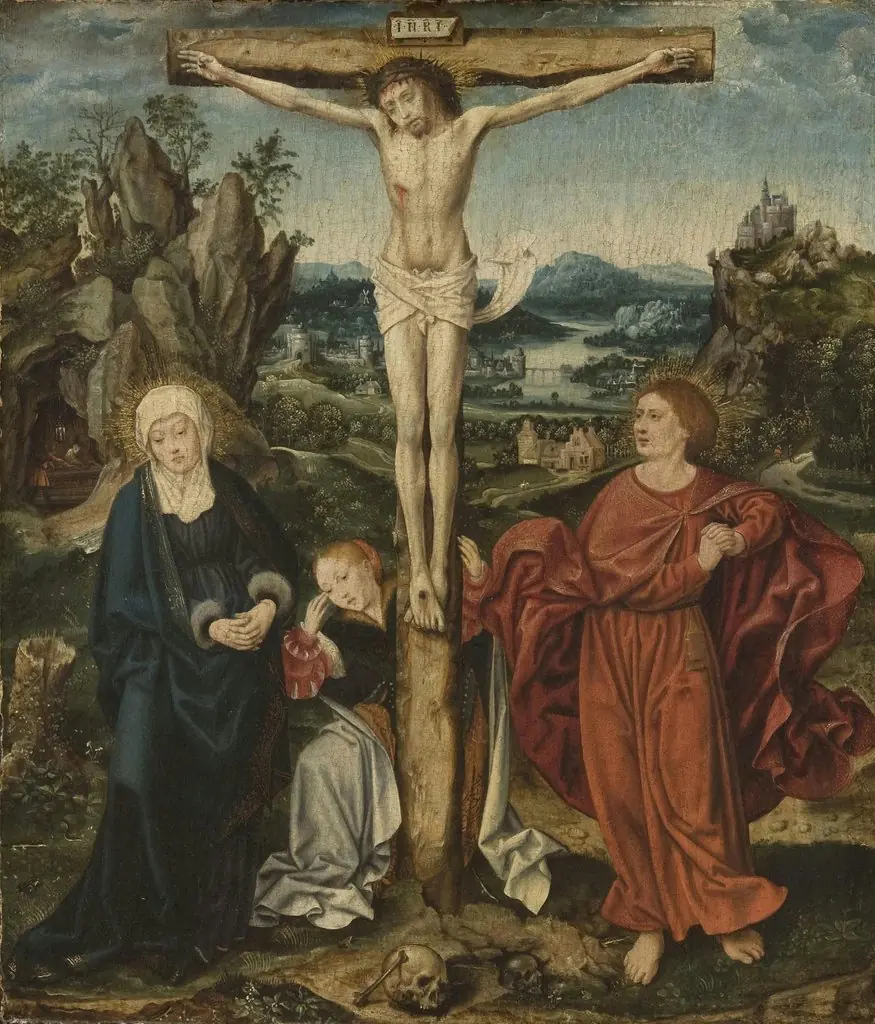
Below the central group, a small cluster of mourners, including women and a child, kneels in prayer, their expressions conveying deep sorrow.
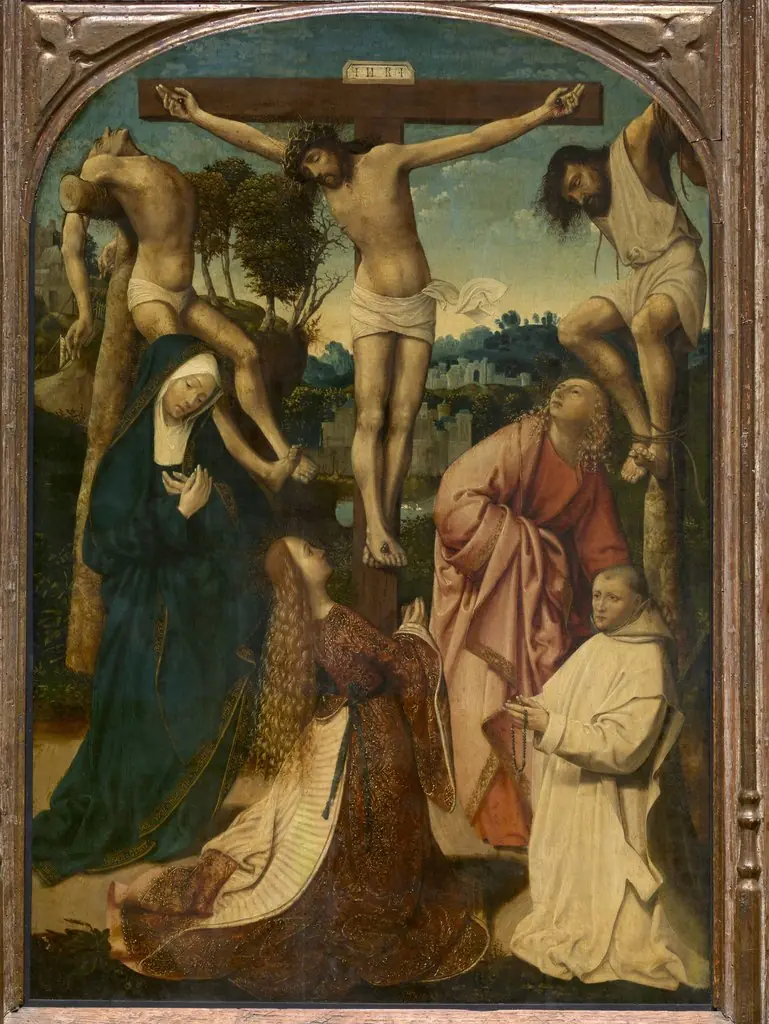
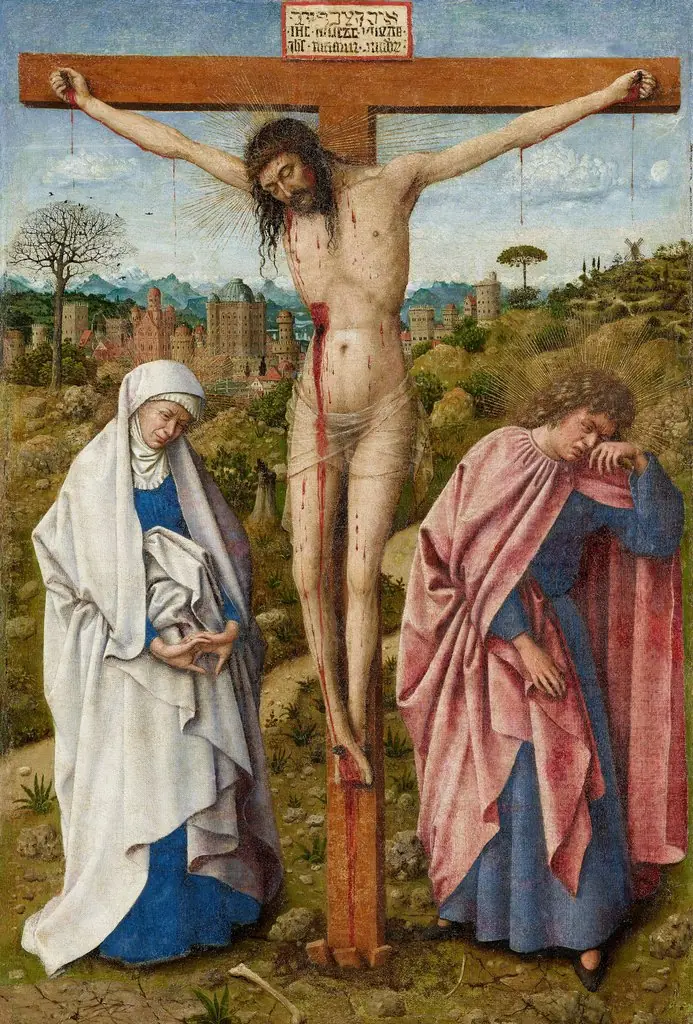
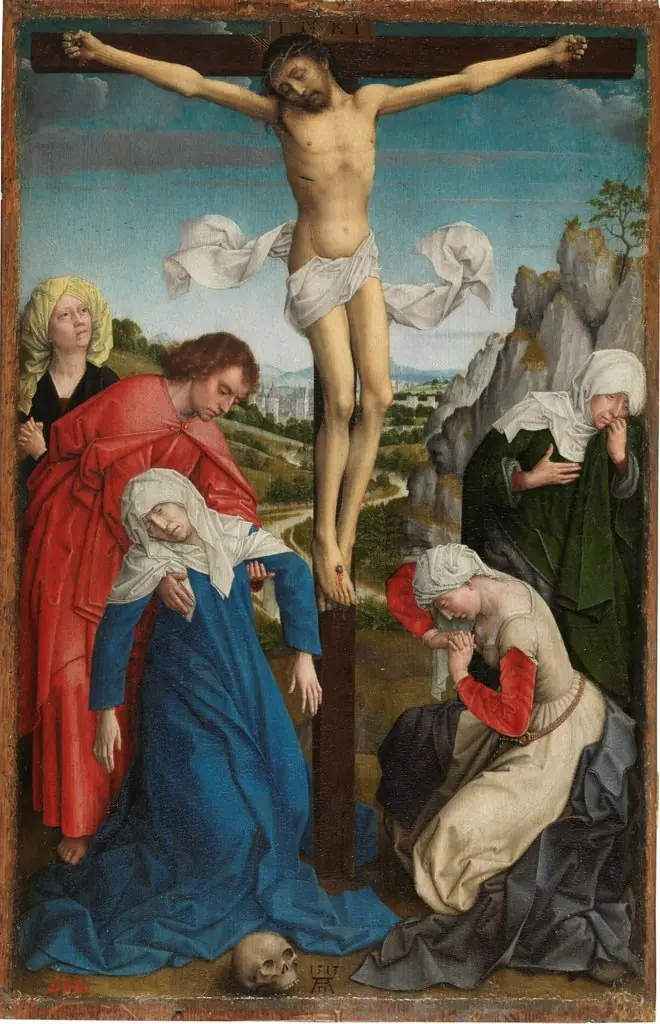
Painted in 1517, Christ Crucified between the Two Thieves is a significant religious work by Lucas Cranach the Elder, created during the early years of the Protestant Reformation. The composition centers on the crucifixion of Jesus, flanked by the two thieves, Dismas and Gestas, each affixed to their own cross. Below the central group, a small cluster of mourners, including women and a child, kneels in prayer, their expressions conveying deep sorrow. The figures are set against a dramatic landscape featuring a rocky outcrop and a castle perched in the distance, a characteristic element of Cranach's style that blends biblical narrative with a distinctively Germanic setting. This work exemplifies Cranach's ability to merge traditional iconography with the emerging theological shifts of his time, utilizing a flattened perspective and sharp, linear contours typical of his mature period. The painting serves as a visual meditation on sacrifice and redemption, reflecting the artist's role as a key figure in disseminating Reformation ideas through art.
Subject & Meaning
The central figure of Jesus hangs on the cross, flanked by the two thieves condemned alongside him. Below, a grieving group of two women and a child kneel in prayer, their expressions conveying sorrow and devotion. The composition emphasizes the contrast between the divine sacrifice and human mourning.
Technique & Style
Cranach employs a clear, linear approach typical of his workshop, with sharply defined outlines and a restrained palette. The foreground figures are rendered in vivid garments—a red dress, a blue robe, and a red‑clad child—while the background recedes into a dramatic, cloud‑filled sky and a distant castle perched on a hill.
History & Provenance
Created in 1517, the painting remained in German collections before entering the Alte Pinakothek’s holdings. Its provenance reflects the artist’s reputation as a leading court painter for the Electors of Saxony, whose patronage helped disseminate his religious works across the Holy Roman Empire.
Context
Cranach’s treatment of the crucifixion aligns with contemporary Lutheran iconography, which emphasized personal piety and the emotional response of believers. The inclusion of a child among the mourners underscores the universal impact of Christ’s death, a motif often found in early Reformation art.
Artist & collection
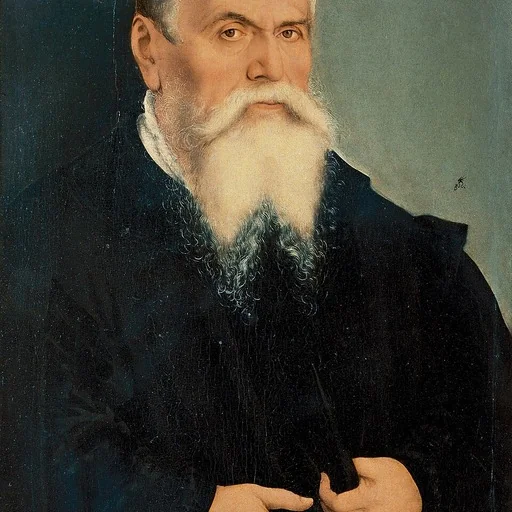
Artist
Lucas Cranach the Elder was a German Renaissance painter and printmaker in woodcut and engraving.