Artwork
Ecce Homo
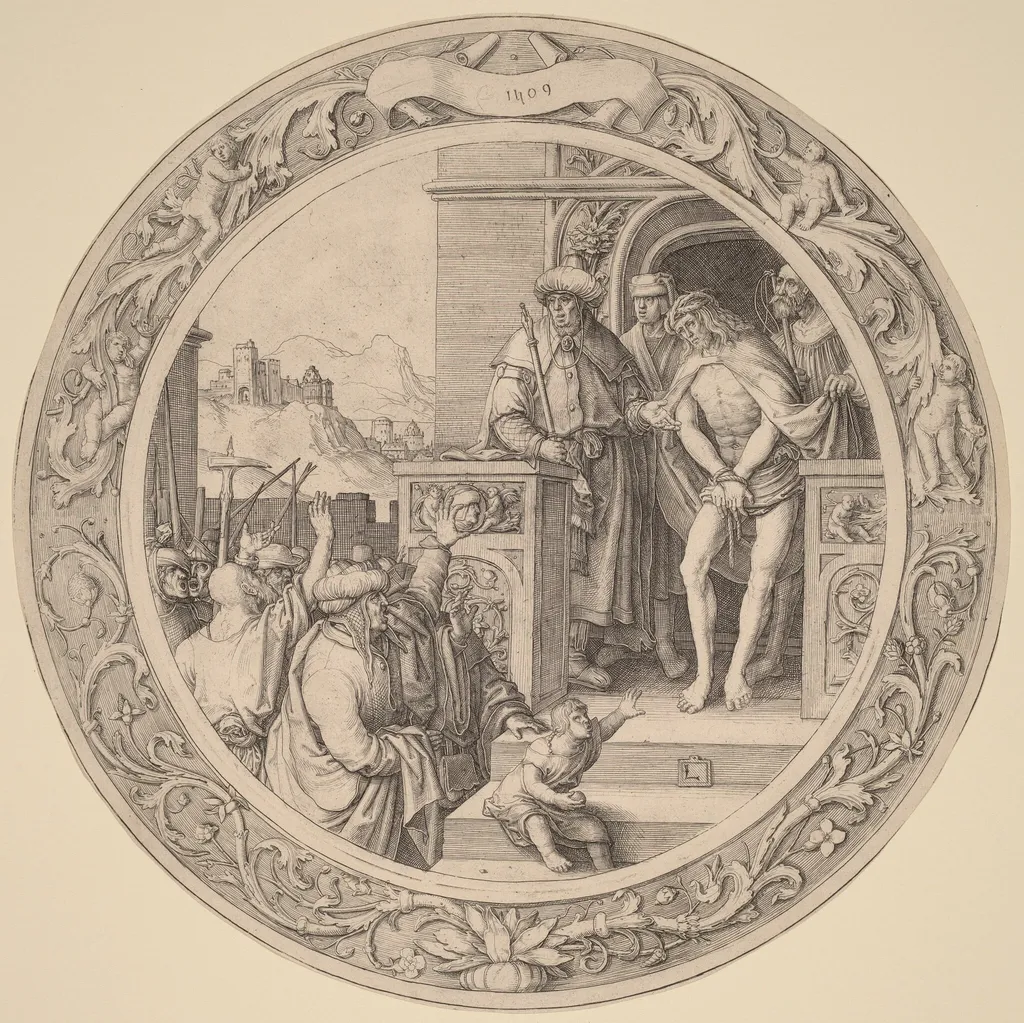
Ecce Homo is an ink print by the Renaissance artist Lucas van Leyden. It dates from 1509 and is held in the collection of the National Gallery of Art.
About this work
Overview
Created in 1509, Lucas van Leyden’s *Ecce Homo* is an engraving that exemplifies the technical precision of Northern Renaissance printmaking.
Created in 1509, Lucas van Leyden’s *Ecce Homo* is an engraving that exemplifies the technical precision of Northern Renaissance printmaking. As one of the earliest Dutch artists to achieve prominence through engraved works, van Leyden used fine, controlled lines to render complex scenes with remarkable clarity. This print captures a pivotal moment from the Passion narrative, rendered not as a grand altarpiece but as an intimate, widely distributable image meant for private devotion or scholarly contemplation.
Subject & Meaning
The scene illustrates Pontius Pilate presenting Jesus to the crowd, as described in the Gospel of John. Jesus, half-naked and holding a staff, stands in a doorway while onlookers react with varied expressions—some gaze upward, others point or kneel. A child is held by a figure near the edge, and a distant castle suggests a fortified town. The composition invites reflection on judgment, humility, and human response to divine suffering, embedding theological weight within a meticulously observed social setting.
Technique & Style
Van Leyden employed fine, intersecting lines to model form and create tonal depth, exploiting the engraver’s ability to control ink density through line weight and density. The background town and architectural details are rendered with microscopic precision, while the figures’ drapery and facial expressions are suggested through subtle gradations. A decorative border frames the scene, reinforcing its status as a crafted object rather than a mere illustration, and enhancing its visual rhythm without distracting from the narrative.
History & Provenance
Produced during the height of van Leyden’s career, this engraving circulated widely across Europe, contributing to his international reputation. Early impressions were collected by both religious institutions and private patrons, reflecting the growing market for prints as objects of devotion and artistic study. While no single early provenance is definitively documented, its survival in multiple institutional collections attests to its enduring appeal and the esteem in which van Leyden’s prints were held by contemporaries.
Context
In early 16th-century the Netherlands, printmaking emerged as a vital medium for disseminating religious imagery beyond church walls. Van Leyden’s work intersected with broader humanist interests in biblical texts and naturalistic observation. Unlike Italian contemporaries who favored fresco or oil, Northern artists like him leveraged the reproducibility of engraving to reach literate, middle-class audiences, blending spiritual themes with detailed depictions of everyday life and architecture.
Legacy
Van Leyden’s *Ecce Homo* influenced later generations of Northern engravers through its integration of narrative complexity and technical refinement. His ability to convey psychological nuance and spatial depth within the constraints of line work set a precedent for artists such as Dürer and Rembrandt. The print remains a touchstone in the study of early print culture, illustrating how technical mastery could serve both devotional purpose and artistic innovation.
Artist & collection

Artist
Lucas van Leyden (1494 – 8 August 1533), was a Dutch painter and printmaker in engraving and woodcut. Lucas van Leyden was among the first Dutch exponents of genre painting and was a very accomplished engraver.

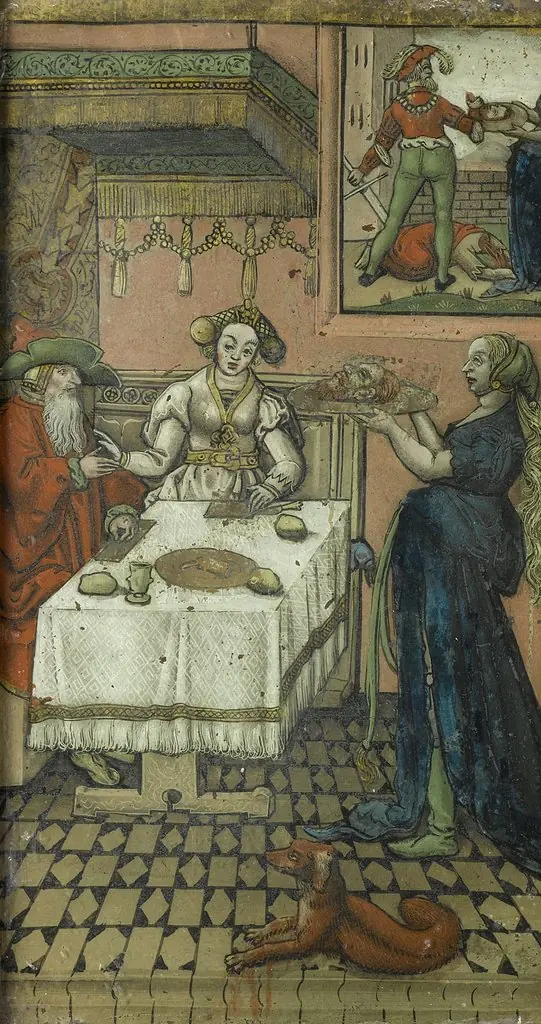 Salome with the head of St John the Baptist
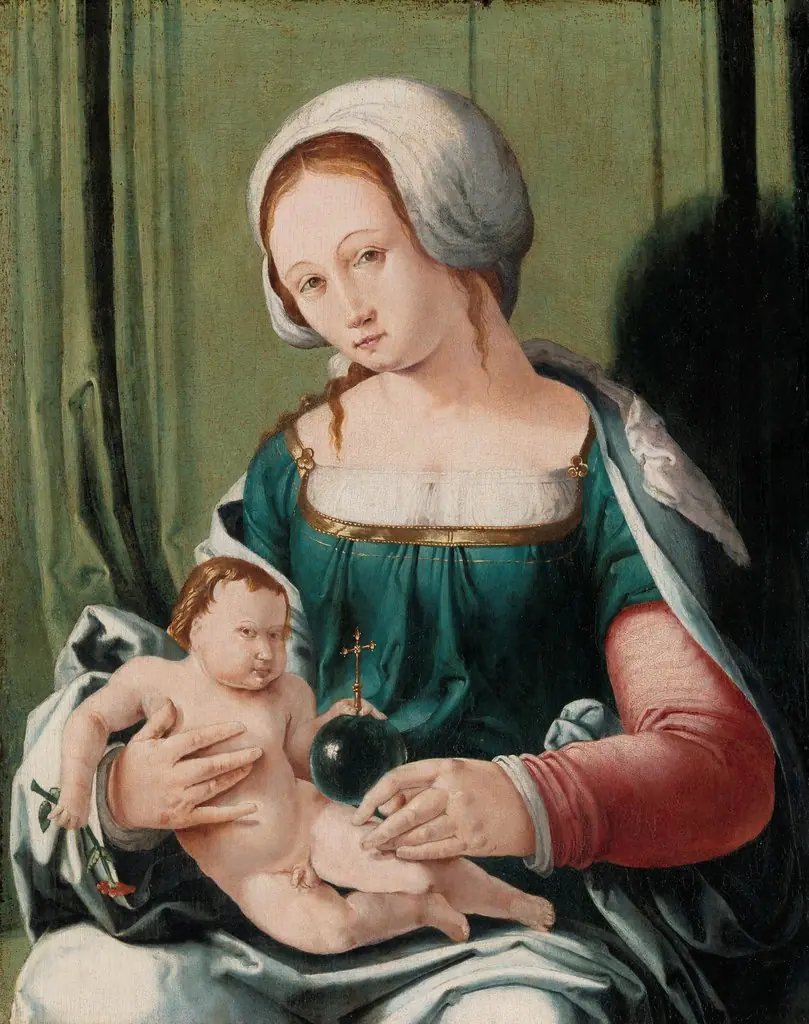 The Virgin and Child
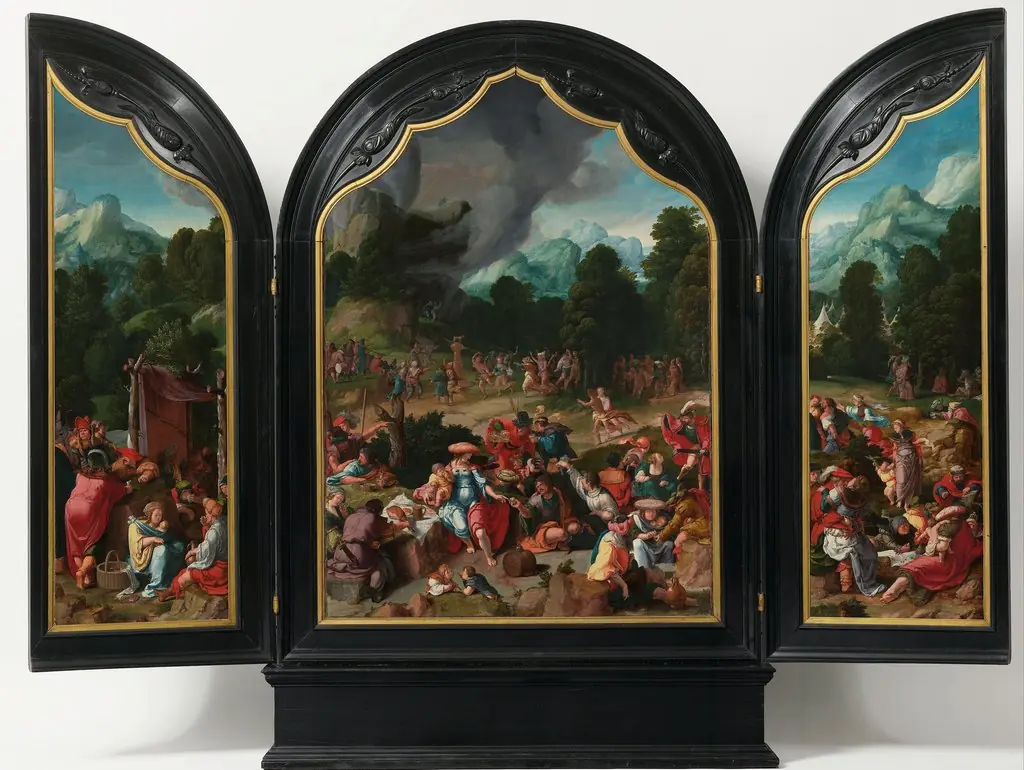 Worship of the Golden Calf
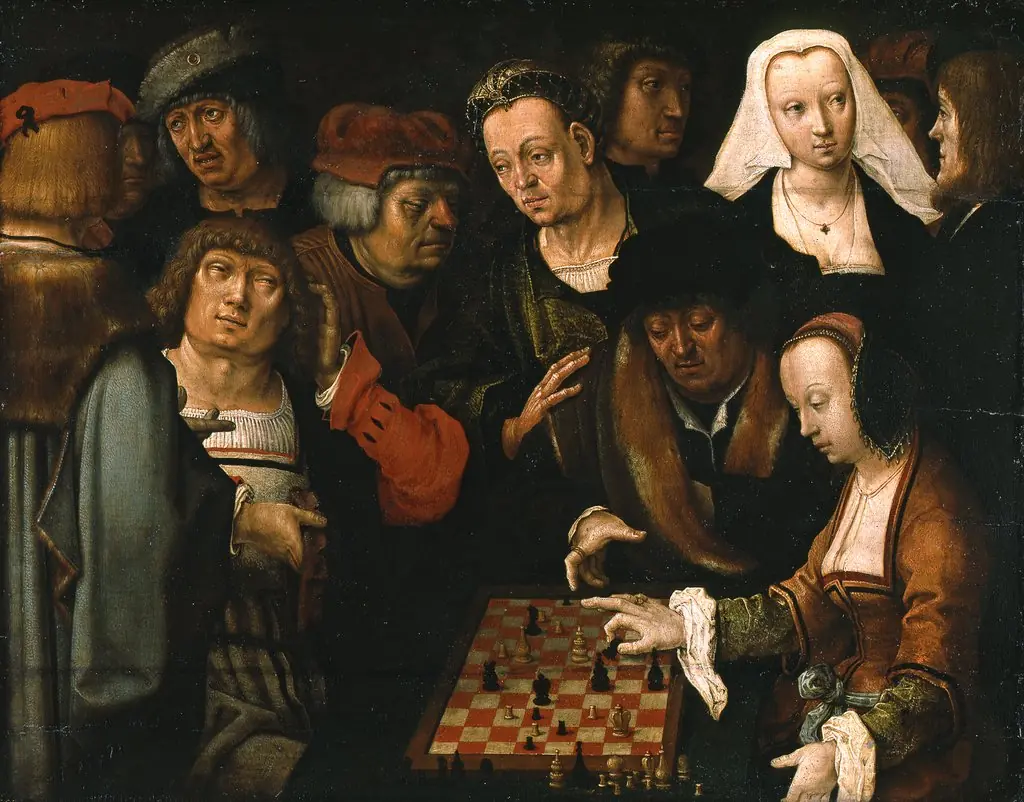 A Game of Chess
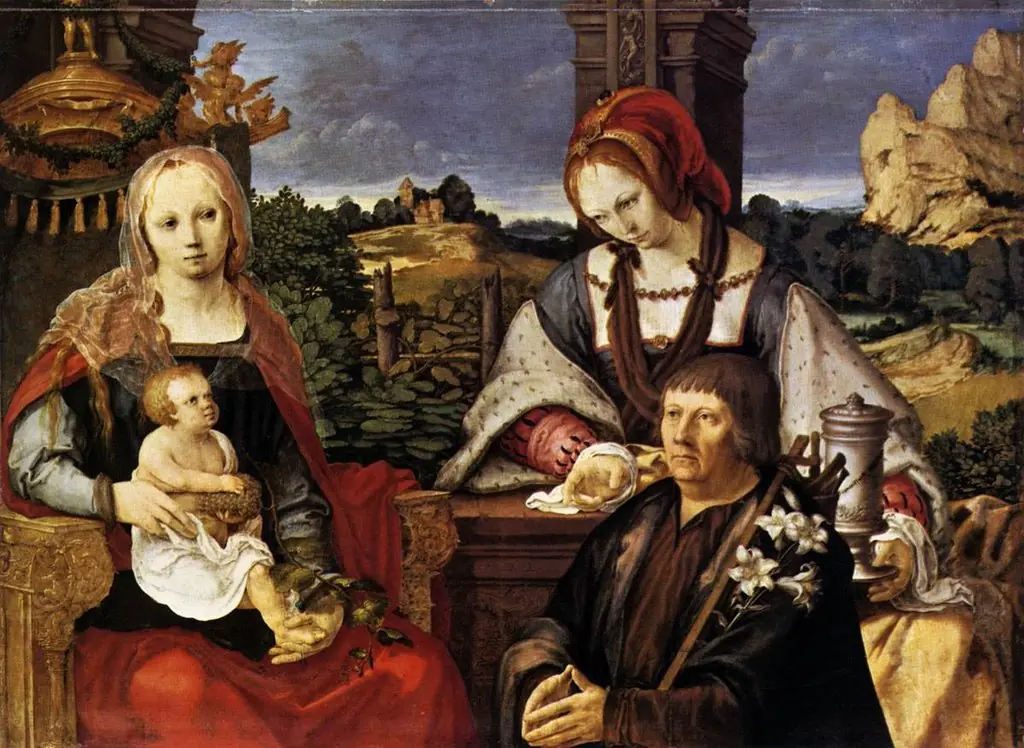 Mary with Child, St. Maria Magdalena and founder (separate outside, Inv. No. 7713)
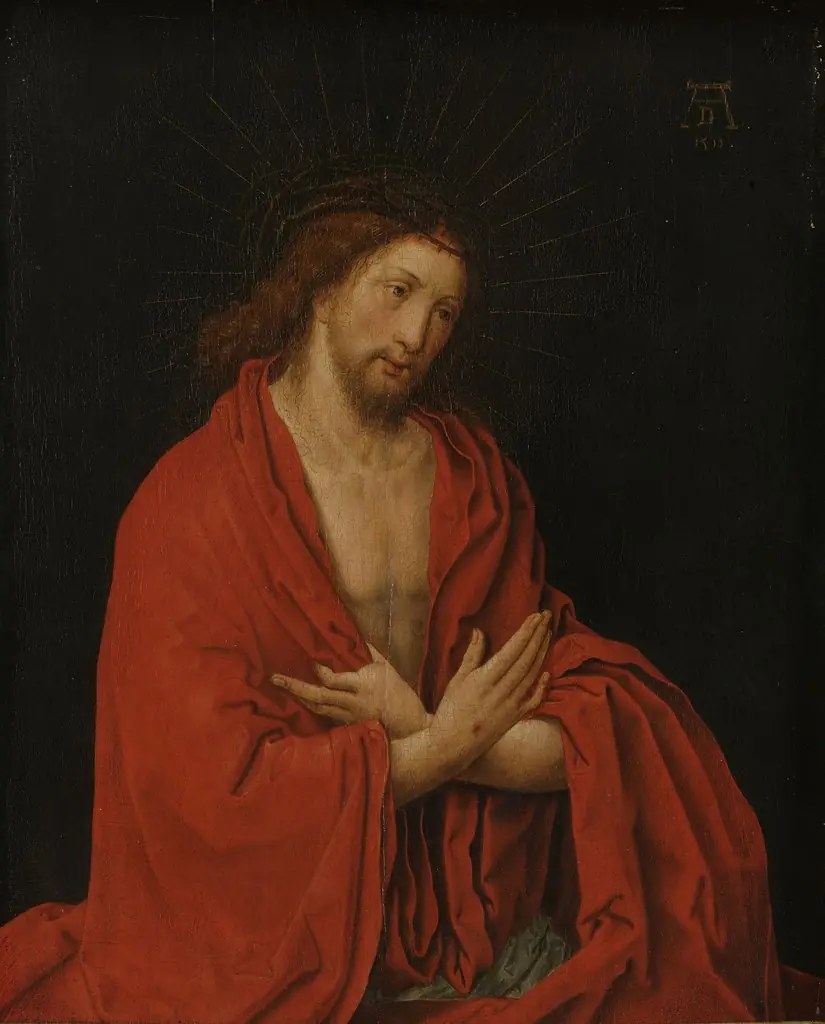 Inner left wing of a diptych with Christ as the Man of Sorrows
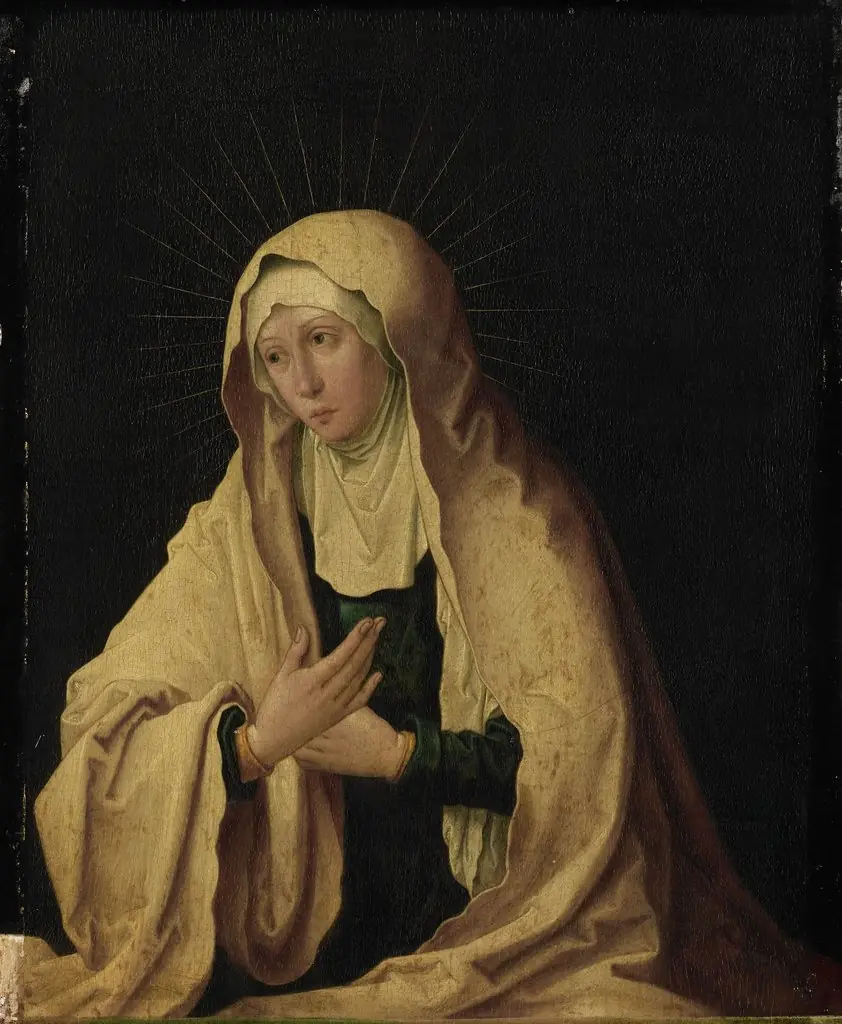 Inner right wing of a diptych with the Virgin as Mater Dolorosa
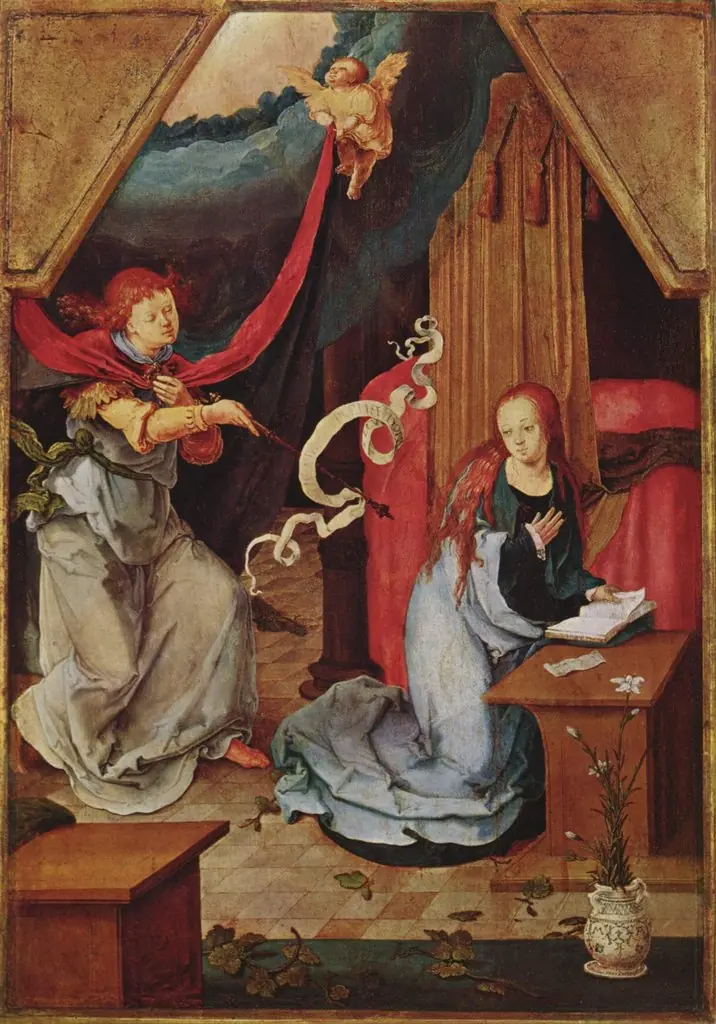 Annunciation
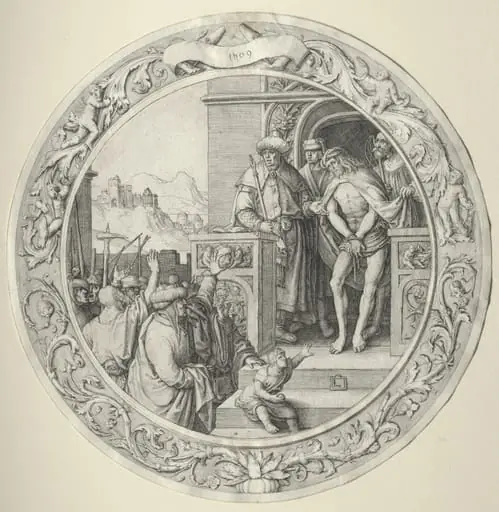 The Round Passion: Christ Presented to the People
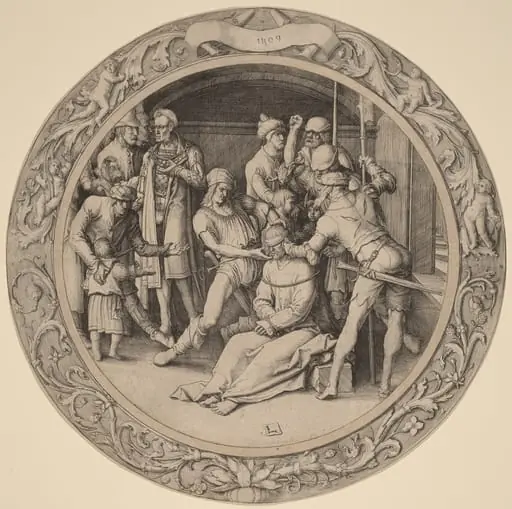 The Scoffing of Christ
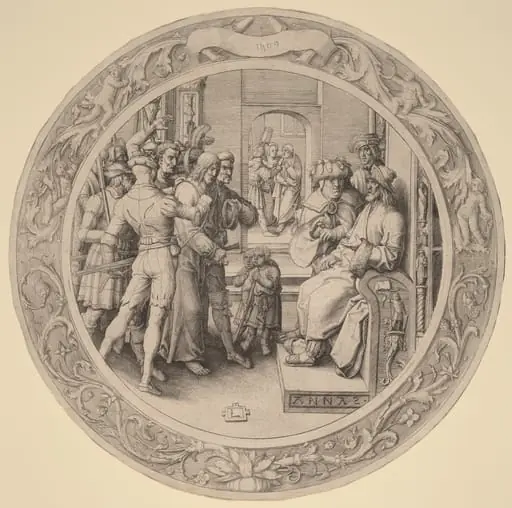 Christ before Annas
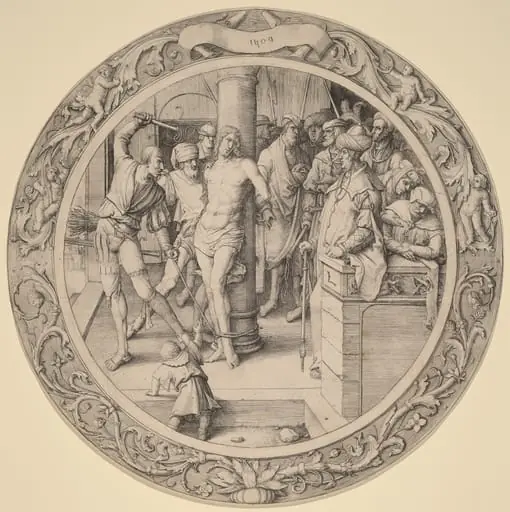 The Flagellation
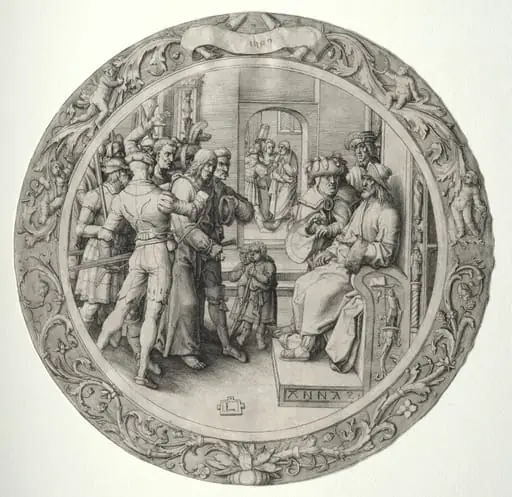 The Round Passion: Christ before the High Priest
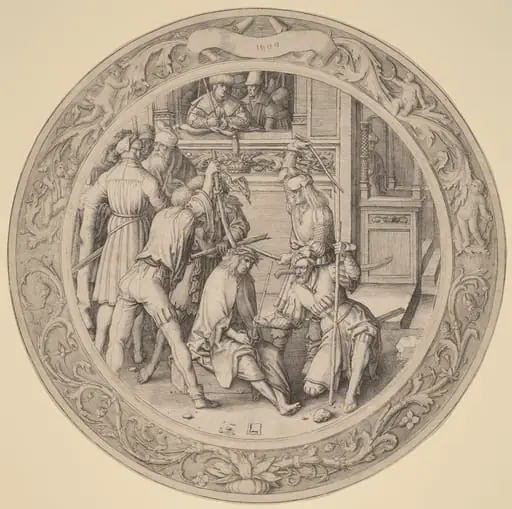 Christ Crowned with Thorns
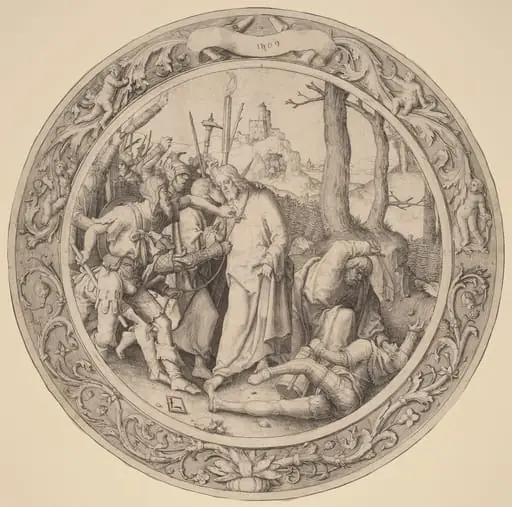 The Captivity
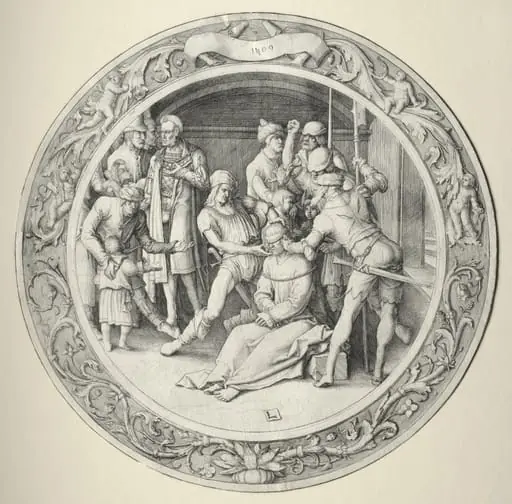 The Round Passion: Ecce Homo
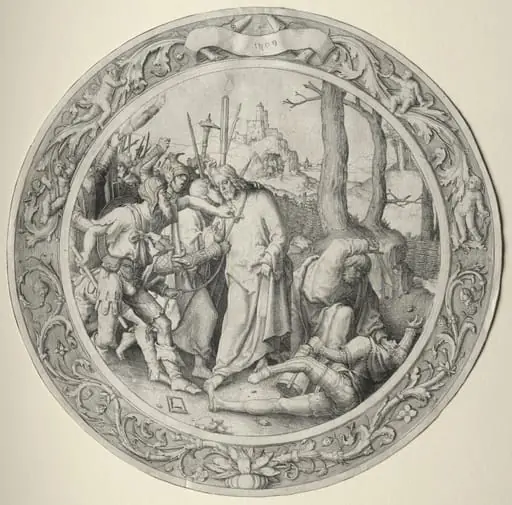 The Round Passion: The Betrayal of Christ
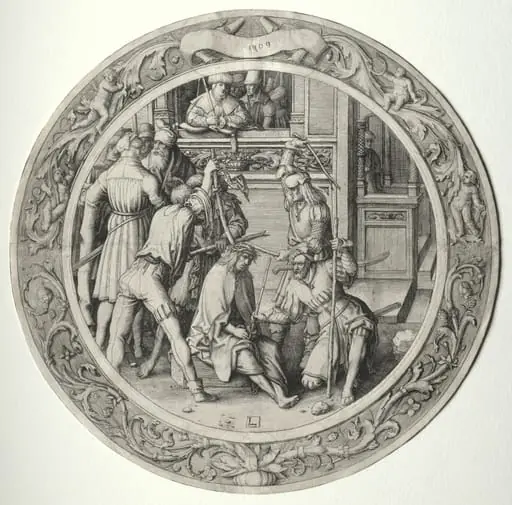 The Round Passion: Christ Crowned with Thorns
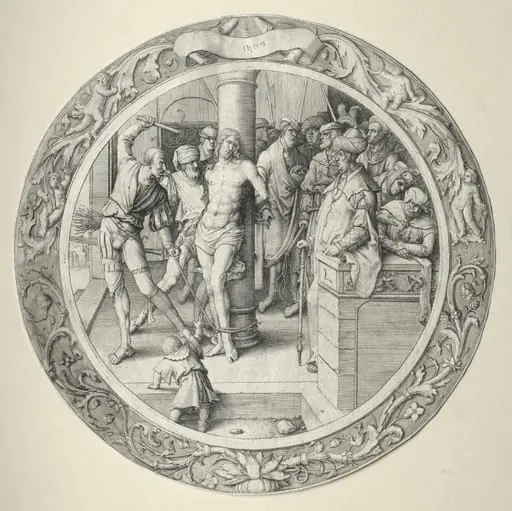 The Round Passion: The Flagellation
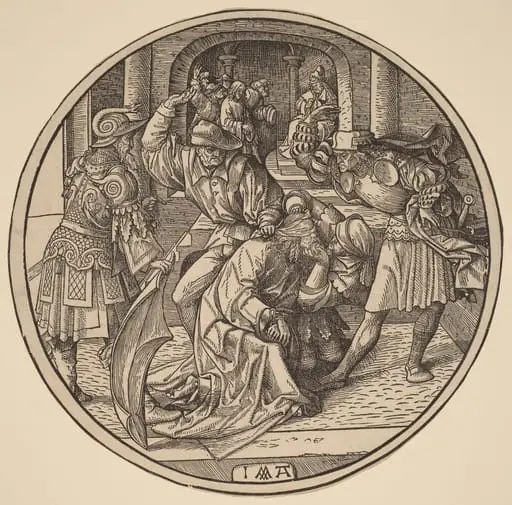 The Mocking of Christ and Christ Before Caiaphas