Artwork
Triumphs of Caesar IX
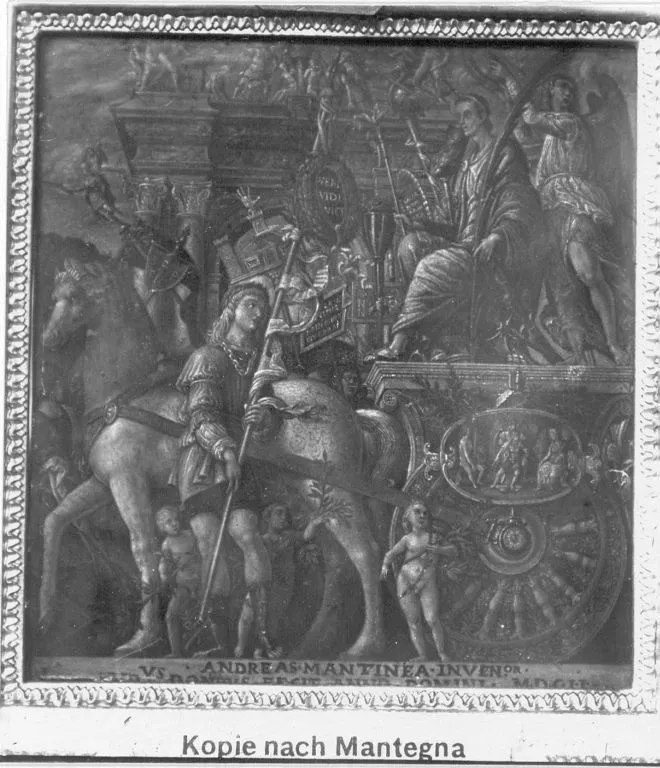
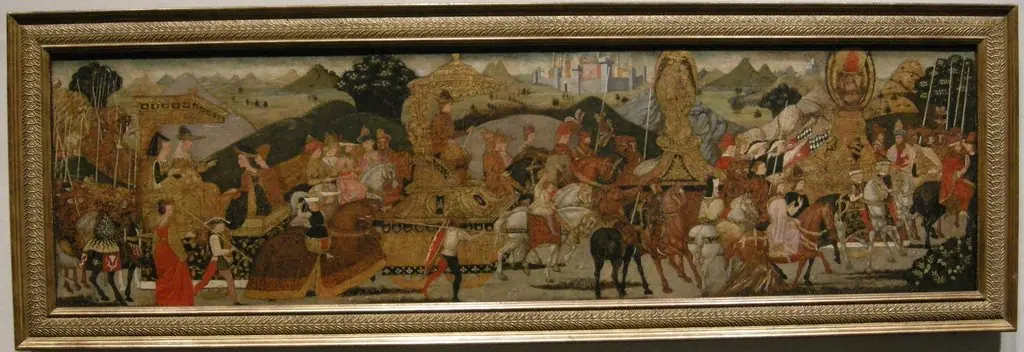
Triumphs of Caesar IX is an unspecified painting by the Early Baroque Italian artist Ludovico Dondi. It dates from 1600 and is held in the collection of the Bavarian State Painting Collections.
About this work
Overview
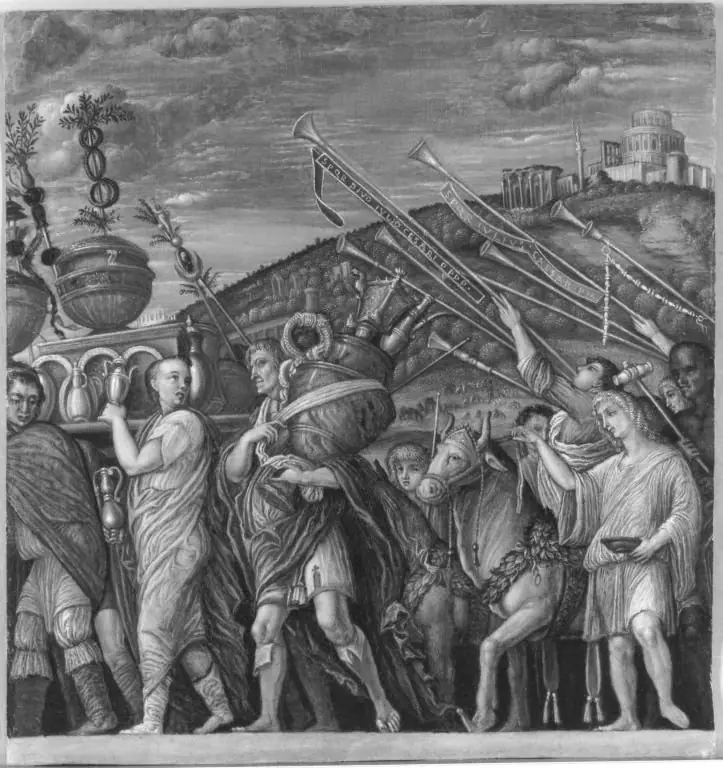
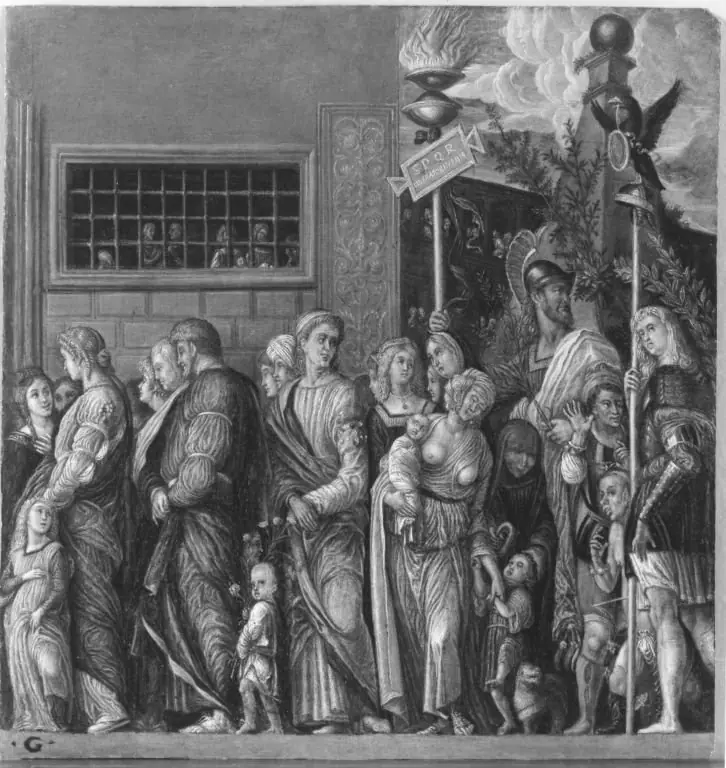
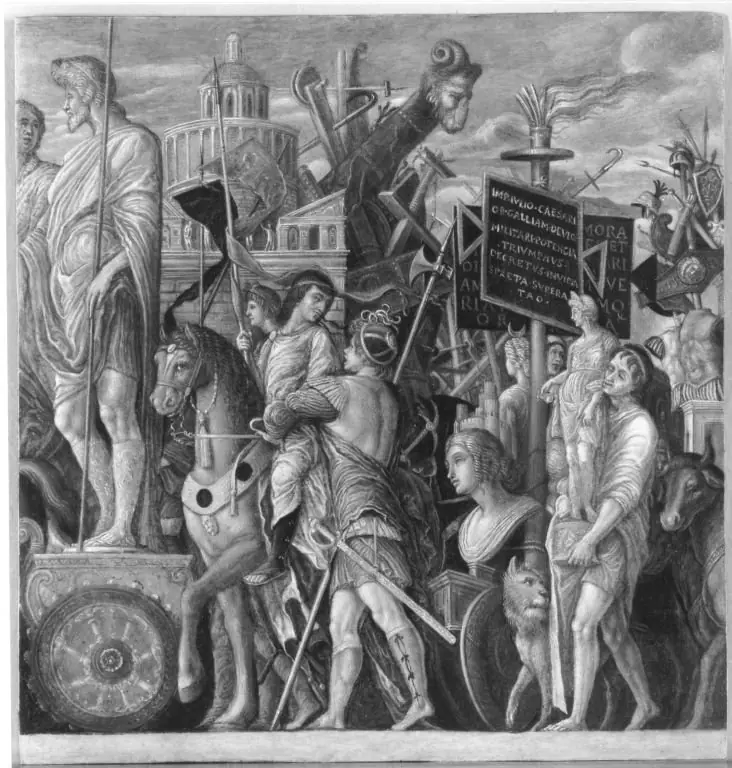
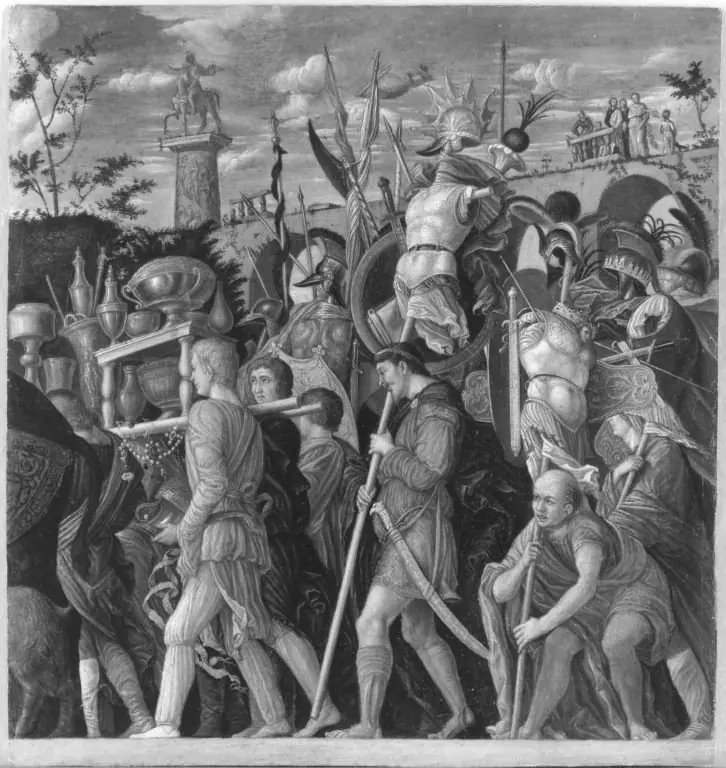
It forms the ninth panel in a series that reproduces Andrea Mantegna’s earlier cycle depicting the triumphal procession of Julius Caesar.
Triumphs of Caesar IX is a painting by Ludovico Dondi, created around 1600 in Mantua. It forms the ninth panel in a series that reproduces Andrea Mantegna’s earlier cycle depicting the triumphal procession of Julius Caesar. Dondi worked within the tradition of meticulous replication, adapting Mantegna’s compositions for early Baroque patrons who valued classical themes and historical grandeur. The work is now held in the Alte Pinakothek in Munich.
Subject & Meaning
The scene portrays Julius Caesar seated in a chariot, crowned and holding a scepter, as the central figure of a Roman triumph. Surrounding him are soldiers, attendants, and captives, all arranged to emphasize his authority and the scale of his victories. The composition follows ancient Roman ceremonial protocol, reinforcing the idea of imperial legitimacy. The stillness of Caesar’s expression contrasts with the movement of the crowd, underscoring his detached, elevated status.
Technique & Style
Dondi employed detailed brushwork and rich pigments to render textures of fabric, metal, and animal muscle with precision. His style reflects the influence of Mantegna’s linear clarity and sculptural forms, while incorporating subtle Baroque touches in the modeling of light and the arrangement of figures. The palette is restrained yet vivid, with deep reds, golds, and earth tones enhancing the historical gravitas without theatrical flourish.
History & Provenance
The painting was produced during Dondi’s active years in Mantua, likely commissioned by a collector interested in classical antiquity. It remained within private collections in northern Italy before entering the Alte Pinakothek’s holdings in the 19th century. Its inclusion in the museum’s collection reflects its value as a faithful Renaissance-derived work, representative of early 17th-century artistic practice in the service of historical commemoration.
Context
In the late 16th and early 17th centuries, Italian courts favored cycles of ancient Roman imagery to legitimize political power. Mantegna’s original Triumphs, completed decades earlier, were widely admired and copied. Dondi’s version emerged in a cultural climate where historical accuracy and classical reference were prized, even as Baroque sensibilities began to influence composition and emotional tone.
Legacy
Dondi’s series, including Triumphs of Caesar IX, serves as a documented link between Renaissance ideals and early Baroque interpretation. While not original in conception, the works preserve Mantegna’s compositions for later study and offer insight into how classical themes were transmitted across generations. Today, they are valued as historical artifacts of artistic reproduction rather than as independent innovations.
Artist & collection
Artist
Ludovico Dondi (active 1585–1614) was an Italian painter active in Mantua. He is called il Mantovano in 1840 by Romanelli. Garollo calls him Luigi Dondi. He is known for the copies he made of Andrea Mantegna's Triumphs of Caesar.