Artwork
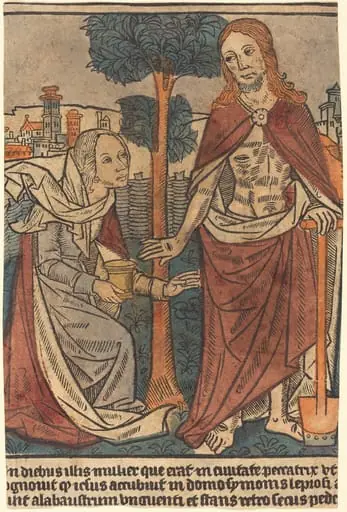
Noli me tangere
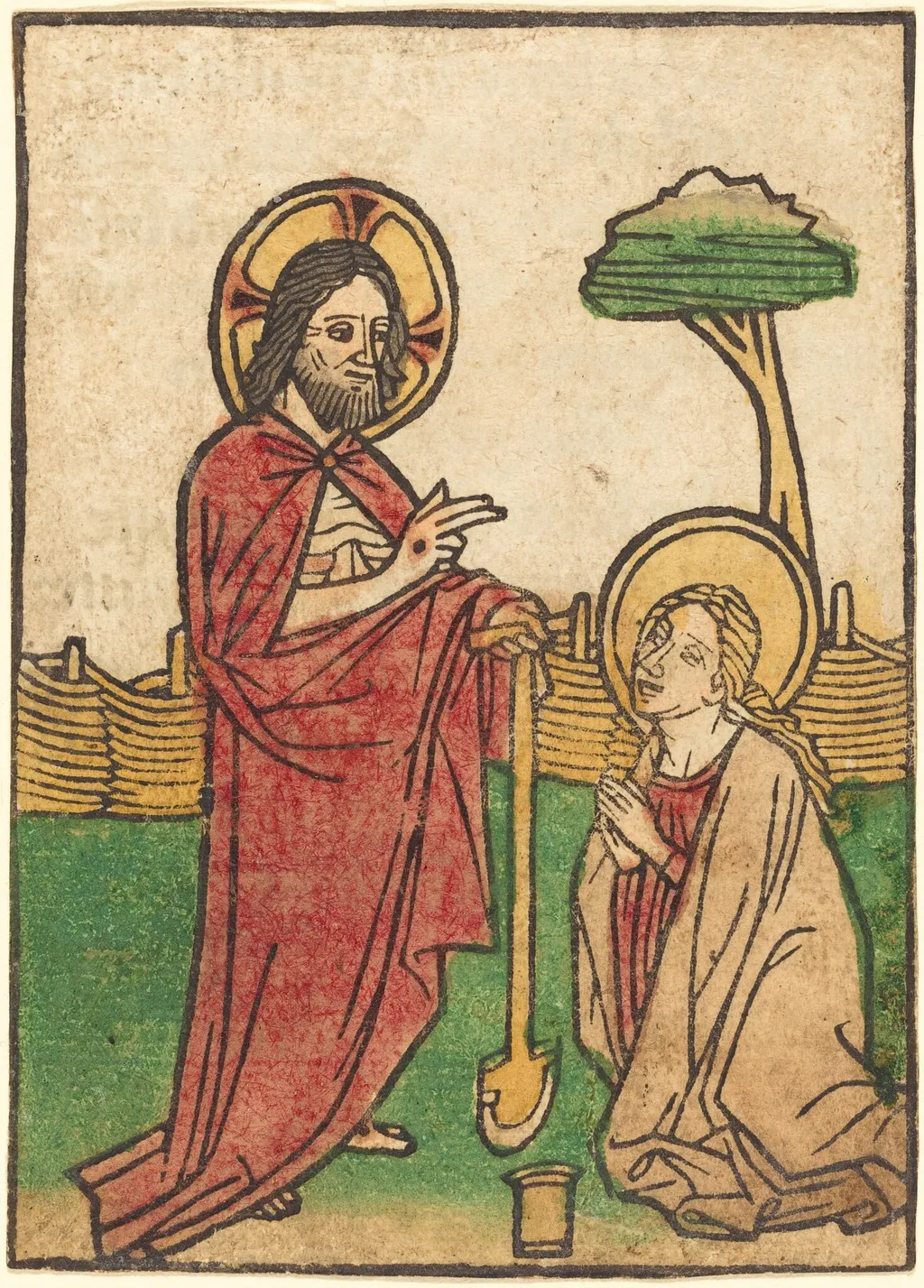
Noli me tangere is an ink print by Ludwig of Ulm. It dates from 1450 and is held in the collection of the National Gallery of Art.
About this work
Overview
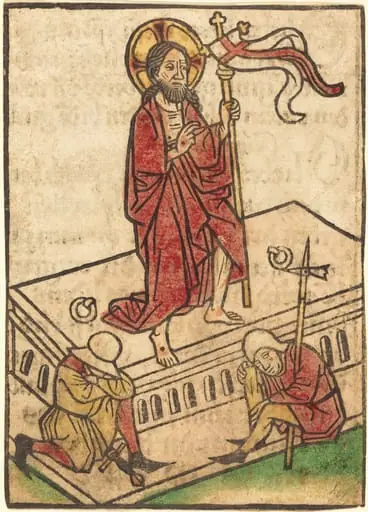
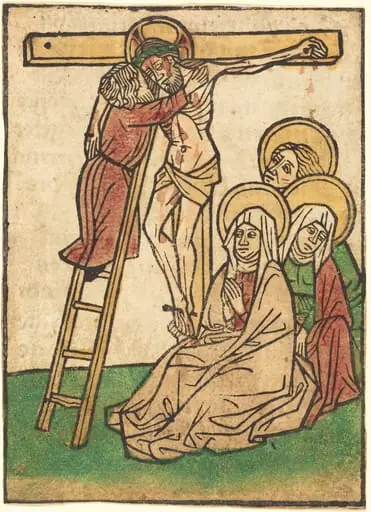
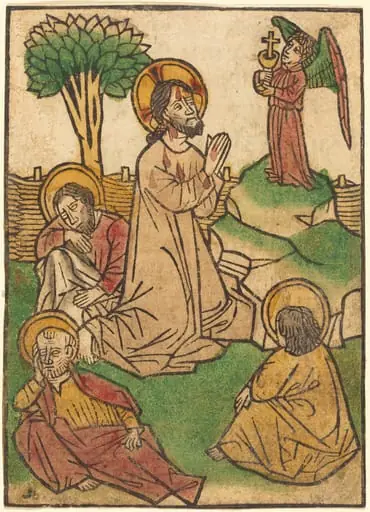
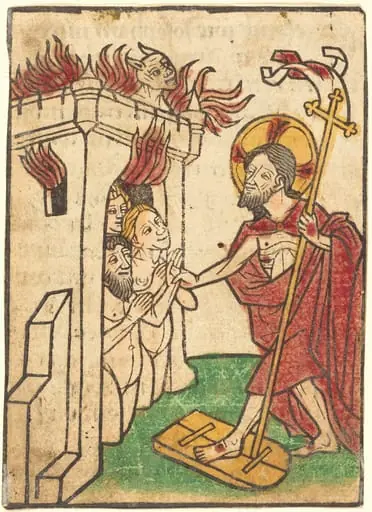
Created around 1450, this hand‑coloured woodcut originates from a blockbook page and is attributed to the German artist Ludwig of Ulm. Executed as a print, the image presents a compact outdoor scene rendered in bold lines and limited colour, characteristic of mid‑15th‑century devotional graphics.
Subject & Meaning
The composition depicts two haloed figures set against a sparse landscape. A standing man in a vivid red robe gestures outward, his hand raised in a warning or admonition, while a kneeling figure in a pale cloak reaches toward a small jar. The interaction suggests a moment of revelation or instruction, echoing biblical narratives where a risen figure addresses a disciple.
Technique & Style
The work employs the woodcut process, in which an image is carved in relief on a single block of wood, inked, and pressed onto paper. After printing, the sheet was hand‑coloured, adding selective hues to the red robe and halo. The stark chiaroscuro and simplified forms reflect the blockbook tradition, where text and image were combined for affordable devotional use.
History & Provenance
Ludwig of Ulm, active in the mid‑1400s, is known for producing religious prints for the emerging market of lay piety. This particular piece survives as part of a blockbook, a hybrid of printed text and illustration that circulated in German‑speaking regions. Its provenance traces through several private collections before entering a museum repository in the early twentieth century.
Context
Blockbooks like this one offered inexpensive alternatives to illuminated manuscripts, allowing a broader audience to engage with visual theology.
The print belongs to a period when the printing press and woodcut technology expanded access to biblical stories. Blockbooks like this one offered inexpensive alternatives to illuminated manuscripts, allowing a broader audience to engage with visual theology. The depiction of a teaching moment aligns with contemporary devotional practices that emphasized personal contemplation of scriptural events.
Artist & collection