Artwork
Christ Appearing to Mary Magdalene
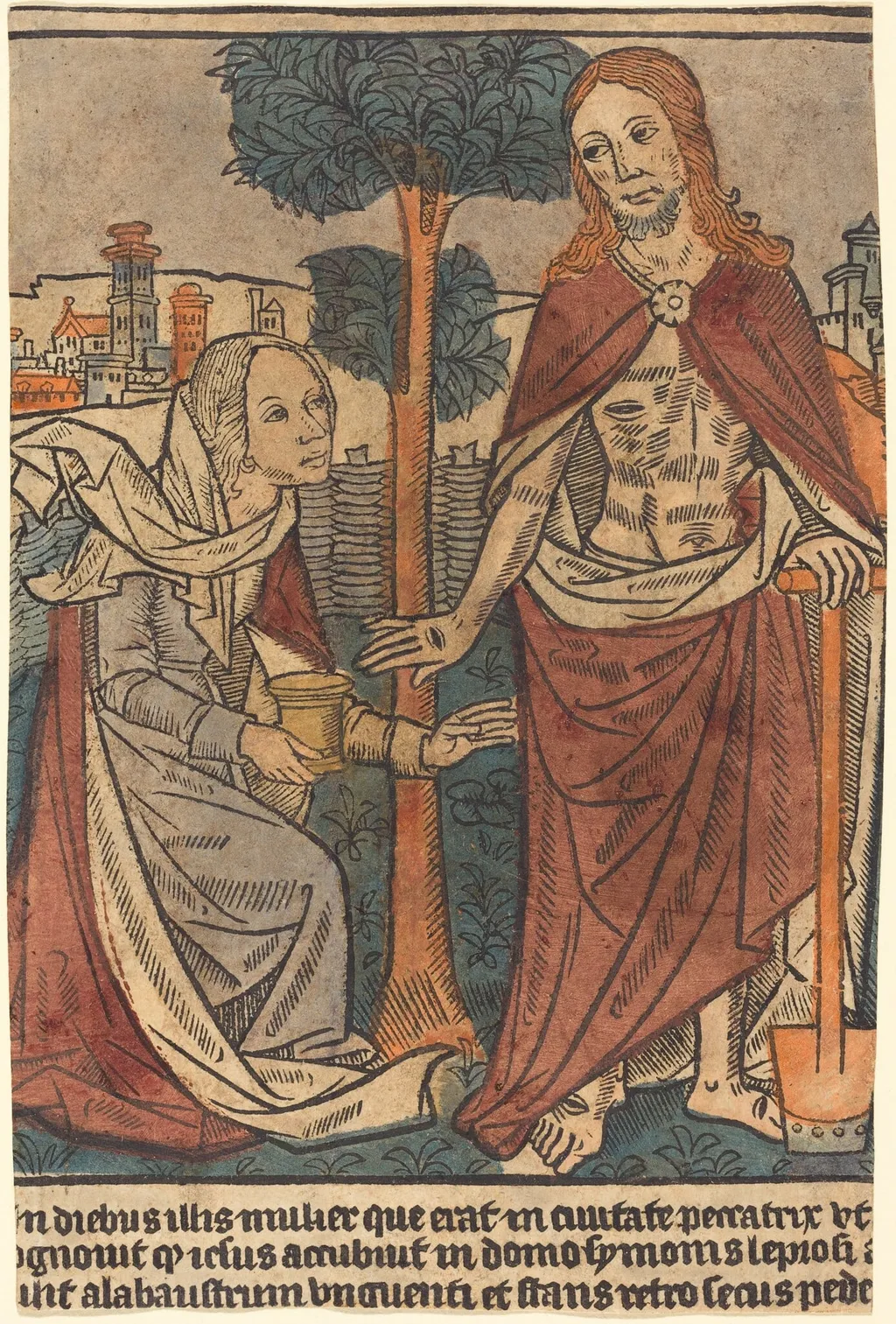
Christ Appearing to Mary Magdalene is an ink print by the Renaissance artist French 15th Century. It dates from 1500 and is held in the collection of the National Gallery of Art.
About this work
Overview
This woodcut print, hand‑colored in a palette of maroon, orange, yellow, blue‑green, mauve and flesh tones, portrays the biblical moment when Christ appears to Mary Magdalene. The figure of Mary kneels, her gaze lifted toward the standing Jesus, who is dressed in a red robe and holds a staff in his right hand.
Subject & Meaning
The scene captures a moment of revelation and devotion: Mary Magdalene, often associated with penitence, receives the appearance of the risen Christ, evoking themes of forgiveness and spiritual awakening. Her posture combines surprise with reverence, emphasizing the transformative impact of the encounter.
Technique & Style
Executed as a woodcut on laid paper, the image gains texture from the carved lines of the block. Hand‑coloring—possibly applied with stencils—adds vivid hues that delineate clothing, foliage and architectural elements, enhancing depth while retaining the graphic quality inherent to the medium.
Context
The composition situates the figures within a modest rural landscape, with trees and modest buildings suggesting a village setting. This backdrop underscores the universality of the narrative, placing the sacred encounter within an everyday environment that would have resonated with contemporary viewers.
Artist & collection

Artist
This artist hid their best work inside old travel trunks. They glued vivid woodcuts into the lids of wooden boxes meant to be carried on horseback, like secret postcards from God. If you’ve ever pried open a cracked lid…