Artwork
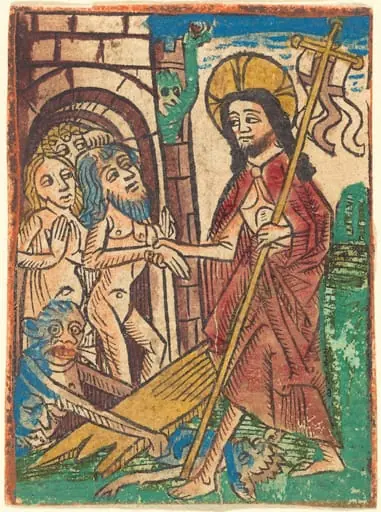
Christ in Limbo
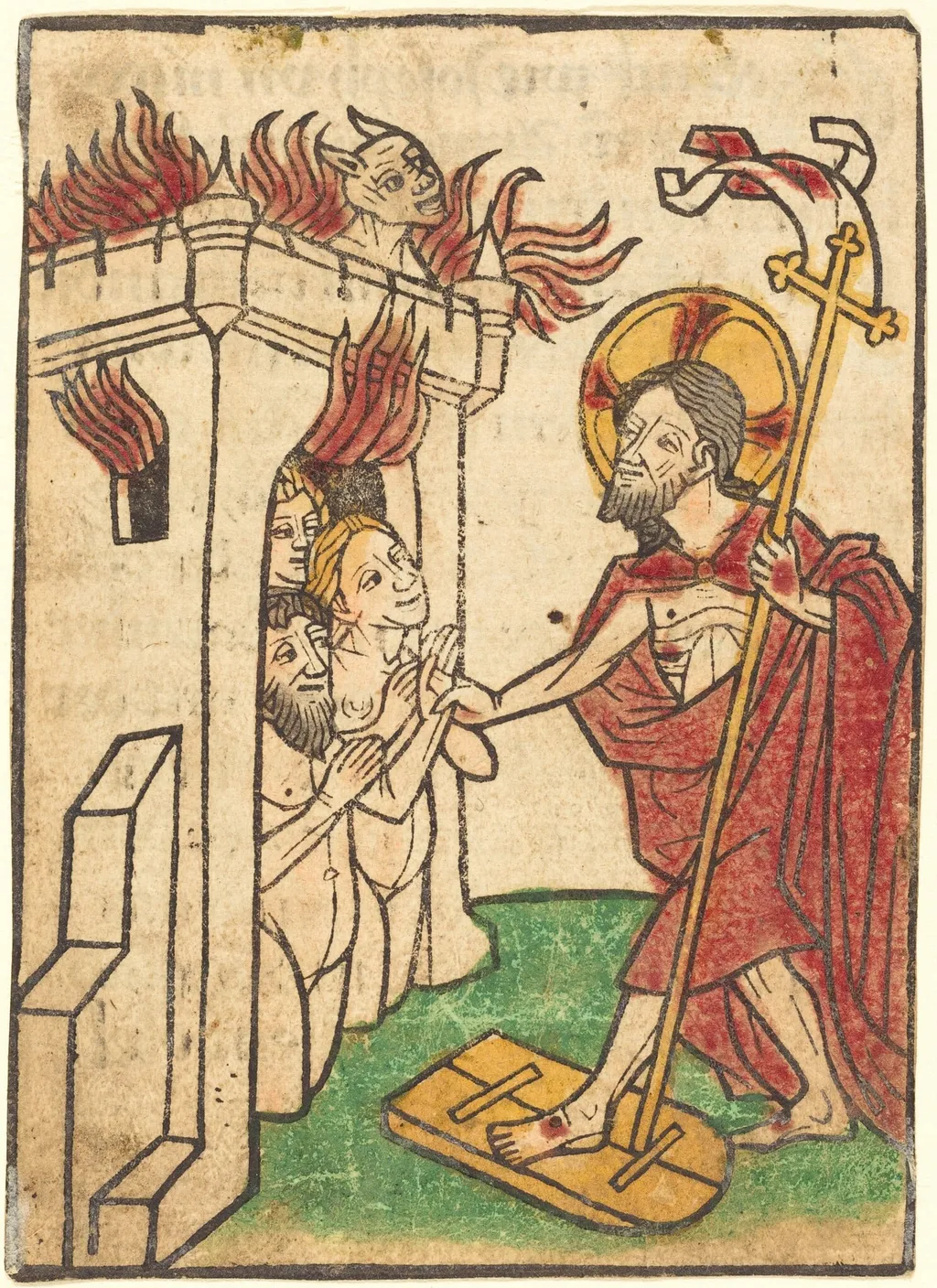
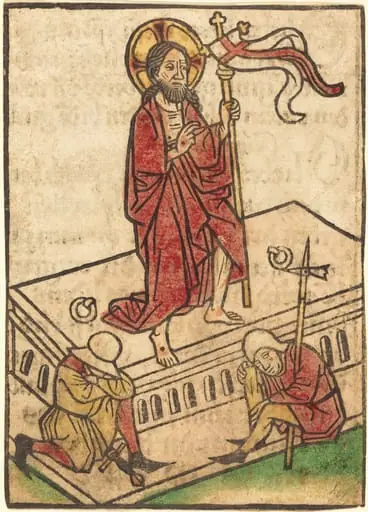
Christ in Limbo is an ink print by Ludwig of Ulm. It dates from 1450 and is held in the collection of the National Gallery of Art.
About this work
Overview
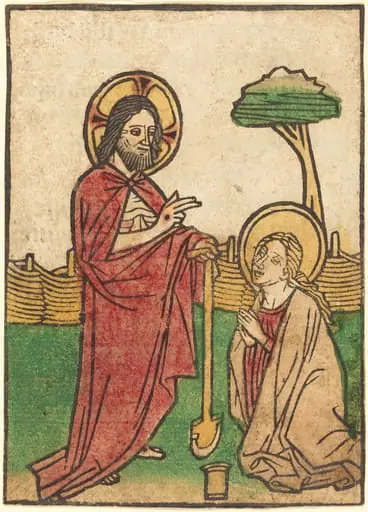
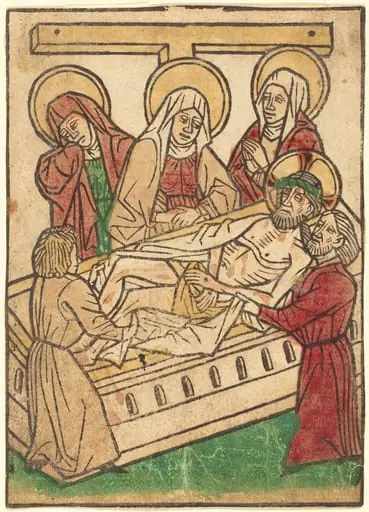
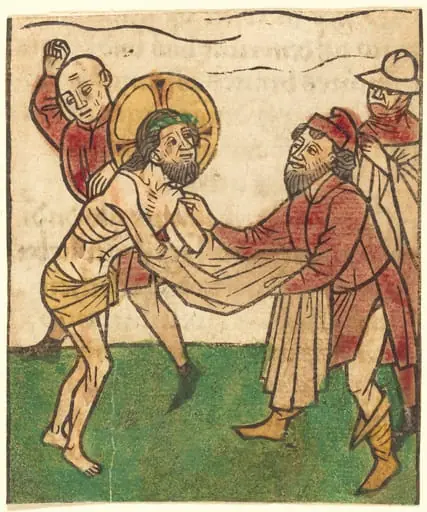
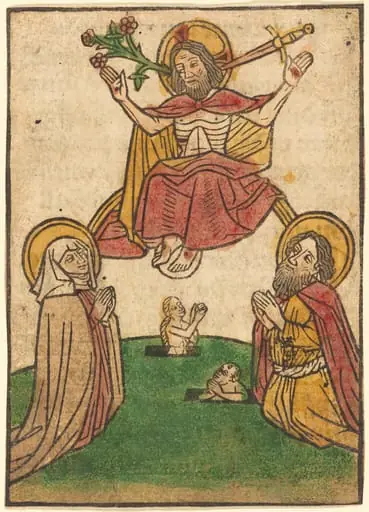
This hand-colored woodcut, produced around 1450, is attributed to Ludwig of Ulm and originates from a blockbook—a printed book made from carved wooden blocks.
This hand-colored woodcut, produced around 1450, is attributed to Ludwig of Ulm and originates from a blockbook—a printed book made from carved wooden blocks. Each page was printed in black ink and then manually painted with pigments, a common practice in late medieval Germany. The image depicts a theological scene drawn from apocryphal tradition, illustrating Christ’s descent into the realm of the dead to liberate the righteous.
Subject & Meaning
The scene portrays Christ, identified by his halo and red robe, reaching downward from the right to pull figures from a fiery abyss. These figures, some partially nude and contorted, represent souls held in Limbo—those who died before Christ’s redemption. Their postures convey suffering and yearning, while Christ’s outstretched hand symbolizes divine intervention and salvation, reinforcing the belief in his victory over death.
Technique & Style
Executed as a woodcut, the image relies on bold, incised lines to define forms, typical of blockbook printing. The figures and architecture are rendered with simplified contours, emphasizing clarity over naturalism. Hand-coloring in vivid reds, greens, and whites enhances emotional impact, contrasting the warmth of Christ’s robe against the cold tones of the pit. The flat, unmodeled background focuses attention on the central narrative.
History & Provenance
The print emerged from a tradition of devotional blockbooks produced in southern Germany during the mid-15th century, before the widespread adoption of movable type. Ludwig of Ulm was one of several artists active in this niche. Few complete examples survive; this piece likely circulated among clergy or wealthy laypeople as a tool for meditation, its coloration suggesting private ownership rather than mass distribution.
Context
In the 15th century, the doctrine of Christ’s Harrowing of Hell was widely accepted in Western Christianity, though not part of the canonical Gospels. It appeared frequently in liturgical drama, stained glass, and printed images. This woodcut reflects a period when visual aids were essential for conveying complex theology to largely illiterate audiences, blending popular belief with ecclesiastical teaching.
Legacy
As a product of the transitional era between manuscript illumination and print culture, this woodcut exemplifies how religious imagery adapted to new technologies. Though overshadowed by later Renaissance prints, it preserved medieval iconography and influenced early printed devotional books. Its survival offers insight into how ordinary believers engaged with sacred narratives through accessible, tactile media.
Artist & collection