Artwork
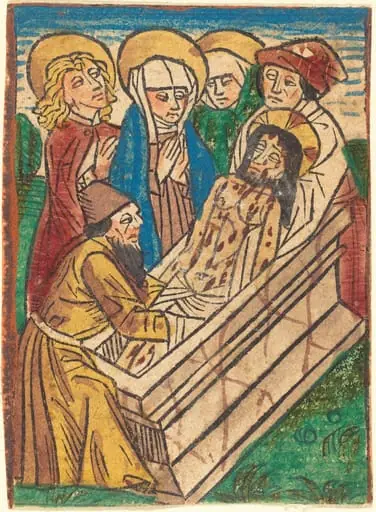
The Entombment
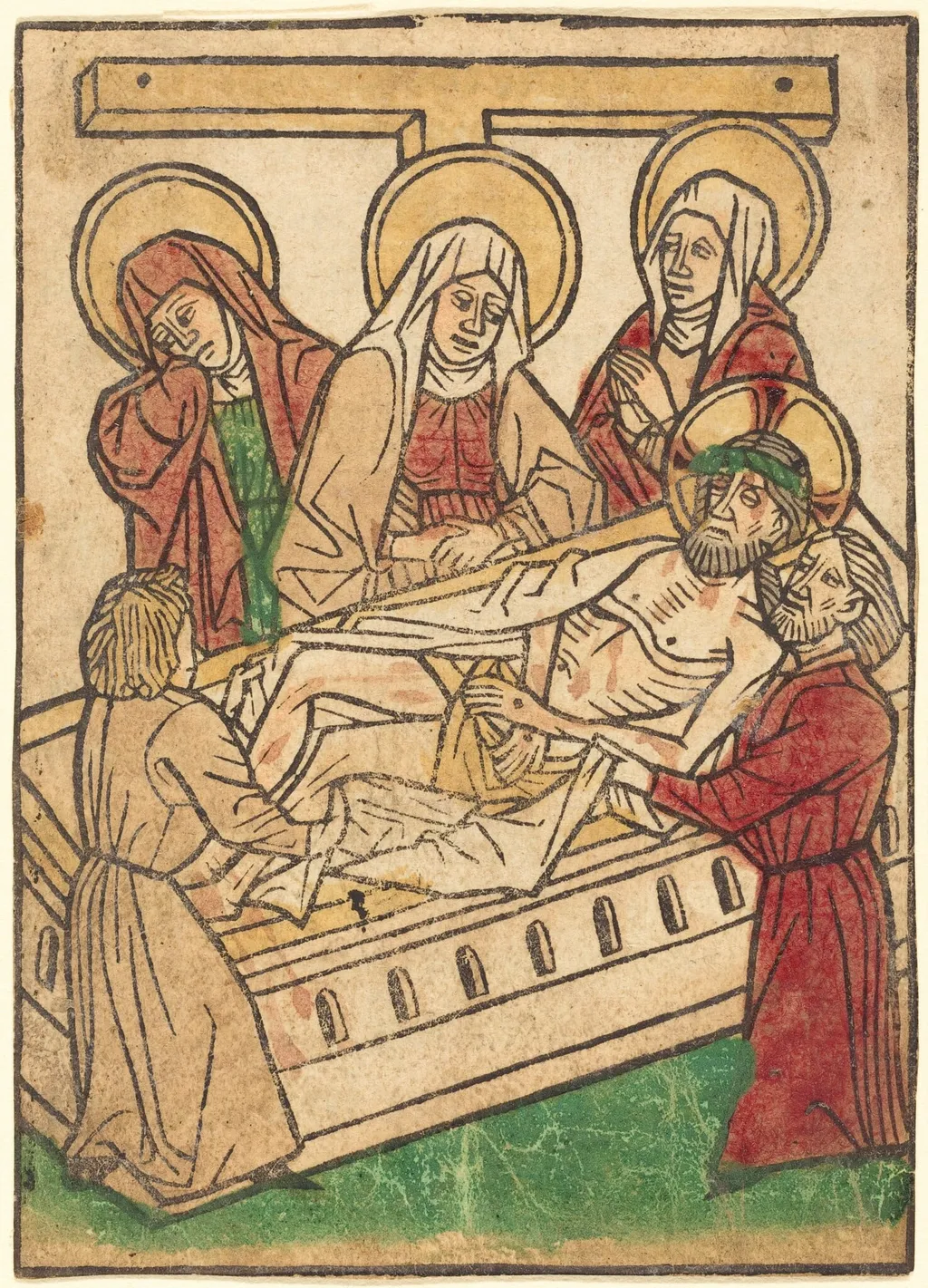
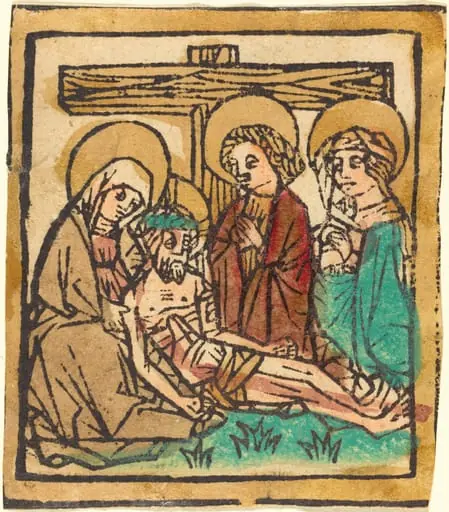
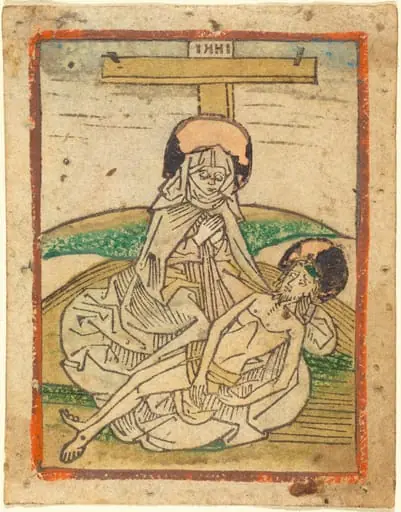
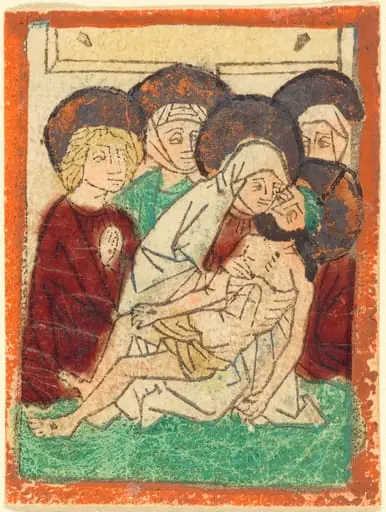
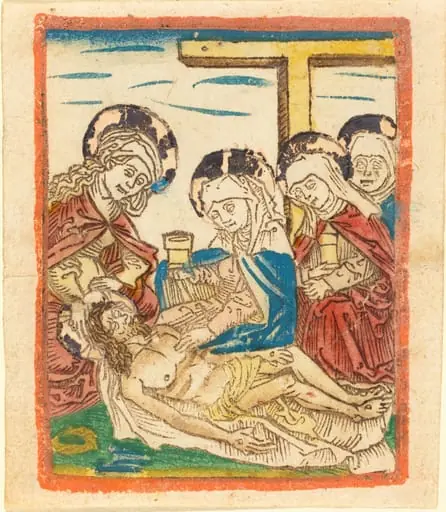
The Entombment is an ink print by Ludwig of Ulm. It dates from 1450 and is held in the collection of the National Gallery of Art.
About this work
Overview
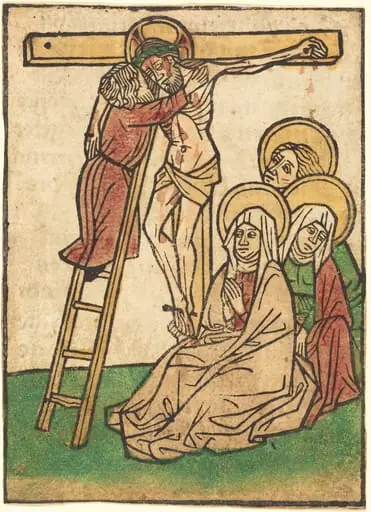
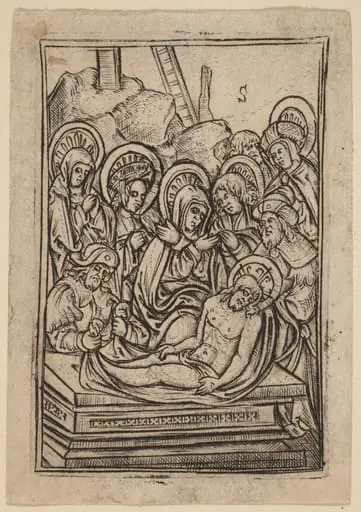
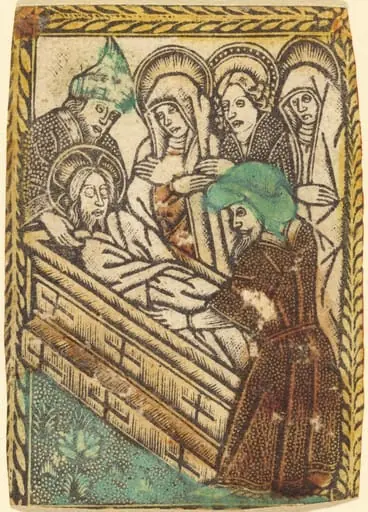
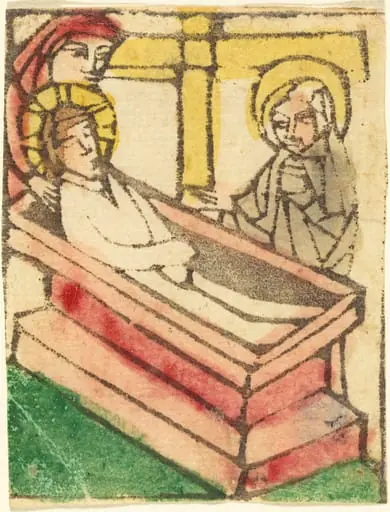
The Entombment is a hand-colored woodcut, specifically a blockbook page, attributed to Ludwig of Ulm and dated to 1450. It depicts a pivotal moment in Christian iconography.
Subject & Meaning
The print illustrates Christ's body being prepared for burial, with the Virgin Mary kneeling beside him, conveying intense grief. This scene reflects the emotional depth of the Entombment narrative within Christian tradition.
Technique & Style
Ludwig of Ulm carved the design directly into a wood block, which was then inked and used to print the image onto paper. Colors were subsequently added manually, one hue at a time, highlighting the labor-intensive process of pre-press era printmaking.
History & Provenance
Created in the 15th century, before the widespread use of mechanical printing presses, this work exemplifies the blockbook technique, where entire pages were carved for printing, often in a format akin to illustrated books.
Artist & collection