Artwork
The Agony in the Garden
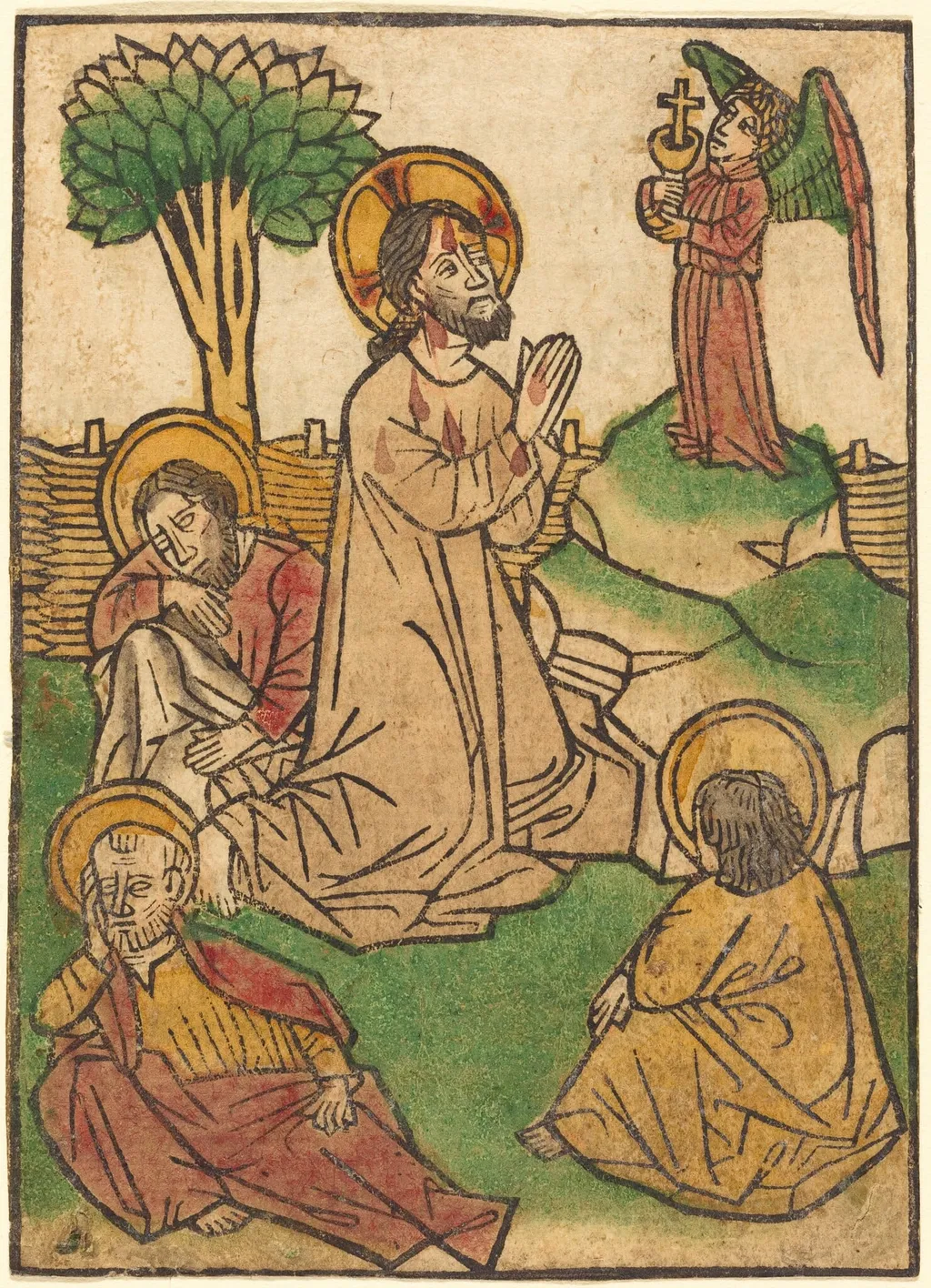
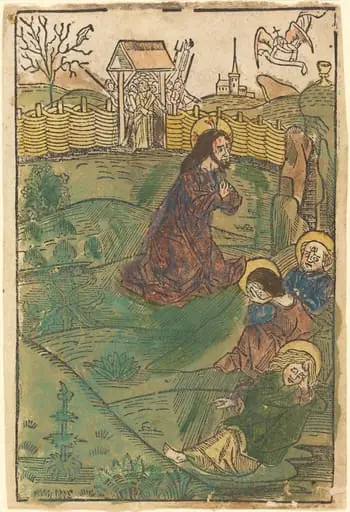
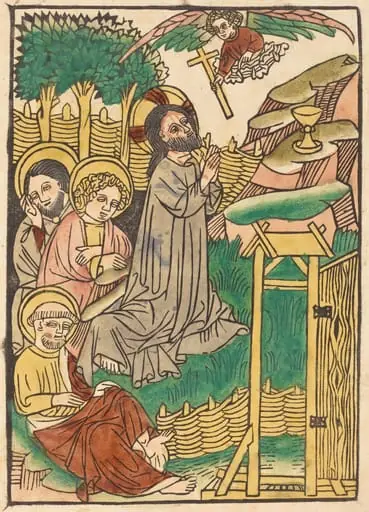
The Agony in the Garden is an ink print by Ludwig of Ulm. It dates from 1450 and is held in the collection of the National Gallery of Art.
About this work
Overview
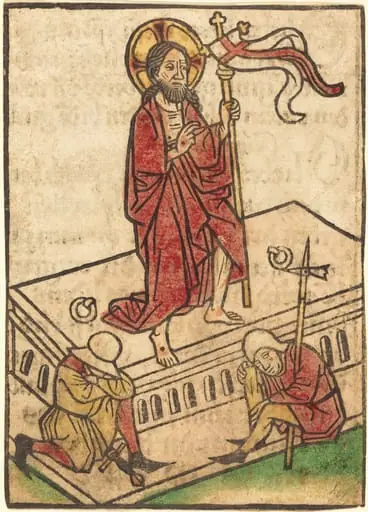
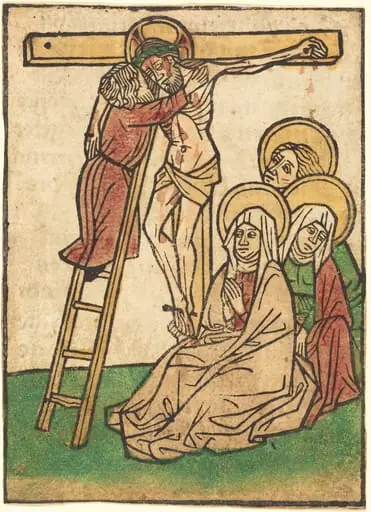
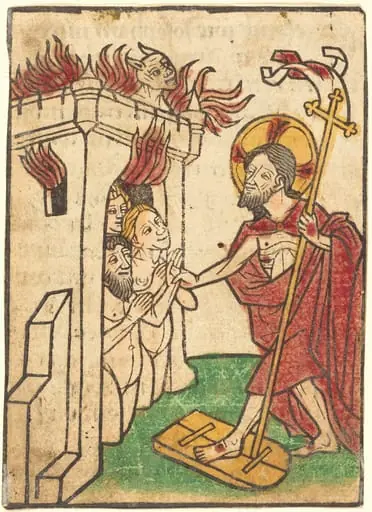
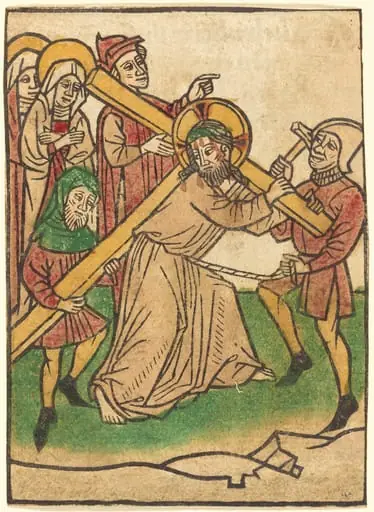
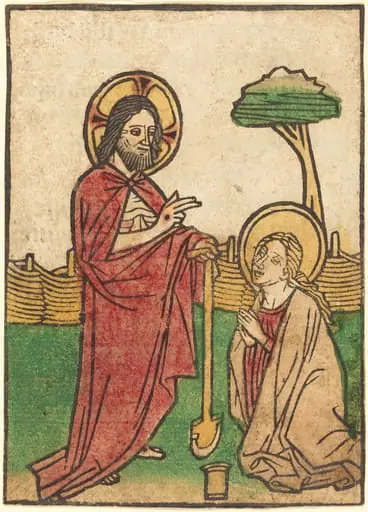
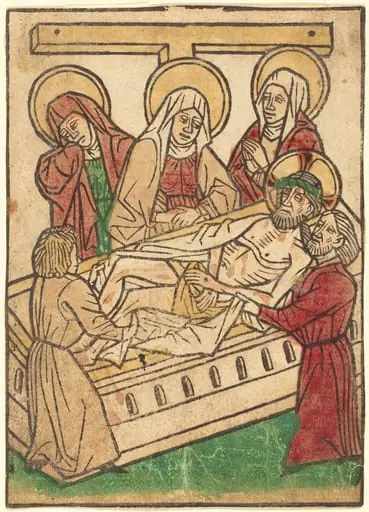
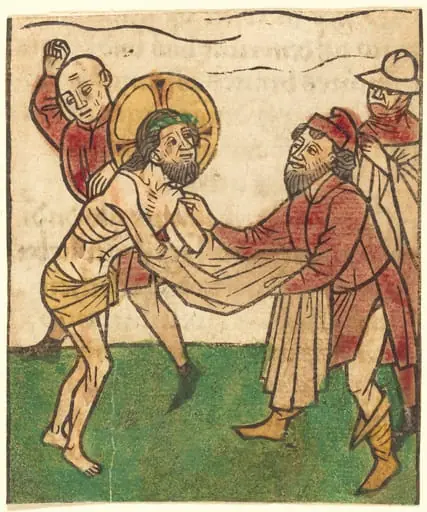
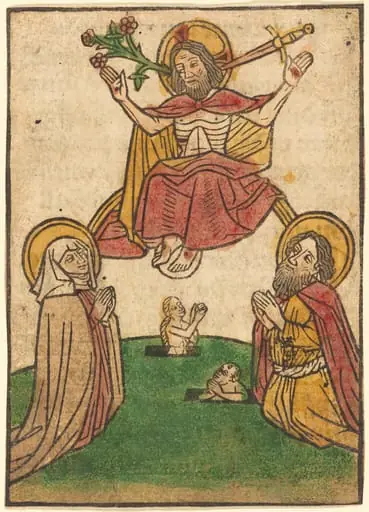
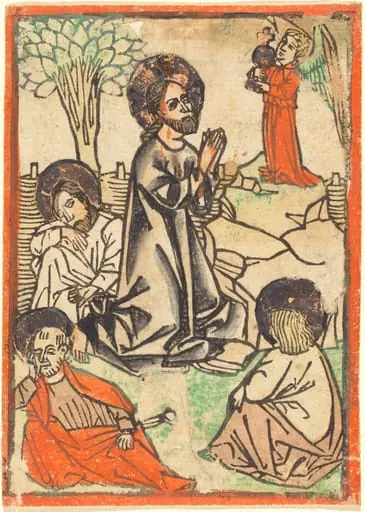
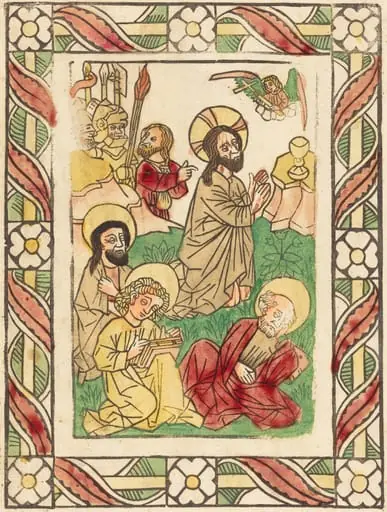
Created around 1450, this hand‑colored woodcut originates from the workshop of Ludwig of Ulm. It appears as a single page from a blockbook, a type of early printed book that combined text and images on the same sheet. The image is reproduced in multiple copies, each receiving individual color application after printing.
Subject & Meaning
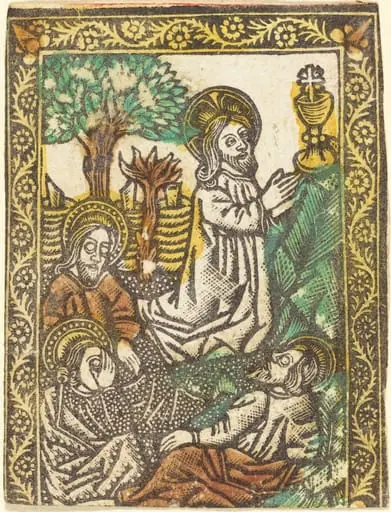
The composition depicts the biblical episode of Christ in the Garden of Gethsemane, moments before his apprehension. Jesus is shown kneeling in prayer, surrounded by a tranquil garden setting that contrasts with the imminent betrayal. The scene emphasizes contemplation and sacrifice, reflecting devotional themes common in mid‑15th‑century religious art.
Technique & Style
Ludwig employed a woodcut matrix to print the outline, then applied pigments manually to each impression. This hand‑coloring step, still novel at the time, gave every copy a slightly different hue while preserving the reproducibility of the printed line work. The style combines the bold linear quality of early German woodcuts with modest, localized coloration.
History & Provenance
The print is part of a blockbook series produced in the German lands during the transition from manuscript to print culture. Though the original blockbook is fragmented, surviving copies are held in several European libraries, indicating a wide distribution shortly after its creation. The work bears Ludwig’s signature, confirming his authorship.
Artist & collection