Artwork
The Descent from the Cross
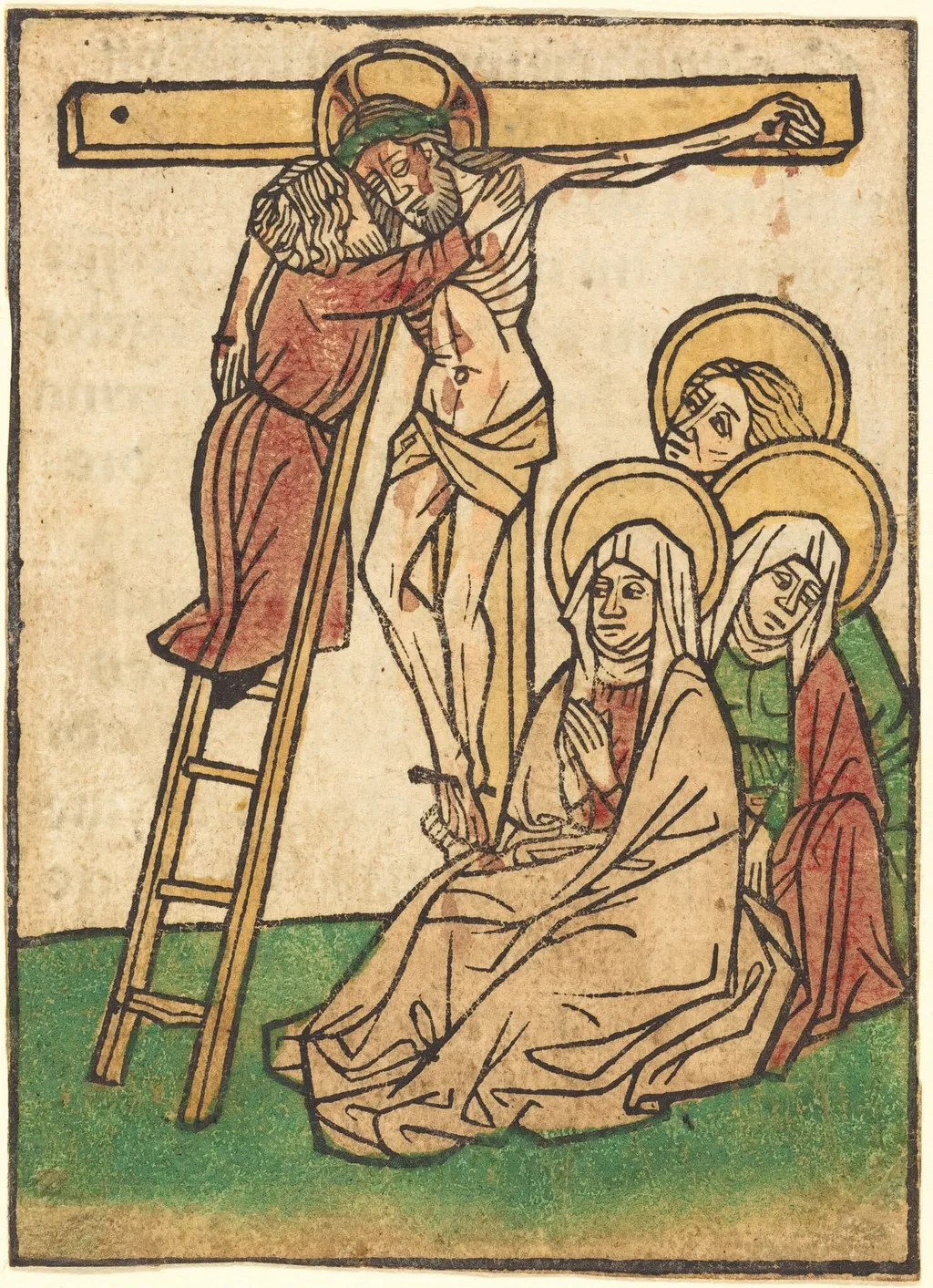
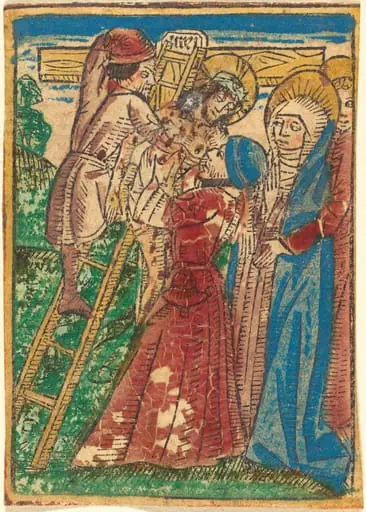
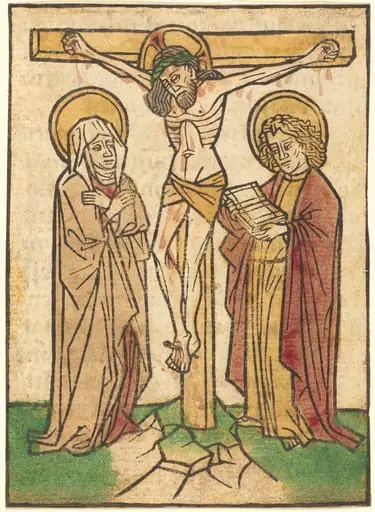
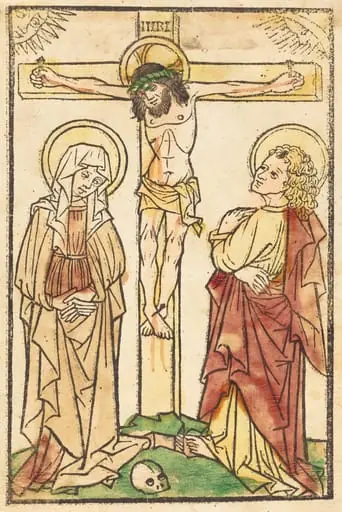
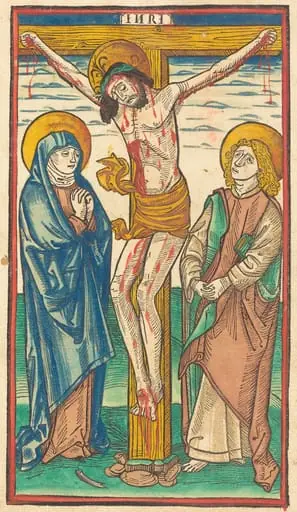
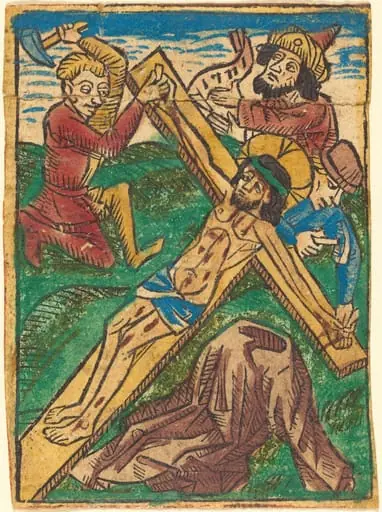
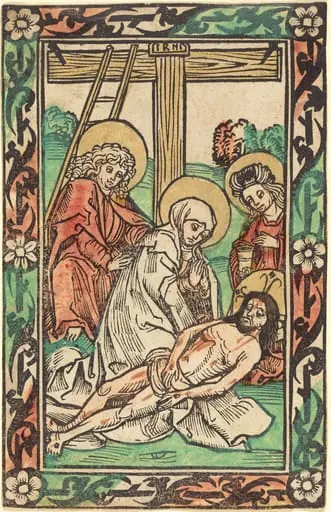
The Descent from the Cross is an ink print by Ludwig of Ulm. It dates from 1450 and is held in the collection of the National Gallery of Art.
About this work
Overview
Ludwig of Ulm’s hand‑colored woodcut, dated to around 1450, depicts the biblical episode of the Descent from the Cross.
Ludwig of Ulm’s hand‑colored woodcut, dated to around 1450, depicts the biblical episode of the Descent from the Cross. Rendered as a blockbook page, the image presents a central figure being lowered from the cross, assisted by two men, while a kneeling woman watches with clasped hands. Additional onlookers flank the scene, creating a compact composition typical of early printed devotional imagery.
Subject & Meaning
The work illustrates the moment after Christ’s crucifixion when his body is removed from the cross, a theme emphasizing compassion and the transition from death to burial. The presence of a grieving woman, likely the Virgin Mary, and the attentive figures convey the solemnity of the event, inviting contemplation of sacrifice and redemption within a devotional context.
Technique & Style
Carved from a single wooden block, the image was printed in black ink and then colored by hand, employing flat washes of red, green, and pale flesh tones. The bold outlines and limited palette reflect the practical constraints of early woodcut production, while the hand‑coloring adds a modest decorative quality that enhances the narrative without obscuring the linear clarity of the carving.
History & Provenance
Produced as part of a blockbook—a hybrid of text and image printed together—this piece served as an accessible visual aid for lay piety in the mid‑15th century. Its creation in Ulm aligns with the city’s reputation as a center for woodcut publishing, and the work survives as a testament to the spread of printed religious imagery before the rise of movable‑type books.
Artist & collection