Artwork
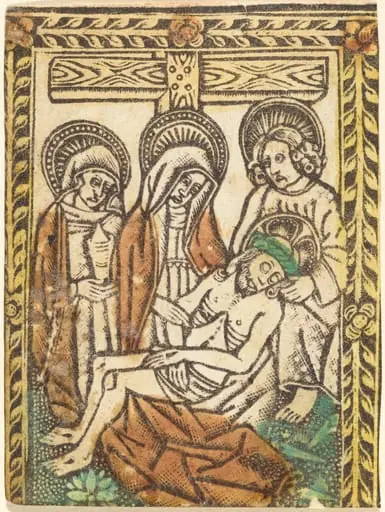
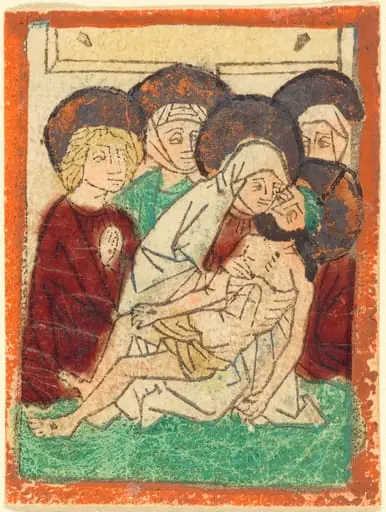
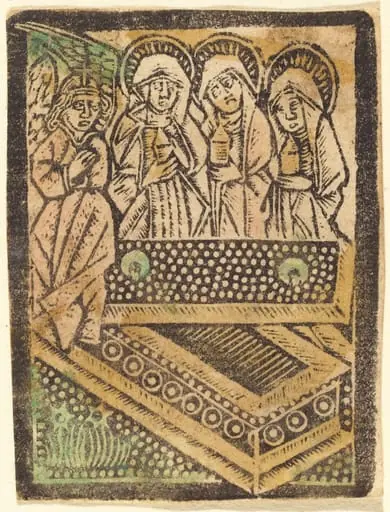
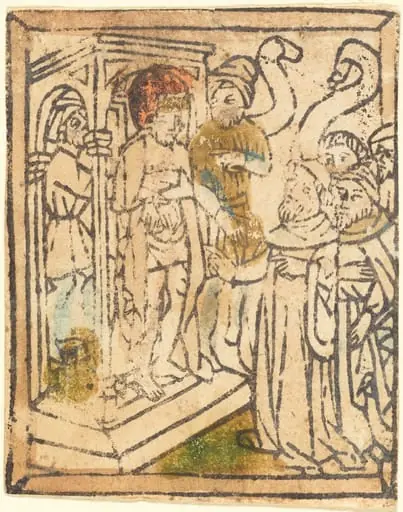
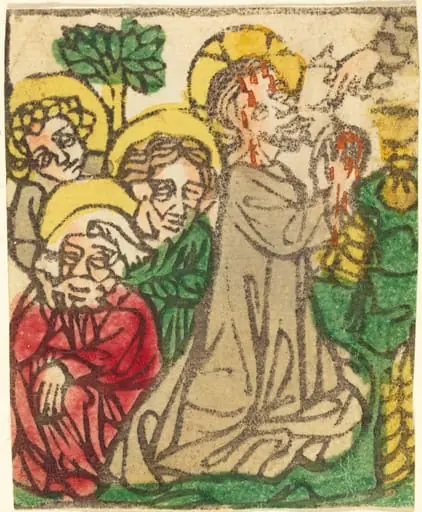
The Entombment
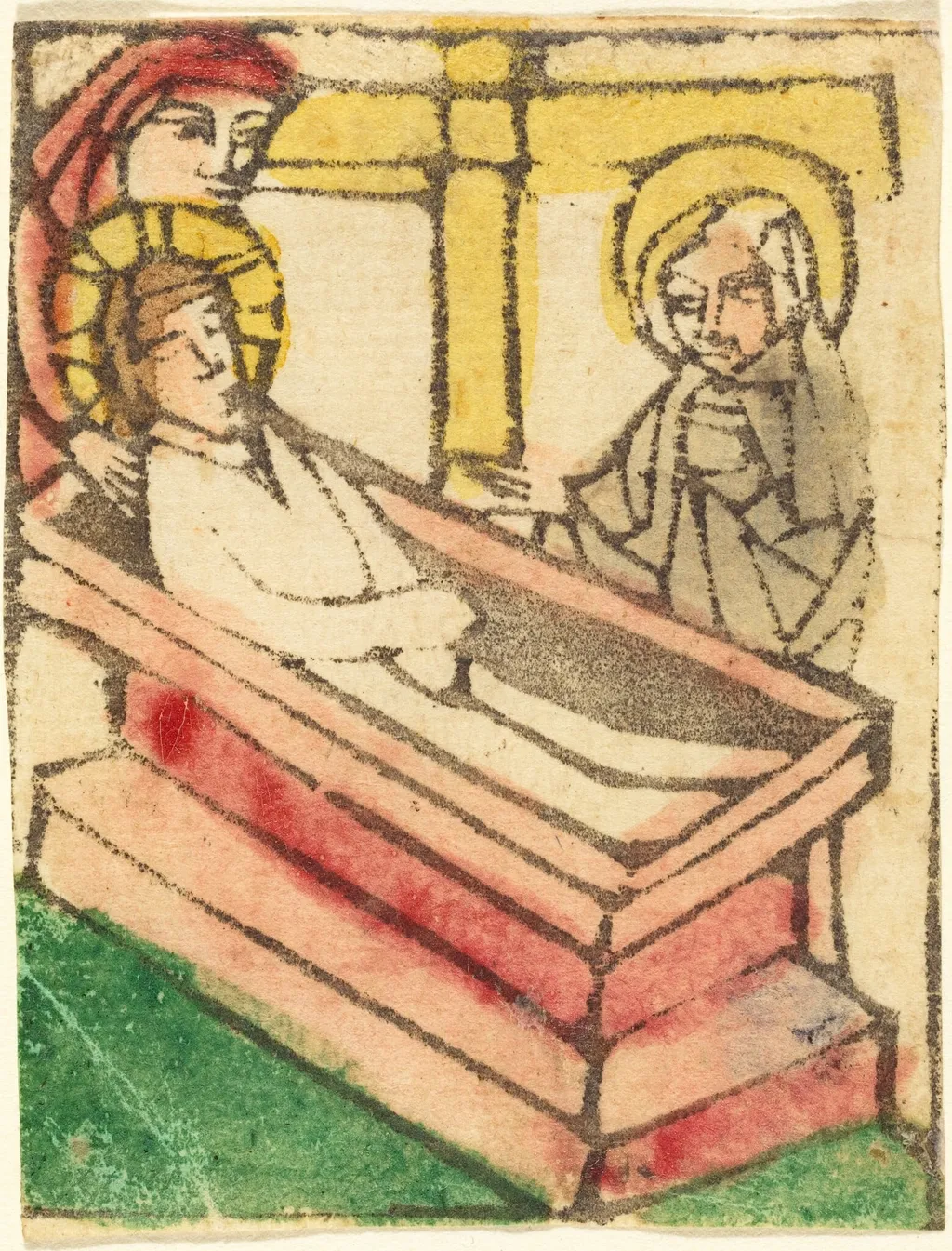
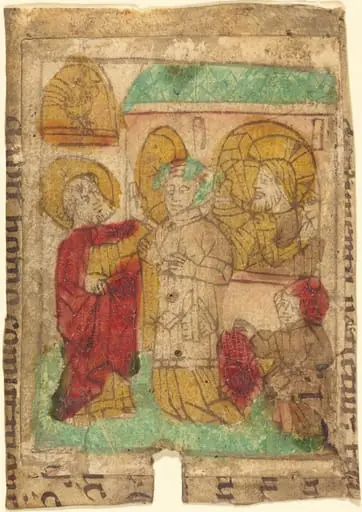
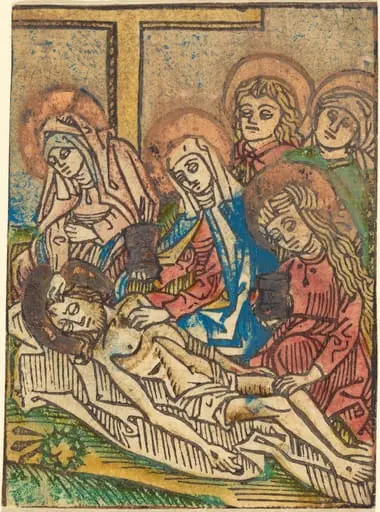
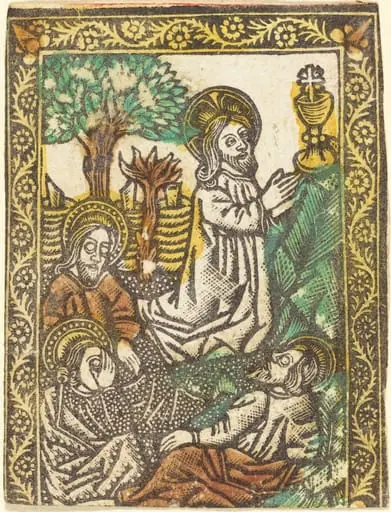
The Entombment is an ink print by the Renaissance artist German 15th Century. It dates from 1438 and is held in the collection of the National Gallery of Art.
About this work
Overview
Bright, flat pigments in red lake, green, yellow, tan, and orange were applied by hand after printing, a common practice in early printed devotional images.
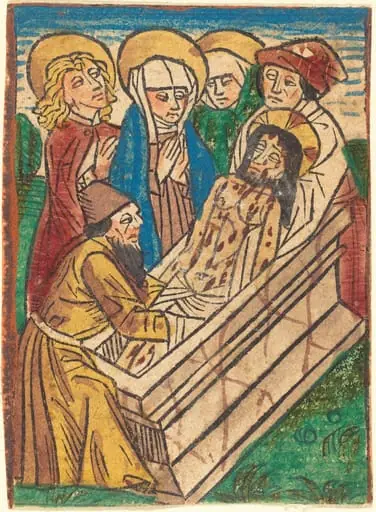
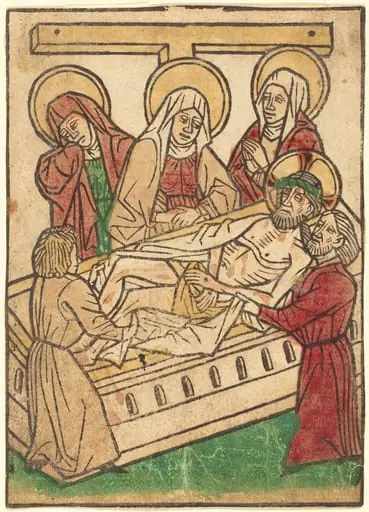
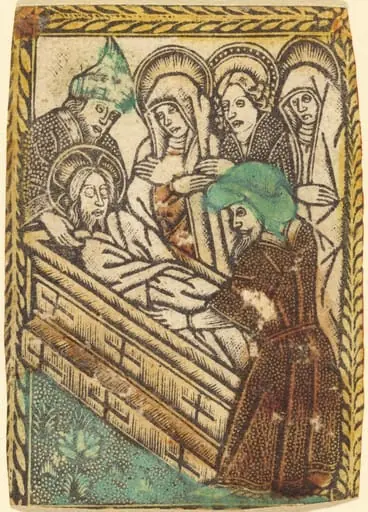
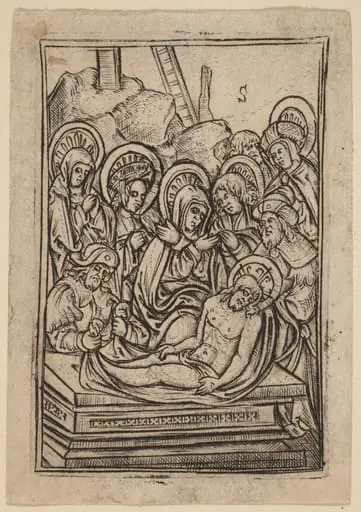
This hand-colored woodcut depicts the entombment of Christ, rendered in a simplified, two-dimensional style. The composition features two figures: one recumbent, wrapped in cloth, and another standing beside them, clasping their hand. The background is minimal—a yellow wall and a striped red floor—with green grass at the base. Bright, flat pigments in red lake, green, yellow, tan, and orange were applied by hand after printing, a common practice in early printed devotional images.
Subject & Meaning
The scene illustrates the moment after Christ’s crucifixion, when his body is laid in preparation for burial. The intimate gesture of one figure holding the other’s hand suggests mourning and reverence. The lack of elaborate detail or spatial depth focuses attention on the emotional stillness of the moment, aligning with devotional practices that emphasized contemplation over narrative complexity.
Technique & Style
Executed as a woodcut, the image was carved from a wooden block and printed in ink, then manually colored with water-based pigments. The forms are blocky and linear, with sharp contours and no shading, typical of early printmaking. The flat, unmodulated colors—applied in broad areas—enhance the image’s symbolic rather than naturalistic character, reflecting the aesthetic priorities of its time.
History & Provenance
The work originates from the early period of printed religious imagery, likely produced in a workshop where carving, printing, and coloring were divided among specialists. Such prints were affordable and widely distributed, serving private devotion or liturgical use. Exact origins are undocumented, but its style and coloring align with Northern European production in the late 15th or early 16th century.
Context
In the decades following Gutenberg’s press, woodcuts became a primary medium for disseminating religious imagery to a broader public. This print reflects the transition from manuscript illumination to mass-produced devotional art. Its simplicity and vivid color made it accessible and memorable, fitting within a culture where visual aids supported personal piety and communal worship.
Legacy
Though not attributed to a known master, this print exemplifies how early printmakers adapted traditional iconography to new technologies. Its enduring presence in collections underscores the cultural value placed on accessible religious imagery during the Reformation’s formative years. It stands as a quiet testament to the role of print in shaping spiritual experience beyond elite artistic circles.
Artist & collection

Artist
This 15th-century German artist carved vivid religious scenes into metal and wood, then hand-painted them in bright, symbolic colors.

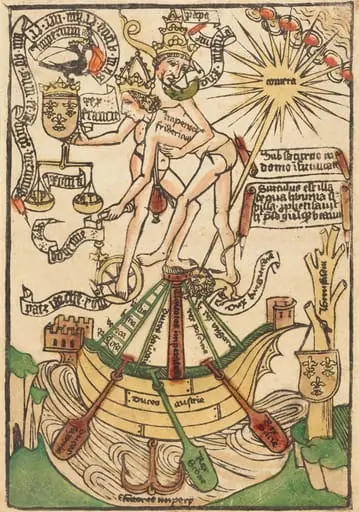 Allegory of the Meeting of Pope Paul II and Emperor Frederick III
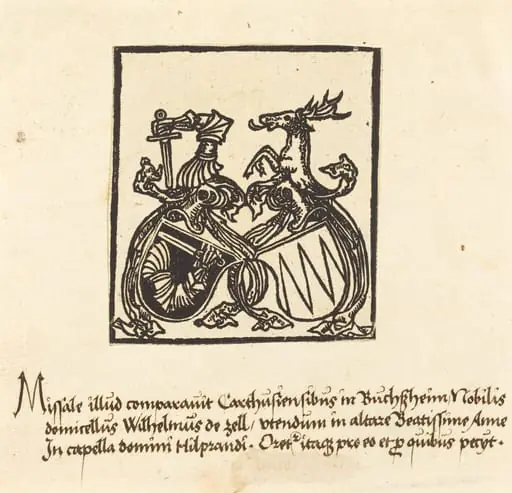 Bookplate of Wilhelm von Zell
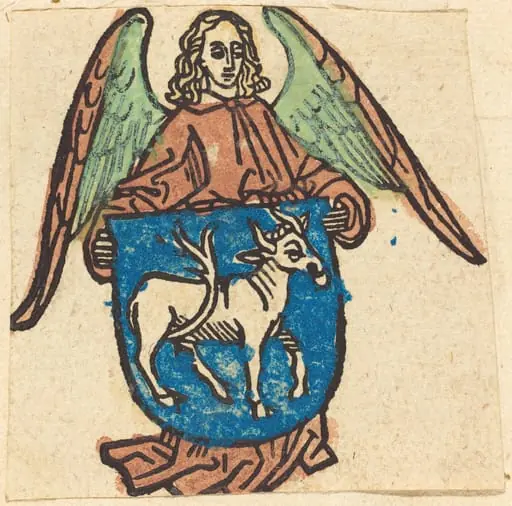 Bookplate of Hilprand Brandenburg of Bibrach
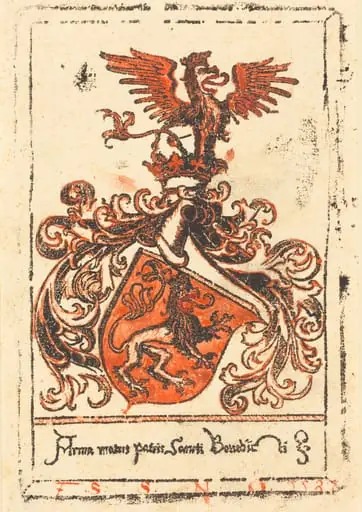 Bookplate of the Abbey of Ottobeuren
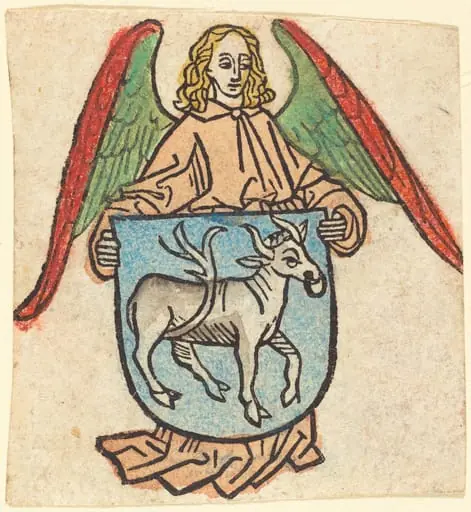 Bookplate of Hilprand Brandenburg of Bibrach
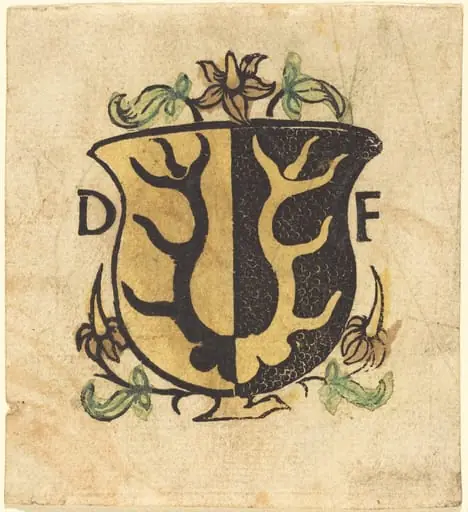 Bookplate of Dominicus Frauenfelder
![Studies for Six Figures (sheet from a model book) [recto], by German 15th Century](https://artifactworldgallery.com/img/german-15th-century--studies-for-six-figures-sheet-from-a-model-book-recto--4837429e0755bc3f-w320.webp) Studies for Six Figures (sheet from a model book) [recto]
Studies for Six Figures (sheet from a model book) [recto]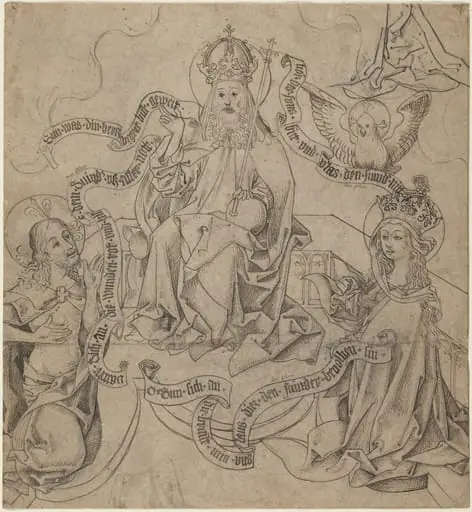 Christ and Mary Interceding with God the Father