Artwork
The Last Supper
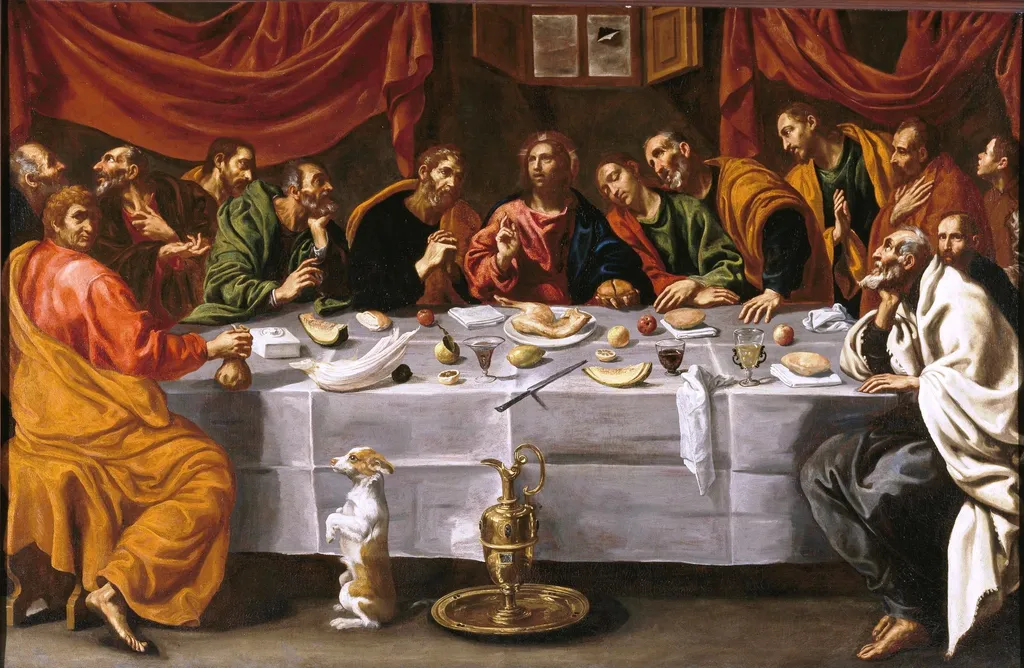
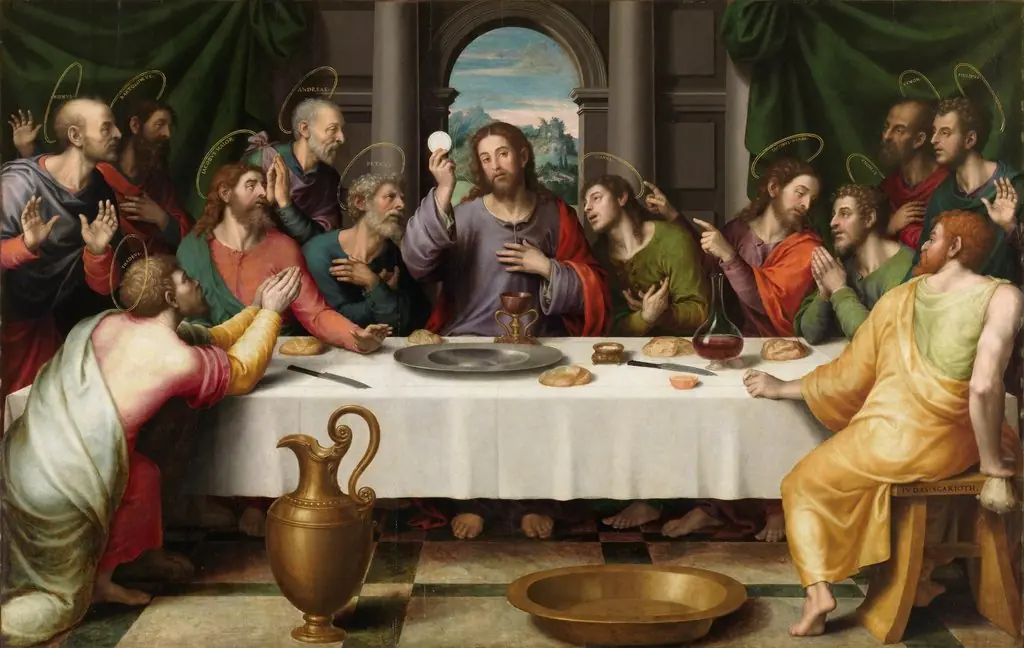
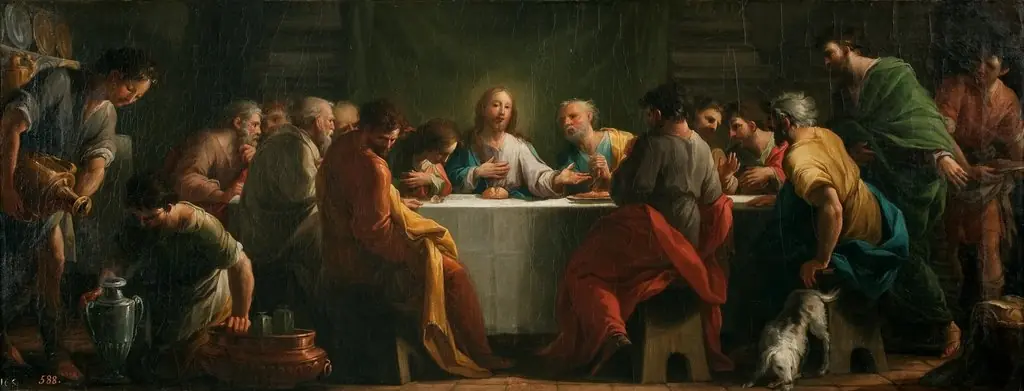
The Last Supper is an oil painting by the Early Baroque Italian artist Luis Tristán. It dates from 1620 and is held in the collection of the Museo del Prado.
About this work
Overview
Luis Tristán’s *The Last Supper* (1620) is an oil painting that presents a banquet scene set within a dimly lit interior.
Luis Tristán’s *The Last Supper* (1620) is an oil painting that presents a banquet scene set within a dimly lit interior. A group of men in varied robes gathers around a long, white‑draped table laden with fruit, bread, cups, and a golden pitcher, while a small dog stands on its hind legs near a tray. The composition reflects early Baroque influences and is part of the Museo del Prado’s collection in Madrid.
Subject & Meaning
The work portrays the biblical episode of the final meal shared by Jesus and his disciples, though the figures are unnamed and the narrative is suggested through the arrangement of food and the central focus on the table. The inclusion of a domestic dog, an uncommon element in such religious depictions, introduces a subtle, everyday realism that softens the solemnity of the scene.
Technique & Style
Tristán employs a restrained chiaroscuro, allowing a soft, directional light to illuminate faces and textiles, creating a sense of depth and material richness. The brushwork renders the fabrics in vivid reds, greens, yellows, and oranges, while the textures of fruit and bread are rendered with careful modeling, characteristic of the early Baroque style that he adapted from Italian precedents.
History & Provenance
Born in Toledo around 1585, Tristán worked within the Spanish Mannerist tradition before embracing Baroque sensibilities. He completed *The Last Supper* shortly before his death in 1624. The painting entered the Museo del Prado’s holdings in the 19th century, where it remains on display as part of the museum’s early 17th‑century Spanish collection.
Context
Created during a period when Spanish artists were integrating Italian Baroque dynamism with local devotional practices, the painting reflects Tristán’s transition from Mannerist elegance to a more naturalistic approach. The domestic details, such as the dog and the everyday tableware, align with contemporary efforts to make sacred narratives more accessible to viewers.
Own this work as a print
Artist & collection
Artist
Luis Tristán de Escamilla, also known as Luis de Escamilla or Luis Rodríguez Tristán (c.1585, Toledo - 1624, Toledo), was a Spanish painter in the mannerist style.