Artwork
Titian's Bacchus and Ariadne
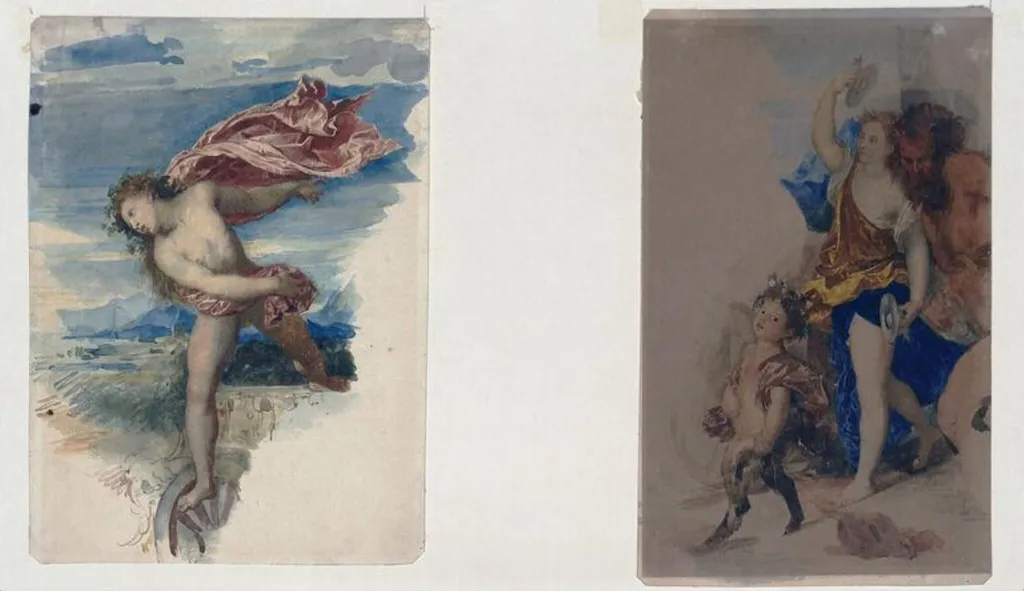
Titian's Bacchus and Ariadne is a watercolor work on paper by the British Romanticist artist Daniel Maclise. It dates from 1835 and is held in the collection of the Victoria and Albert Museum. Two watercolor sketches reinterpret Titian’s Bacchus and Ariadne, capturing the mythological moment with fluid, energetic lines.
About this work
Overview
Two watercolor sketches reinterpret Titian’s Bacchus and Ariadne, capturing the mythological moment with fluid, energetic lines.
Two watercolor sketches reinterpret Titian’s Bacchus and Ariadne, capturing the mythological moment with fluid, energetic lines. The artist employs loose brushwork and muted hues—soft blues, pinks, and earth tones—to convey motion rather than finish. The composition divides into two distinct scenes, each emphasizing dynamic posture and fleeting gesture, suggesting a study in movement rather than a polished final image.
Subject & Meaning
The sketches illustrate the myth of Bacchus discovering Ariadne abandoned on Naxos. On the left, Ariadne hovers mid-air, her red garment swirling as if caught in divine wind, while Bacchus leans against a rock. On the right, a winged child—likely Cupid—watches as Bacchus raises his staff, signaling his arrival. The scene merges divine intervention with human vulnerability, rooted in classical narrative but rendered with emotional immediacy.
Technique & Style
The artist uses rapid, sketchy strokes to suggest form without definition, prioritizing motion over anatomical precision. Figures twist in exaggerated poses, their limbs elongated to enhance dynamism. Watercolor is applied thinly, allowing the paper to show through, creating a sense of lightness and transience. The wings of the child and the flowing fabric are rendered with minimal detail, relying on suggestion rather than finish.
History & Provenance
These sketches are attributed to Daniel Maclise, a 19th-century Royal Academy artist known for his watercolor studies of classical themes. They likely date from the 1830s–40s, a period when Maclise was actively engaging with Renaissance compositions as preparatory exercises. Their survival suggests they were kept as working references rather than exhibited works, reflecting the artist’s process rather than public display.
Context
In early Victorian Britain, artists frequently revisited Renaissance subjects as both homage and technical training. Maclise’s sketches align with a broader trend of reinterpreting Titian through the lens of Romantic sensibility—emphasizing emotion, movement, and atmospheric effect over classical restraint. Watercolor, then gaining prestige, allowed for spontaneity that oil painting often suppressed.
Legacy
These sketches exemplify how 19th-century artists used watercolor to explore classical themes with fresh immediacy. Maclise’s approach influenced contemporaries who valued expressive line and ephemeral tone over polished finish. Though not widely exhibited, such studies contributed to a shift in academic training, validating sketching as a legitimate mode of artistic inquiry beyond preparatory drafts.
Artist & collection
Artist
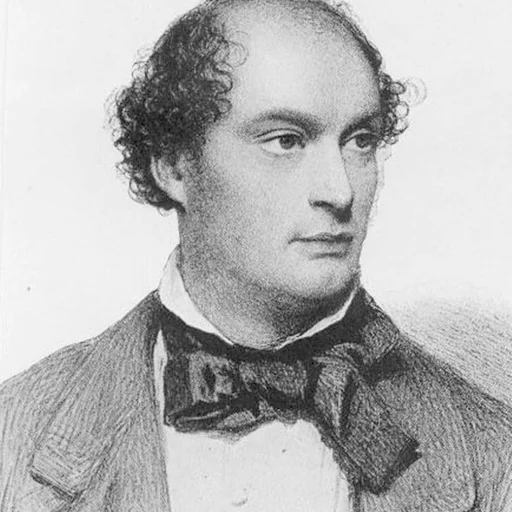
Daniel Maclise (25 January 1806 – 25 April 1870) was an Irish history painter, literary and portrait painter, and illustrator, who worked for most of his life in London, England.

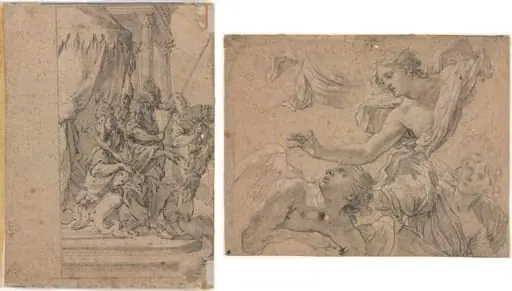 Studies of Angels (recto); Panthea before Cyrus? (verso)
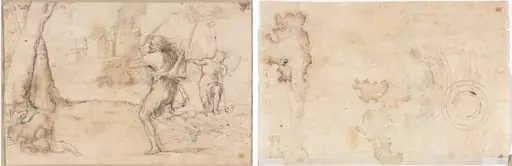 Romulus and Remus Found by Faustulus (recto) Concentric Circles (verso)
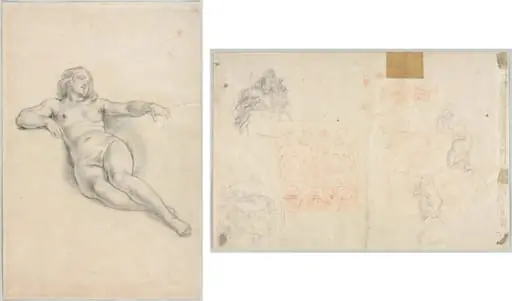 Reclining Female Nude (recto); Various Sketches of Figures and Plants (verso)
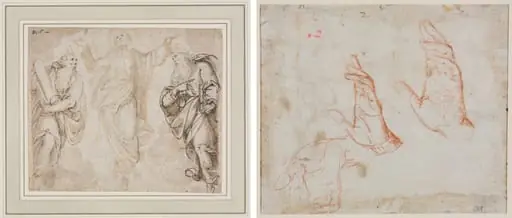 The Transfiguration (recto); Study of Hands (verso)
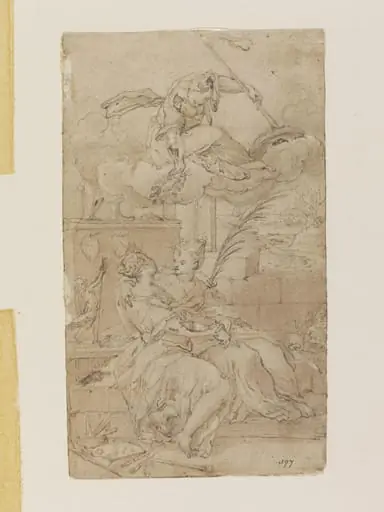 Allegory of the Union of Painting and Sculpture
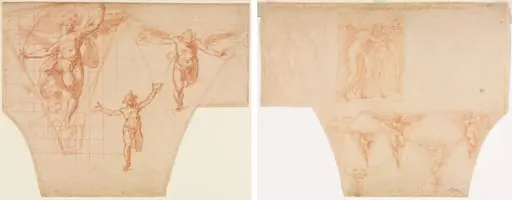 Three Studies of Angels for a Pendentive (recto); Studies for Christ Meeting His Mother on the Road to Calvary, Studies of an Angel in a Pendentive (verso)
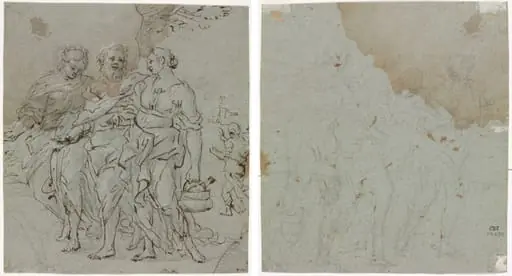 Lot and His Daughters (recto); Sketch for Lot and His Daughters (verso)
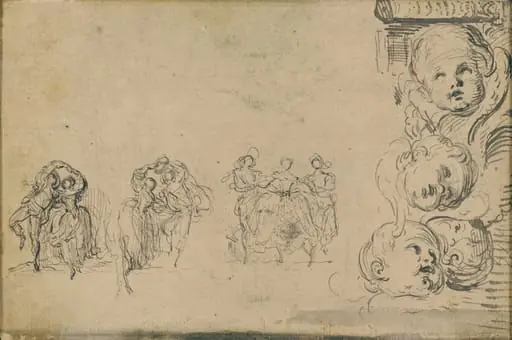 Sketches of Dancers and Heads of Putti
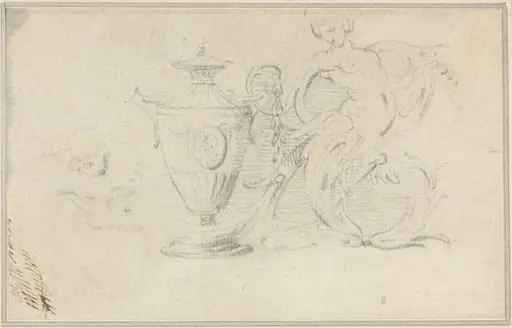 Designs for Decorative Vases
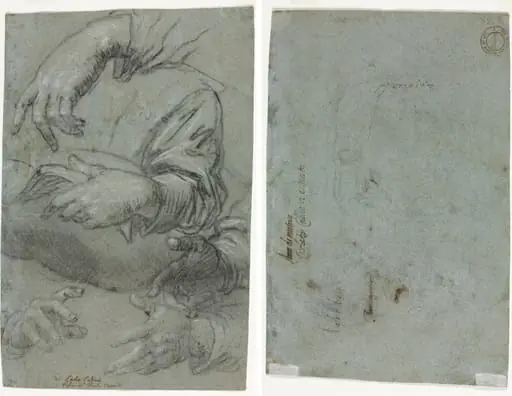 Studies of Hands (recto); Sketch of a Child's Head (verso)
 Allegorical Figure (recto and verso)
 Bacchus and Ariadne