Artwork
American Widgeon
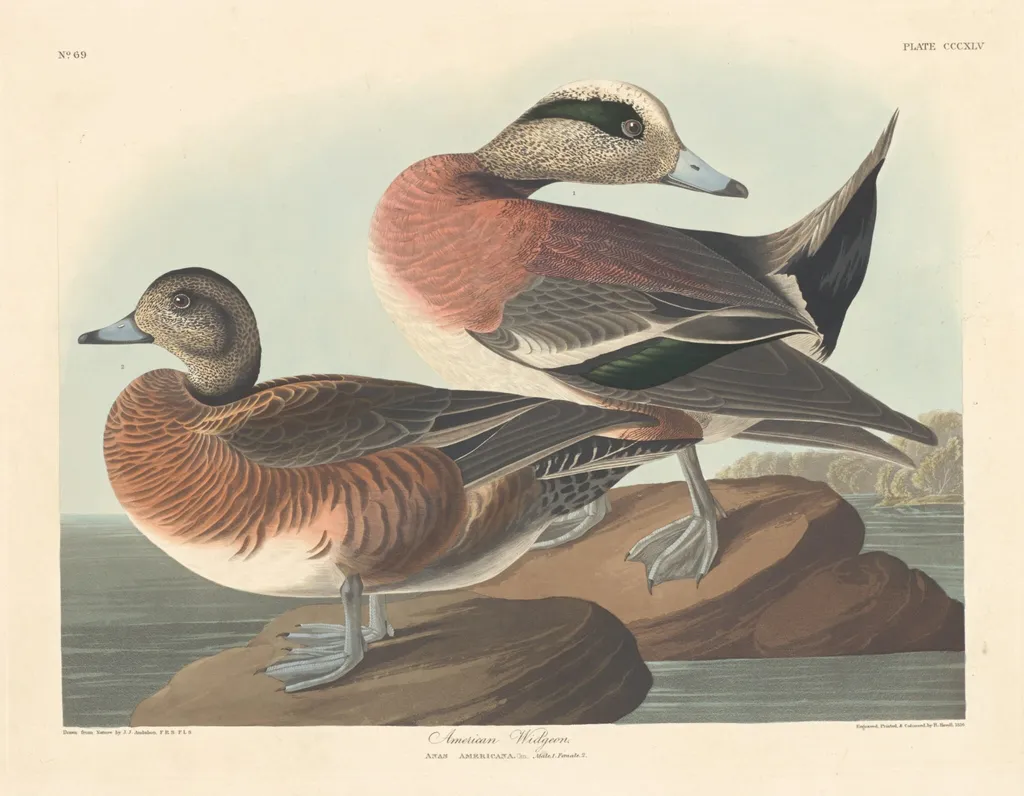
American Widgeon is an ink print by the Romanticist artist Robert Havell Jr.. It dates from 1836 and is held in the collection of the National Gallery of Art.
About this work
Overview
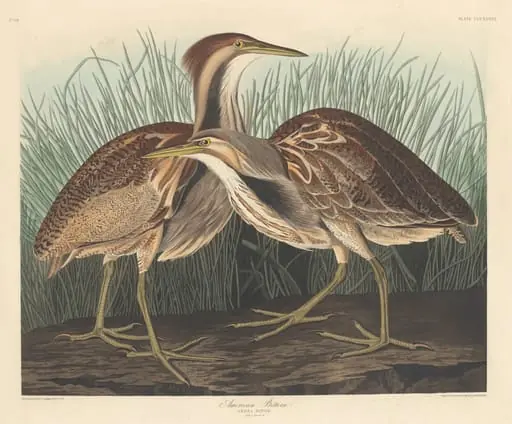
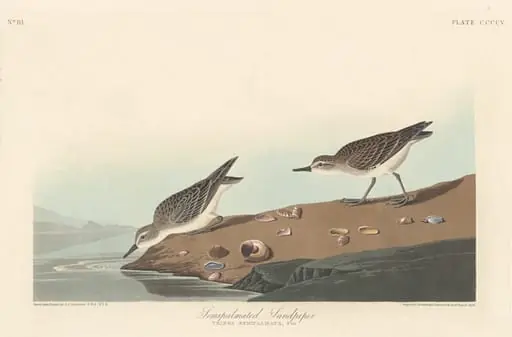
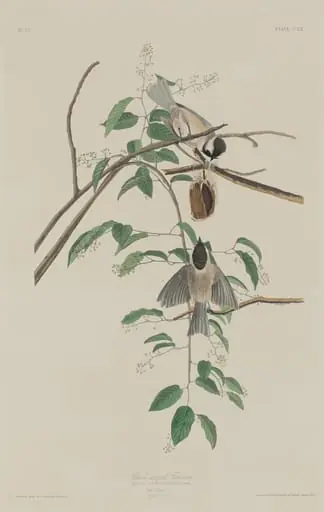
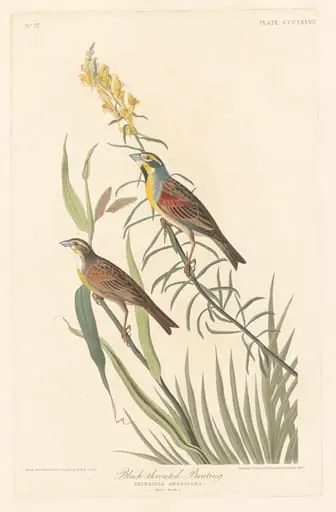
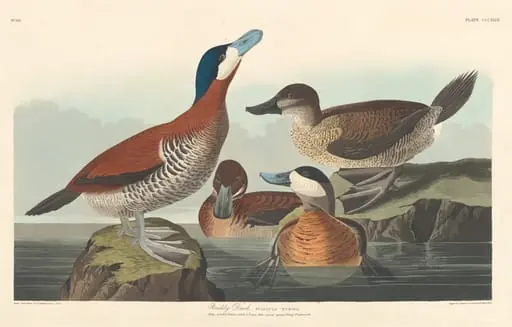
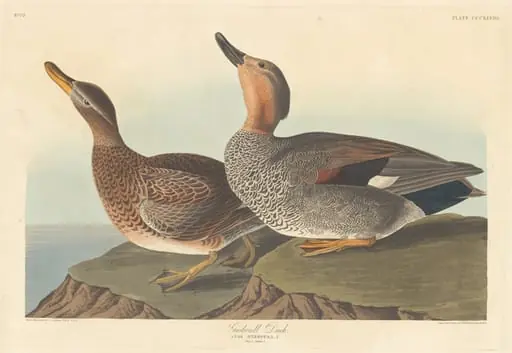
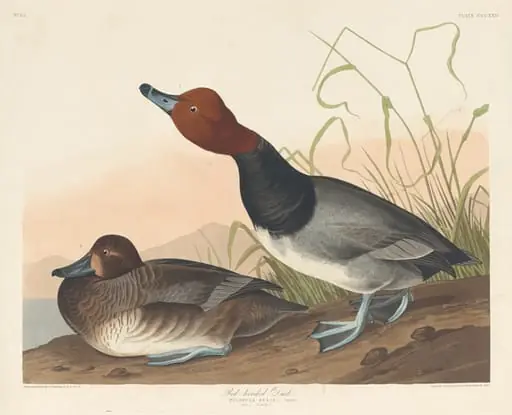
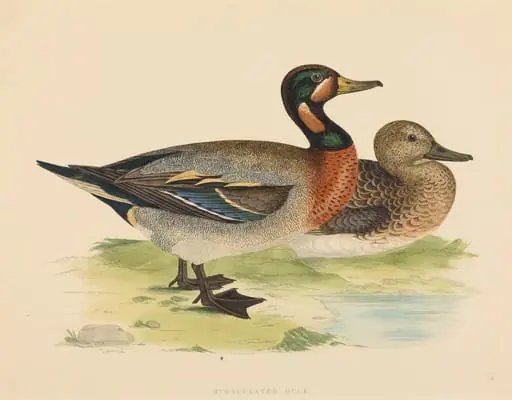
American Widgeon is a hand-colored engraving and aquatint print created by Robert Havell Jr. in 1836 on Whatman wove paper, showcasing a detailed representation of a North American widgeon duck.
Subject & Meaning
The print depicts a North American widgeon with meticulous attention to its natural features, emphasizing realism. A simple background highlights the bird, underscoring its central subject.
Technique & Style
Havell Jr. utilized aquatint, a technique his family excelled in, alongside engraving. This method involved etching designs onto metal plates, characteristic of the Havell family's printmaking tradition.
History & Provenance
Created in 1836 by Robert Havell Jr., the work stems from a family lineage of engravers, etchers, and painters, reflecting their established printmaking expertise.
Context
While the Havell family was known for engagements with Indian art and culture, this piece specifically focuses on North American wildlife, suggesting a broader interest in natural history subjects.
Legacy
As a work by Robert Havell Jr., *American Widgeon* contributes to the legacy of the Havell family's contributions to printmaking, particularly in the aquatint technique.
Artist & collection

Artist
The Havell family of Reading, Berkshire, England, included a number of notable engravers, etchers and painters, as well as writers, publishers, educators, and musicians.