Artwork
Mallard Duck
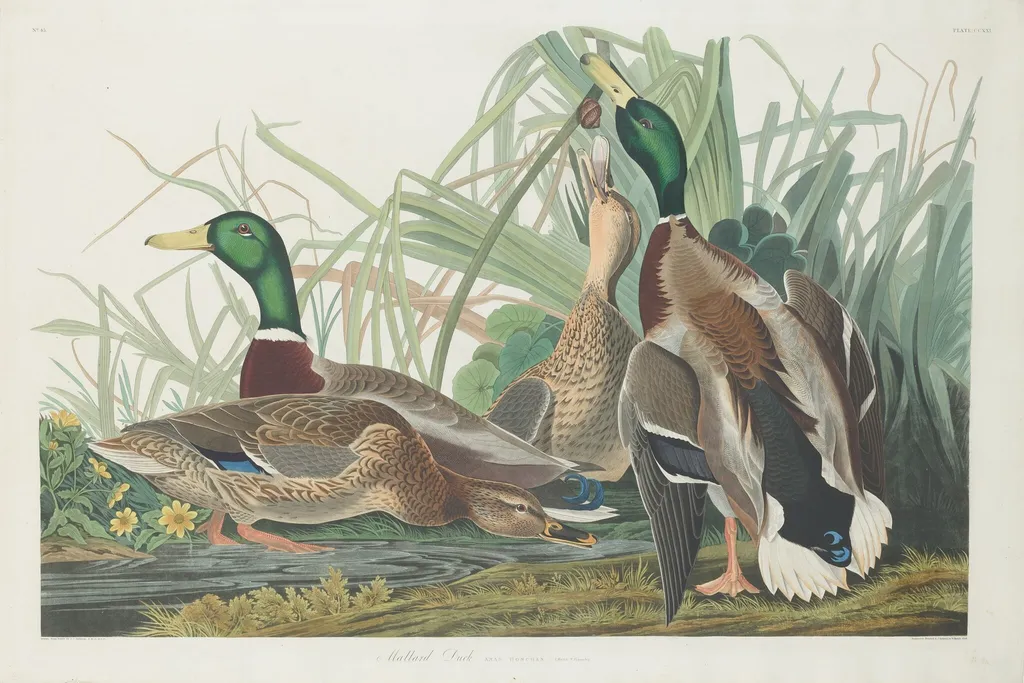
Mallard Duck is an ink print by the Romanticist artist Robert Havell Jr.. It dates from 1834 and is held in the collection of the National Gallery of Art.
About this work
Overview
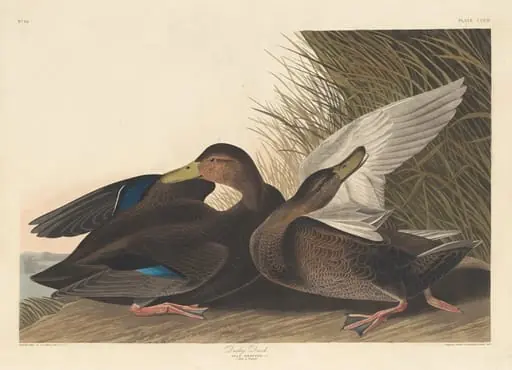
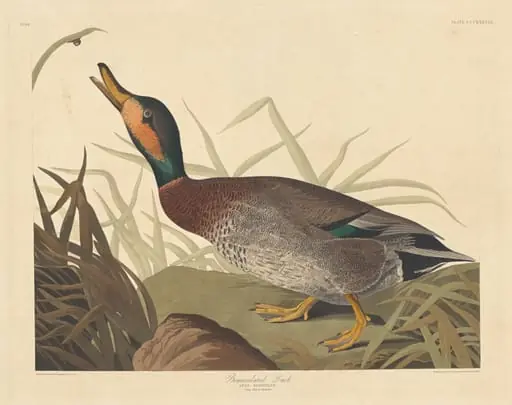
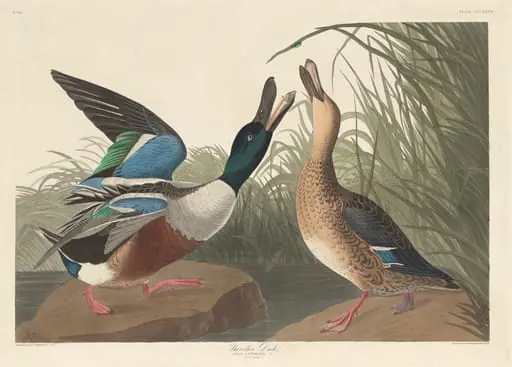
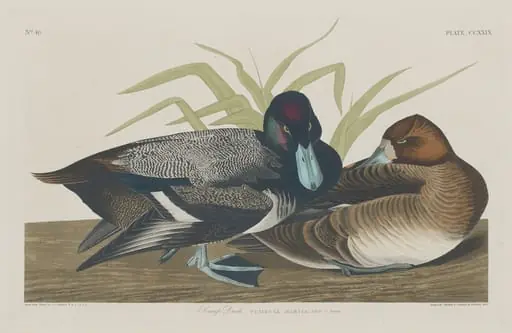
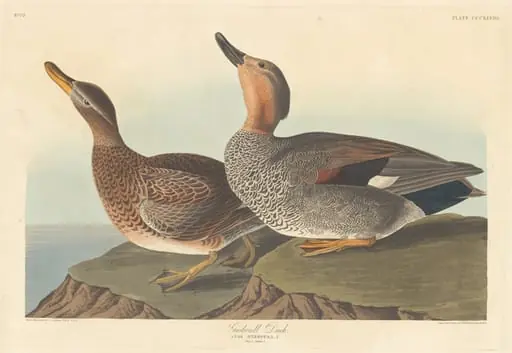
Created in 1834, *Mallard Duck* is a hand‑coloured engraving combined with aquatint, executed on Whatman wove paper. The print presents four mallard ducks in a calm wetland scene, each rendered with meticulous attention to feather texture and posture. The surrounding grasses and water are depicted in muted greens and browns, emphasizing a tranquil natural setting.
Subject & Meaning
The image focuses on a group of mallard ducks, shown both standing and partially submerged, illustrating typical behaviours of the species. By portraying the birds in a realistic environment, the work aligns with early‑19th‑century interests in scientific observation and the aesthetic appreciation of wildlife.
Technique & Style
Havell employed aquatint to achieve tonal variation across the water and foliage, while the hand‑colouring adds subtle hues to the ducks’ plumage—greens, browns and whites. The combination of engraving lines and aquatint washes reflects the Havell family’s mastery of printmaking methods that could convey fine detail and atmospheric depth.
History & Provenance
Robert Havell Jr., part of a lineage of engravers that included his father Robert Havell Sr. and uncle Luke Havell, produced the print during a period when the family was noted for their work in Indian art publishing. The piece was likely issued as part of a series of natural‑history illustrations circulating among collectors and scholars of the era.
Context
The early 1800s saw a surge in ornithological illustration, driven by expanding scientific societies and public curiosity about the natural world. *Mallard Duck* fits within this tradition, offering a visual complement to contemporary texts on birds while demonstrating the commercial viability of finely coloured prints for an educated audience.
Legacy
While not widely reproduced today, the print exemplifies the Havell workshop’s contribution to the development of colour printing techniques in Britain. It remains a reference point for scholars studying the intersection of art, natural history, and the evolution of aquatint as a medium for detailed, coloured imagery.
Own this work as a print
Artist & collection

Artist
The Havell family of Reading, Berkshire, England, included a number of notable engravers, etchers and painters, as well as writers, publishers, educators, and musicians.