Artwork
The Corpus Christi Procession in Seville
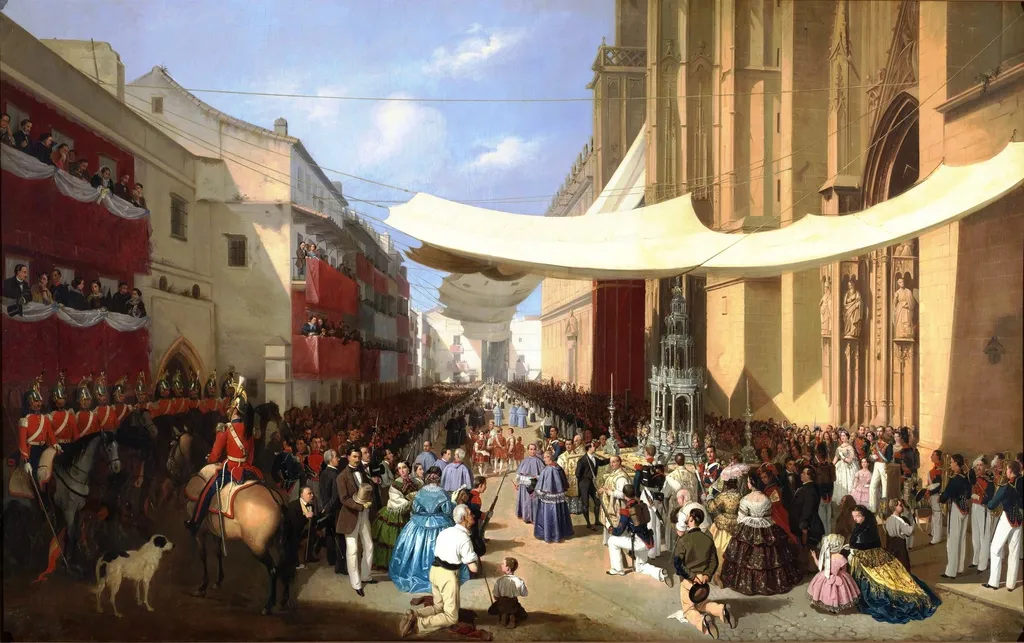
The Corpus Christi Procession in Seville is an oil painting by Manuel Cabral y Aguado Bejarano. It dates from 1857 and is held in the collection of the Museo del Prado.
About this work
Overview
The work resides in the Museo del Prado, where it stands as a representative example of mid-19th-century Spanish genre painting rooted in local tradition.
Painted in 1857 by Manuel Cabral y Aguado Bejarano, this oil on canvas depicts a Corpus Christi procession through the streets of Seville. A member of the city’s artistic community, Cabral y Aguado Bejarano captured a moment of public ritual with precision and attention to social detail. The work resides in the Museo del Prado, where it stands as a representative example of mid-19th-century Spanish genre painting rooted in local tradition.
Subject & Meaning
The painting portrays a religious procession honoring the Eucharist, a central event in Seville’s annual calendar. Participants include clergy, lay brotherhoods in distinctive robes, and townspeople of varying social standing, all moving in orderly formation. The scene conveys communal devotion rather than solemnity, emphasizing civic pride and collective participation in a ritual that bound religious and urban life together.
Technique & Style
Cabral y Aguado Bejarano employed a detailed, realistic approach characteristic of Costumbrismo, rendering textures of fabric, stone, and skin with careful brushwork. Light falls naturally across the street, enhancing the three-dimensionality of figures and architecture. The composition guides the viewer’s eye along the procession’s path, using diagonal lines and layered depth to suggest movement through a crowded urban space.
History & Provenance
Completed in 1857, the painting entered the Museo del Prado’s collection shortly after its creation. It remained within Spanish institutional hands, reflecting its recognition as a document of regional culture. Cabral y Aguado Bejarano, a native of Seville, produced several works on similar themes, but this remains one of his most comprehensive depictions of a local ceremony.
Context
In mid-19th-century Spain, religious festivals were both spiritual observances and expressions of civic identity. Seville’s Corpus Christi procession, with its elaborate rituals and participation from multiple social classes, offered artists a rich subject. Cabral y Aguado Bejarano’s work aligns with broader European trends in genre painting but grounds itself firmly in Andalusian specificity, avoiding idealization in favor of observed reality.
Legacy
The painting endures as a visual record of Seville’s ceremonial life during a period of social change. While not widely exhibited outside Spain, it contributes to scholarly understanding of Costumbrismo and the role of religion in urban culture. Its meticulous detail continues to inform studies of dress, architecture, and public behavior in 19th-century Andalusia.
Own this work as a print
Artist & collection
Artist
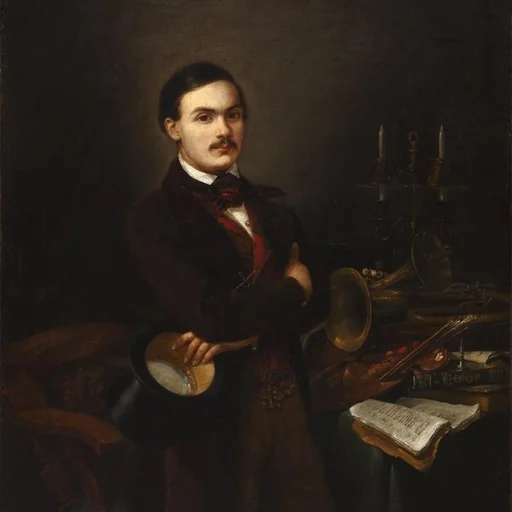
Manuel Cabral y Aguado Bejarano
Manuel Cabral Aguado-Bejarano (1827 in Seville – 1891 in Seville) was a Spanish painter in the Romantic style; best known for his Costumbrismo scenes.

 Horses in a Courtyard by the Bullring before the Bullfight, Madrid (detail)
 Auto-da-fe on Plaza Mayor, Madrid
 La garde nationale célèbre dans la cour du Palais-Royal, l'anniversaire de la naissance du roi, 6 octobre 1830
 The wedding
 Entry of Charles X into Paris at the Gate of la Villette, after his Coronation
 Vista do Mosteiro e Praia de Belém
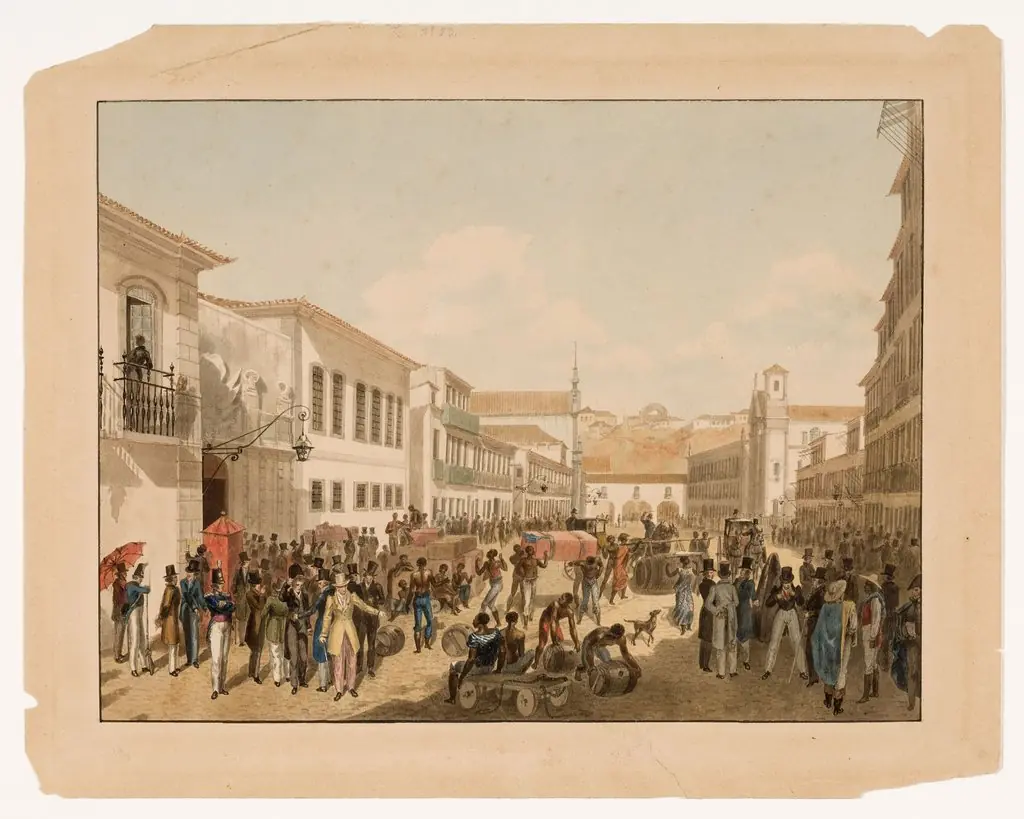 Rua Direita, Rio de Janeiro (atribuído)
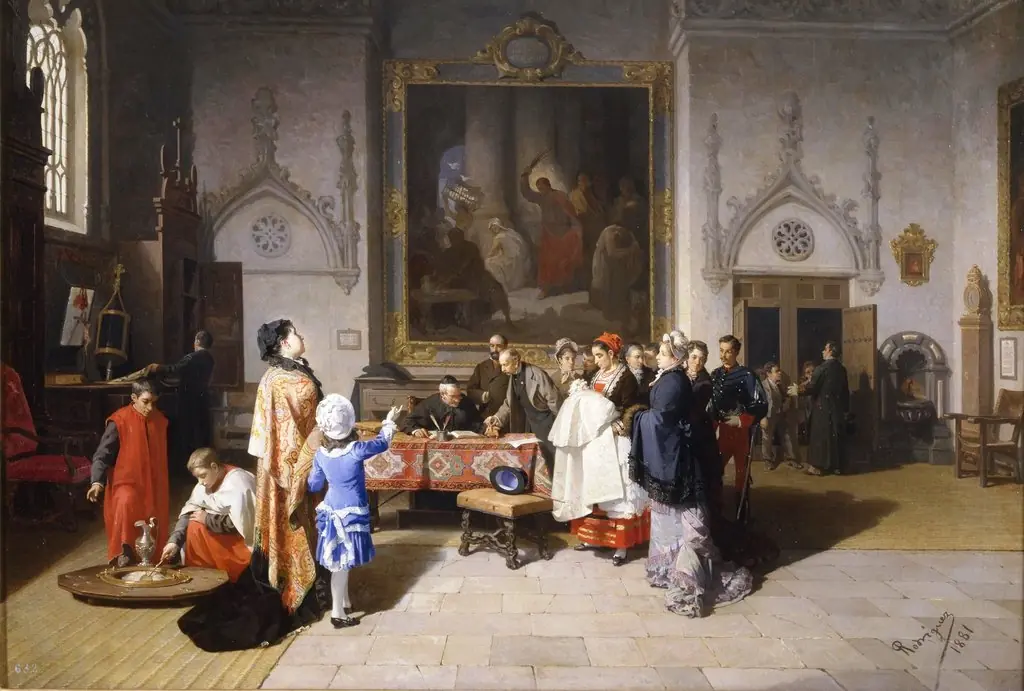 En la sacristía. ¿Mamá por qué pega Jesús a ese hombre?
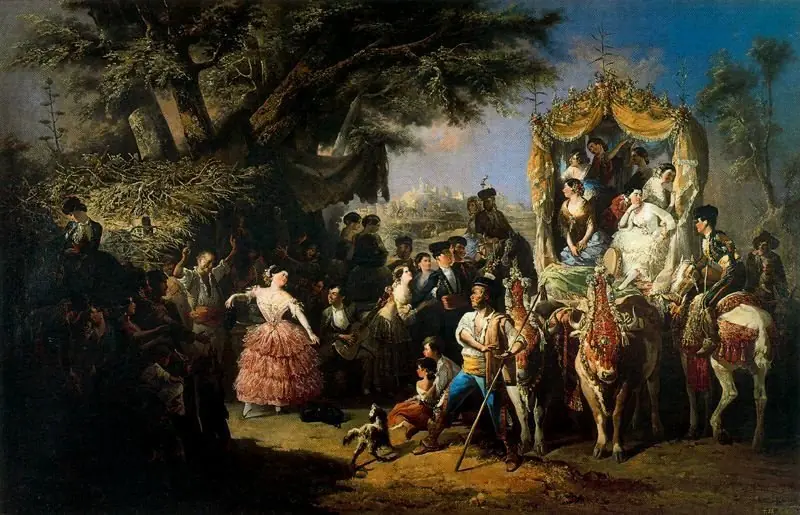 La feria de Santiponce
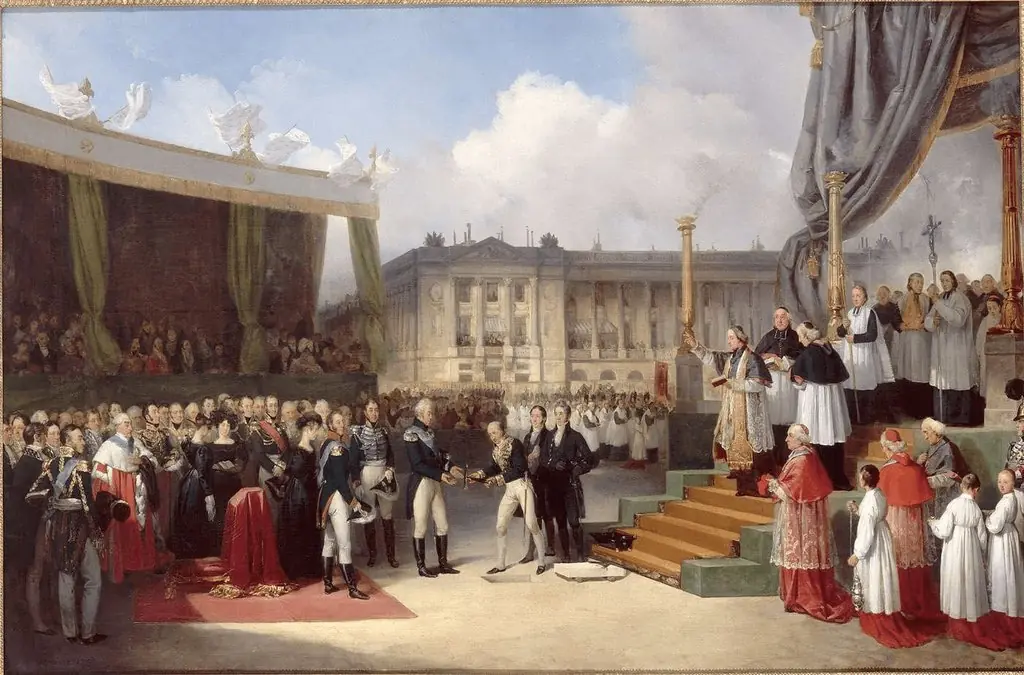 Inauguration du monument à la mémoire de Louis XVI par Charles X, place de la Concorde, 3 mai 1826