Artwork
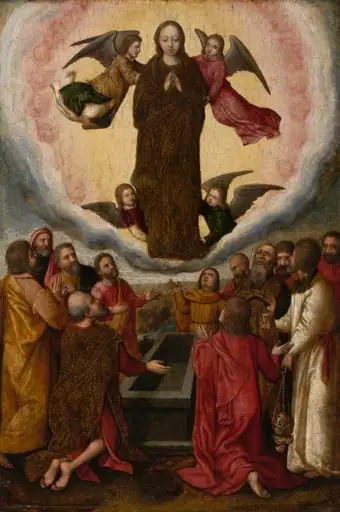
Assumption of the Virgin
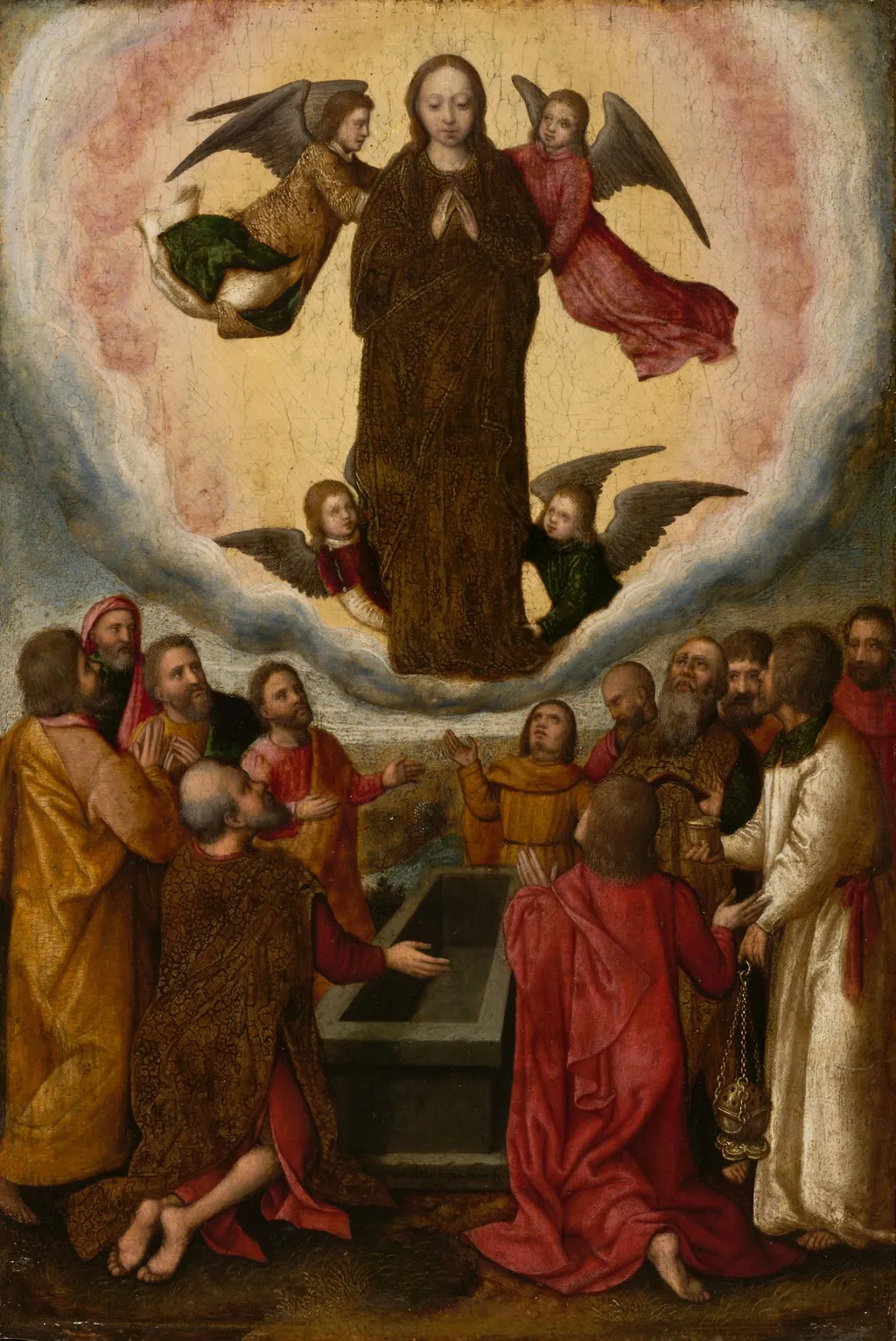
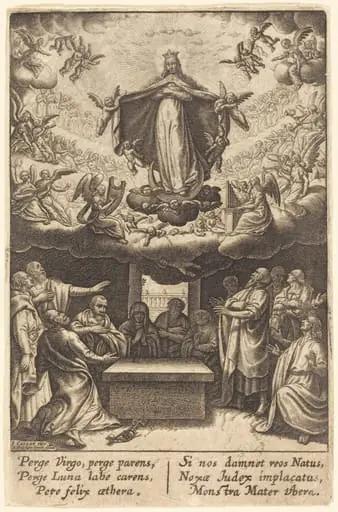
Assumption of the Virgin is an oil painting by the Early Baroque Italian artist Marcellus Coffermans. It dates from 1550 and is held in the collection of the Art Institute of Chicago.
About this work
Overview
Assumption of the Virgin is a 16th-century religious oil painting by Marcellus Coffermans, dated circa 1550, currently in the collection of the Art Institute of Chicago.
Subject & Meaning
The painting depicts the Assumption of the Virgin Mary, showing her serene ascension to heaven. Mary, clad in a long, dark robe, is accompanied by angels, one of whom holds a red cloth. Below, a diverse group of mourners surrounds an empty stone tomb, expressing varied emotions at her departure.
Technique & Style
Executed in oil paint, the work utilizes a warm, dominant color palette of gold, red, and brown. The medium contributes to the painting's depth, texture, and realistic dimensionality, characteristic of Renaissance artistic practices.
History & Provenance
Created around 1550 by Marcellus Coffermans, the painting's historical ownership trail is not detailed here, but it is currently held in the permanent collection of the Art Institute of Chicago.
Context
This work reflects Renaissance religious art themes, emphasizing the sacred event of the Virgin's Assumption. The composition and emotional portrayal of figures align with period conventions for depicting pivotal religious narratives.
Legacy
As a preserved example of 16th-century religious painting, Assumption of the Virgin contributes to the understanding and appreciation of Renaissance art, available for study at the Art Institute of Chicago.
Own this work as a print
Artist & collection

Artist
Marcellus Coffermans, was a Flemish renaissance painter who was active in Antwerp from 1549 to 1581.