Artwork
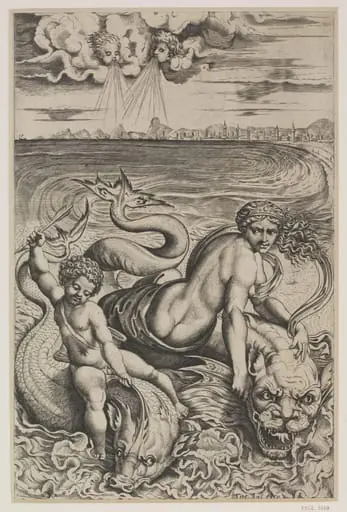
Love and Cupid Carried by Dolphins
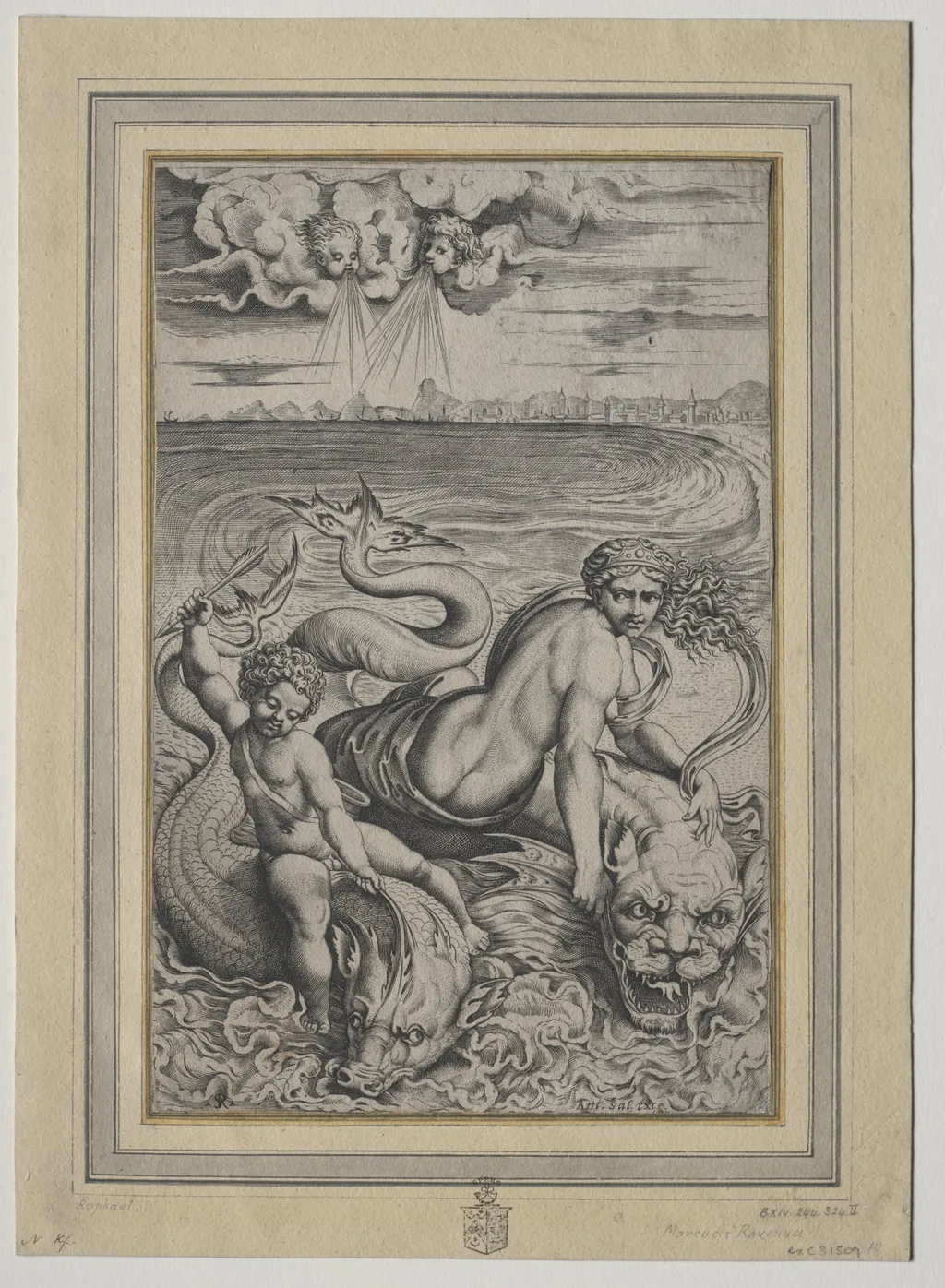
Love and Cupid Carried by Dolphins is a print by the Renaissance artist Marco Dente. It dates from 1504 and is held in the collection of the Cleveland Museum of Art.
About this work
Overview
Love and Cupid Carried by Dolphins is a mythological print created around 1504 by Marco Dente. The work is currently part of the collection at The Cleveland Museum of Art.
Subject & Meaning
The print depicts a muscular woman, likely a mythological figure, riding a dolphin while holding a bow. Cupid, as a small winged boy, stands on the dolphin's back, aiming an arrow. A sea monster with a lion's head emerges from the waves below, contrasting with serene angels and a distant city in the sky.
Technique & Style
The print exhibits a distinctive style with sharply defined edges on clouds, waves, and figures, giving the scene a carved, stone-like appearance. The composition is densely packed with action, characteristic of the artist's approach.
History & Provenance
Created circa 1504, the print's history prior to its current residence at The Cleveland Museum of Art is not detailed here.
Context
This work fits within the broader artistic trends of the Renaissance, notable for its mythological themes and dynamic movement. Comparing with the Renaissance style highlights how Dente's mix of myth and energetic composition aligns with or diverges from contemporaneous art.
Legacy
The legacy of 'Love and Cupid Carried by Dolphins' is not explicitly outlined in the provided information, suggesting its impact or influence on subsequent art or cultural movements is either undocumented here or not widely emphasized.
Artist & collection

Artist
Marco Dente da Ravenna (1493–1527), usually just called Marco Dente, was an Italian engraver born in Ravenna in the latter part of the 15th Century.

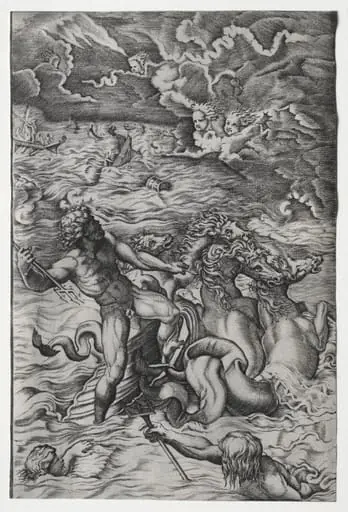 Neptune Calming the Tempest That Aeolus Raised Against Aeneas's Fleet
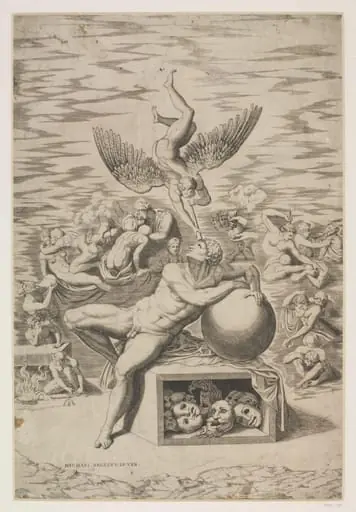 Dream of Human Life
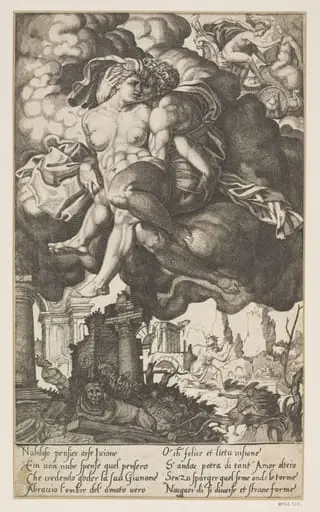 Untitled
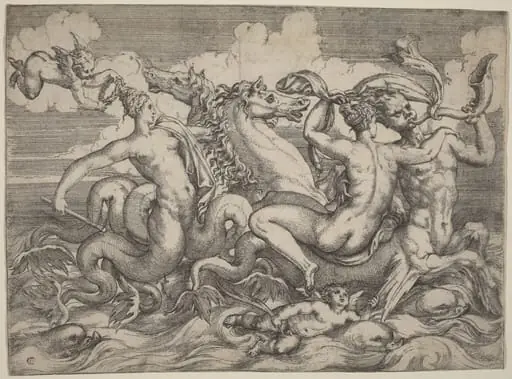 Sirens, Naiads, and Tritons
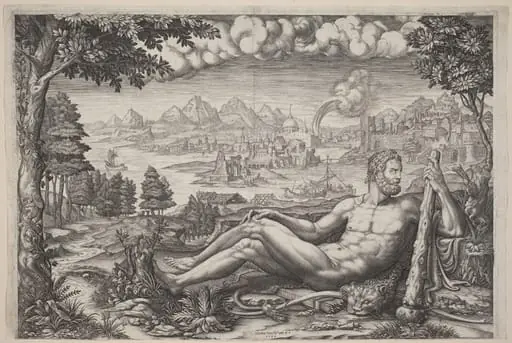 Hercules Resting from His Labors
![Battle of the Sea Gods [left half], by Andrea Mantegna](https://artifactworldgallery.com/img/andrea-mantegna--battle-of-the-sea-gods-left-half--084dd803fb0016b2-w320.webp) Battle of the Sea Gods [left half]
Battle of the Sea Gods [left half]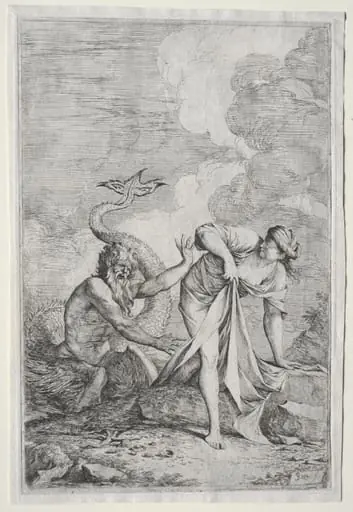 Glaucus and Scylla
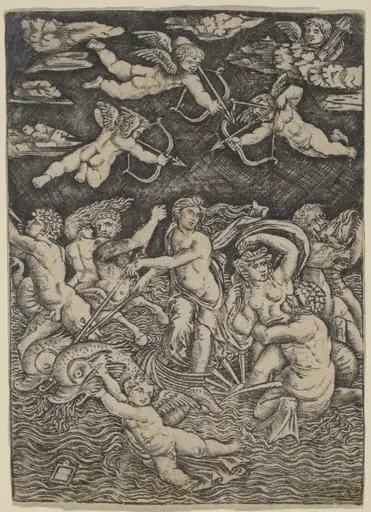 The Triumph of Galatea
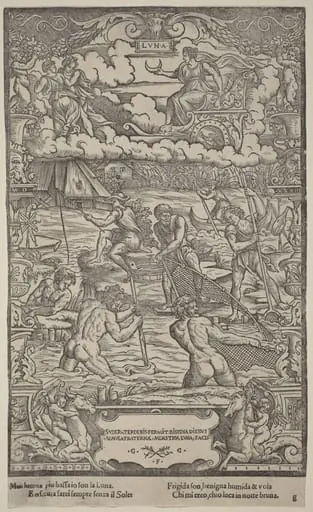 Moon
Moon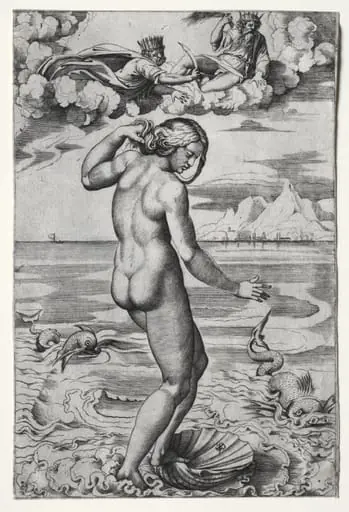 The Birth of Venus
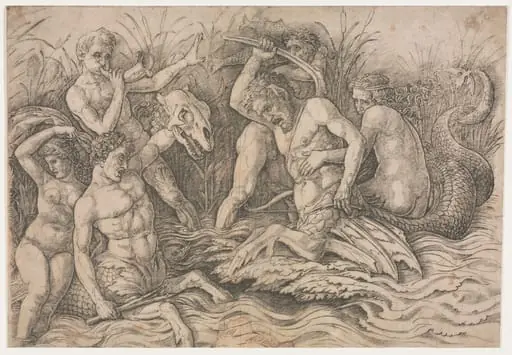 Battle of the Sea Gods - right portion
 Venus and Cupid on the Sea Riding on Dolphins