Artwork
Parable of the unjust steward
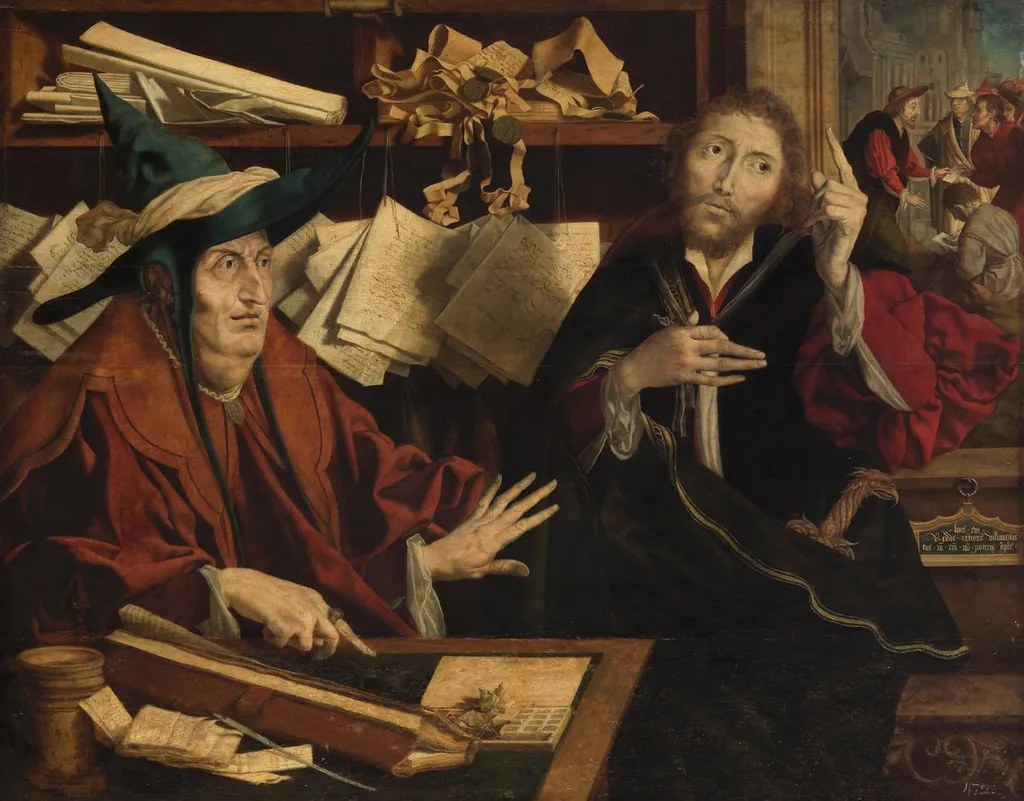
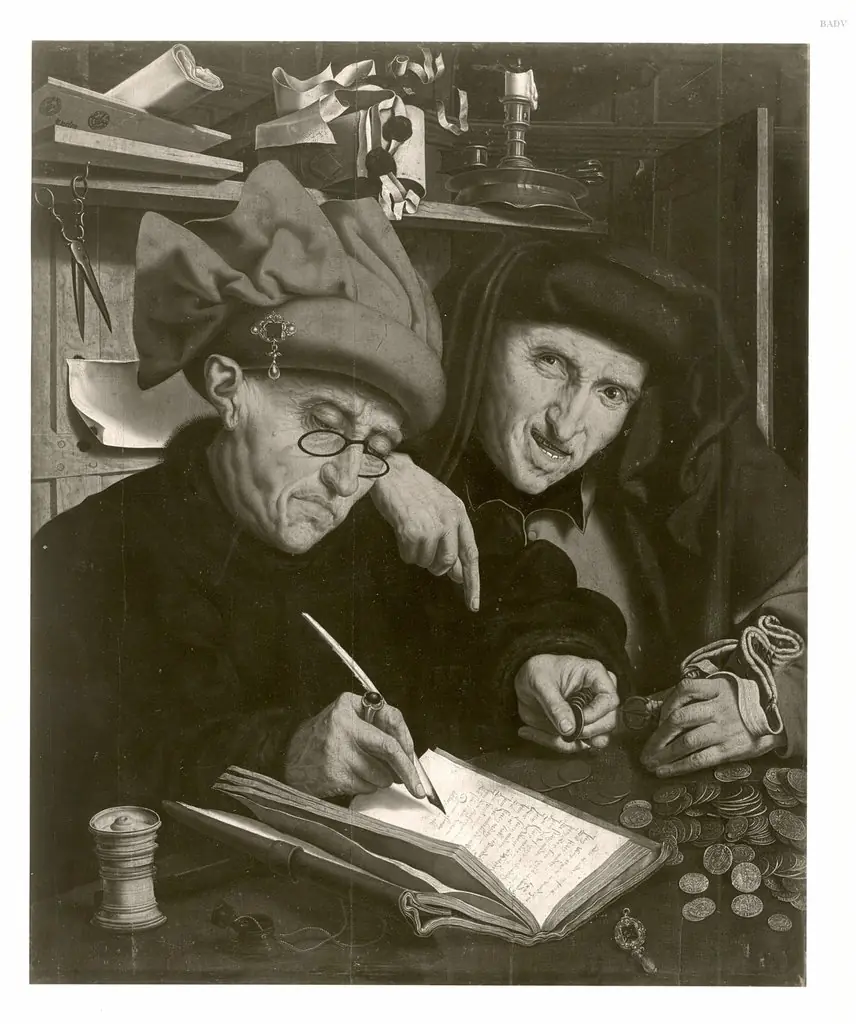
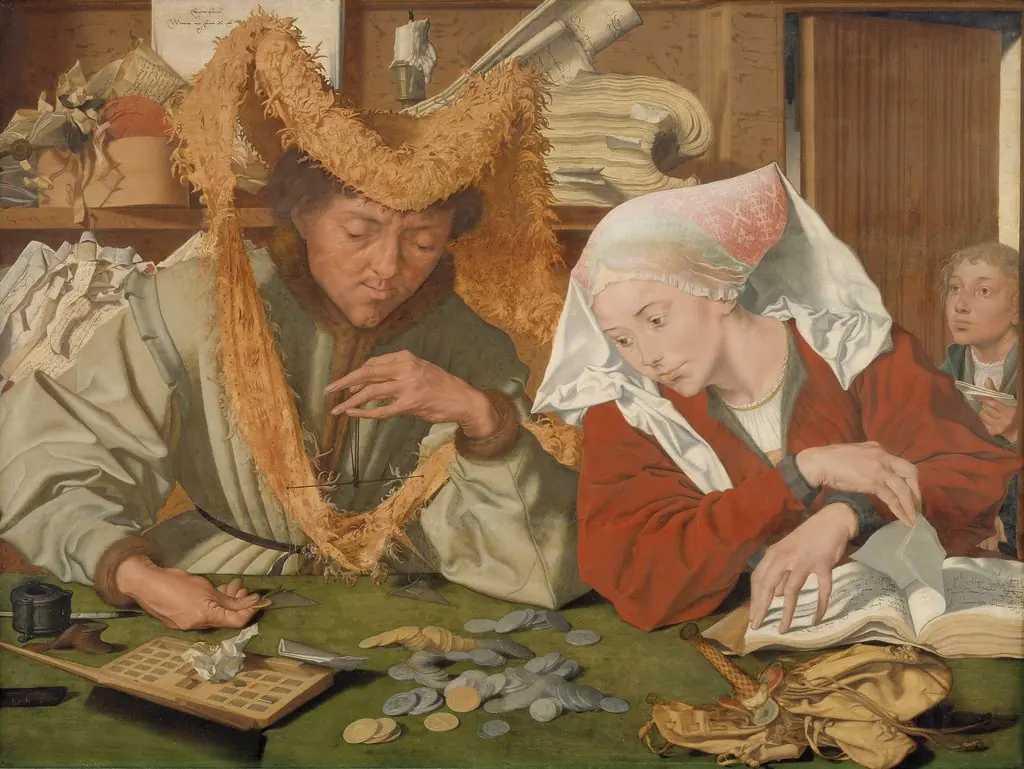
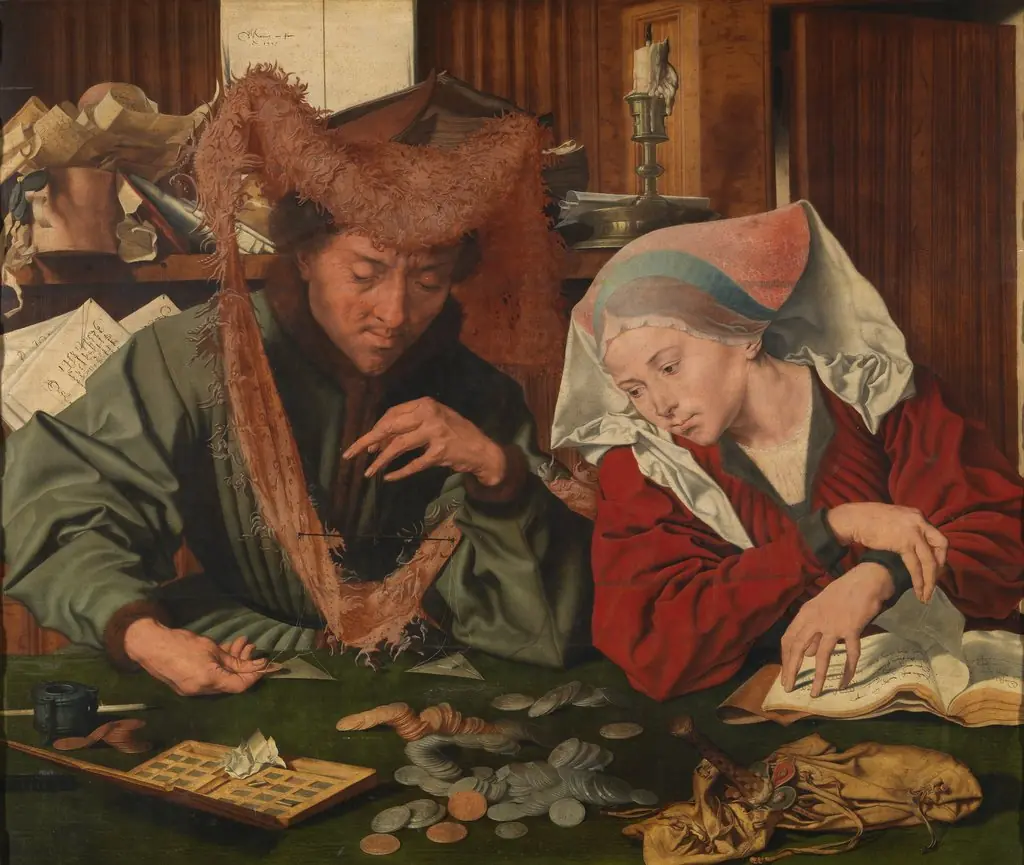
Parable of the unjust steward is an oil painting by the Northern Renaissance artist Marinus van Reymerswaele. It dates from 1540 and is held in the collection of the Kunsthistorisches Museum.
About this work
Overview
Marinus van Reymerswaele, a Dutch painter of the early sixteenth century, executed the oil painting *Parable of the Unjust Steward* in 1540. The work belongs to the Northern Renaissance and is part of the collection of the Kunsthistorisches Museum in Vienna. It presents a domestic interior that functions as a visual illustration of a biblical parable.
Subject & Meaning
Their intense focus on the documents suggests a negotiation or accounting of assets, echoing the moral lesson of the unjust steward from the Gospel of Luke.
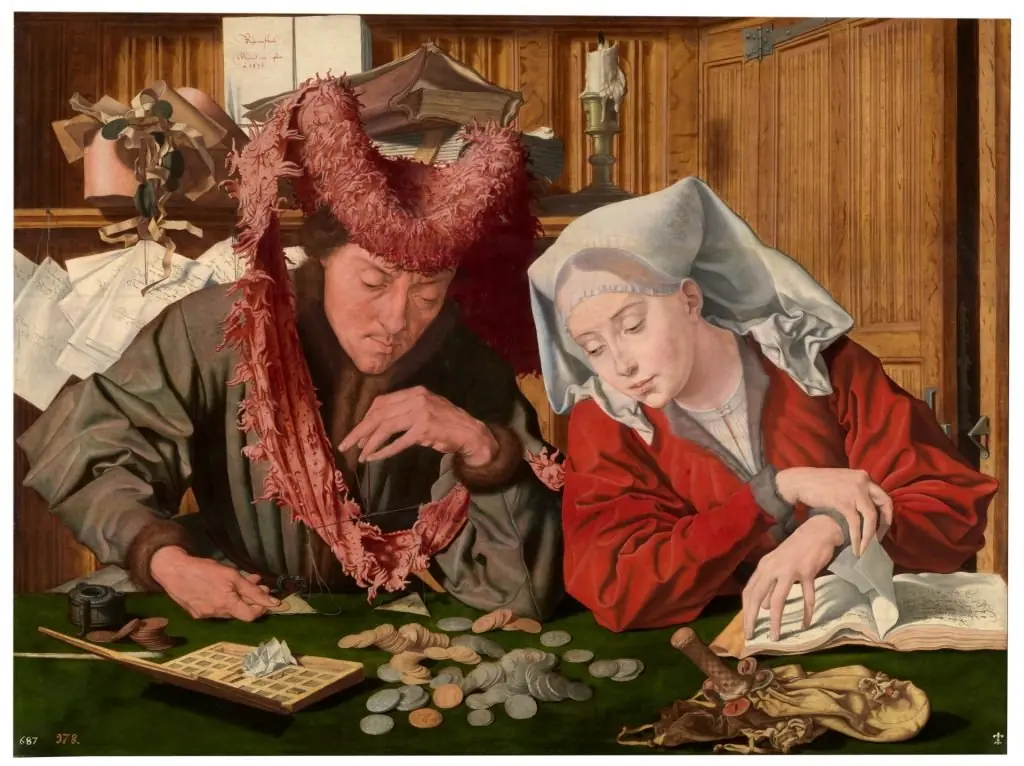
The composition shows two figures within a cramped office space, surrounded by piles of papers, scrolls and books. The man on the left, dressed in a red robe and green hat, appears to be a steward or clerk, while the figure in black with a red sleeve represents a client or legal authority. Their intense focus on the documents suggests a negotiation or accounting of assets, echoing the moral lesson of the unjust steward from the Gospel of Luke.
Technique & Style
Van Reymerswaele employs a tight, detailed rendering of textures, from the sheen of the fabrics to the worn wood of the desk. The painting relies on chiaroscuro, using strong contrasts of light and shadow to model the figures and create a sense of depth. The palette is muted overall, punctuated by the vivid reds of the garments, a typical trait of his workshop’s repeated compositions.
History & Provenance
Trained and active in Antwerp, van Reymerswaele later returned to the Northern Netherlands, where he ran a busy workshop that reproduced popular motifs. *Parable of the Unjust Steward* entered the Kunsthistorisches Museum’s holdings in the early twentieth century, though earlier ownership records are scarce. The work reflects the artist’s habit of producing multiple versions of similar religious‑genre scenes for a market of private collectors.
Context
During the mid‑sixteenth century, Northern European painters often combined devotional subjects with everyday settings, making biblical narratives accessible to a mercantile audience. Van Reymerswaele’s focus on a legal office mirrors contemporary concerns about trade, credit, and moral responsibility, situating the painting within the broader cultural discourse of the Reformation era.
Artist & collection
Artist
Marinus van Reymerswaele or Marinus van Reymerswale (c. 1490 – c. 1546) was a Dutch Renaissance painter mainly known for his genre scenes and religious compositions. After studying in Leuven and training and working as…