Artwork
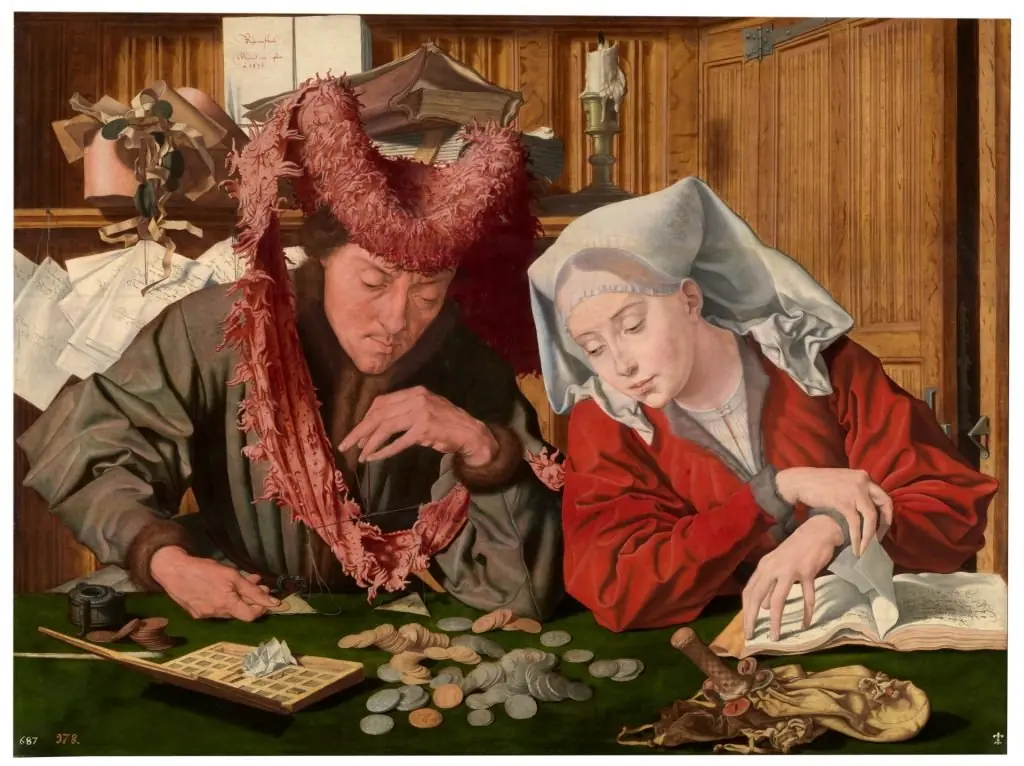
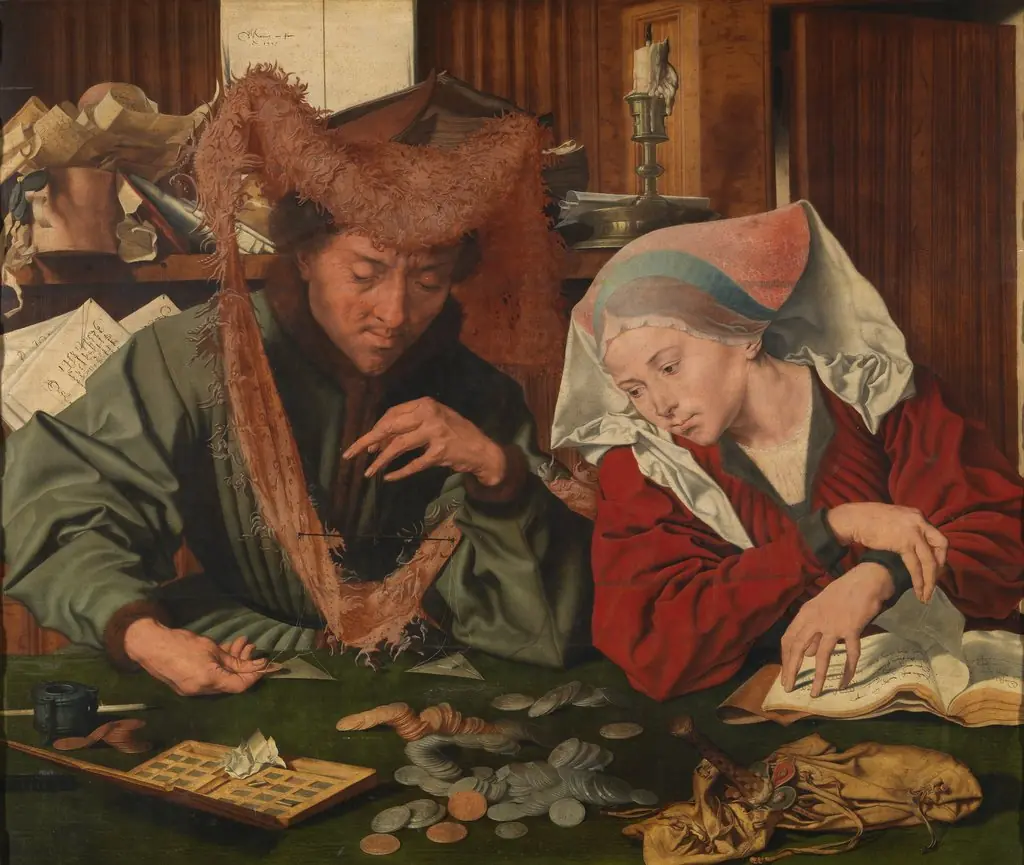
The Moneychanger and his Wife
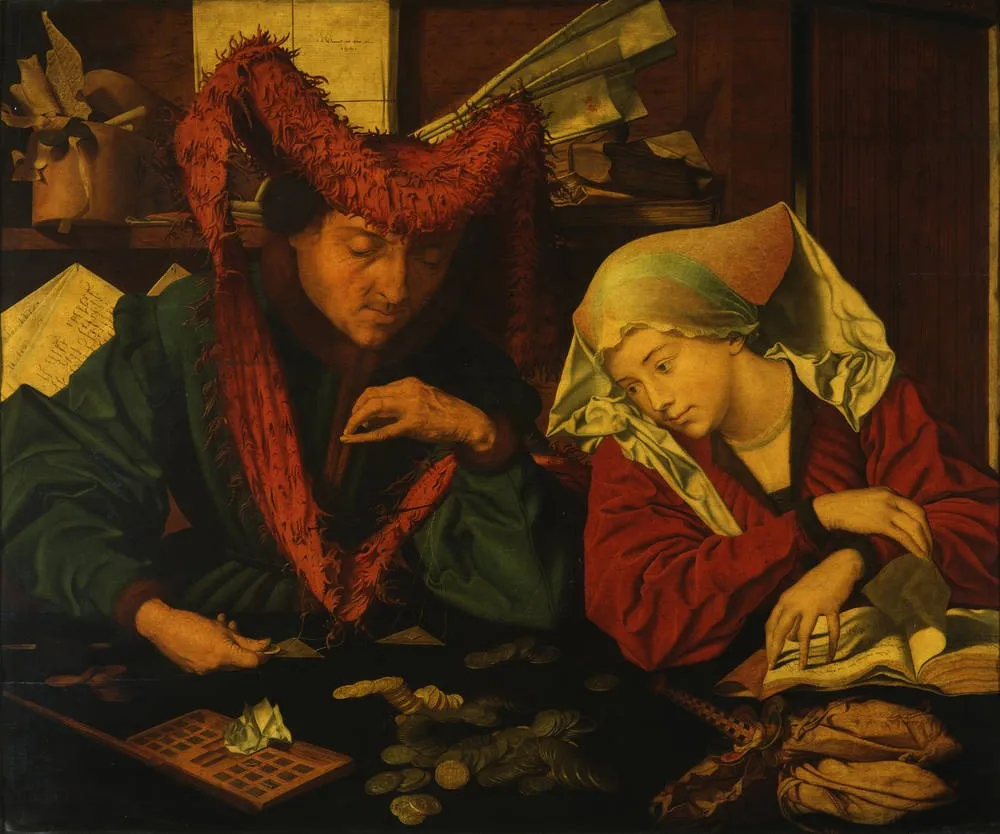
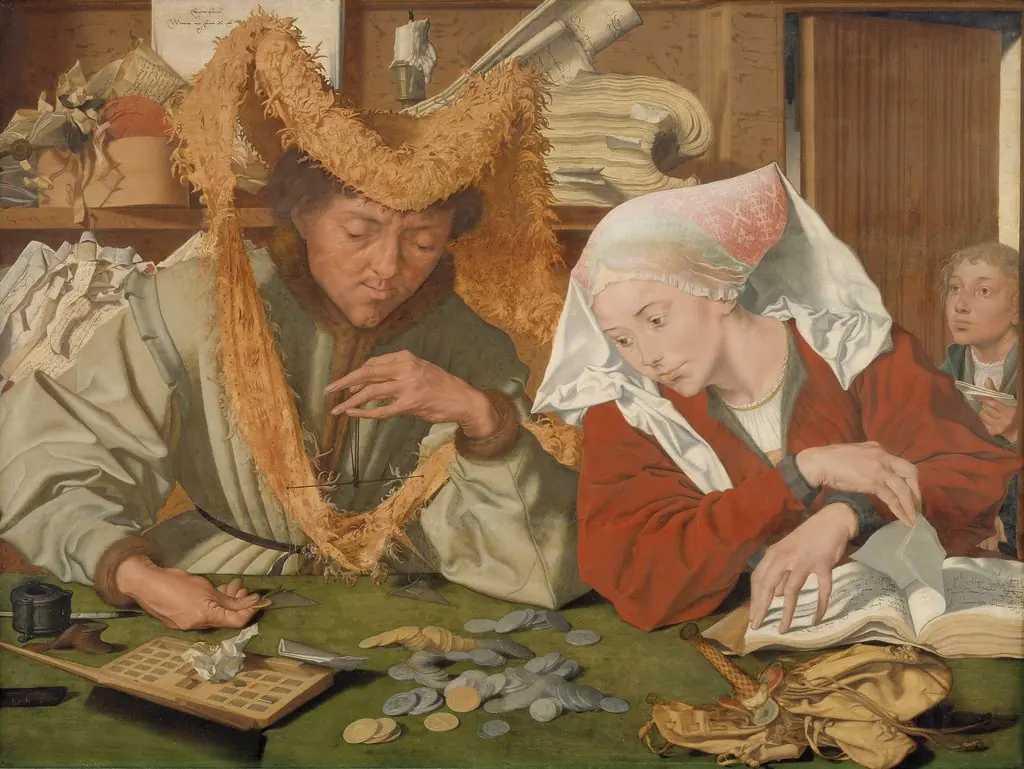
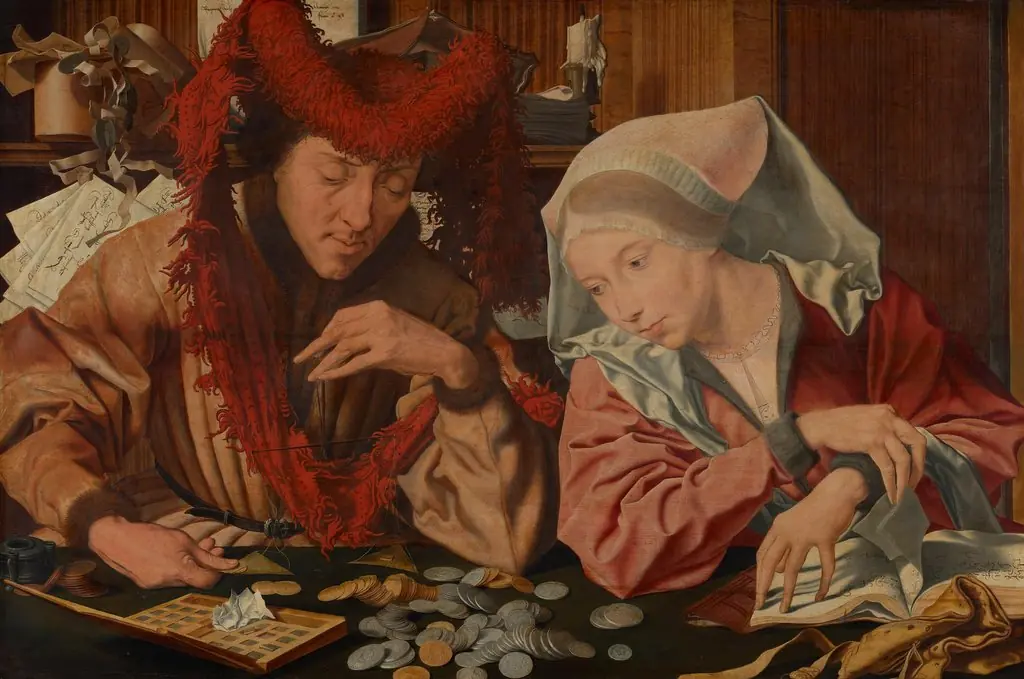
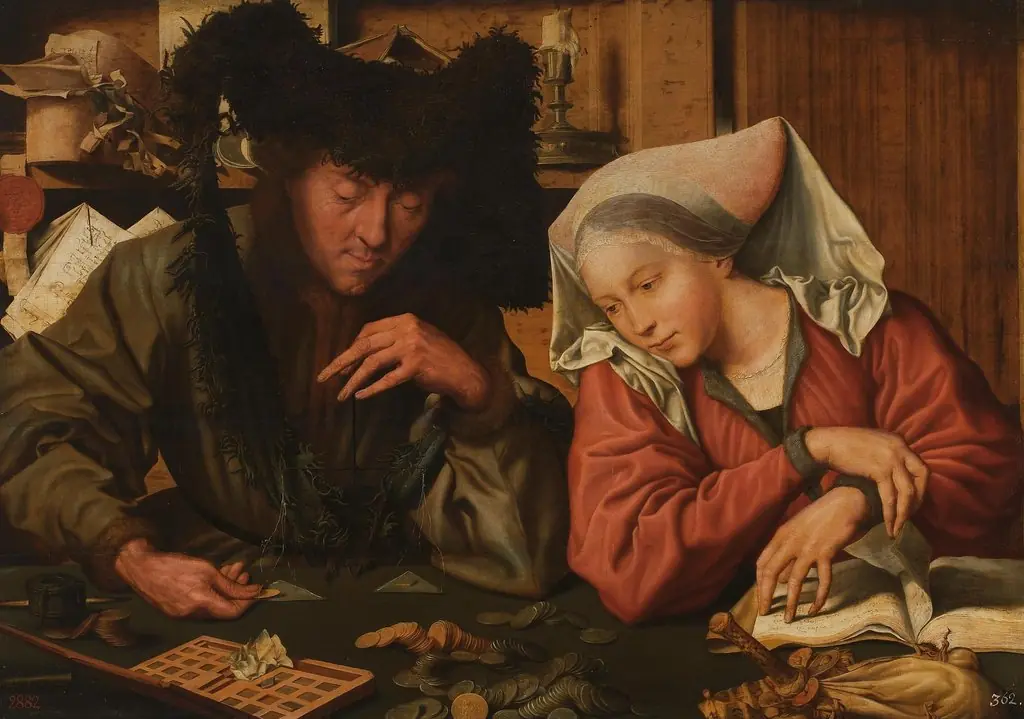
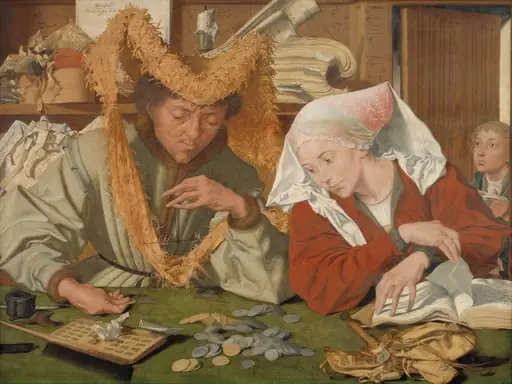
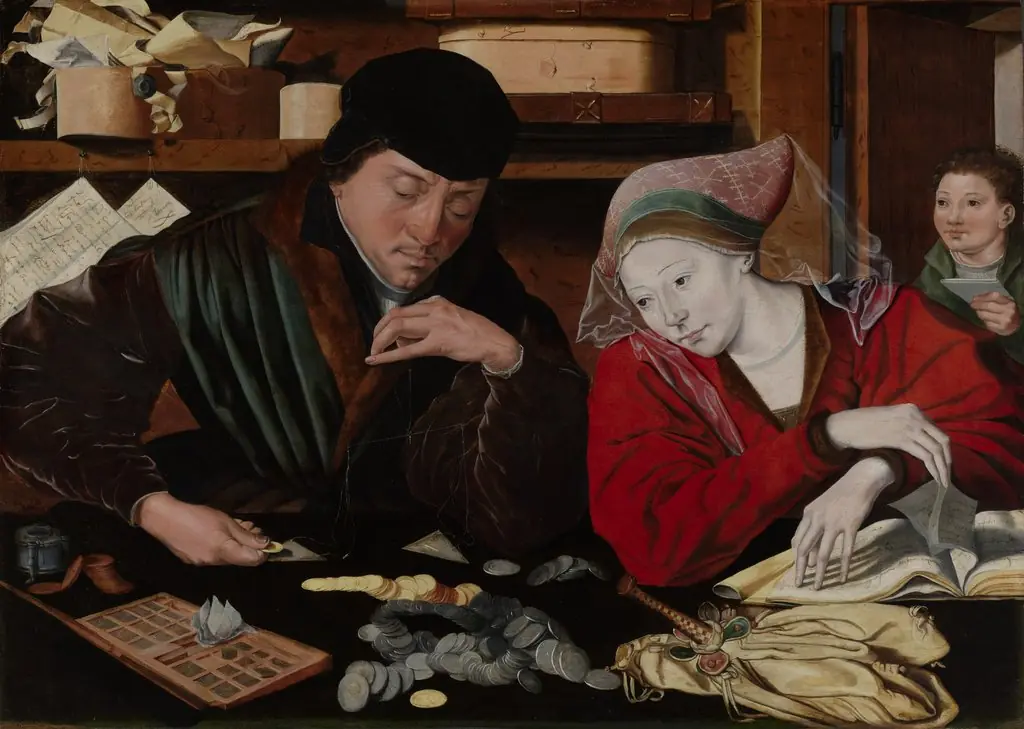
The Moneychanger and his Wife is an oil painting by the Northern Renaissance artist Marinus van Reymerswaele. It dates from 1541 and is held in the collection of the Staatliche Kunstsammlungen Dresden.
About this work
Overview
It illustrates a domestic interior where a male figure and his spouse engage in financial activity, a subject the artist returned to repeatedly in his workshop.
Marinus van Reymerswaele, a Dutch painter of the early sixteenth century, completed *The Moneychanger and his Wife* in 1541. Executed in oil on panel, the work belongs to the Northern Renaissance tradition and is part of the Gemäldegalerie Alte Meister collection. It illustrates a domestic interior where a male figure and his spouse engage in financial activity, a subject the artist returned to repeatedly in his workshop.
Subject & Meaning
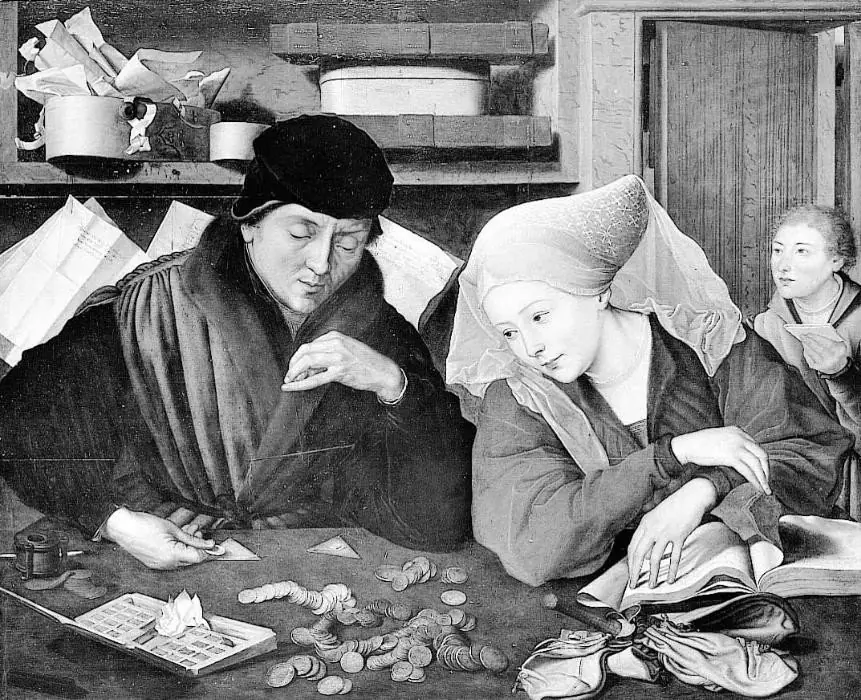
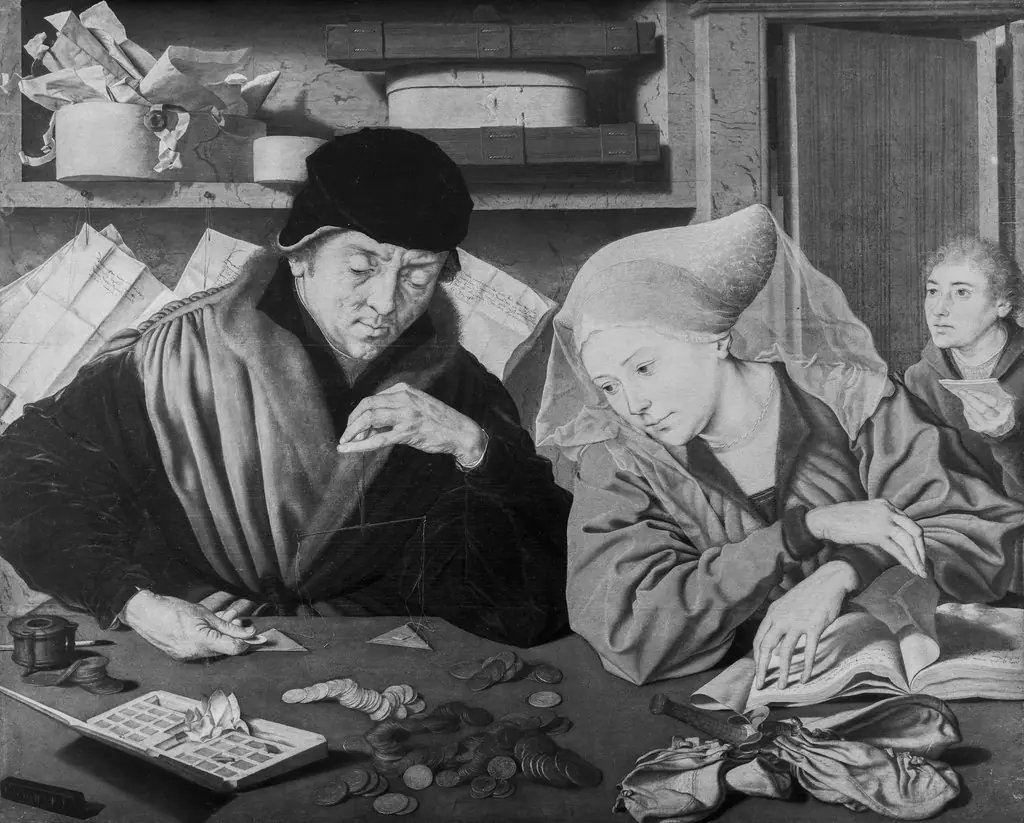
The composition presents a man in a green robe and red hat handling a coin while a woman in a red dress with a white headscarf examines a book. Scattered on the table are coins, a weighing scale and a sheet of paper, suggesting the calculation of debts or taxes. The inclusion of a mask and other objects in the dim background hints at themes of disguise and the moral ambiguities of money‑lending.
Technique & Style
Van Reymerswaele employs a careful chiaroscuro that models the figures against a dark interior, giving the scene a three‑dimensional presence. Fine brushwork renders the textures of fabric, metal and paper, while the subtle gradations of light emphasize the weight of the objects. The tight spatial arrangement and meticulous detail are characteristic of Northern Renaissance genre painting.
History & Provenance
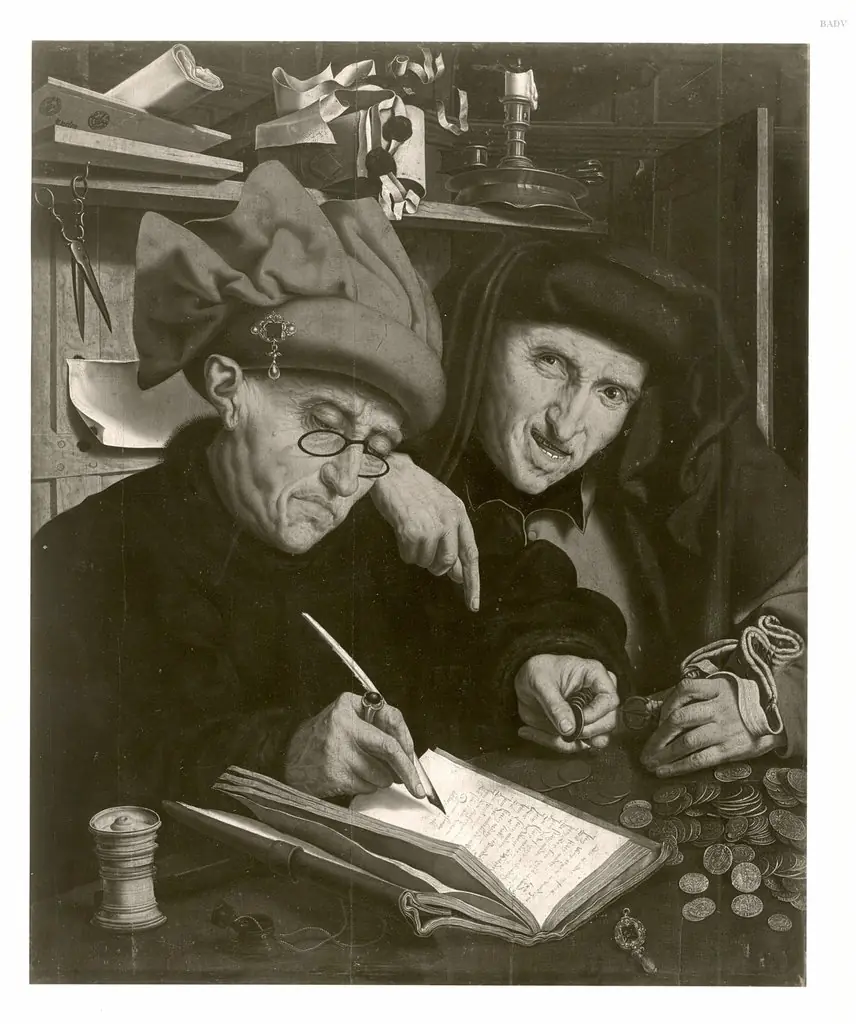
The artist produced several variants of this motif within his workshop, reflecting the popularity of such moralizing genre scenes in the Low Countries. Over the centuries the painting entered various private collections before being acquired by the Gemäldegalerie Alte Meister, where it remains on display as a representative example of van Reymerswaele’s oeuvre.
Context
During the mid‑1500s, Dutch painters often depicted everyday tradespeople to comment on societal values. Van Reymerswaele’s focus on money changers aligns with contemporary concerns about fiscal regulation and the ethical dimensions of commerce, echoing similar works by contemporaries such as Pieter Aertsen and Joachim Patinir.
Artist & collection
Artist
Marinus van Reymerswaele or Marinus van Reymerswale (c. 1490 – c. 1546) was a Dutch Renaissance painter mainly known for his genre scenes and religious compositions. After studying in Leuven and training and working as…