Artwork
Two Draped Female Figures; Rest on the Flight into Egypt [verso]
![Two Draped Female Figures; Rest on the Flight into Egypt [verso], by Angelo Marullo, chalk, 1670](https://artifactworldgallery.com/img/angelo-marullo--two-draped-female-figures-rest-on-the-flight-into-egypt-vers--e824f78c5638b352-w1024.webp)
Two Draped Female Figures; Rest on the Flight into Egypt [verso] is a chalk drawing by the Baroque artist Angelo Marullo. It dates from 1670 and is held in the collection of the National Gallery of Art.
About this work
Overview
Angelo Marullo’s drawing, dated 1670, is executed on laid paper with pen, brown ink, and a brown wash applied over black chalk. The work is divided into two distinct vignettes on the verso: a solitary, draped female figure on the left and a crowded, narrative scene on the right.
Subject & Meaning
The left panel presents a tall woman in flowing robes, hands clasped, her expression serene, suggesting a devotional or noble portrait. The right panel depicts a group of figures—some seated, others kneeling—gazing upward at a luminous, floating presence, likely an angelic figure, evoking the biblical Flight into Egypt.
Technique & Style
Marullo employs swift, sketchy lines and a loose handling of ink and wash, allowing the drapery and gestures to suggest movement without fine detail. The contrast between the calm, linear rendering of the solitary figure and the busier, more gestural composition on the right illustrates his ability to convey narrative tension through varied line work.
History & Provenance
Created in the late seventeenth century, the drawing is attributed to Marullo, an Italian draftsman active during the Baroque period. Its provenance traces to private collections before entering the museum’s holdings, where it is displayed as part of the drawing department’s Baroque holdings.
Context
The work reflects the Baroque fascination with dramatic religious scenes, particularly the Flight into Egypt, a subject frequently rendered by contemporaries. Marullo’s combination of a solitary devotional figure with a larger narrative tableau aligns with the period’s interest in juxtaposing personal piety and communal experience.
Artist & collection


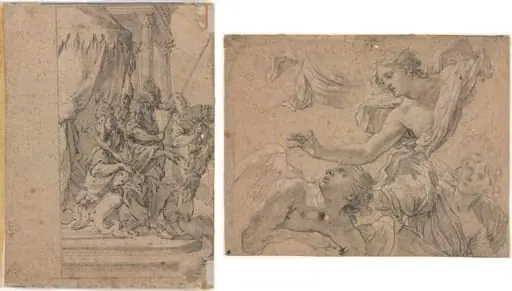 Studies of Angels (recto); Panthea before Cyrus? (verso)
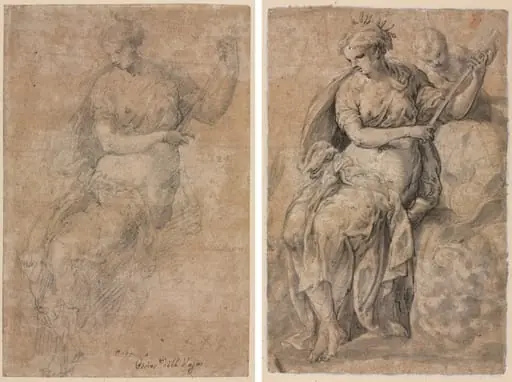 Allegorical Figure (recto and verso)
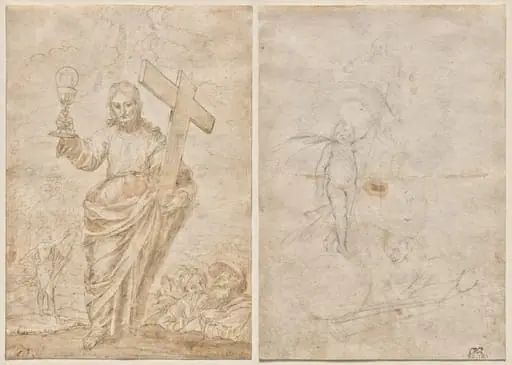 Christ Holding a Chalice and Cross (recto); Resurrected Christ and Lamb of God (verso)
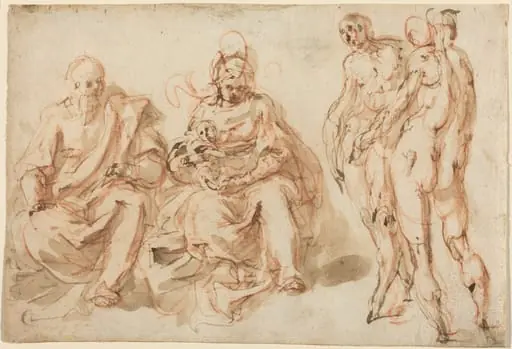 The Adoration of the Shepherds
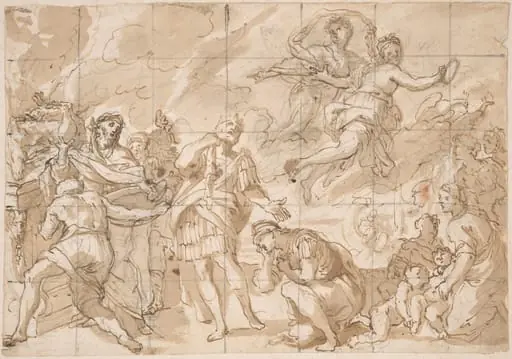 The Sacrifice of Iphigenia
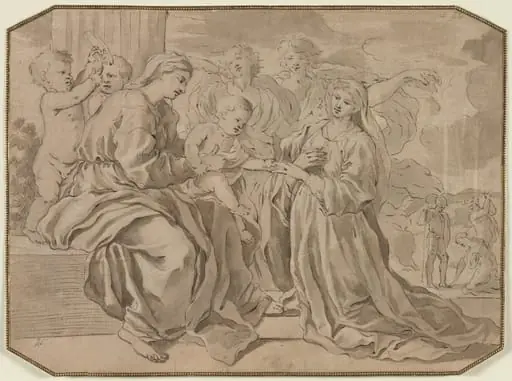 Mystic Marriage of St. Catherine
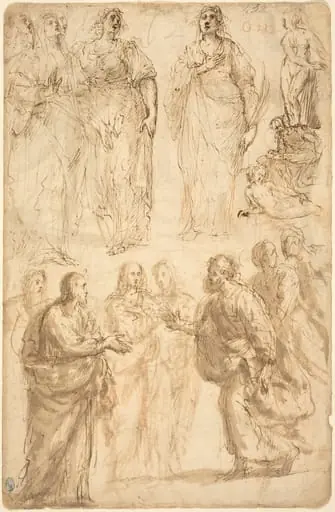 Scenes from the Life of Saint Peter
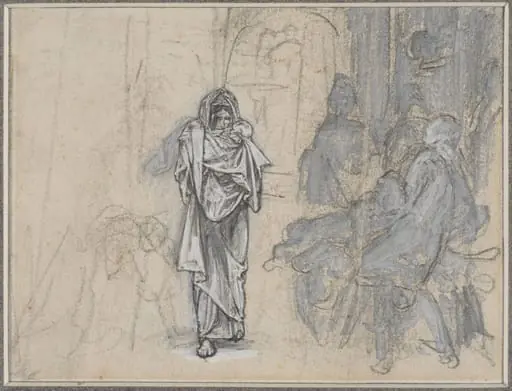 Untitled
![Studies for an Annunciation [recto], by Jacopo Palma il Giovane](https://artifactworldgallery.com/img/jacopo-palma-il-giovane--studies-for-an-annunciation-recto--a15d0411b7678b1e-w320.webp) Studies for an Annunciation [recto]
Studies for an Annunciation [recto]![Presentation of the Virgin in the Temple [recto], by Antonio Zanchi](https://artifactworldgallery.com/img/antonio-zanchi--presentation-of-the-virgin-in-the-temple-recto--b60030c863fe5e3b-w320.webp) Presentation of the Virgin in the Temple [recto]
Presentation of the Virgin in the Temple [recto] A Flying Angel (recto); Studies of Hands Playing Instruments (verso)
![Studies of Hands and Bending Figures [verso], by Abraham Bloemaert](https://artifactworldgallery.com/img/abraham-bloemaert--studies-of-hands-and-bending-figures-verso--31576b28735e6b96-w320.webp) Studies of Hands and Bending Figures [verso]
Studies of Hands and Bending Figures [verso]