Artwork
Guillaume de Brisacier
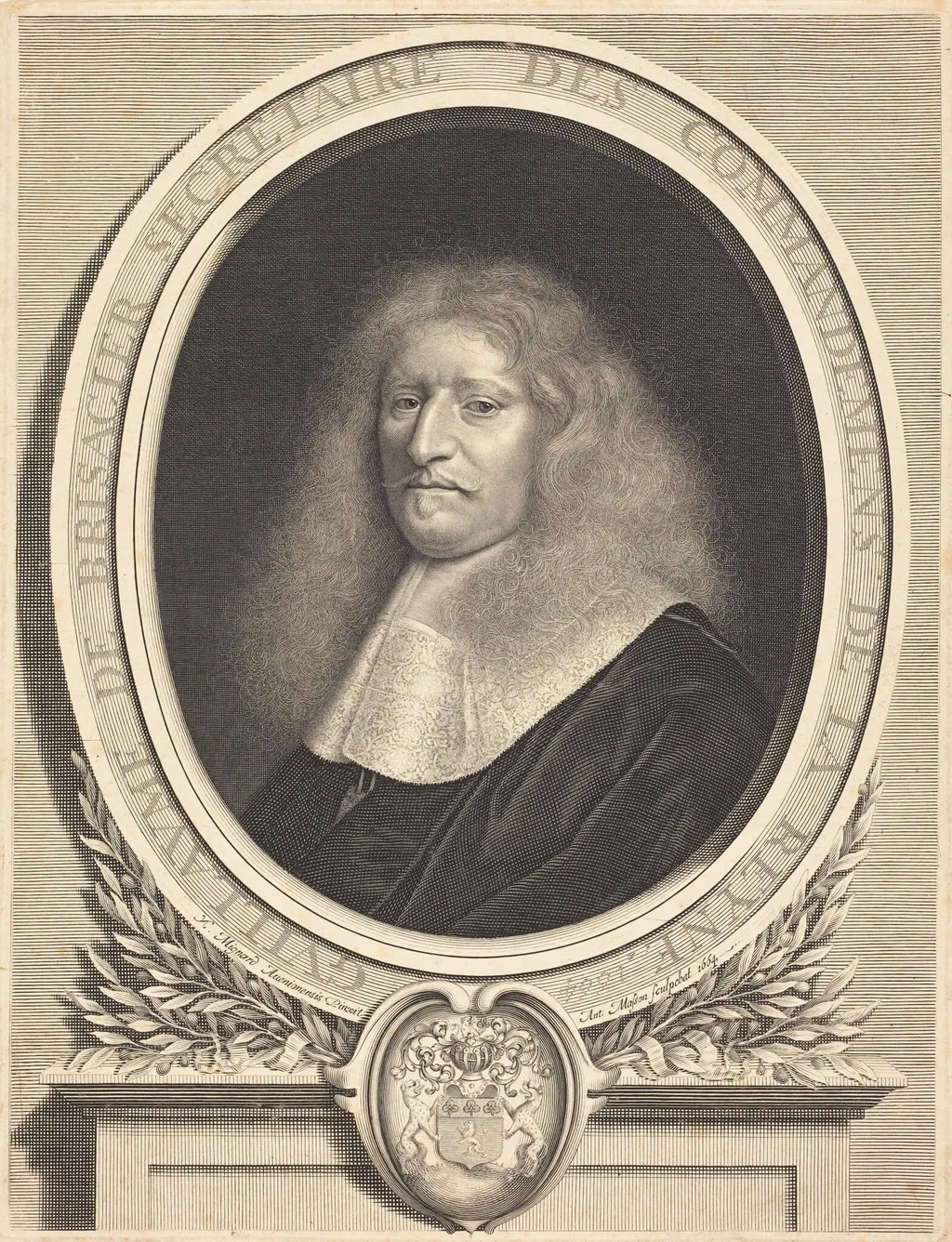
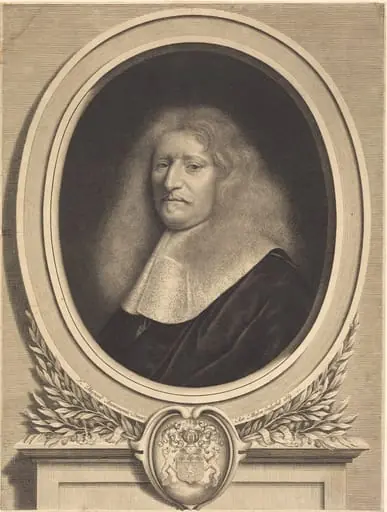
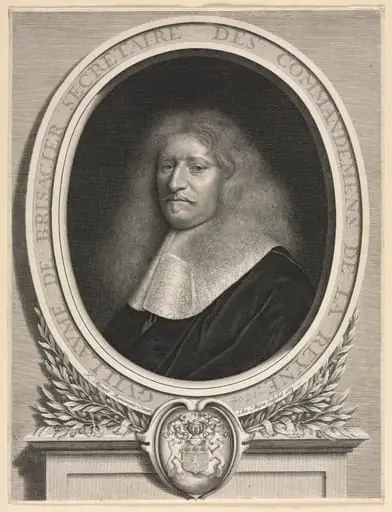
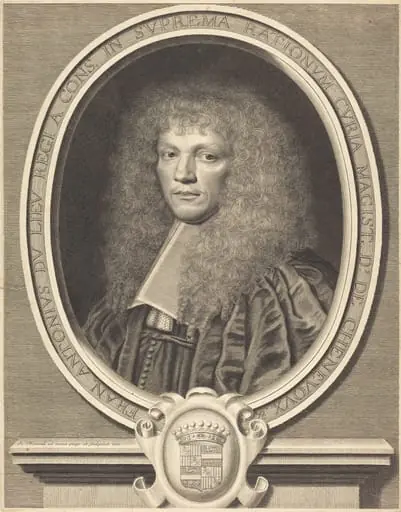
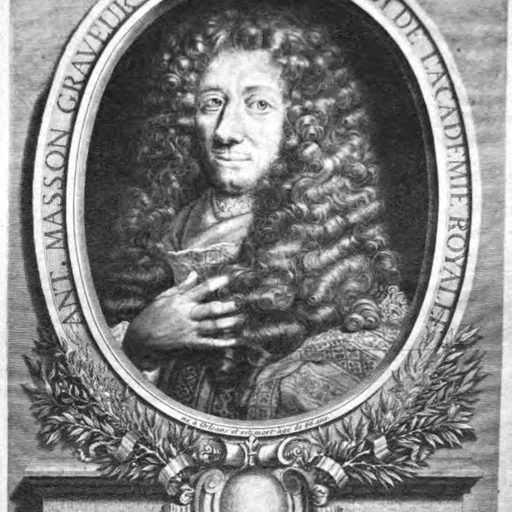
Guillaume de Brisacier is an ink print by the Baroque artist Antoine Masson. It dates from 1664 and is held in the collection of the National Gallery of Art.
About this work
Overview
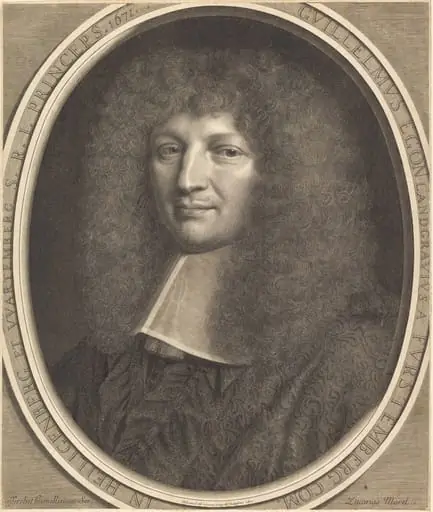
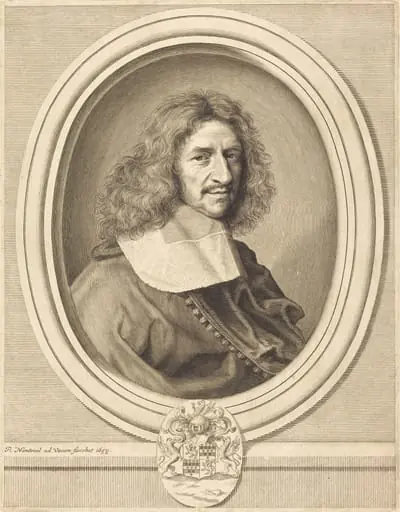
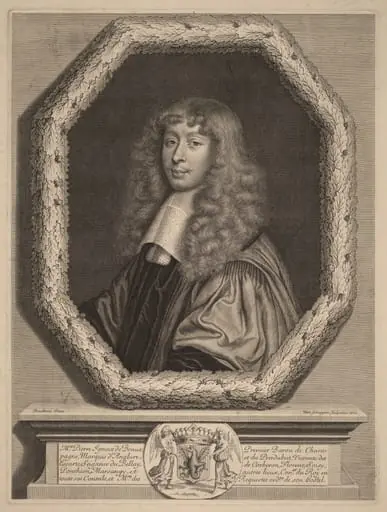
Antoine Masson’s 1664 print portrays Guillaume de Brisacier in a formal black‑and‑white portrait. Executed with a combination of etching and engraving, the image presents the sitter with curly hair, a moustache, and a high‑collared garment, framed by an ornamental border of swirls and leaf motifs.
Subject & Meaning
The work records the likeness of Guillaume de Brisacier, a figure whose identity was significant enough to merit inclusion among Masson’s limited series of portrait plates. The sober expression and dignified attire suggest a portrayal intended to convey status and seriousness.
Technique & Style
Masson employed fine, intersecting lines to model the hair, facial features, and the textured fabric of the collar, creating subtle gradations of tone. This meticulous line work reflects the 17th‑century French approach to portrait engraving, where precision and depth were achieved through careful incising and acid‑etched areas.
History & Provenance
Trained originally as an armorer’s apprentice, Masson turned to printmaking and became a member of the Académie Royale de Peinture et de Sculpture in 1679. The Guillaume de Brisacier plate is one of 68 documented prints attributed to him, illustrating his focus on portraiture during his career.
Context
The print belongs to a period when French engravers produced portrait series for collectors and patrons, often disseminating images of notable individuals. Masson’s work aligns with this tradition, combining technical skill with the courtly aesthetic favored in mid‑17th‑century France.
Artist & collection
Artist
Antoine Masson (1636 – 30 May 1700, in Paris) was a French painter, but above all a line engraver, born at Loury, near Orléans.