Artwork
Ecce Homo
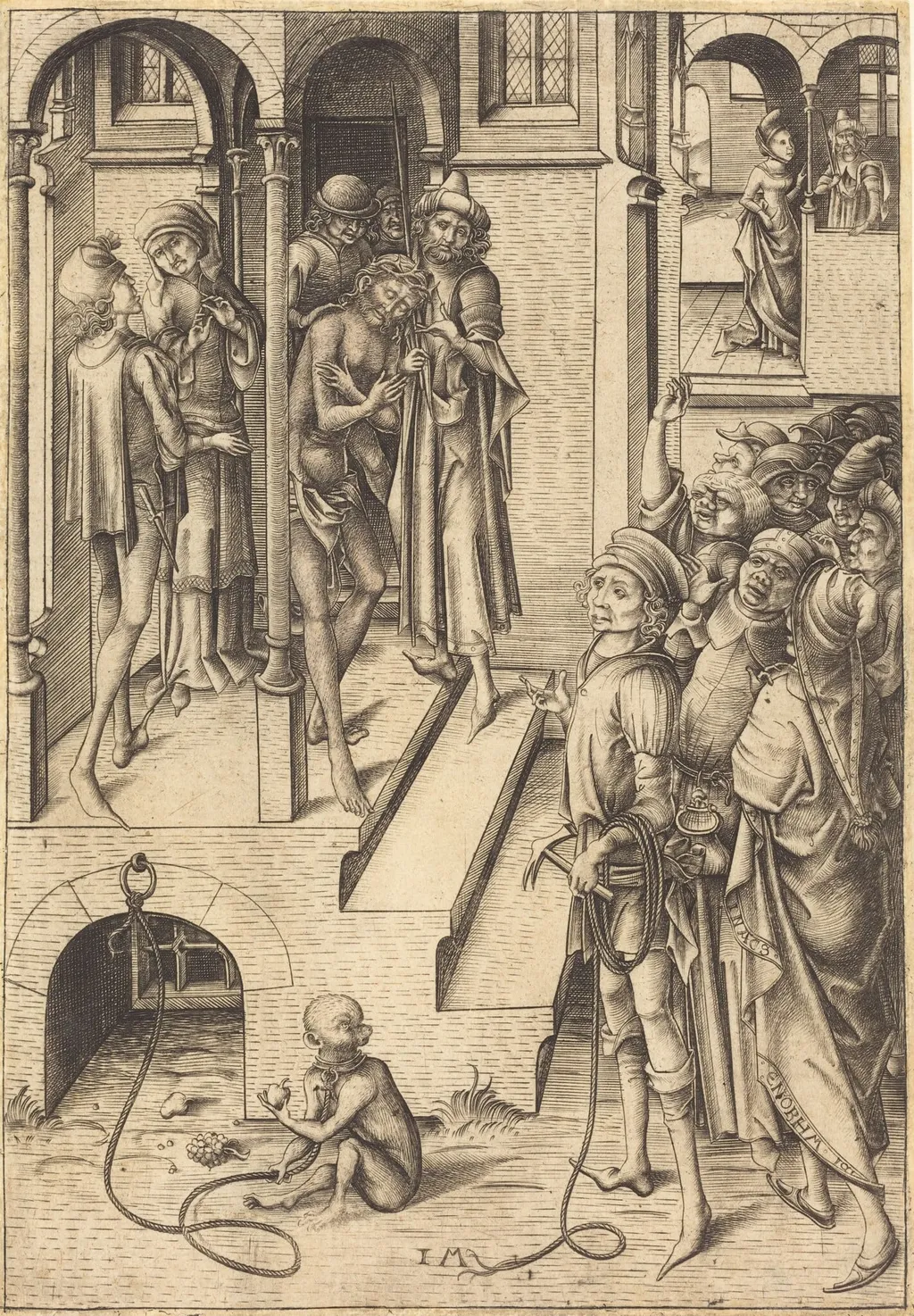
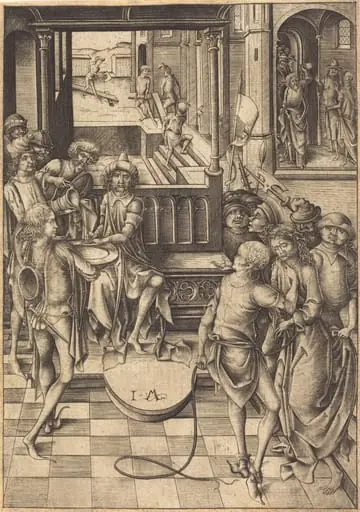
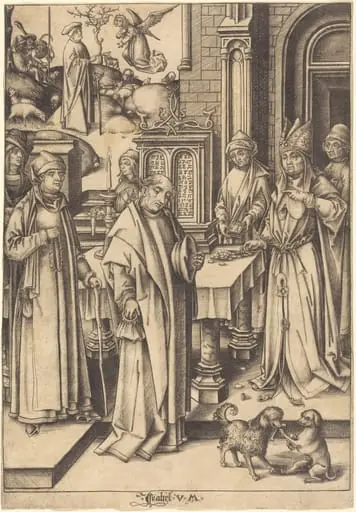
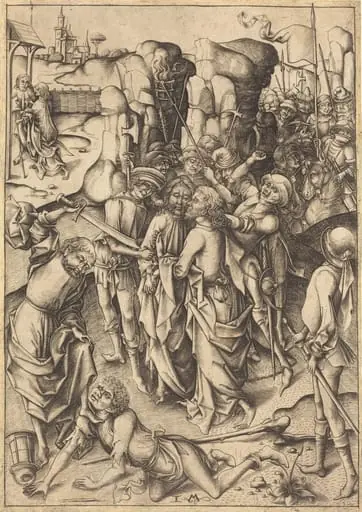
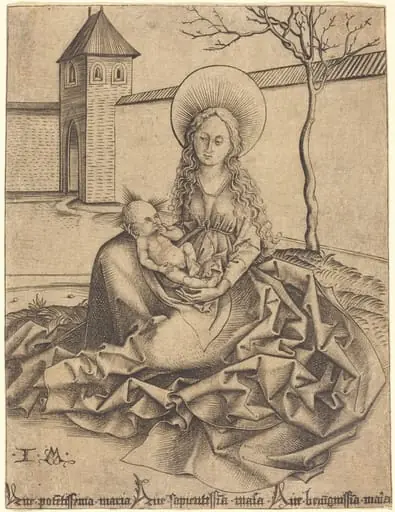
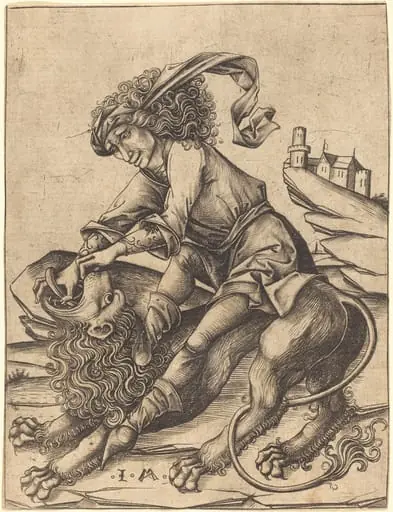
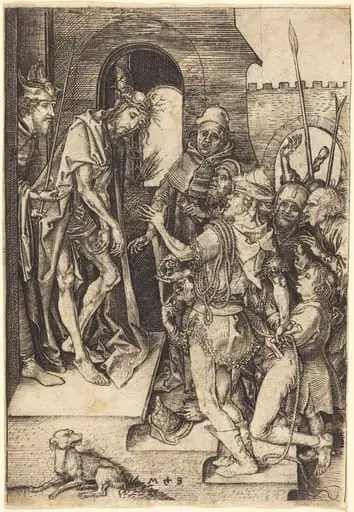
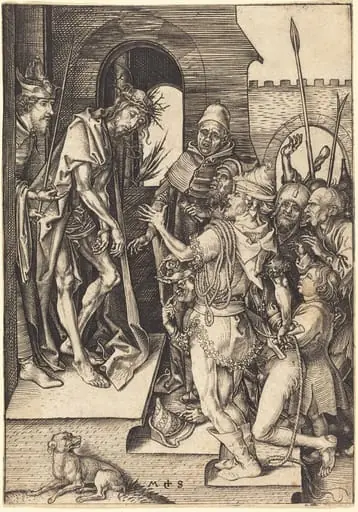
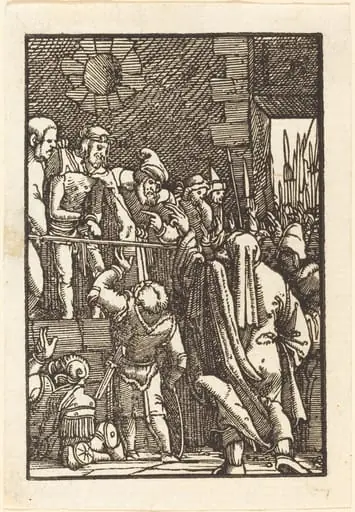
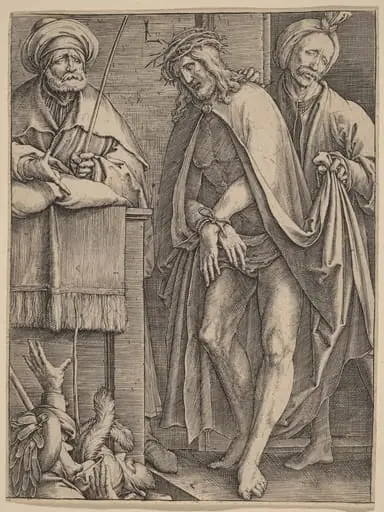
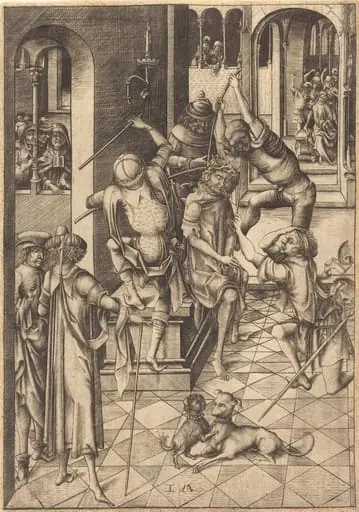
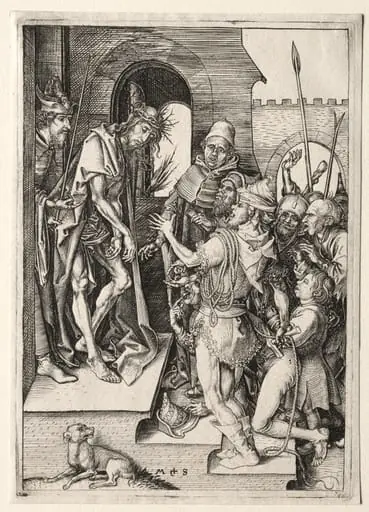
Ecce Homo is an ink print by the Renaissance artist Israhel van Meckenem. It dates from 1480 and is held in the collection of the National Gallery of Art.
About this work
Overview
This work belongs to a series of religious subjects rendered in fine linear detail, characteristic of Northern European printmaking of the era.
Israhel van Meckenem, a German engraver and goldsmith active between 1465 and 1503, produced this print around 1480. One of the most prolific printmakers of the 15th century, he created over 620 engravings, often reinterpreting compositions by contemporaries. This work belongs to a series of religious subjects rendered in fine linear detail, characteristic of Northern European printmaking of the era.
Subject & Meaning
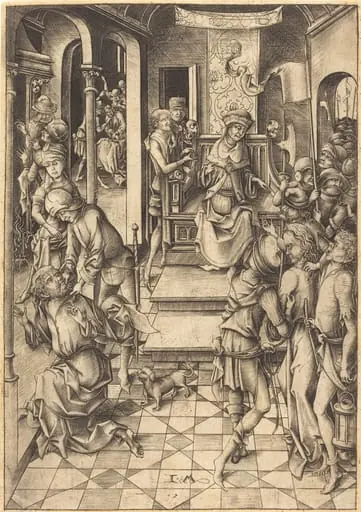
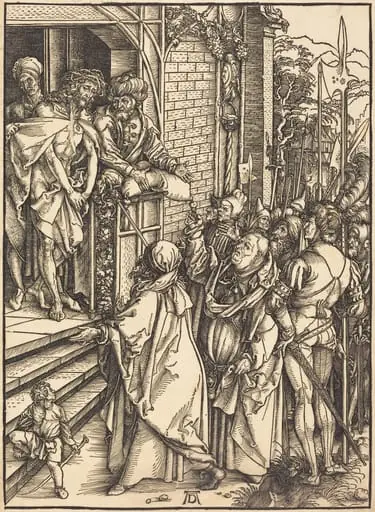
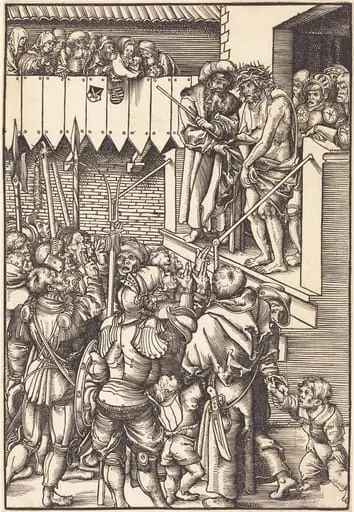
The scene illustrates Pontius Pilate presenting Jesus to the crowd, as described in the Gospels. Jesus, visibly worn and bound, is held aloft by Pilate amid a dense assembly of onlookers. Their varied reactions—mockery, curiosity, indifference—reflect the biblical moment of judgment. The inclusion of a child with grapes and a monkey adds a layer of everyday life, contrasting the solemnity of the central event.
Technique & Style
Executed in engraving, the image relies on precise, incised lines to define form and texture. Shading is achieved through controlled cross-hatching, enhancing the volume of figures against the architectural backdrop. The crowded composition is organized with careful spatial layering, using architectural elements like arched windows to suggest depth within a compact frame.
History & Provenance
The print was made during Meckenem’s most active period, likely for distribution among collectors and clergy. His workshop produced multiple impressions, and surviving examples appear in major European collections. While the original plate is unlocated, the work’s survival in several institutional holdings confirms its circulation in late 15th-century print markets.
Context
Northern European artists frequently depicted Ecce Homo as a devotional image, emphasizing Christ’s suffering and human vulnerability. Meckenem’s version aligns with regional trends that blended biblical narrative with detailed, lifelike settings. The inclusion of contemporary clothing and domestic details reflects a broader interest in grounding sacred stories in familiar urban environments.
Legacy
Meckenem’s prolific output helped standardize the dissemination of religious imagery through print. Though often derivative, his engravings preserved and adapted compositions that might otherwise have been lost. This work exemplifies how printmaking expanded access to visual theology, influencing both popular piety and later artists working in the medium.
Artist & collection
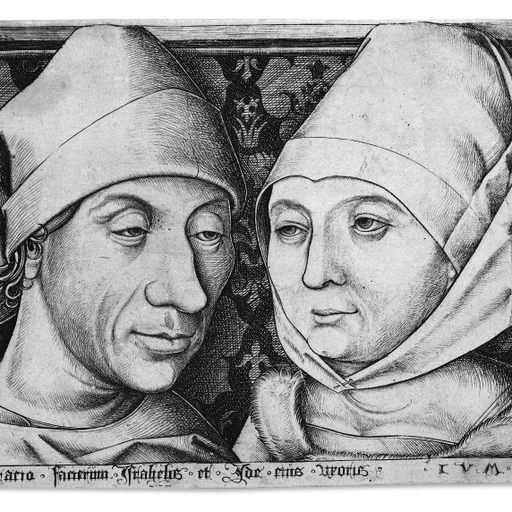
Artist
Israhel van Meckenem (c. 1445 – 10 November 1503), also known as Israhel van Meckenem the Younger, was a German printmaker and goldsmith, perhaps of a Dutch family origin. He was the most prolific engraver of the…