Artwork
Bacchanalian Scene with Satyrs and a Maenad
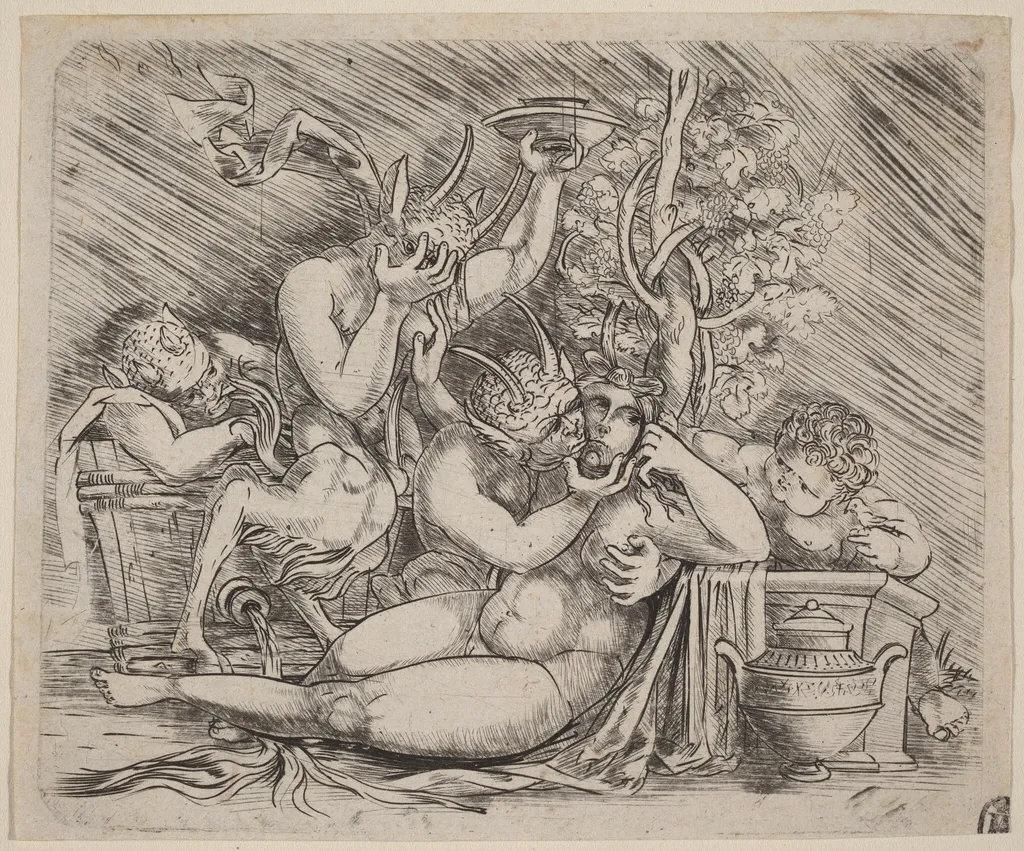
Bacchanalian Scene with Satyrs and a Maenad is an ink print by the Renaissance artist Master of 1515. It dates from 1515 and is held in the collection of the National Gallery of Art.
About this work
Overview
The composition is dense with overlapping figures, rendered through delicate, intersecting strokes that suggest motion rather than defined form.
An engraving dated around 1515, attributed to the artist known as the Master of 1515, depicts a frenetic celebration rooted in classical myth. Executed in fine linear technique, the print captures a moment of unrestrained revelry without clear spatial boundaries. The composition is dense with overlapping figures, rendered through delicate, intersecting strokes that suggest motion rather than defined form.
Subject & Meaning
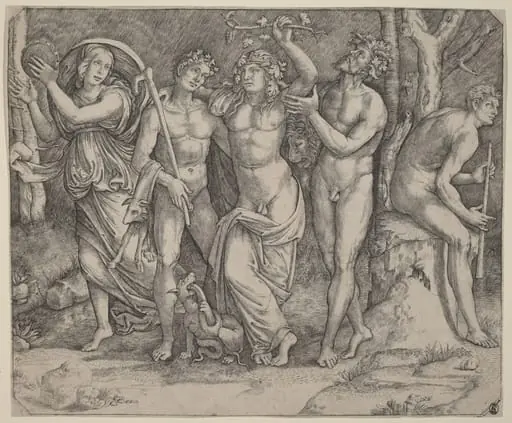
The scene centers on a maenad, her disheveled hair and raised wine jug signaling ecstatic abandon, surrounded by satyrs and other mythic figures engaged in drinking, dancing, and music-making. The goat-legged satyr playing a flute anchors the musical element of the ritual. The imagery draws from Greco-Roman bacchanalia, symbolizing liberation from social order through wine, music, and nature-driven frenzy.
Technique & Style
The artist employs fine parallel and cross-hatched lines to model form and suggest shadow, creating texture without solid contours. Figures emerge from a field of swirling, rhythmic strokes that dissolve background elements into abstract energy. Details are minimized; emphasis is placed on dynamic gesture and rhythmic repetition, resulting in a sense of chaotic movement rather than polished realism.
History & Provenance
The work is attributed to an anonymous printmaker active in the early 16th century, likely in northern Italy or southern Germany, known only by the date of his most recognizable works. Few signed prints survive from this hand, and the attribution relies on stylistic comparison with other engravings of the period. Its survival in private and institutional collections reflects early interest in mythological prints.
Context
Created during a period of renewed classical interest in Renaissance Europe, the image aligns with humanist fascination with ancient rituals and pagan symbolism. While religious themes dominated much print production, this work reflects a niche appetite for secular, mythological subjects among educated collectors. Its rough aesthetic contrasts with the refined engravings of contemporaries like Dürer.
Legacy
The print exemplifies a trend in early 16th-century printmaking where mythological themes were rendered with expressive line work rather than idealized form. Though not widely reproduced, its energetic style influenced later artists exploring movement and emotional intensity in engraved compositions. It remains a key example of how classical subjects were reinterpreted through a distinctly graphic, non-naturalistic lens.
Artist & collection

Artist
This anonymous engraver signed their work with a tiny "M" inside a circle, like a secret handshake.

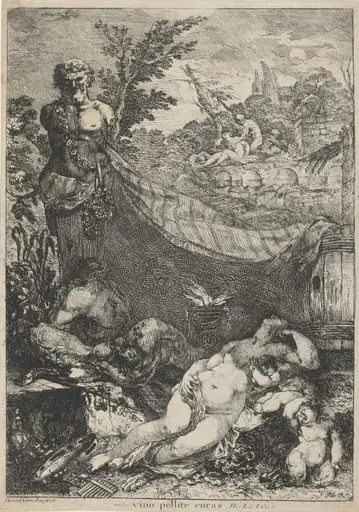 Bacchanal
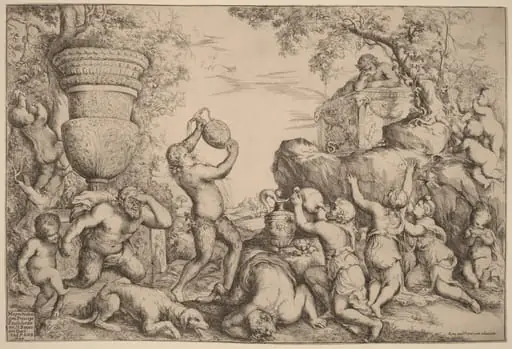 Bacchanal
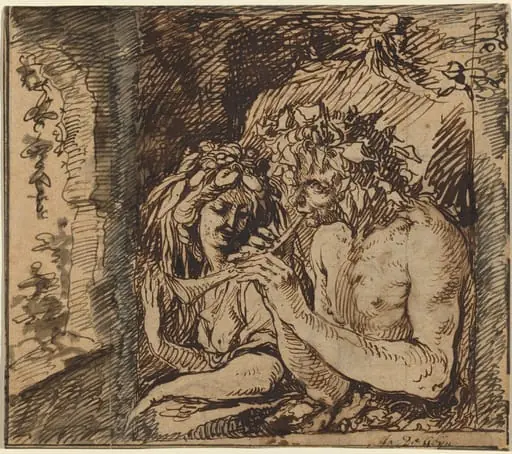 Bacchus and Ceres
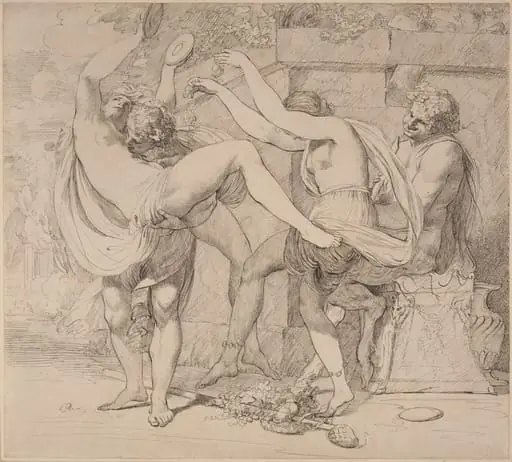 Bacchanal
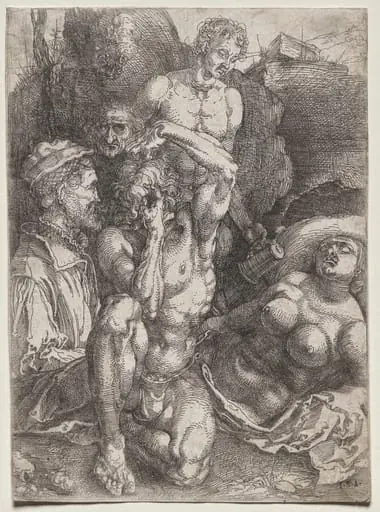 Group of Five Figures
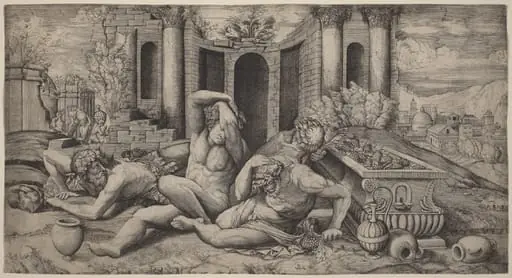 The Wine Bibbers
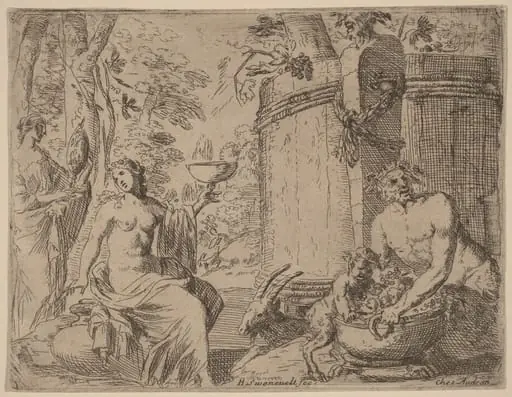 Two Nymphs and a Satyr before a Large Vat
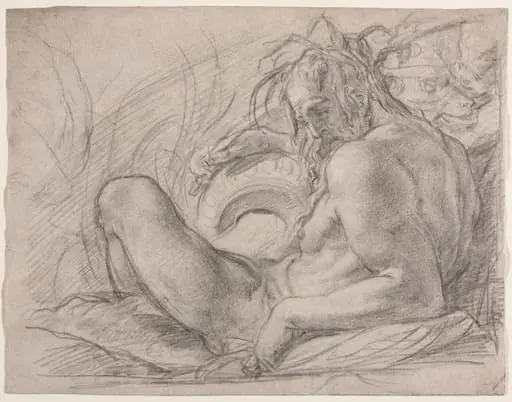 The River God Tiber (Study for a fresco, Miracle of the Snow, or the Foundation of Santa Maria Maggiore, Rome in the Canigiani chapel of S. Felicita, Florence)
 The Drunken Silenus
 Silenus
 The Desperate Man
 Bacchus and His Attendants