Artwork
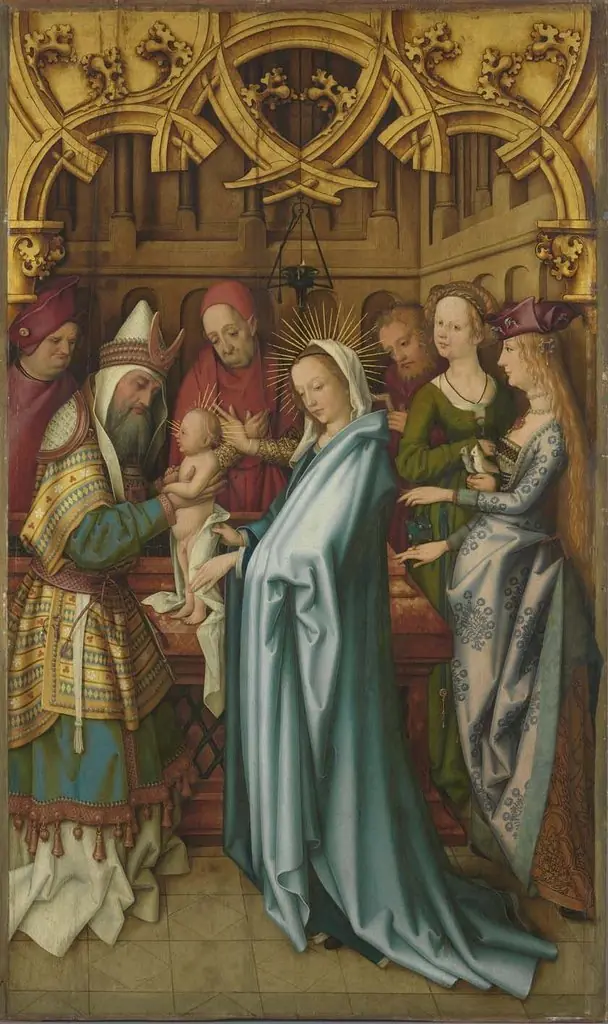
Panel of an altarpiece with the Circumcision (inner wing) and the Resurrection (outer wing)
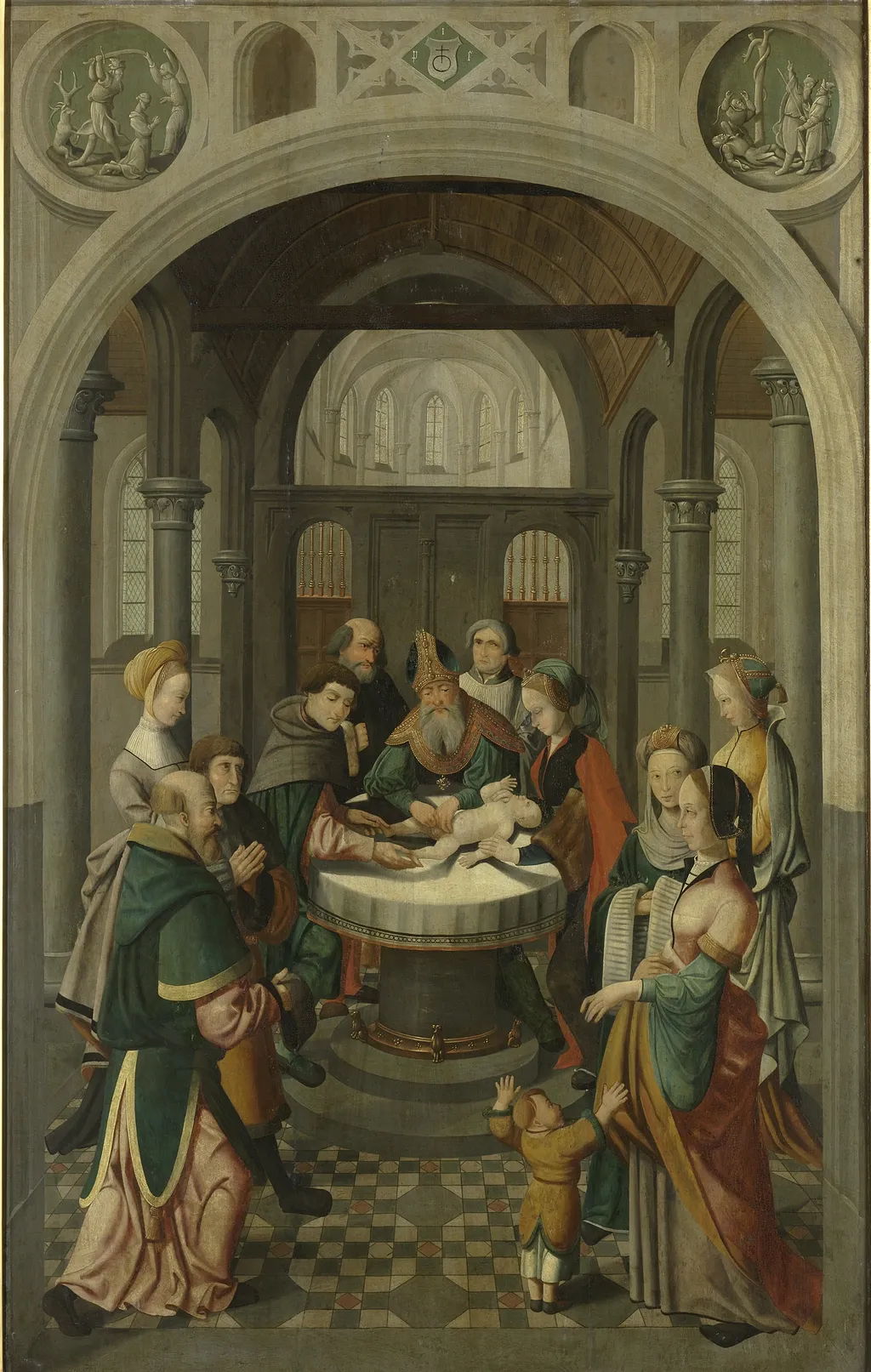
Panel of an altarpiece with the Circumcision (inner wing) and the Resurrection (outer wing) is an oil painting by the Northern Renaissance artist Master of Alkmaar. It is held in the collection of the Rijksmuseum.
About this work
Overview
This panel painting, created in 1527 by the Master of Alkmaar, features two religious scenes: the Circumcision on the inner wing and the Resurrection on the outer wing. Executed in oil paint, it exemplifies the Northern Renaissance style.
Subject & Meaning
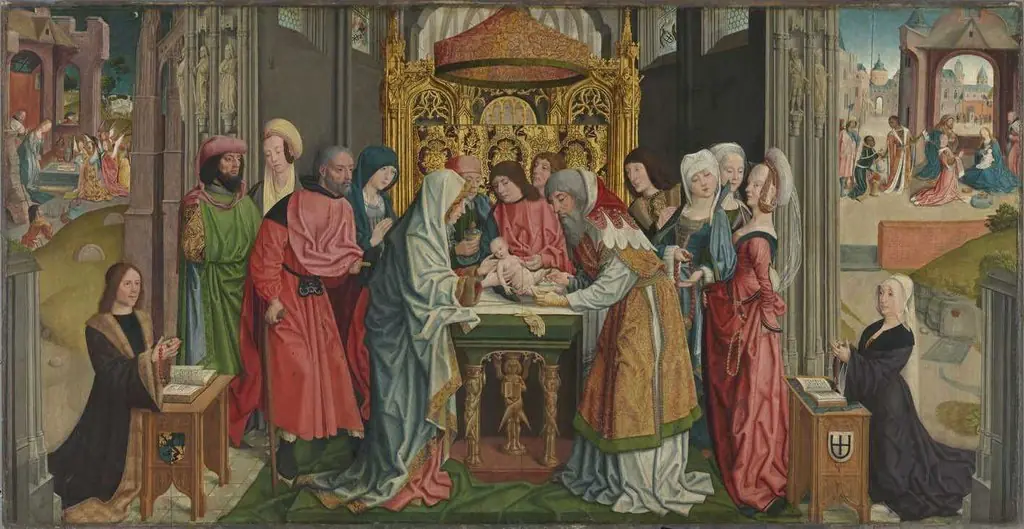
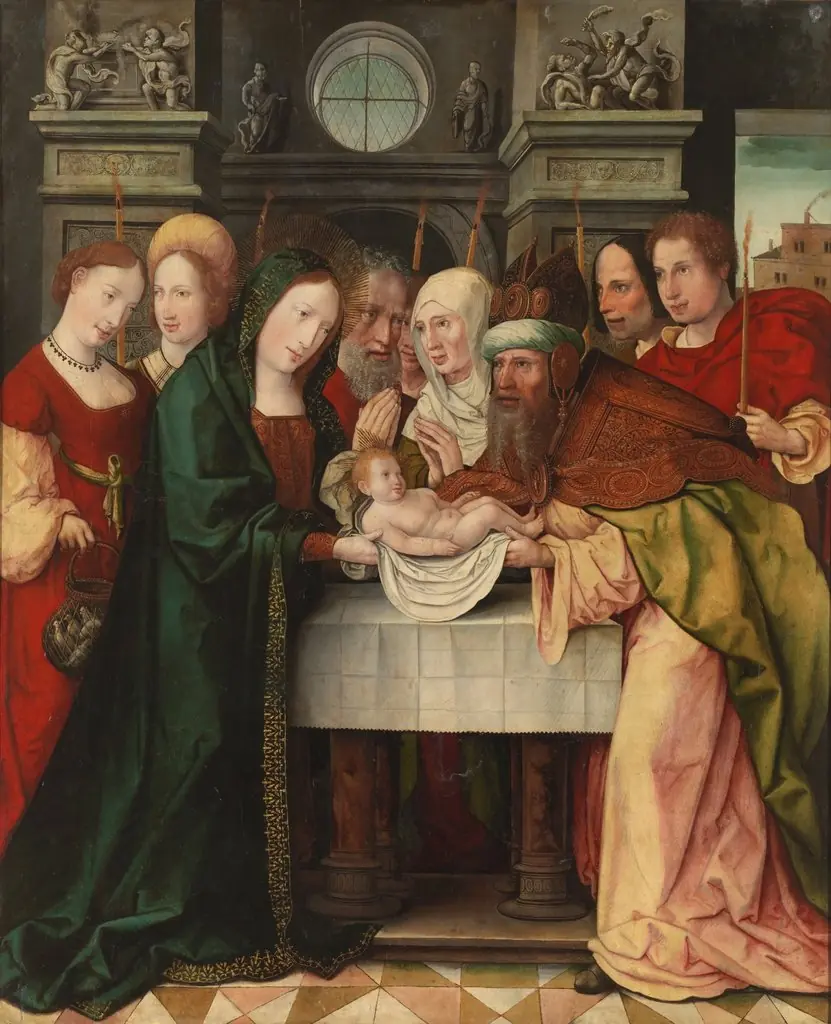
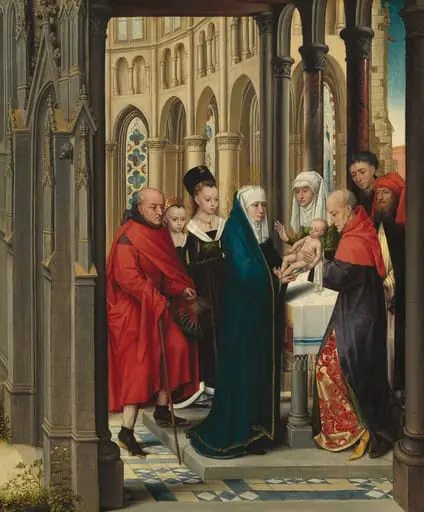
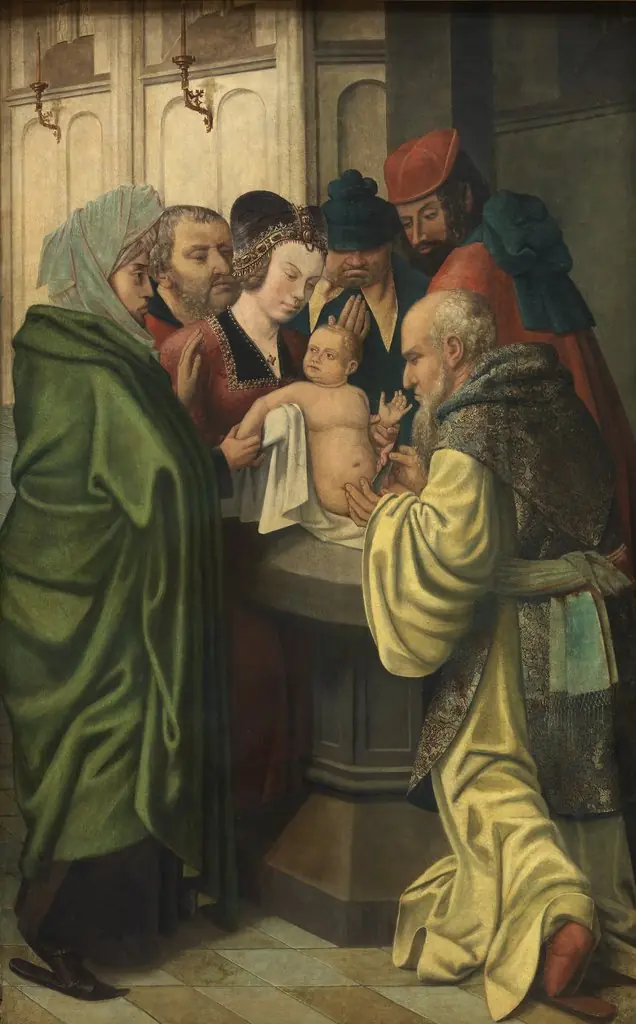
The inner wing depicts the Circumcision, showing a group gathered around a stone basin in a church interior, with a man in a tall hat holding a baby over the basin. The outer wing illustrates the Resurrection, though specific details of this scene are not provided. Both subjects are rooted in Christian religious narrative.
Technique & Style
The painting employs chiaroscuro, characterized by sharp light falling on faces and hands, creating contrasting dark and glowing areas. Figures are rendered with exaggerated, caricatured features, a hallmark of the Master of Alkmaar's style, possibly influenced by Geertgen tot Sint Jans.
History & Provenance
Attributed to the Master of Alkmaar, a Dutch painter active in the early 16th century, this work is linked to a series of panel paintings from Saint Lawrence in Alkmaar, now housed in the Rijksmuseum, depicting the Seven Works of Mercy.
Context
Part of the Northern Renaissance, this painting reflects the artistic and religious themes prevalent in early 16th-century Netherlands, with its use of oil paint and religious subjects typical of the period.
Legacy
While the Master of Alkmaar's identity remains uncertain, the work contributes to the understanding of Northern Renaissance art, particularly the evolution of style and technique among lesser-known artists of the time.
Own this work as a print
Artist & collection
Artist
The Master of Alkmaar was a Dutch painter active around Alkmaar at the beginning of the sixteenth century.

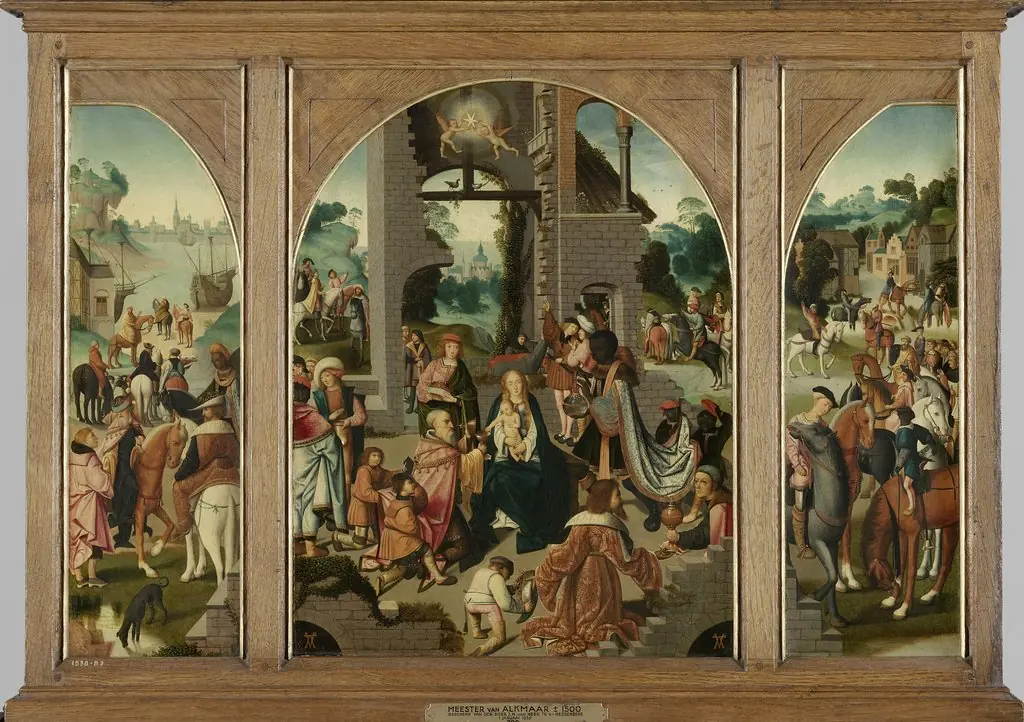 Triptych with the adoration of the Magi (centre panel and inner wings), St Antony Abbot (outer left wing) and St Adrian (outer right wing)
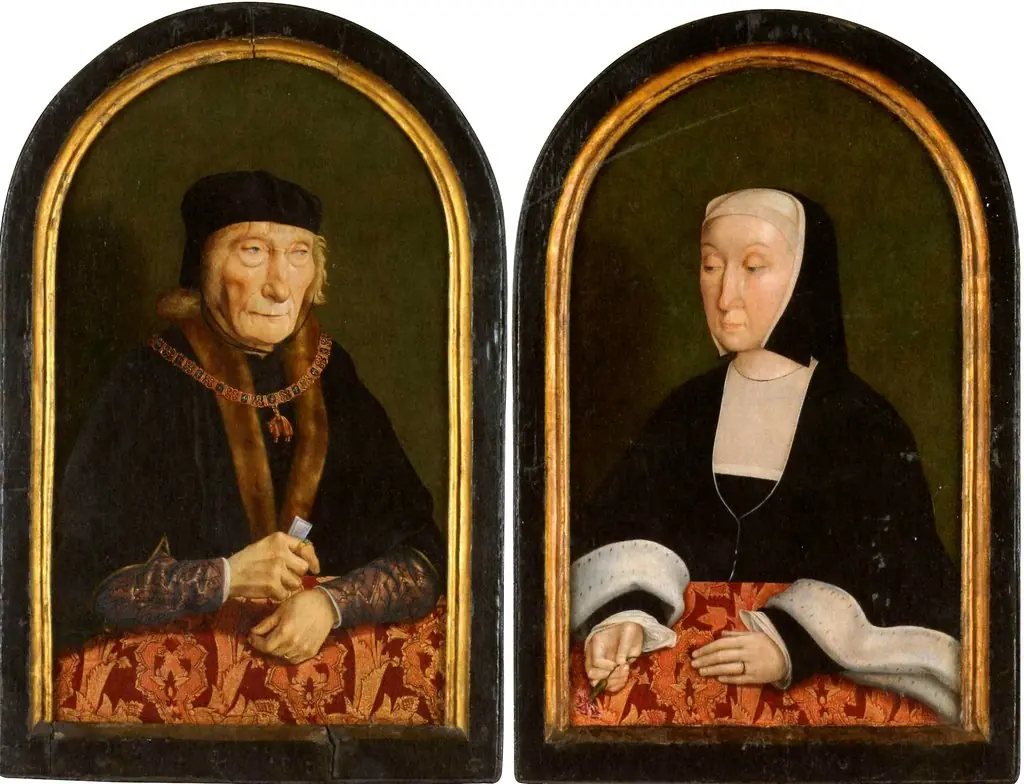 Portrait of Jan III, First Count of Egmond (1438–1516) and his wife Magdalena van Werdenburg, Countess of Egmond (1464–1538)
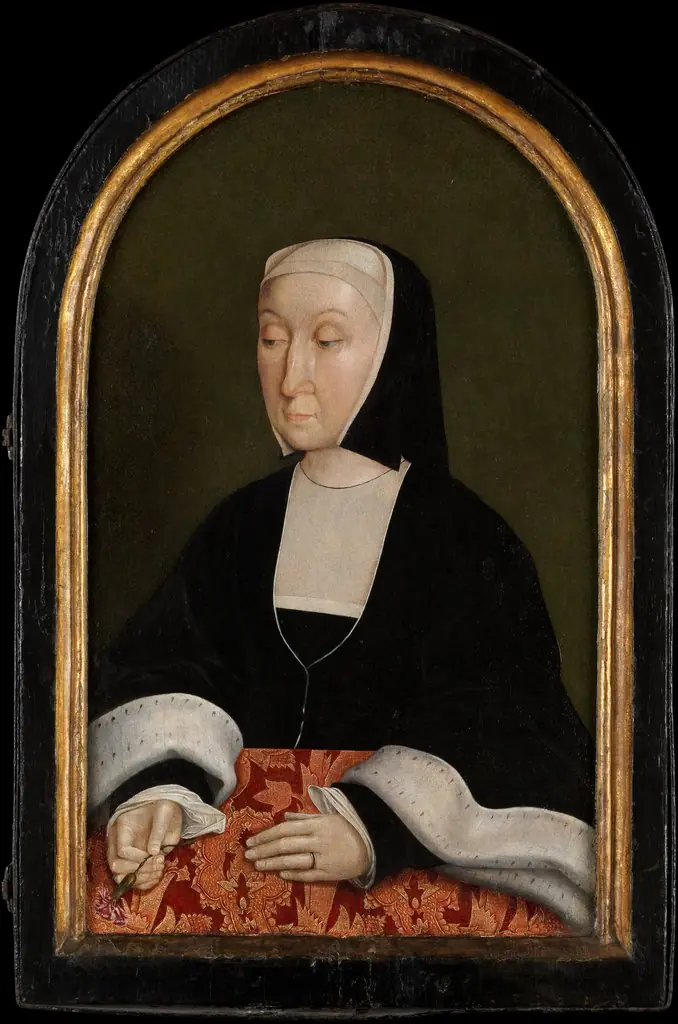 Portrait of Magdalena van Werdenburg (1464–1538), Countess of Egmond and wife of Jan (1438–1516), First Count of Egmond;
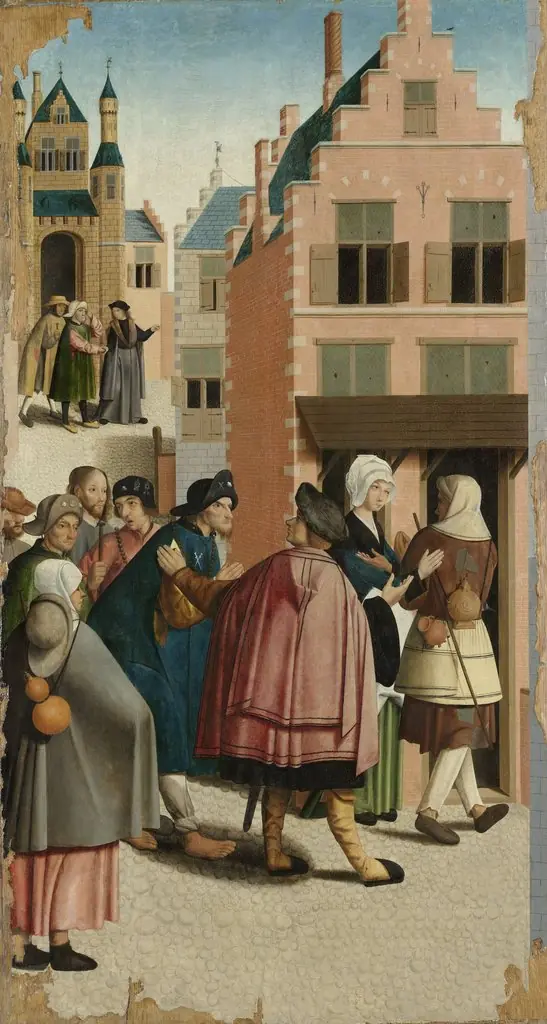 The Seven Works of Mercy
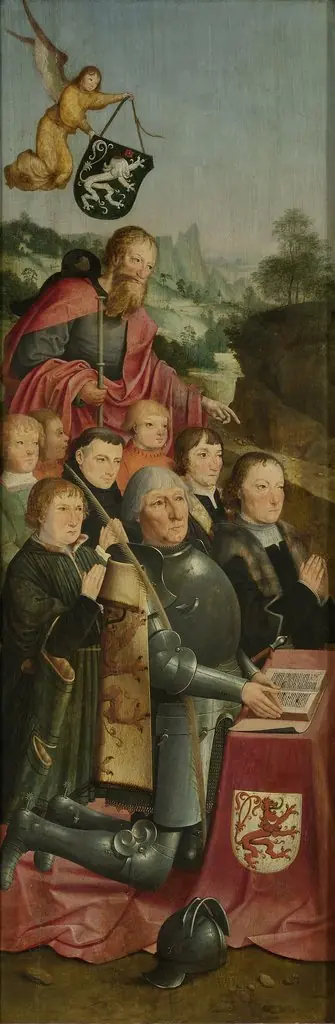 Memorial Panel with Eight Male Portraits, probably Willem Jelysz van Soutelande and Family, with Saint James the Greater and the Van Soutelande Family Crest, inner left wing of an altarpiece
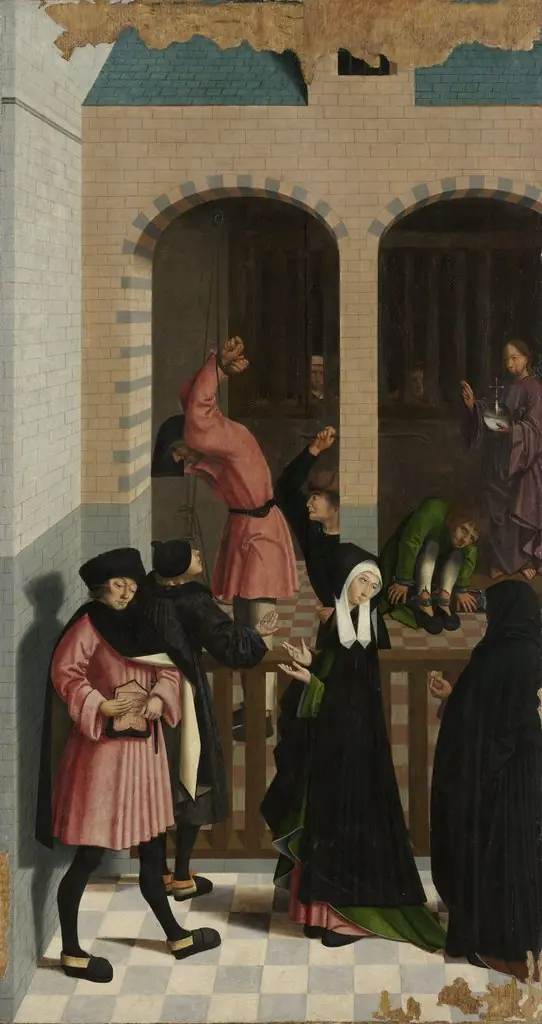 The Seven Works of Mercy
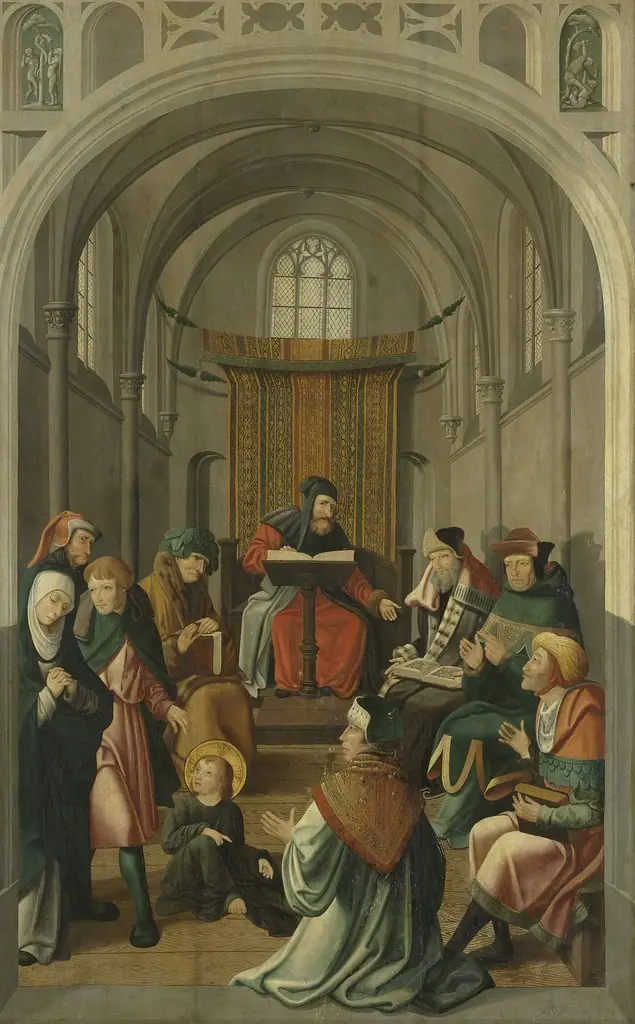 Panel of an altarpiece with Jesus disputing with the doctors in the Temple (inner wing) and Christ appearing to his mother (outer wing)
 Portrait of a Man