Artwork
The Crucifixion
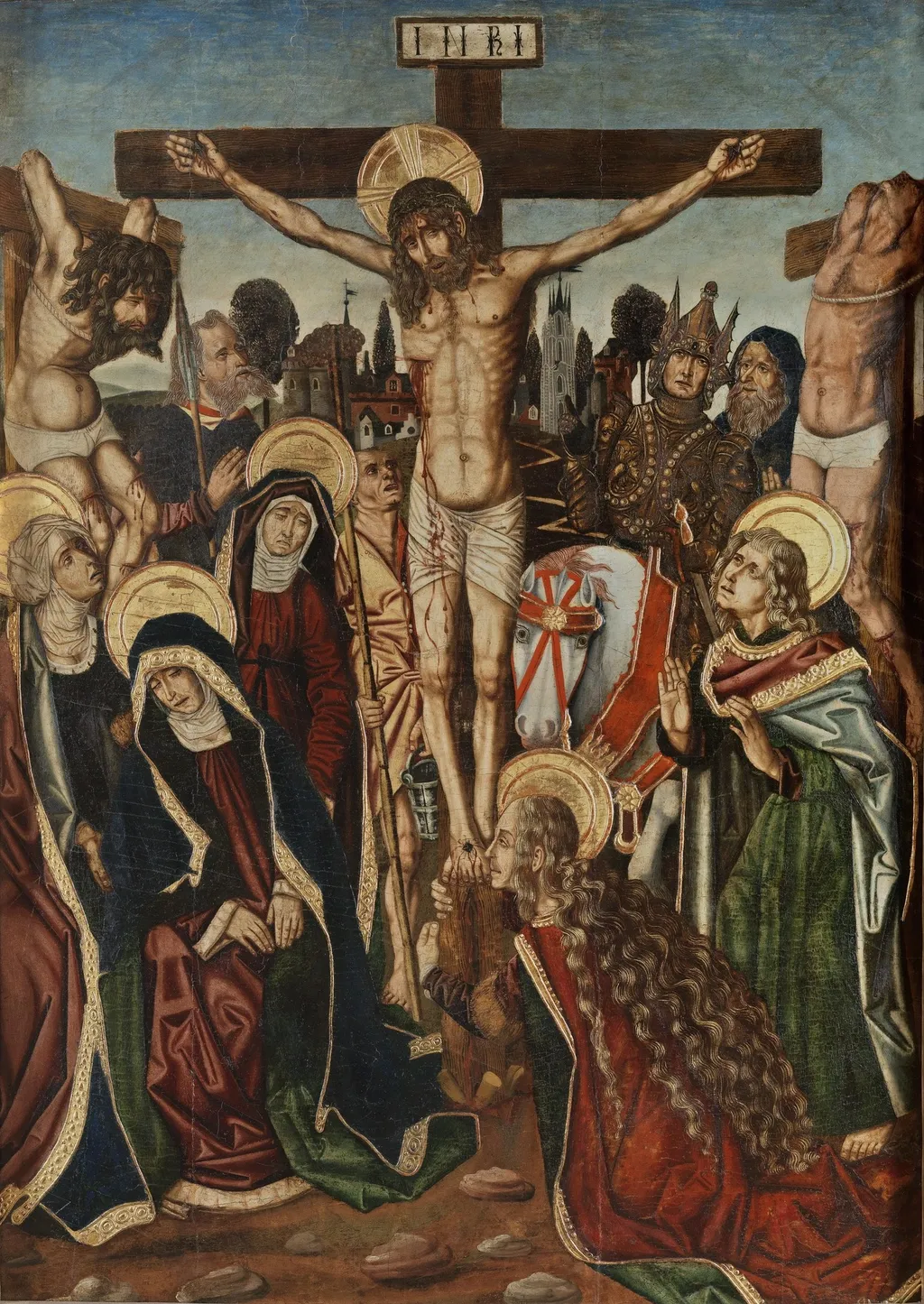
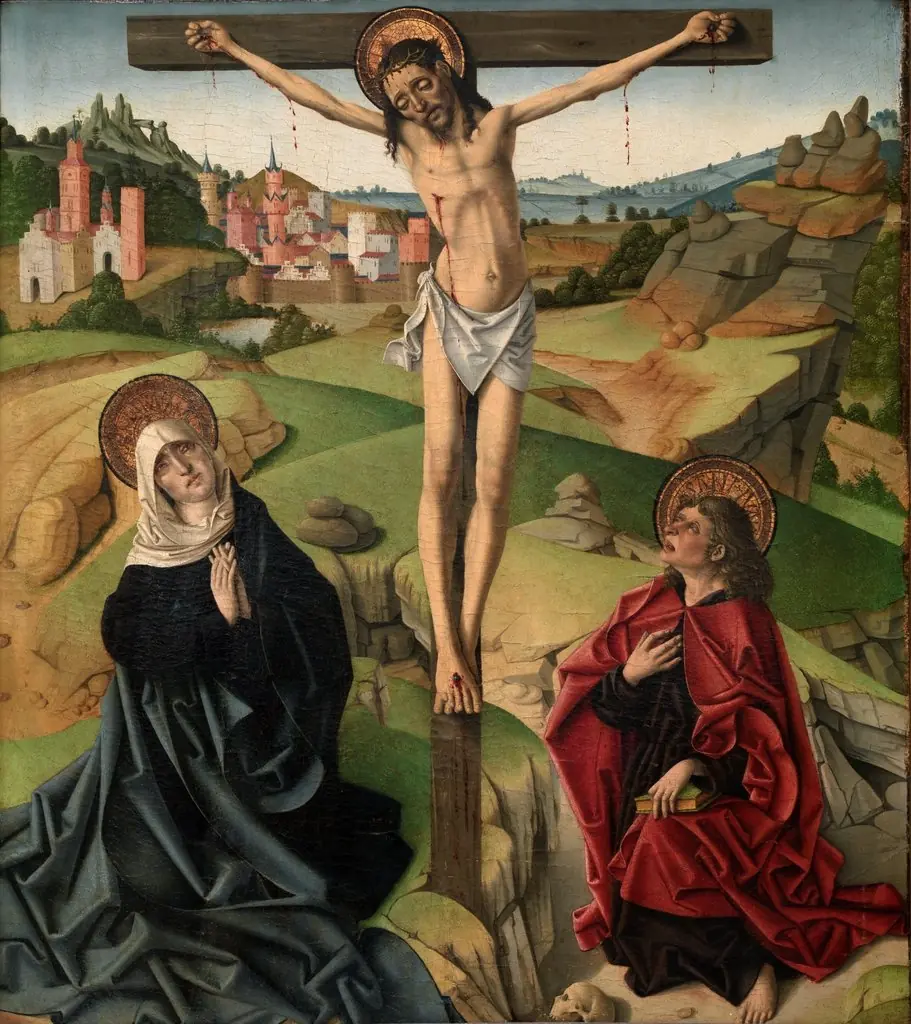
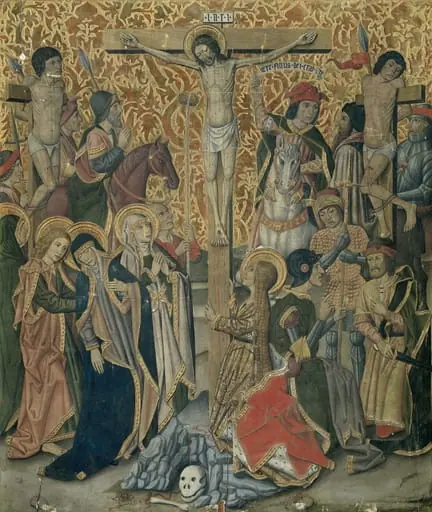
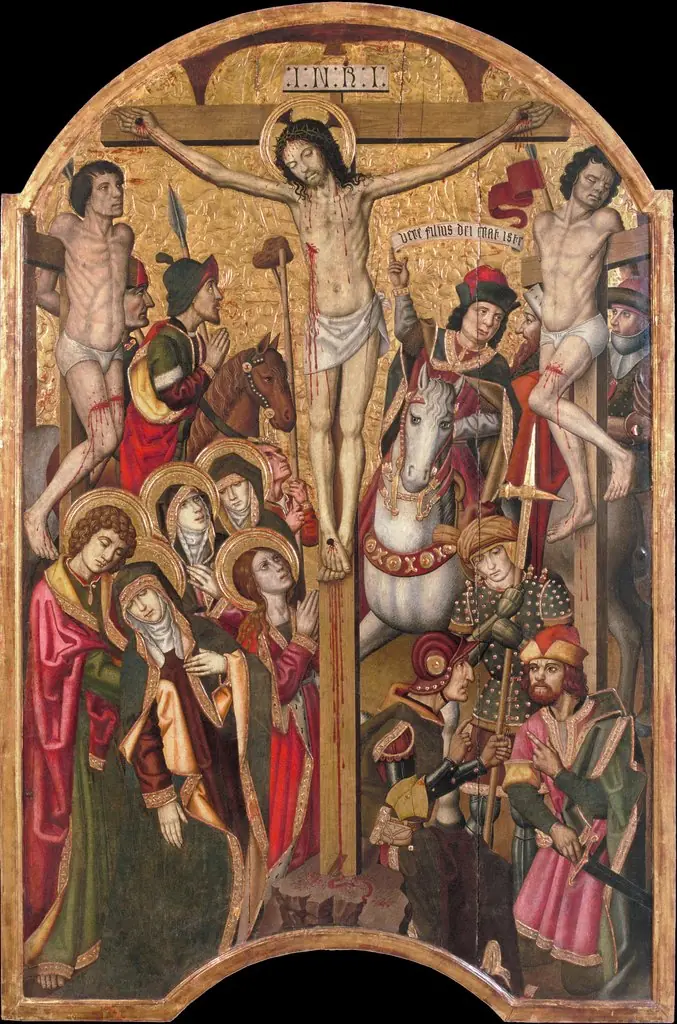
The Crucifixion is an unspecified painting by the Early Renaissance artist Martín Bernat. It dates from 1490 and is held in the collection of the Museo del Prado.
About this work
Overview
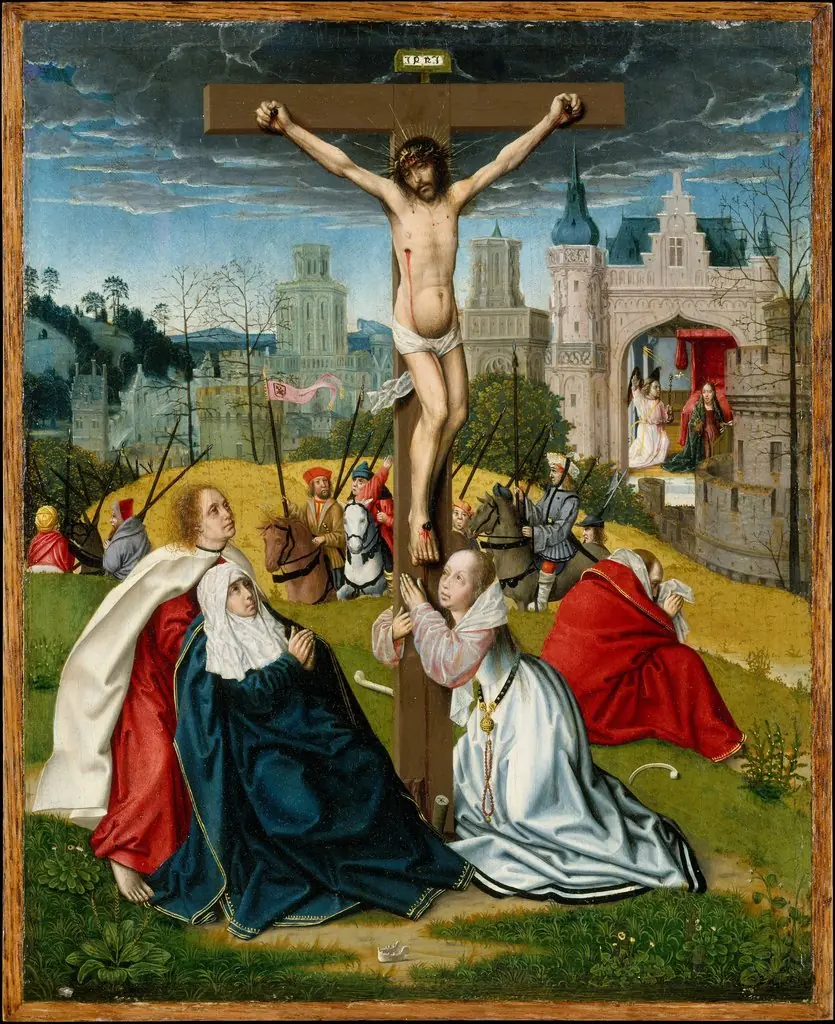
Created in 1490 by Martín Bernat, a Spanish painter active in Zaragoza, *The Crucifixion* presents a detailed depiction of the biblical scene of Christ on the cross. The work belongs to the early Renaissance period while retaining Gothic influences, and it is presently housed in Madrid’s Museo del Prado.
Subject & Meaning
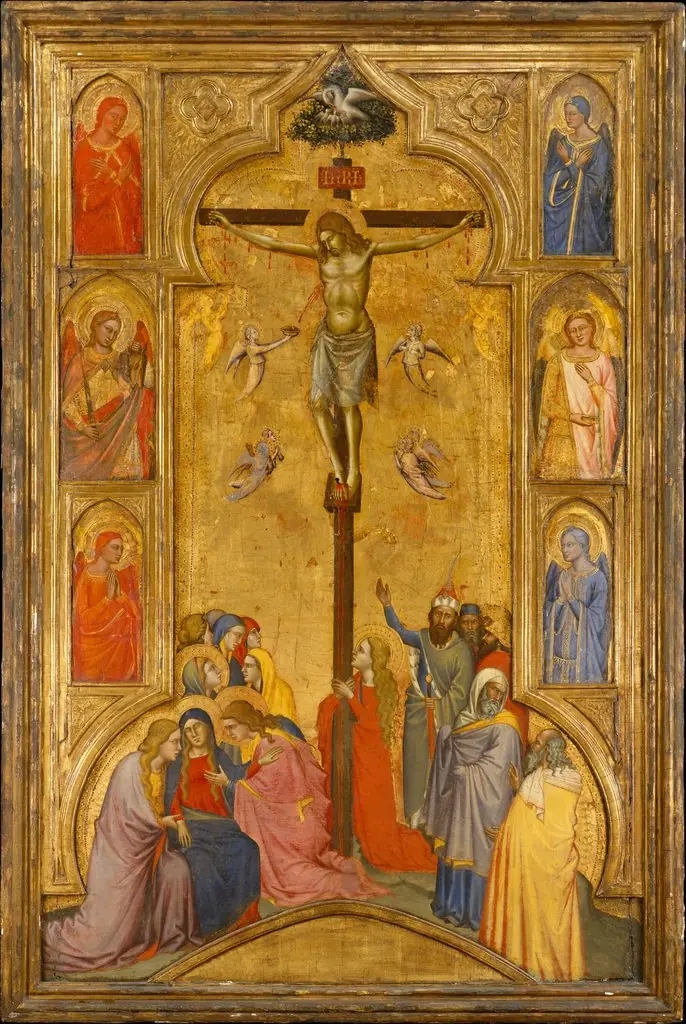
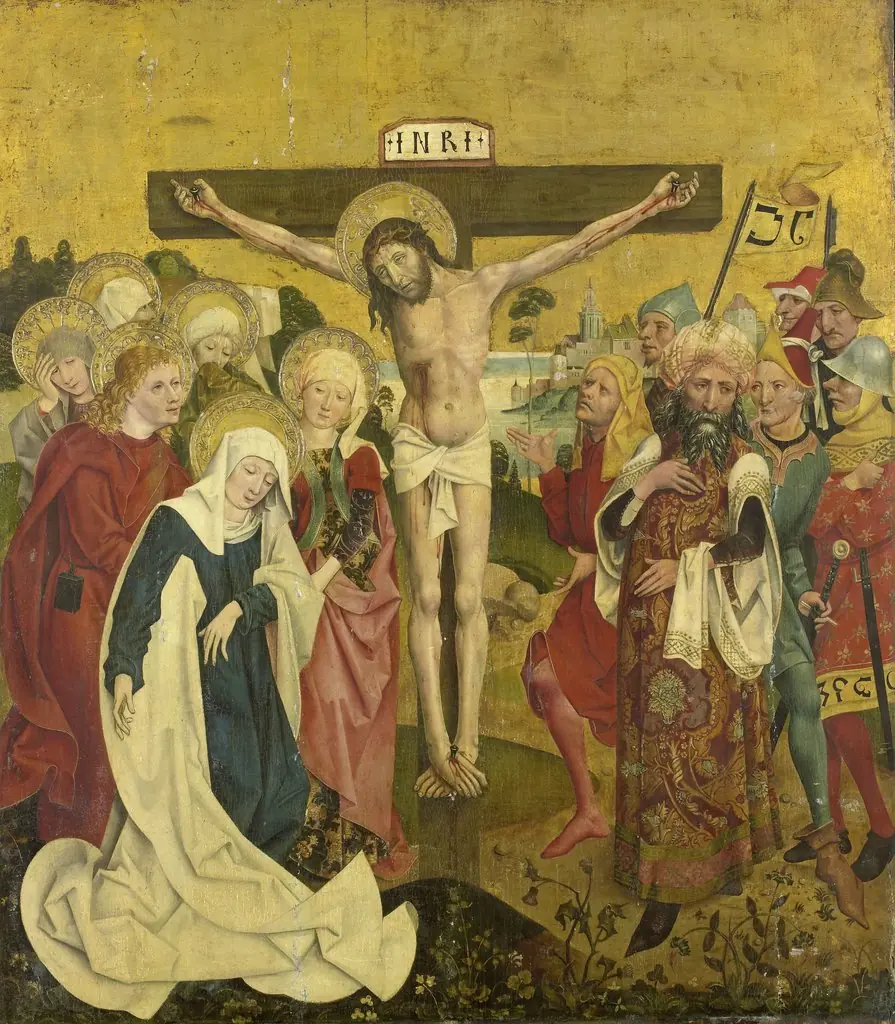
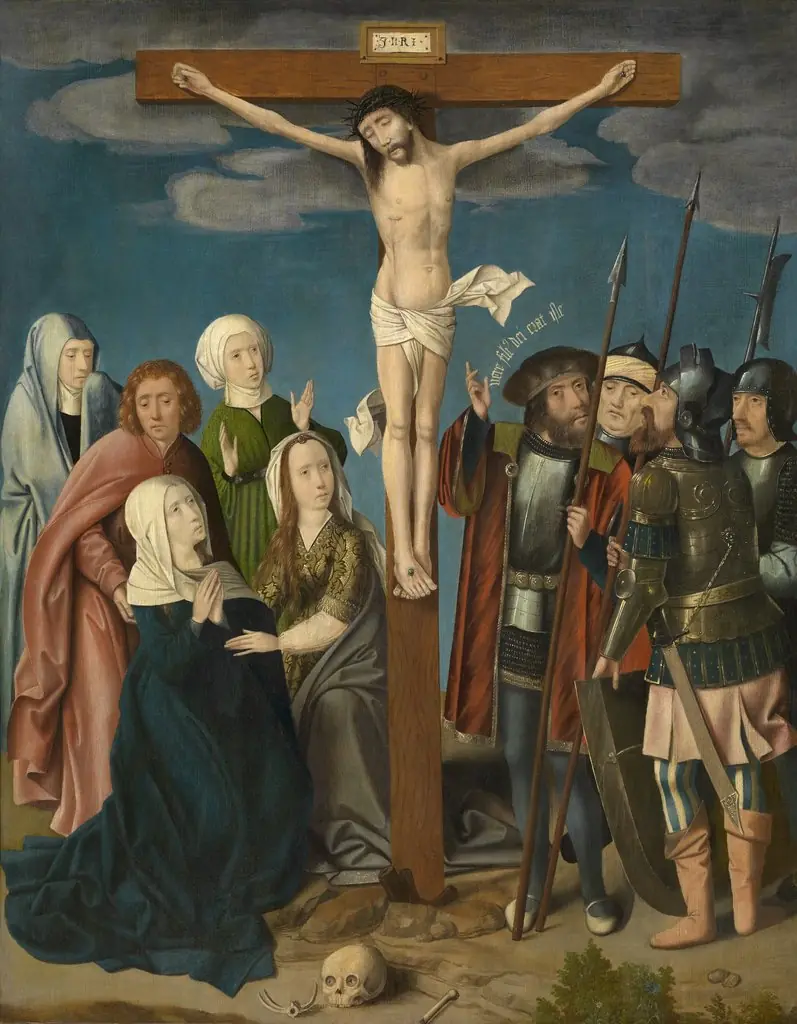
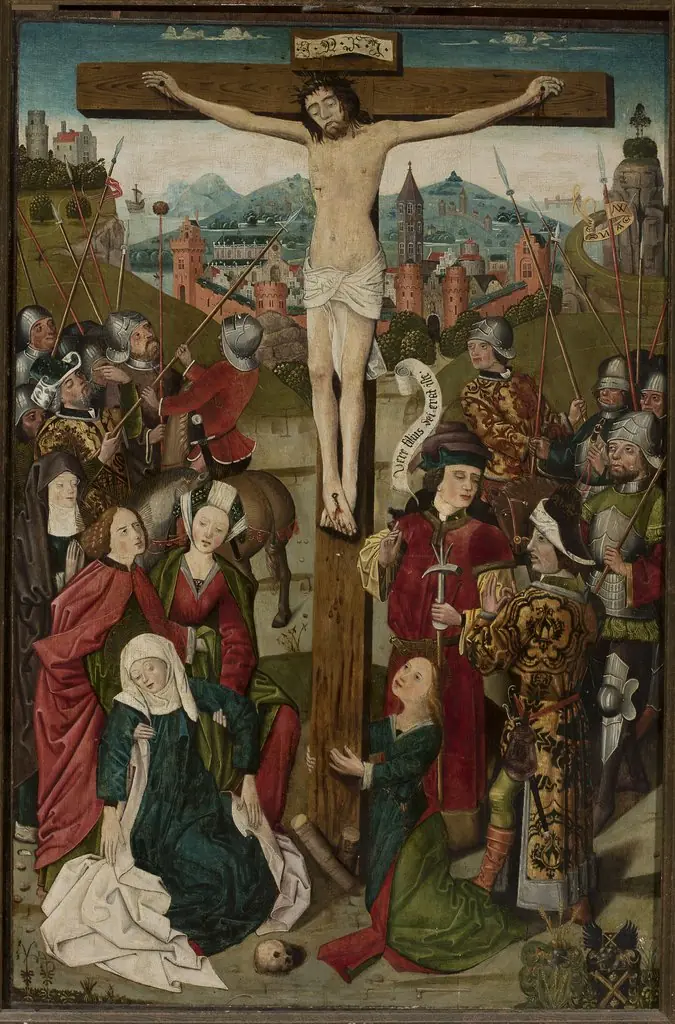
The central figure is Jesus, shown with long hair, a beard, and a white cloth tied at his waist, his arms outstretched on the cross. Surrounding him are mourners—some kneeling, others clasping their hands in prayer—while a figure holds a horse and another raises his arms, emphasizing the drama and sorrow of the Passion.
Technique & Style
Bernat employs a realistic approach, rendering flesh, fabric, and architecture with careful attention to texture and light. The background features a modest cityscape with trees under a clear blue sky, creating depth and a sense of space that reflects the transitional aesthetics between Gothic ornamentation and emerging Renaissance naturalism.
History & Provenance
Bernat worked contemporaneously with Bartolomé Bermejo, another prominent Zaragoza painter, and the painting likely served a devotional function in a local chapel. Over the centuries it entered the royal collections before being transferred to the Museo del Prado, where it remains part of the museum’s Spanish Gothic and early Renaissance holdings.
Own this work as a print
Artist & collection
Artist
Martín Bernat (fl. 1450 -1505) was a Spanish Gothic style painter, active in Zaragoza, where he had a long collaboration with Bartolomé Bermejo. His dates of birth and death are not known.