Artwork
Crucifixion of Christ
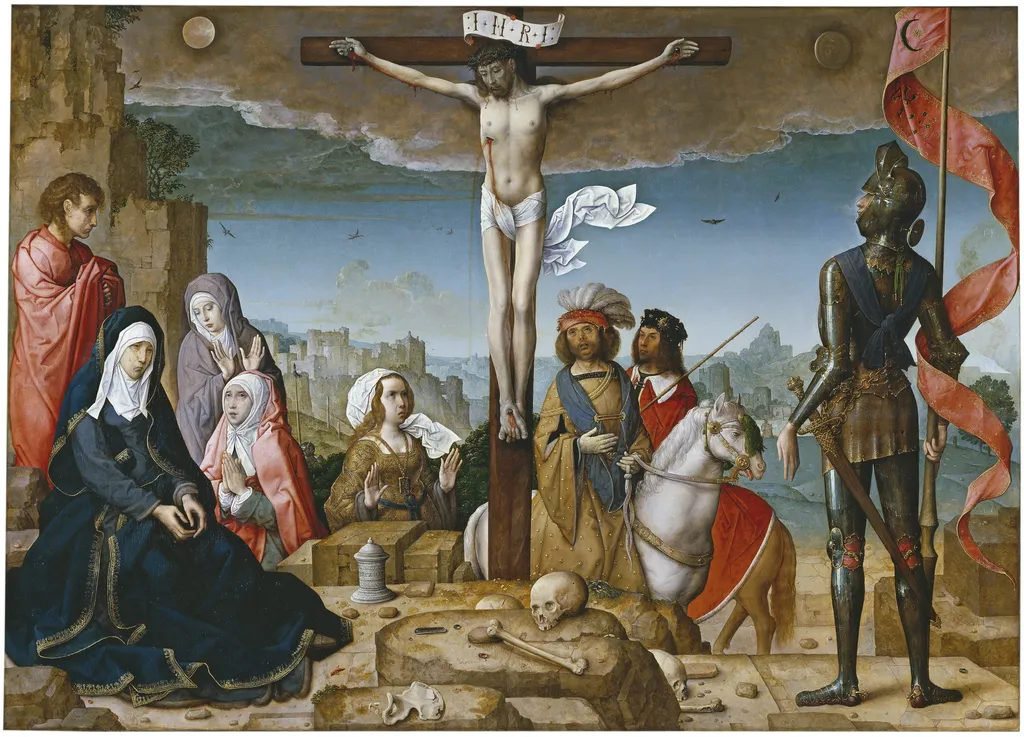
Crucifixion of Christ is an oil painting by the Early Renaissance artist Juan de Flandes. It dates from 1509 and is held in the collection of the Museo del Prado.
About this work
Overview
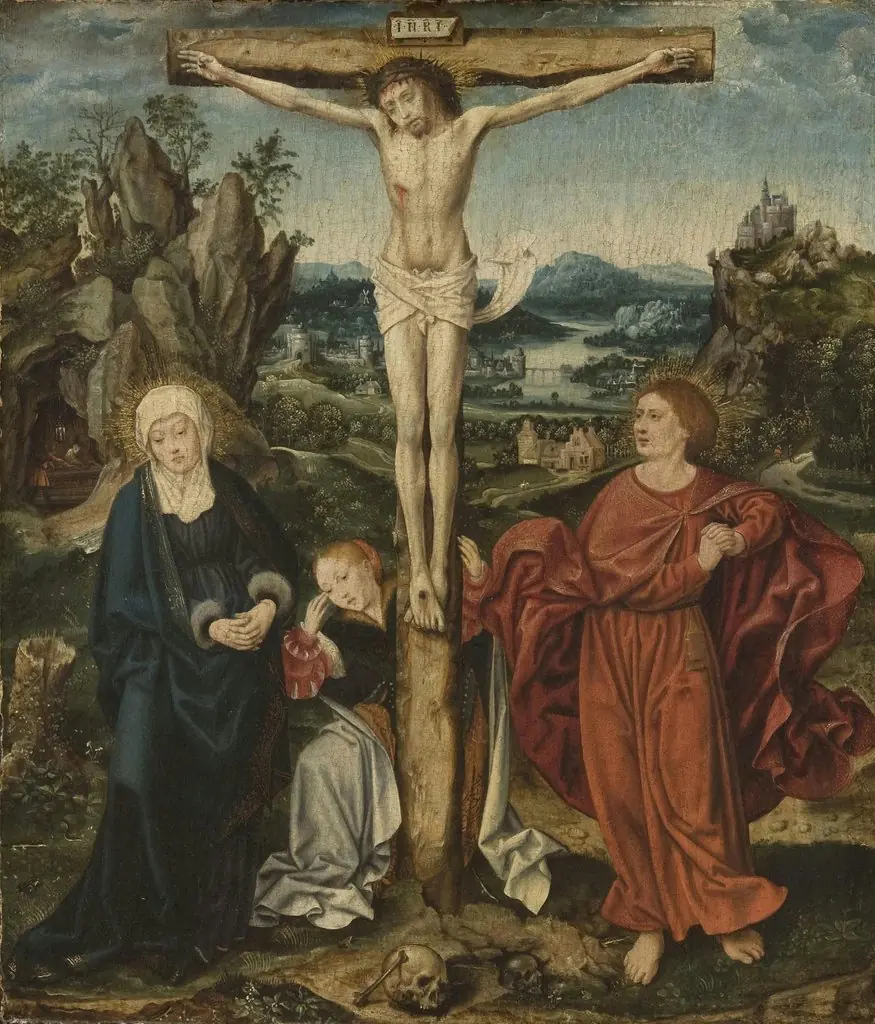
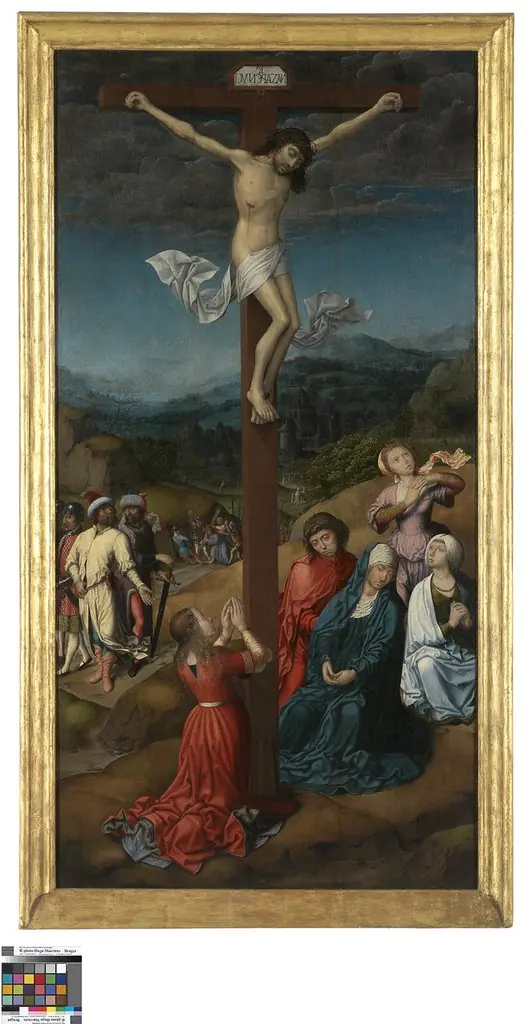
At the foot of the cross, the Virgin Mary and two other women kneel in grief, their dark robes contrasting with the pale skin of the central figure.
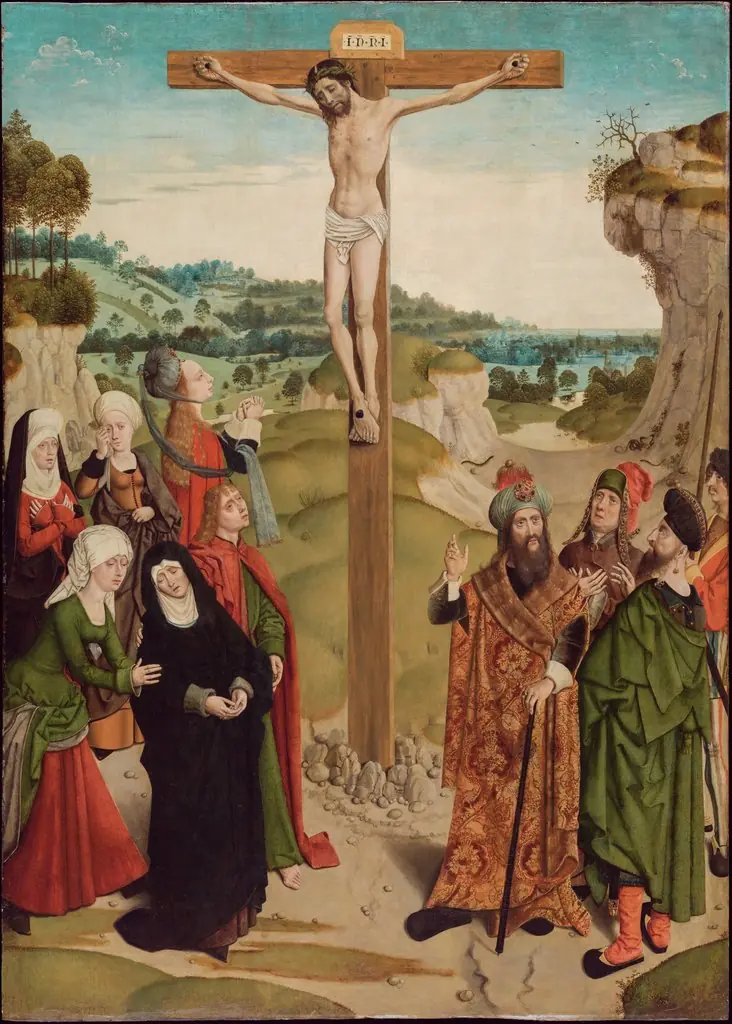
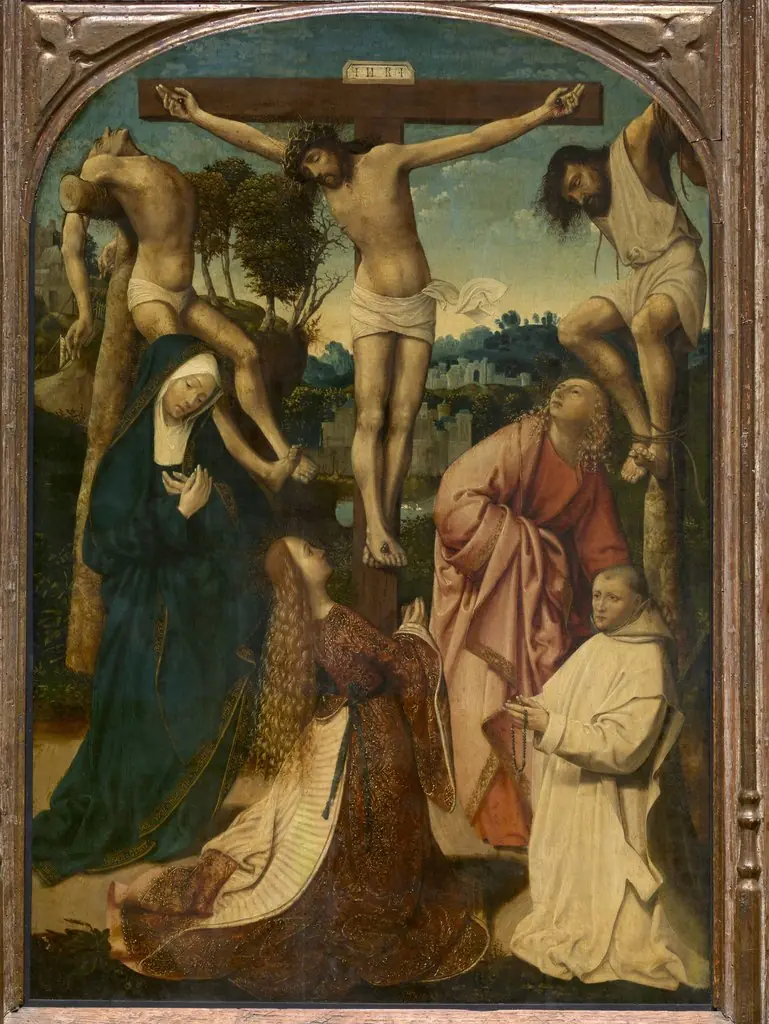
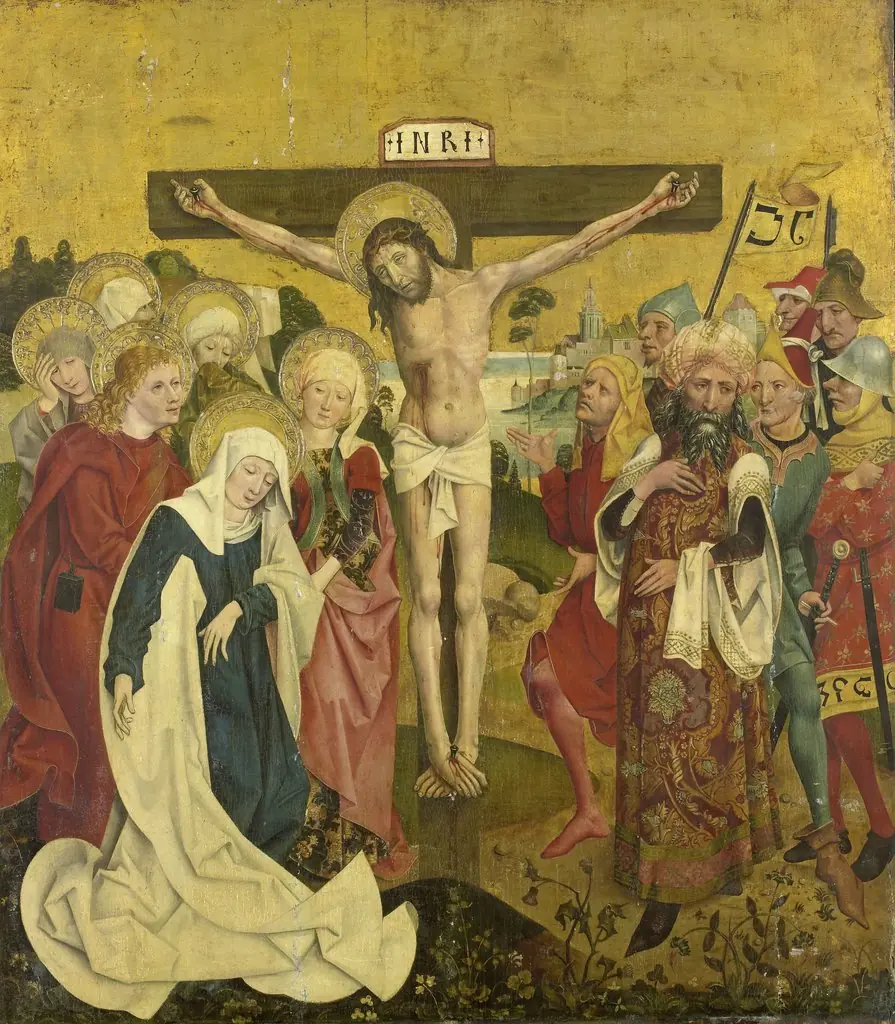
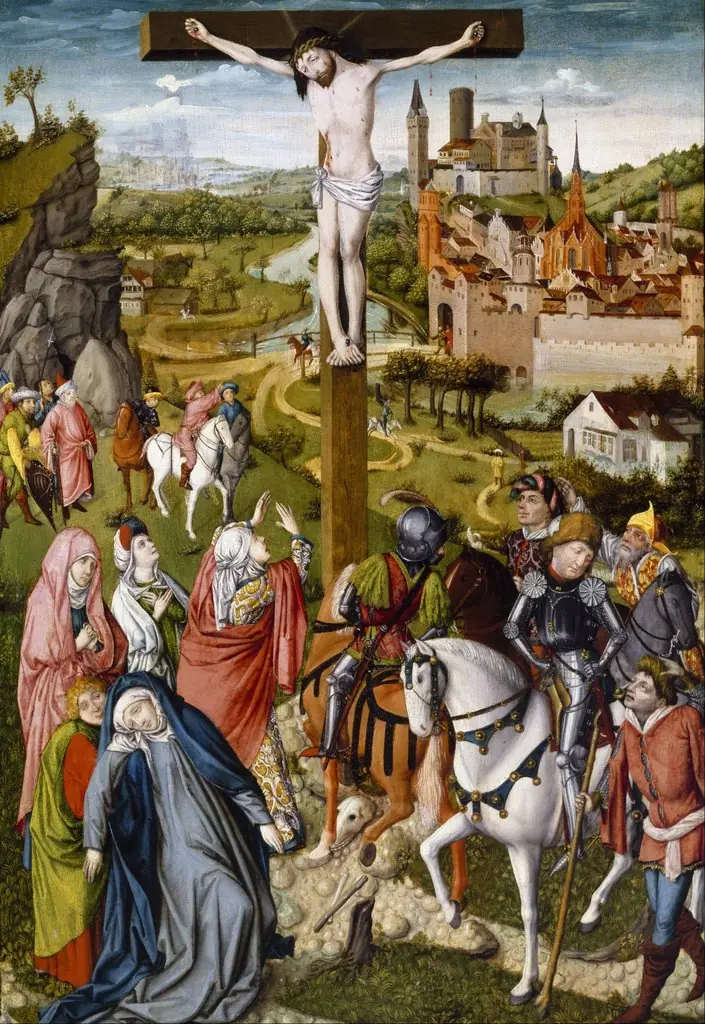
Painted by Juan de Flandes around 1509, this oil on panel depicts the Crucifixion of Christ with a composition characteristic of the artist's late Flemish-influenced style. The scene centers on the figure of Christ on the cross, set against a landscape that transitions from a dark, stormy sky to a distant horizon. At the foot of the cross, the Virgin Mary and two other women kneel in grief, their dark robes contrasting with the pale skin of the central figure. To the right, Roman soldiers on horseback observe the event; one is clad in armor while the other wears vibrant red and gold garments, adding a note of courtly elegance to the violent scene. A skull and scattered bones lie in the foreground, referencing Golgotha, the Place of the Skull. This work exemplifies Juan de Flandes's role as a court painter in Castile, where he synthesized Northern European attention to detail and texture with Spanish devotional intensity. Created during the height of his career in Valladolid, the painting reflects the religious fervor of the early 16th century and the artist's mastery in rendering complex emotional states within a structured, narrative framework.
Subject & Meaning
The central figure is Christ nailed to the cross, his expression weary, while three women in dark garments kneel in sorrow. Two mounted figures—one armored, the other in bright red and gold—stand to the right, the armored rider holding a spear and a red flag nearby, suggesting a narrative of witness and authority.
Technique & Style
De Flandes employs a muted palette and careful modeling to render facial expressions and textures. Soft color transitions and fine detailing convey the emotional tone, while the inclusion of a skull and broken bones adds symbolic depth to the foreground.
History & Provenance
Created in the early 16th century, the painting entered the Spanish royal collections before being transferred to the Museo del Prado, where it remains on display as part of the museum’s early Renaissance holdings.
Own this work as a print
Artist & collection