Artwork
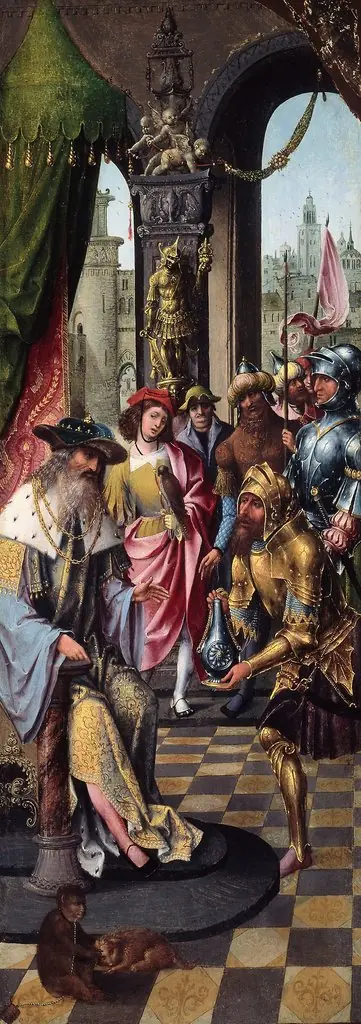
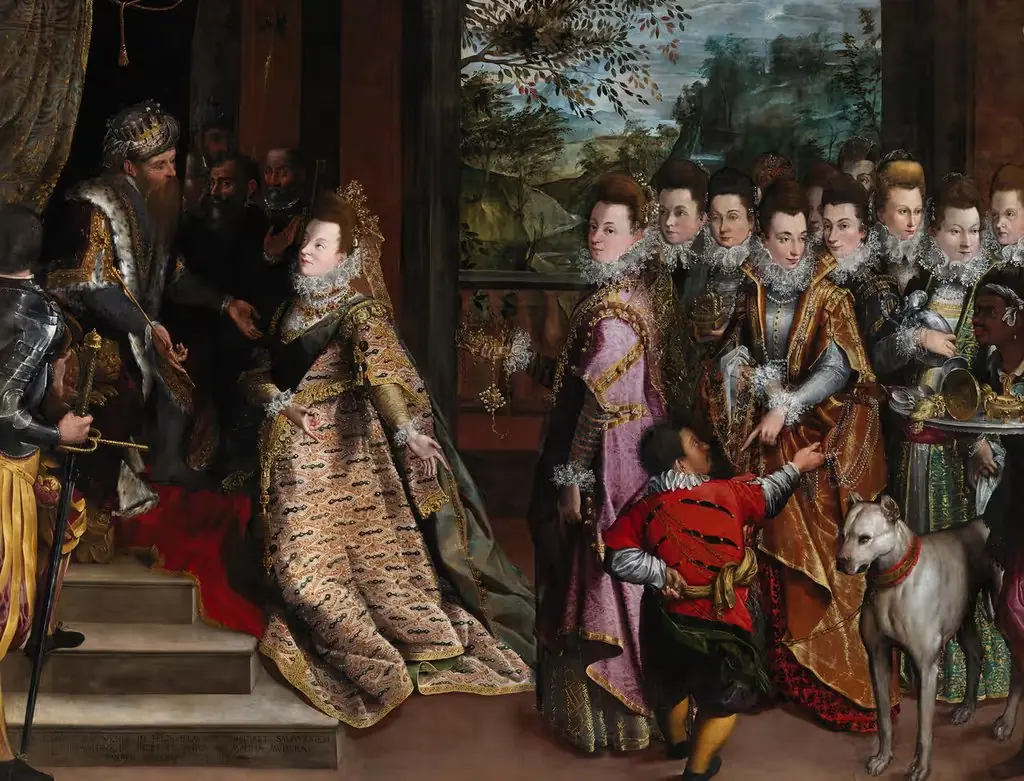
King Solomon Receiving the Queen of Sheba
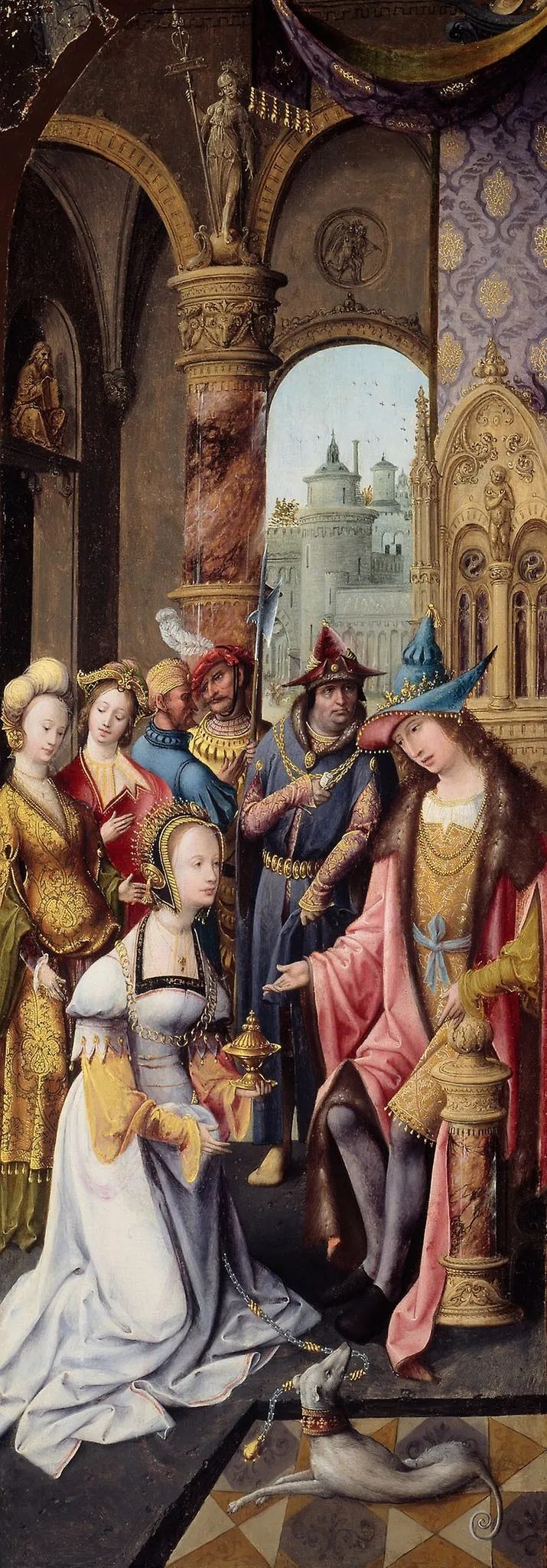
King Solomon Receiving the Queen of Sheba is an oil painting by the Northern Renaissance artist Master of the Antwerp Adoration. It dates from 1517 and is held in the collection of the Art Institute of Chicago.
About this work
Overview
King Solomon Receiving the Queen of Sheba is a 1517 oil painting by the Master of the Antwerp Adoration, a Flemish artist active in Antwerp. The work depicts a biblical scene in the style of Antwerp Mannerism and is housed at the Art Institute of Chicago.
Subject & Meaning
The painting illustrates the biblical encounter between King Solomon and the Queen of Sheba, emphasizing regality through formal composition and attire. The king wears a blue robe, while the queen is depicted in a white dress and blue hat, surrounded by attendants bearing symbolic objects like a scepter and a book.
Technique & Style
Characterized by Antwerp Mannerism, the painting features elaborate, exotic garments on numerous figures. The artist employed a range of colors, including gold, blue, and white, with a notable use of glazing techniques to achieve depth and luminosity.
History & Provenance
Created in 1517, the painting is attributed to the Master of the Antwerp Adoration, an artist defined by their activity in Antwerp between 1500 and 1520. It is currently part of the Art Institute of Chicago's collection.
Context
The work reflects the artistic and religious inclinations of early 16th-century Antwerp, where Mannerist styles and biblical themes were prominent. The inclusion of detailed, exotic clothing also hints at the city's position in global trade and cultural exchange.
Legacy
While specific lasting influences of this painting are not broadly documented, it contributes to the understanding of Antwerp Mannerism's evolution and the artistic interpretation of biblical narratives during the early 16th century.
Artist & collection
Artist
Master of the Antwerp Adoration
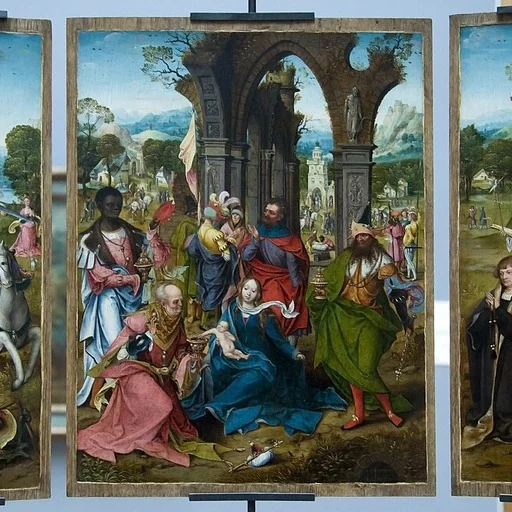
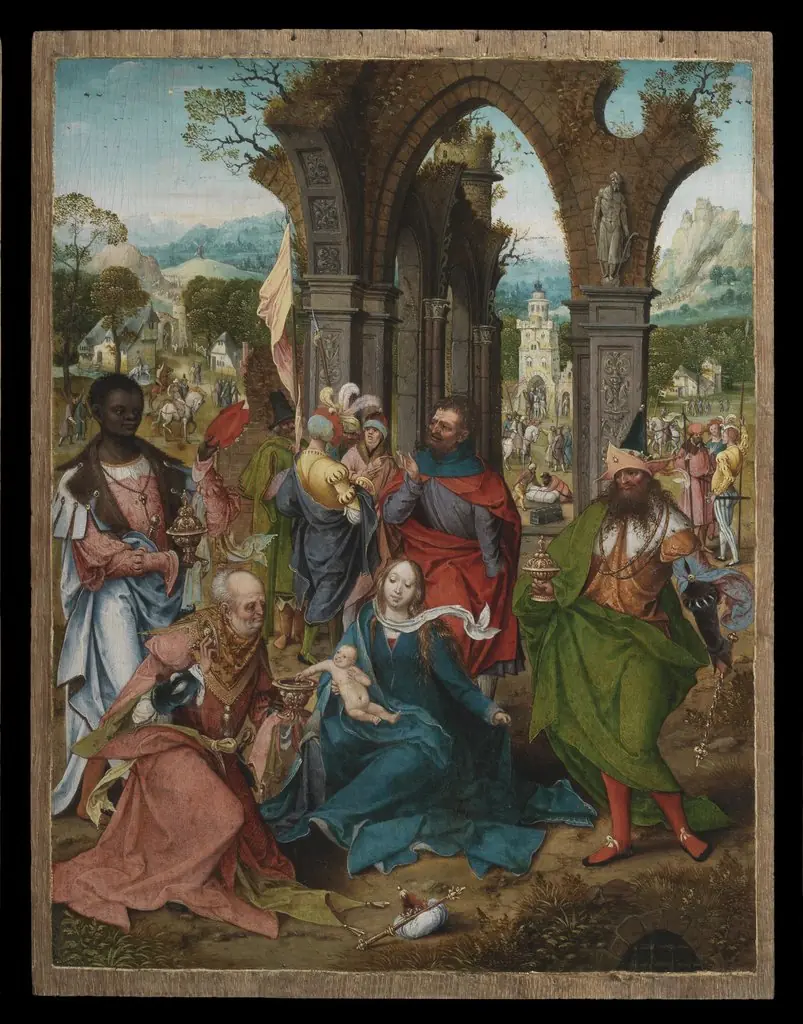
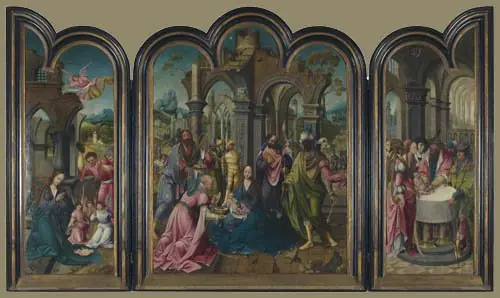
The Master of the Antwerp Adoration (active 1500 – 1520) was a Flemish painter in the style of Antwerp Mannerism, whose compositions are typically filled with agitated figures in exotic, extravagant clothes.

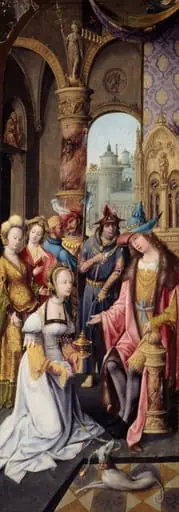 King Solomon Receiving the Queen of Sheba
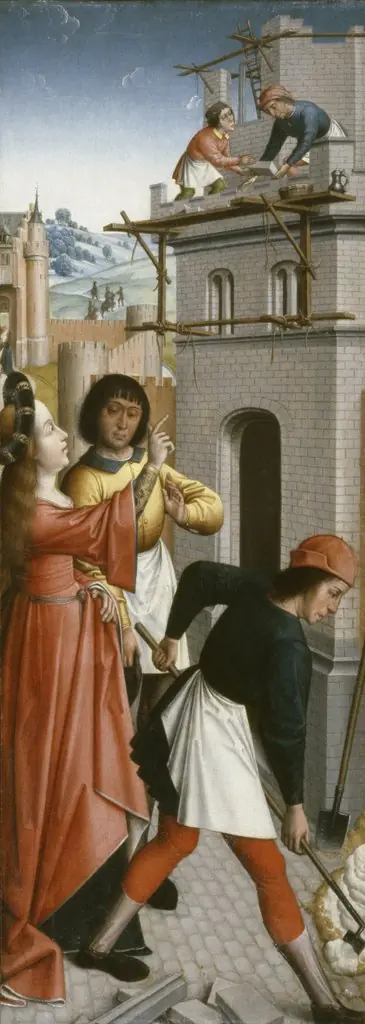 St. Barbara Directing the Construction of a Third Window in Her Tower
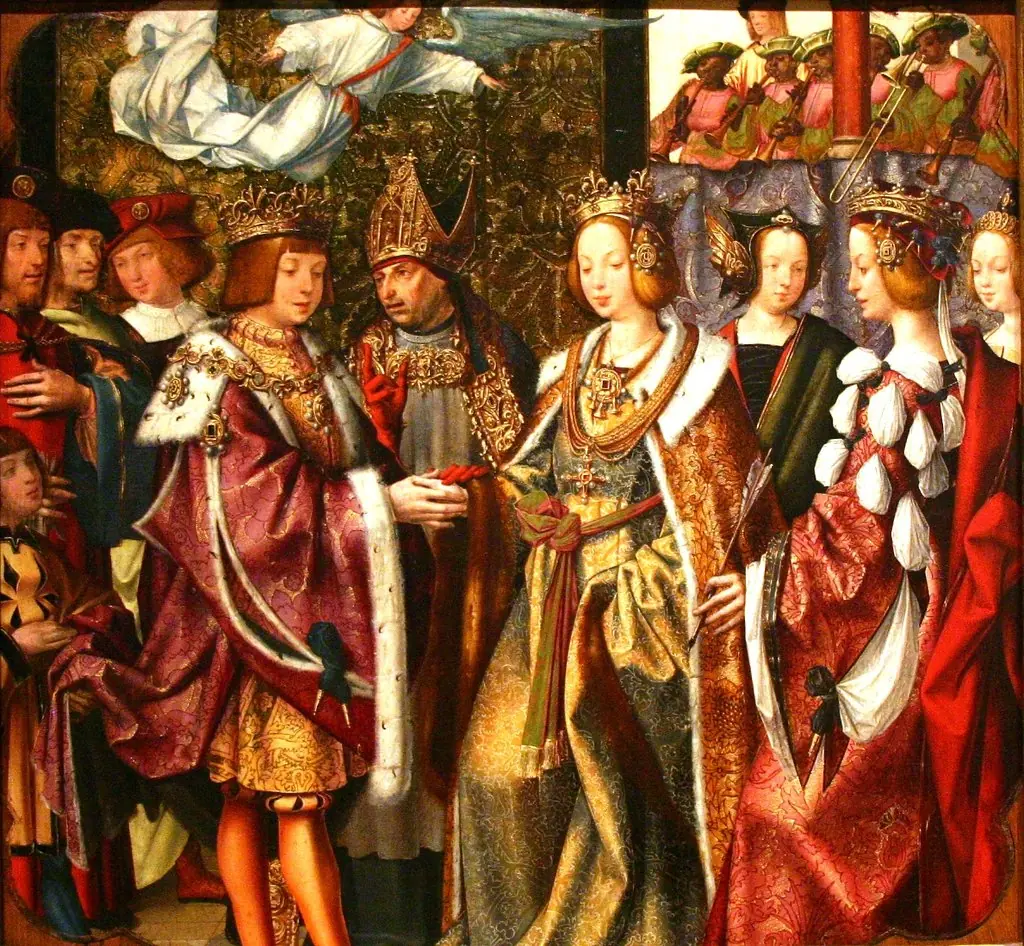 Marriage of St. Ursula and Prince Conan
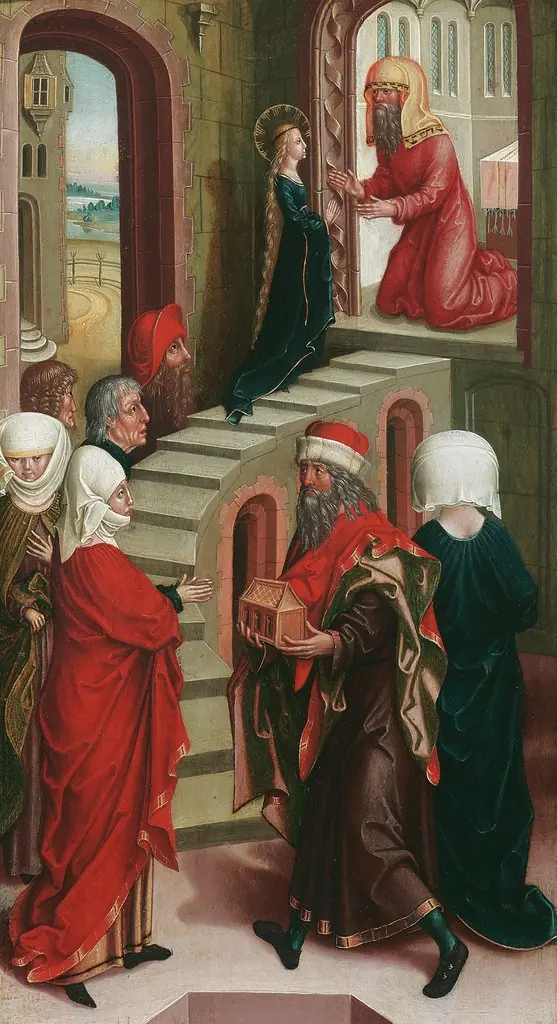 The presentation of Mary in the temple
 King David Receiving the Cistern Water of Bethlehem
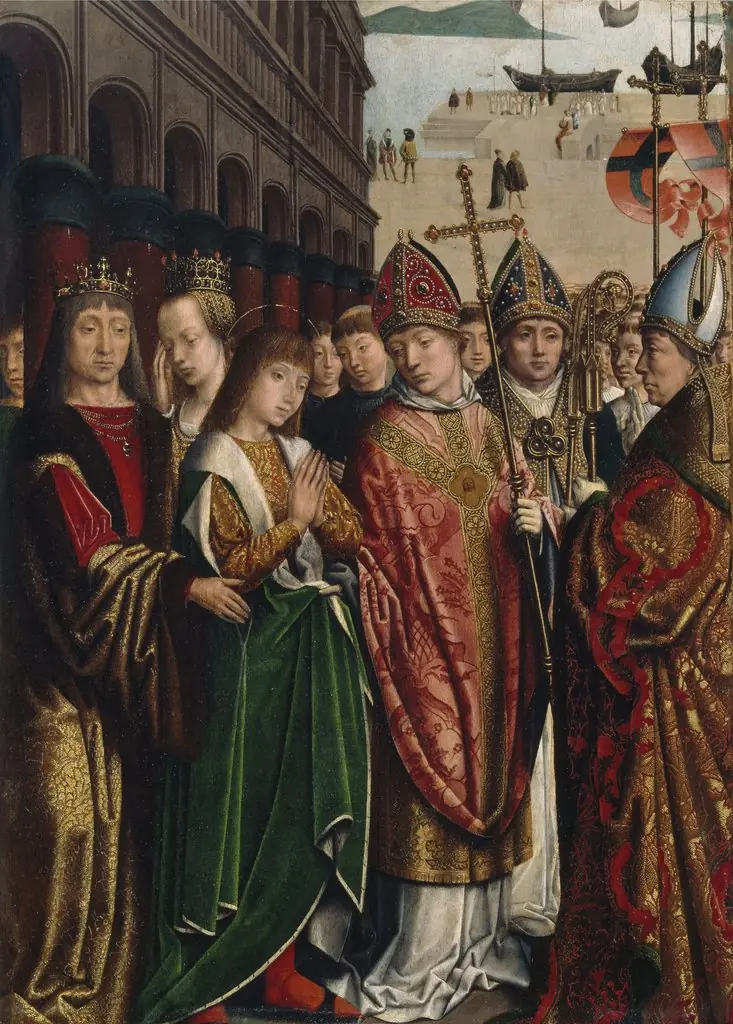 Saint Rumbold Taking Leave of his Parents
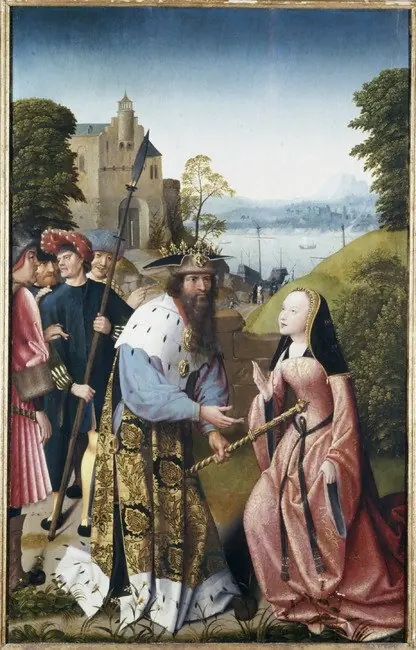 Dymphna’s Father Proposes to her
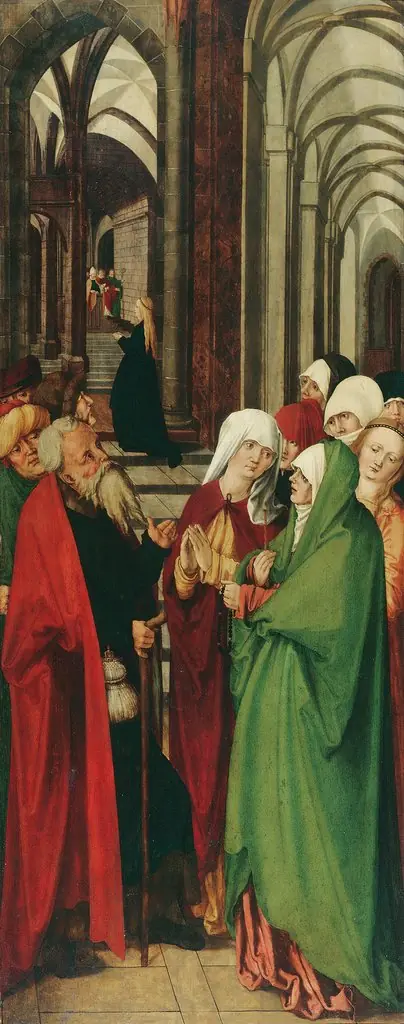 The presentation of Mary in the temple
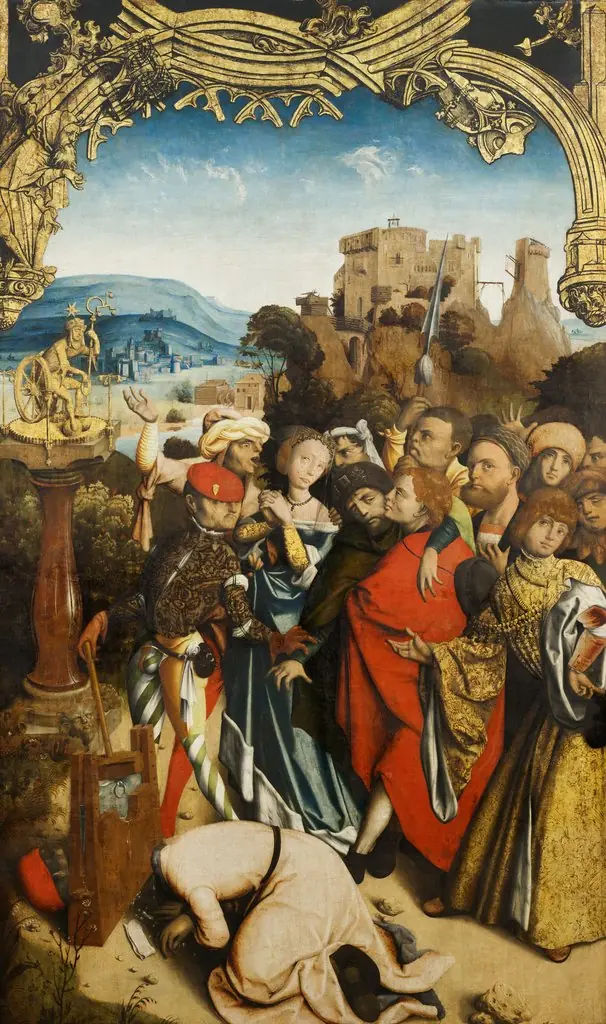 Martyrium der hll. Cantius, Cantianus und Cantianilla (Innenseite); Auferstehung Christi (Außenseite)
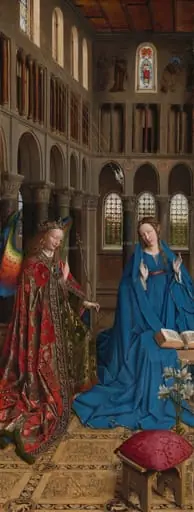 The Annunciation
 Visit of the Queen of Sheba