Artwork
Saint John the Evangelist
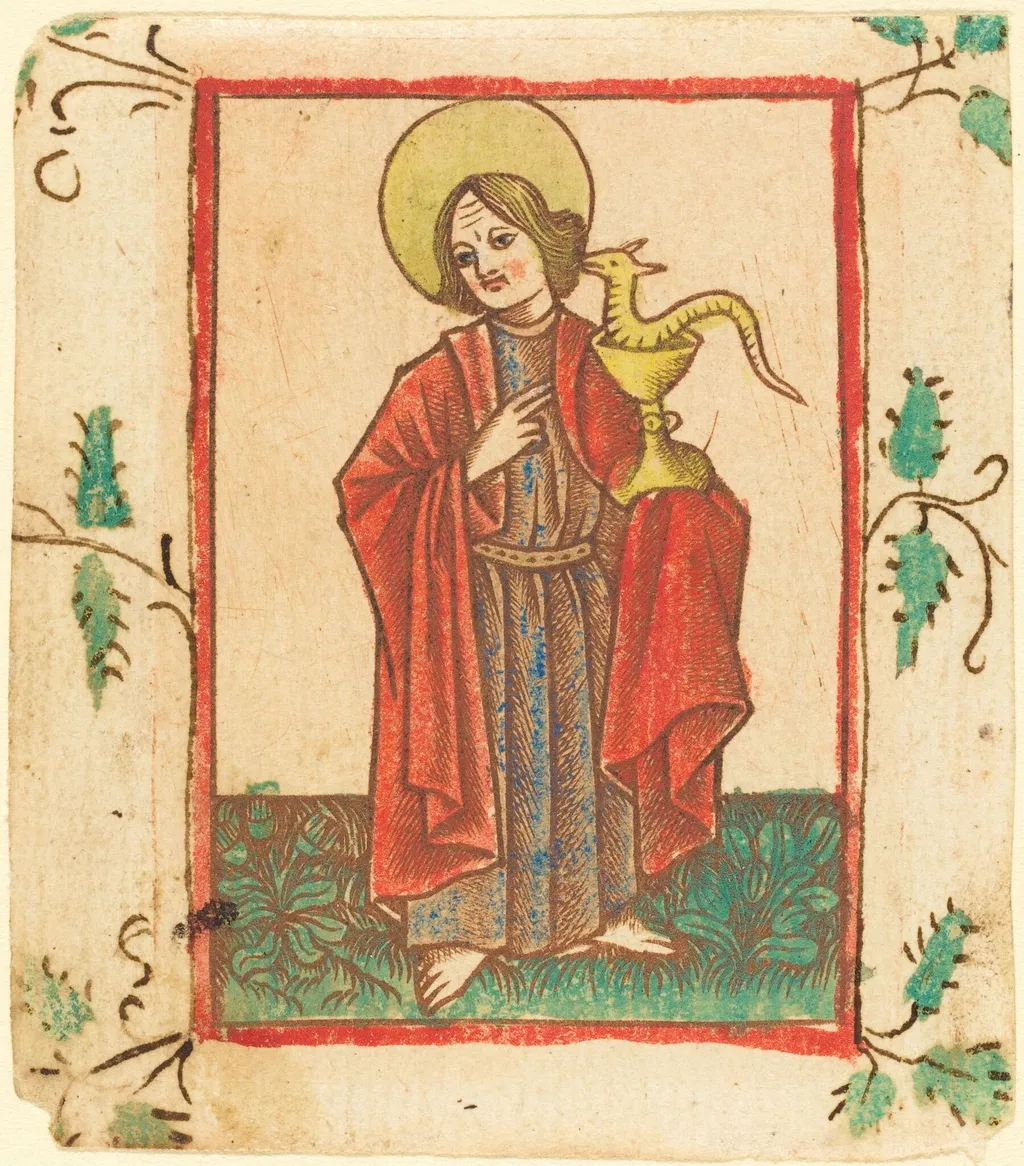
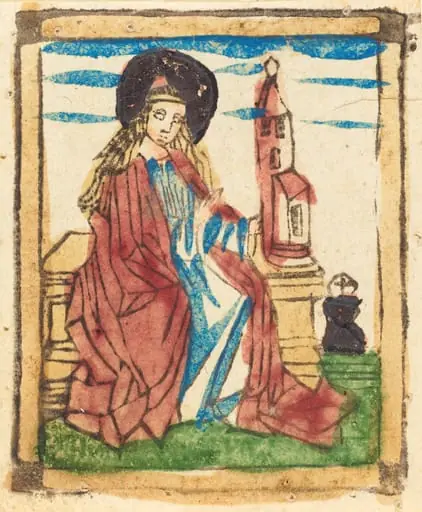
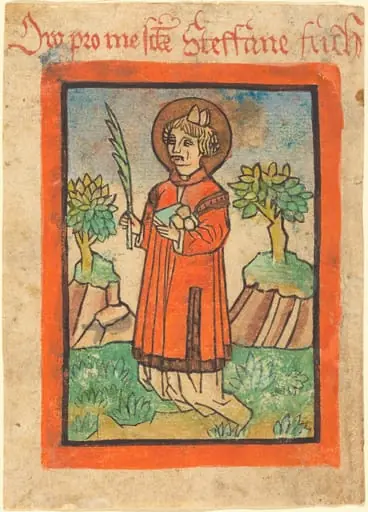
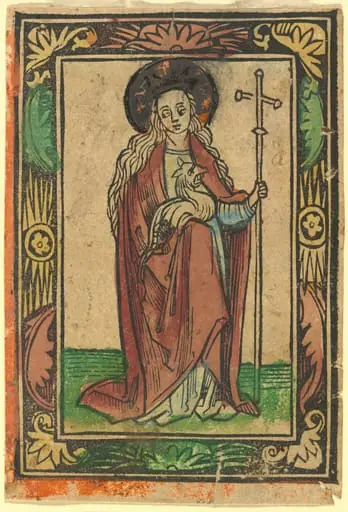
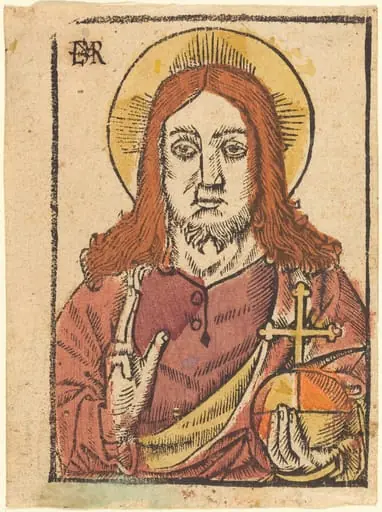
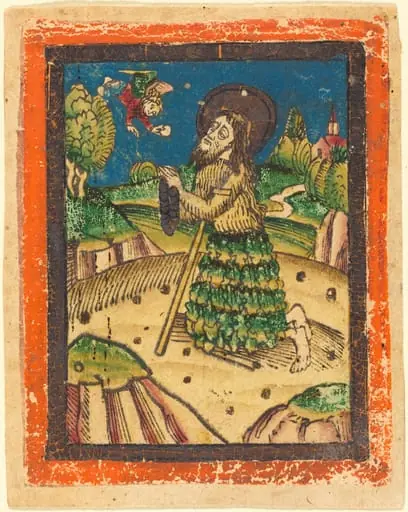
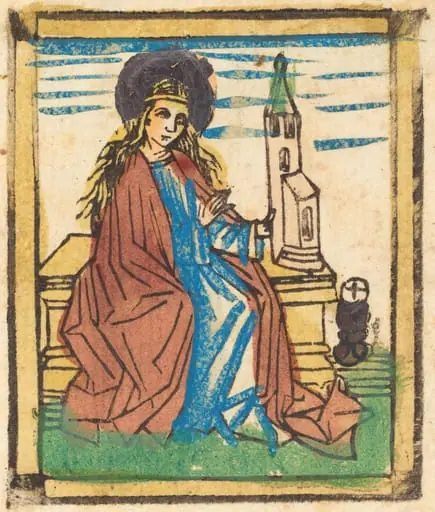
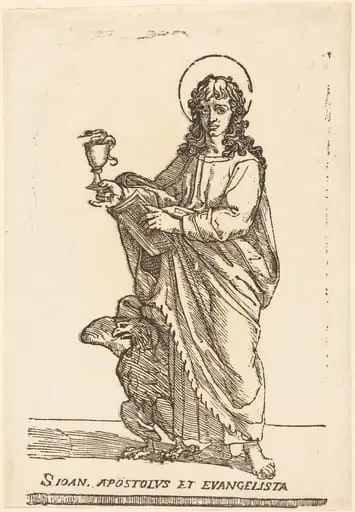
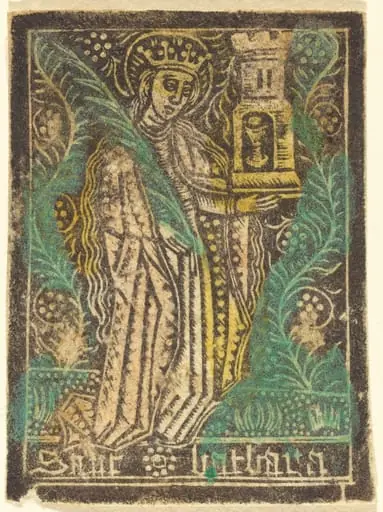
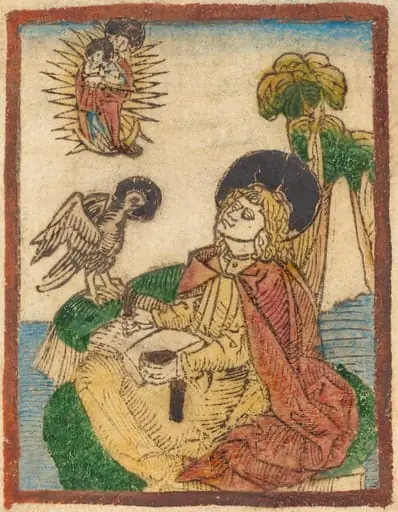
Saint John the Evangelist is an ink print by the Renaissance artist Master of the Dutuit Mount of Olives. It dates from 1460 and is held in the collection of the National Gallery of Art.
About this work
Overview
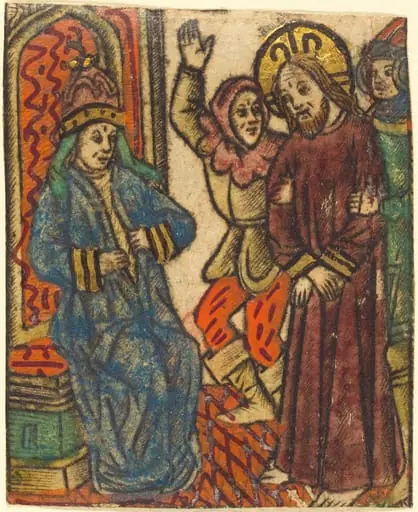
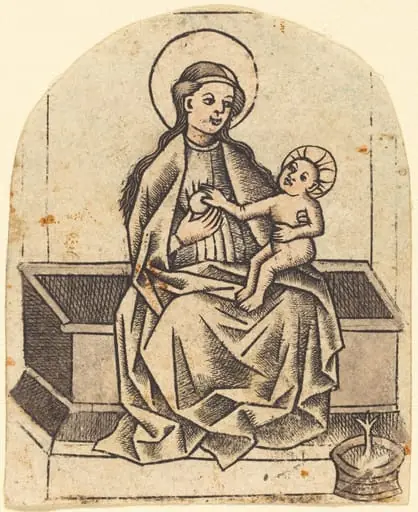
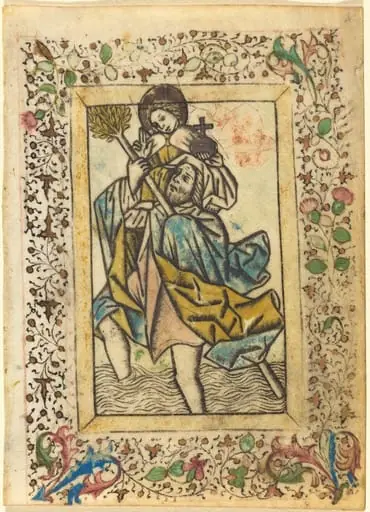
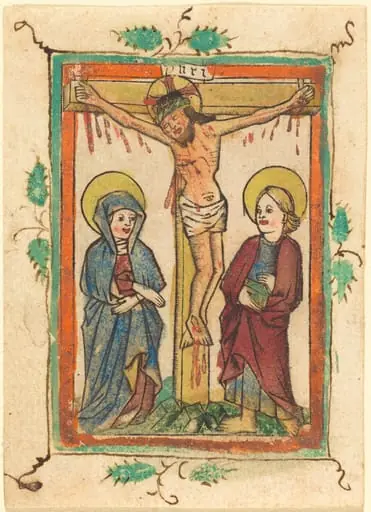
Created around 1460, this hand-colored engraving depicts Saint John the Evangelist as a solitary figure against a minimal background. The work is attributed to the Master of the Dutuit Mount of Olives, an anonymous artist active in the late medieval period. The image combines the precision of engraving with the vibrancy of applied color, reflecting devotional printmaking practices of the time.
Subject & Meaning
The presence of the bird and the simple setting focus attention on the saint’s spiritual role rather than narrative context.
The figure represents Saint John the Evangelist, one of the four Gospel writers. He is identified by the eagle, a traditional symbol associated with his gospel due to its soaring, divine perspective. The golden halo signifies sanctity, while the red robe may allude to martyrdom or apostolic authority. The presence of the bird and the simple setting focus attention on the saint’s spiritual role rather than narrative context.
Technique & Style
The image was produced through engraving on metal, then manually colored with flat, opaque pigments. Lines are crisp and deliberate, defining form with clarity rather than shading. The colors—bright red, green, and gold—are applied uniformly, avoiding gradation. This approach prioritizes symbolic clarity over naturalism, aligning with devotional aesthetics of the mid-fifteenth century.
History & Provenance
The work is part of a small group of prints linked to the Master of the Dutuit Mount of Olives, named after a related drawing in the Dutuit collection. Its survival in relatively intact condition suggests it was carefully preserved, likely in a religious or private devotional context. No definitive record of its original commission or early ownership exists.
Context
In the mid-1400s, engraved religious images circulated widely among laypeople seeking personal devotion. These prints, often hand-colored, served as affordable alternatives to painted altarpieces. Saint John’s depiction with the eagle reflects established iconographic conventions, reinforcing doctrinal themes through visual shorthand accessible to a broad audience.
Legacy
This engraving exemplifies the transition from manuscript illumination to print culture in late medieval Europe. Though not widely known today, it contributes to understanding how religious imagery was reproduced and consumed before the advent of movable type. Its stylistic simplicity influenced later devotional prints in both technique and symbolic language.
Artist & collection

Artist
Master of the Dutuit Mount of Olives
Master of the Dutuit Mount of Olives (1460–1460) was an artist.