Artwork
Saint Margaret
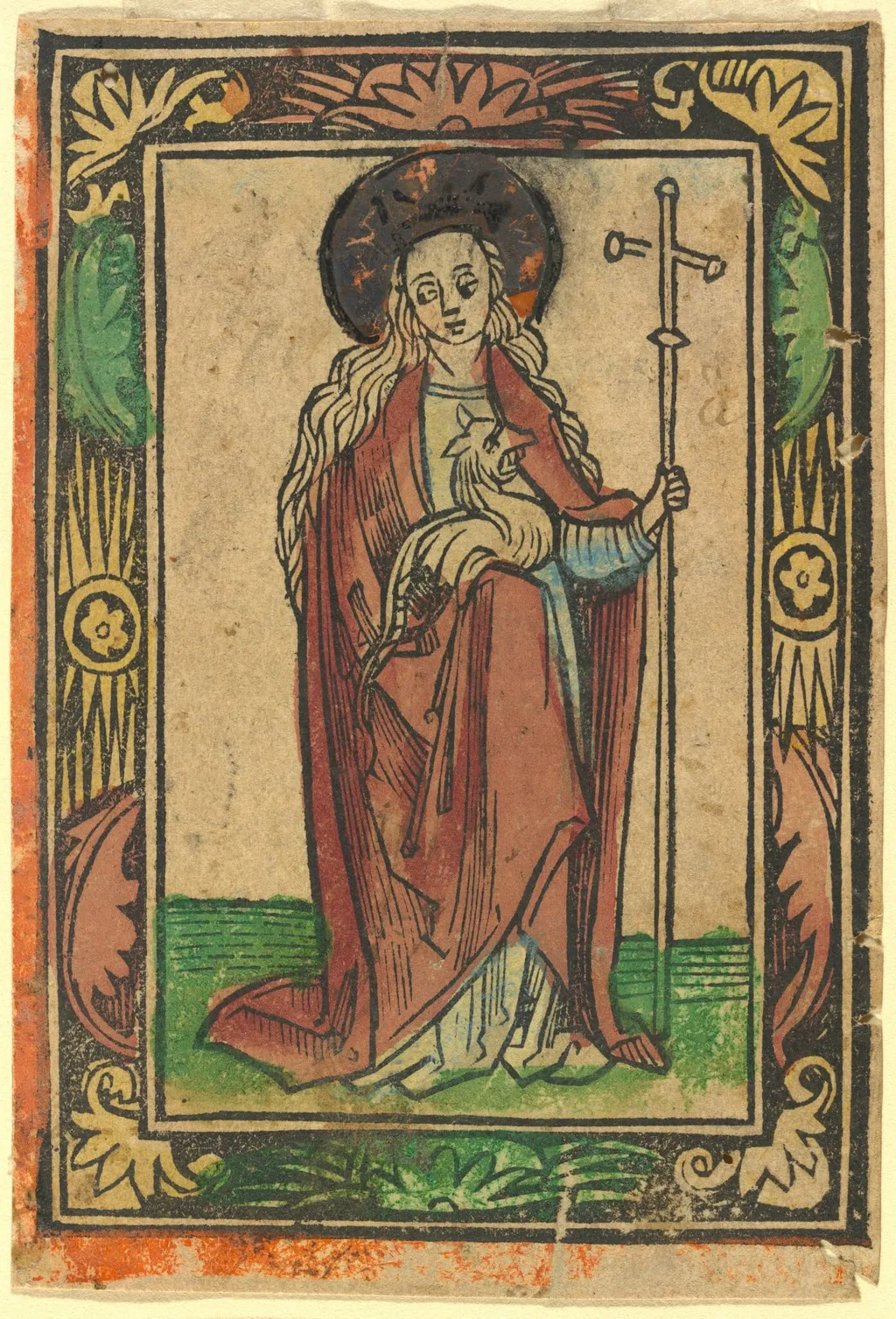
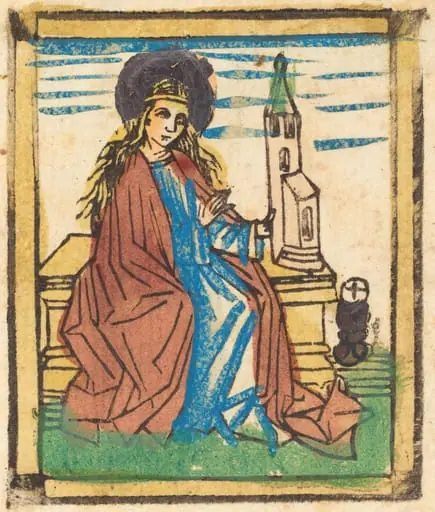
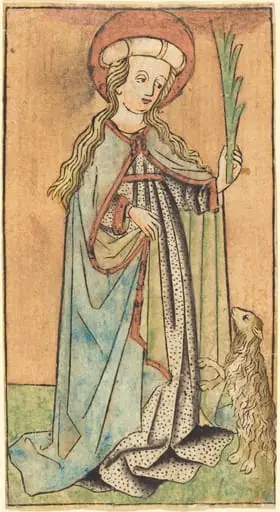
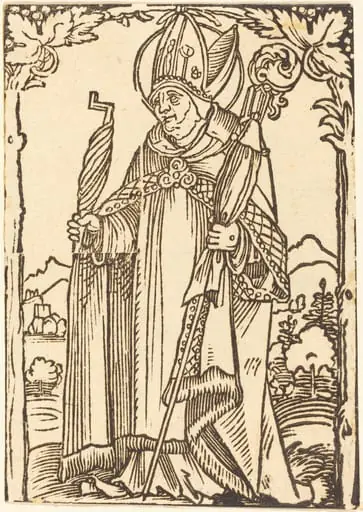
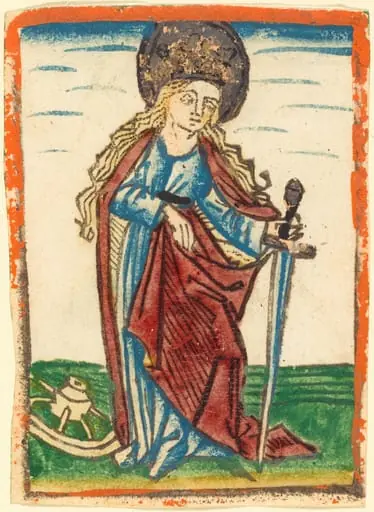
Saint Margaret is an ink print by the Renaissance artist German 15th Century. It dates from 1480 and is held in the collection of the National Gallery of Art.
About this work
Overview
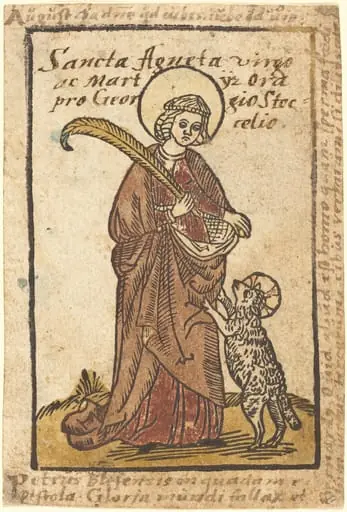
This hand-colored woodcut depicts Saint Margaret, a Christian martyr, rendered in bold, flat hues applied after printing. The figure stands tall against a simple green field, clad in a vivid red robe and crowned with a golden halo. Colors including red, green, yellow, rose, orange, and blue were added manually, enhancing the image’s devotional clarity without naturalistic depth.
Subject & Meaning
Saint Margaret is shown holding a staff and a small object, likely a cross or book, symbolizing her faith and martyrdom. Her elongated form and serene expression reflect traditional iconography of holy women, emphasizing spiritual authority over physical realism. The halo and rich robes signal her sanctity, aligning with medieval hagiographic conventions meant to inspire devotion.
Technique & Style
The image was produced using a woodcut technique, where an image is carved into a wooden block and inked for printing. Hand-coloring with water-based pigments followed, resulting in a stylized, two-dimensional appearance. The limited palette and crisp outlines prioritize symbolic clarity over texture or shading, typical of devotional prints of the period.
History & Provenance
Though specific origins are unrecorded, such prints were commonly produced in late medieval or early Renaissance Europe for private worship. Their affordability made them accessible to laypeople, often used in homes or small chapels. The hand-coloring suggests local workshops, possibly in Germany or the Low Countries, where woodcut production flourished.
Context
During the 15th and early 16th centuries, printed images of saints served as aids to prayer and moral instruction. Saint Margaret, associated with deliverance from peril and childbirth, was a popular subject. This print reflects a time when visual piety complemented textual devotion, especially among those unable to read Latin liturgy.
Legacy
As a mass-produced devotional object, this woodcut exemplifies the democratization of religious imagery before the Reformation. Its survival offers insight into popular piety and the role of color in early print culture. Though not attributed to a known artist, it contributes to understanding how sacred figures were visually sustained in everyday life.
Artist & collection

Artist
This 15th-century German artist carved vivid religious scenes into metal and wood, then hand-painted them in bright, symbolic colors.

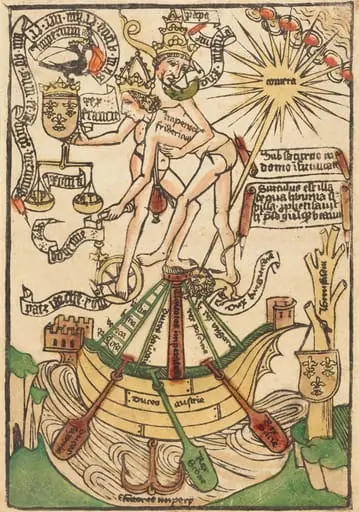 Allegory of the Meeting of Pope Paul II and Emperor Frederick III
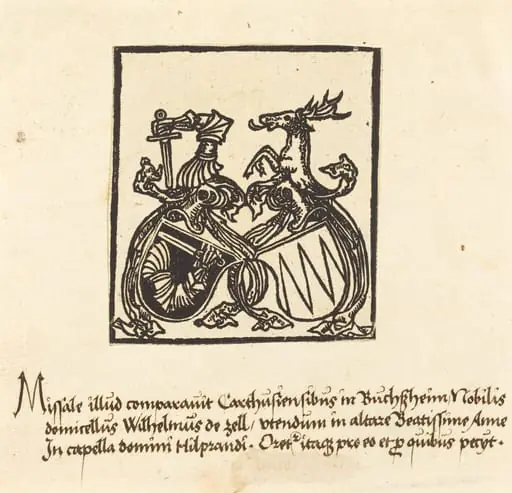 Bookplate of Wilhelm von Zell
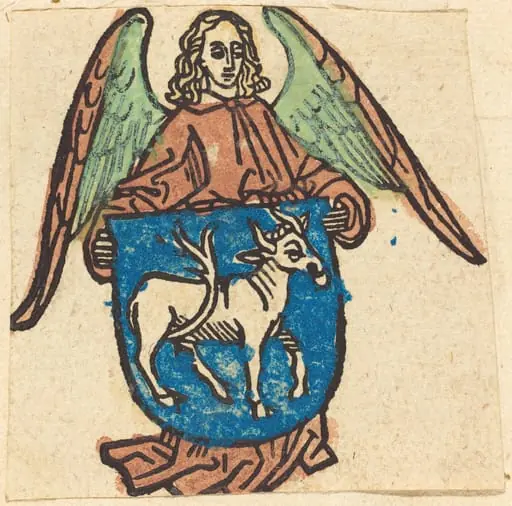 Bookplate of Hilprand Brandenburg of Bibrach
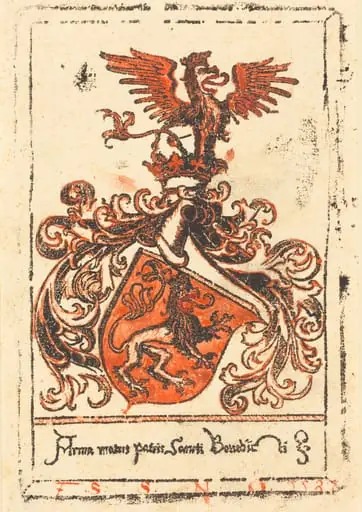 Bookplate of the Abbey of Ottobeuren
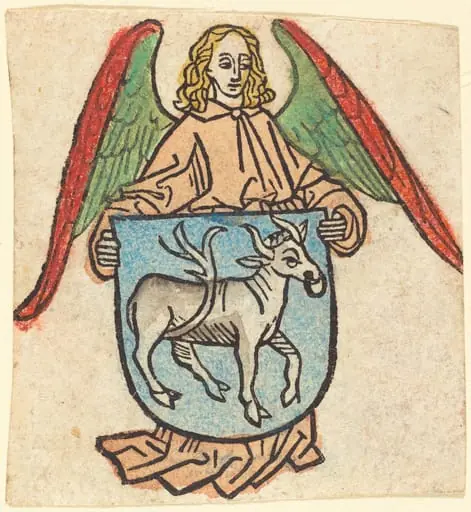 Bookplate of Hilprand Brandenburg of Bibrach
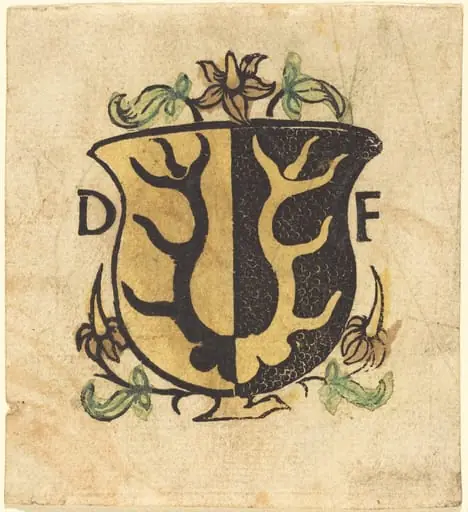 Bookplate of Dominicus Frauenfelder
![Studies for Six Figures (sheet from a model book) [recto], by German 15th Century](https://artifactworldgallery.com/img/german-15th-century--studies-for-six-figures-sheet-from-a-model-book-recto--4837429e0755bc3f-w320.webp) Studies for Six Figures (sheet from a model book) [recto]
Studies for Six Figures (sheet from a model book) [recto]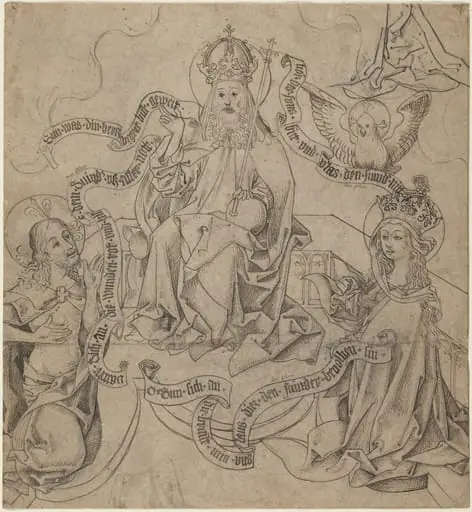 Christ and Mary Interceding with God the Father
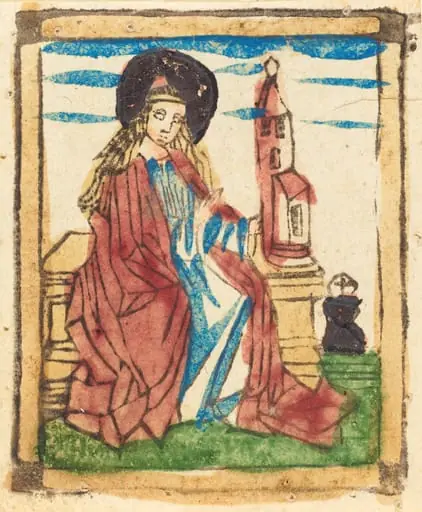
![Saint Agnes [verso], by German 15th Century](https://artifactworldgallery.com/img/german-15th-century--saint-agnes-verso--eb41977e5e7551cd-w320.webp)