Artwork
Saint Bartholomew
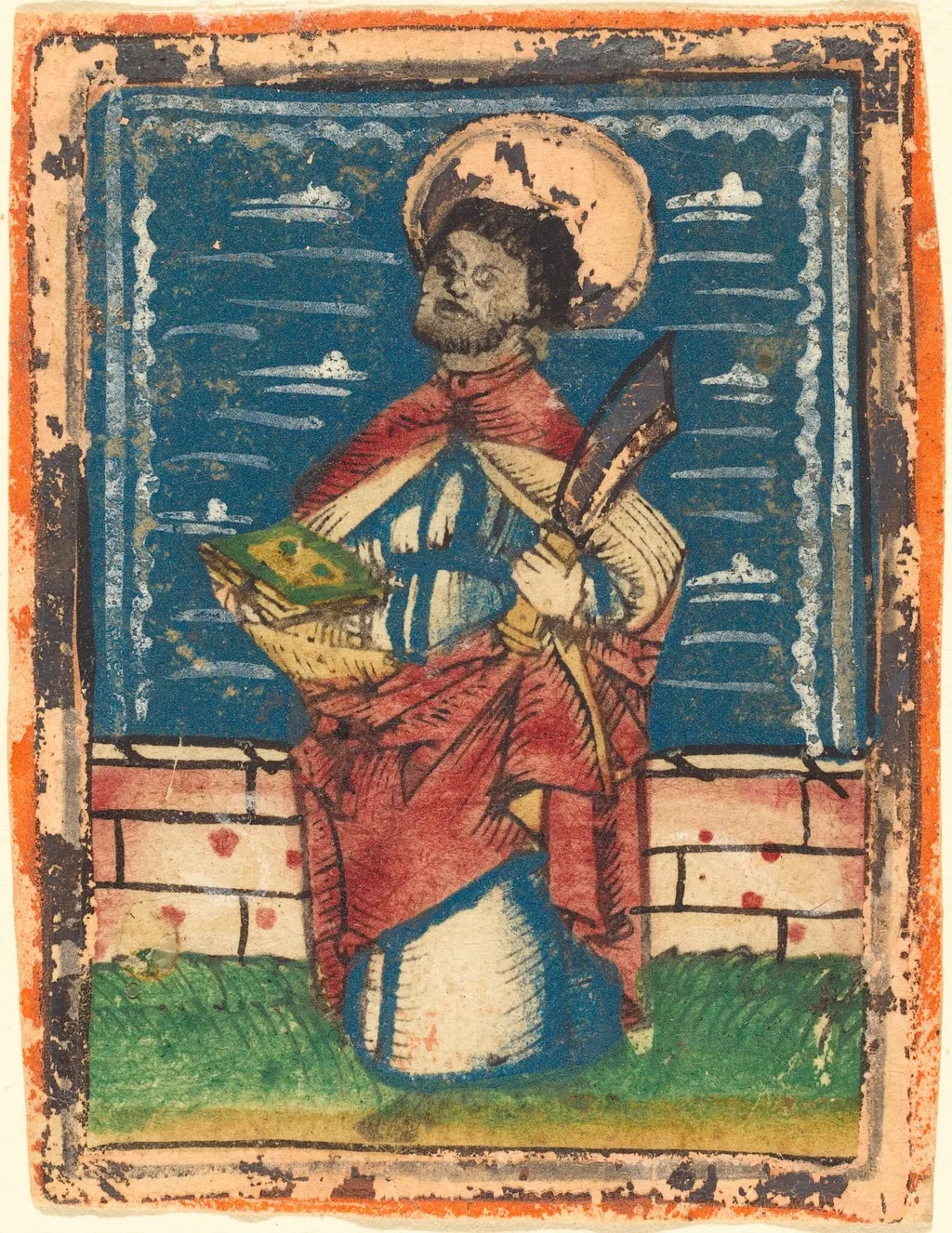
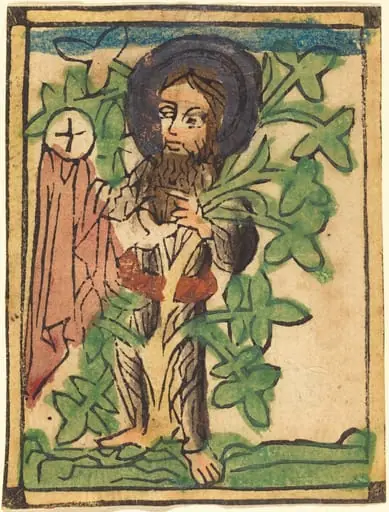
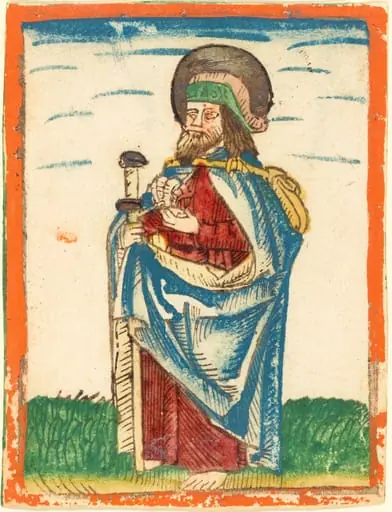
Saint Bartholomew is an ink print by the Renaissance artist German 15th Century. It dates from 1485 and is held in the collection of the National Gallery of Art. The work is a hand‑colored woodcut depicting a bearded figure clutching a large knife.
About this work
Overview
The work is a hand‑colored woodcut depicting a bearded figure clutching a large knife. He is garbed in a vivid red robe, crowned with a halo, and set against a stark blue sky and a brick wall backdrop. The composition relies on flat, saturated hues—blue, red, green, gold, orange, and touches of silver or gold—creating a striking visual contrast despite the print’s evident age and wear.
Subject & Meaning
The central figure represents Saint Bartholomew, one of the Twelve Apostles traditionally associated with his martyrdom by flaying.
The central figure represents Saint Bartholomew, one of the Twelve Apostles traditionally associated with his martyrdom by flaying. The knife he holds alludes to the instrument of his torture, while the halo identifies him as a holy personage. The red robe underscores his martyr’s blood, and the simple architectural setting focuses attention on the saint’s solemn gesture and the narrative of sacrifice.
Technique & Style
Executed as a woodcut, the image was produced by carving the design into a wooden block, inking the raised surfaces, and pressing the block onto paper. After printing, artisans applied hand‑applied pigments—blue, red lake, green, yellow, orange, and metallic silver or gold—resulting in vivid, flat color fields characteristic of early printmaking. The surviving piece shows typical signs of age: surface abrasion, faded pigments, and minor scratches that reveal the manual nature of its creation.
History & Provenance
The print belongs to the tradition of early modern devotional imagery circulated through affordable, reproducible media. While the exact date and workshop remain unspecified, such hand‑colored woodcuts were common in the 15th and 16th centuries for private worship and instruction. The work’s current condition suggests prolonged handling and exposure, indicating it has likely passed through several collections before arriving at its present institutional setting.
Artist & collection

Artist
This 15th-century German artist carved vivid religious scenes into metal and wood, then hand-painted them in bright, symbolic colors.

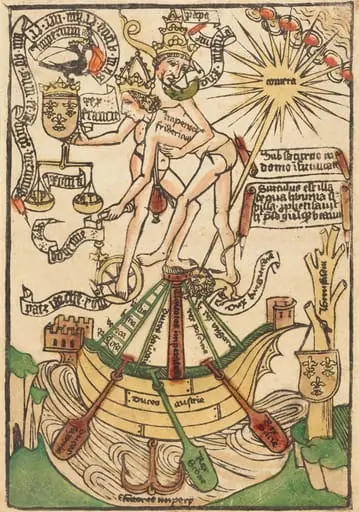 Allegory of the Meeting of Pope Paul II and Emperor Frederick III
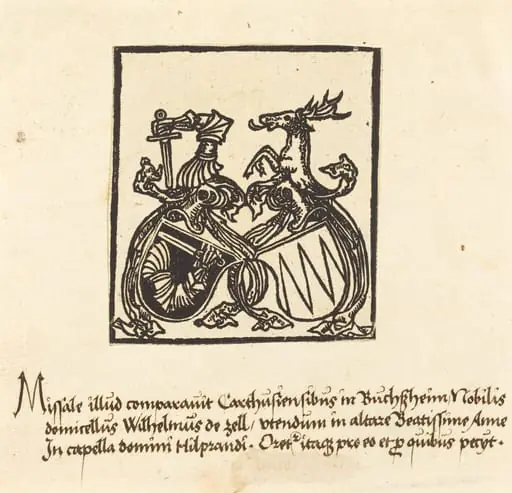 Bookplate of Wilhelm von Zell
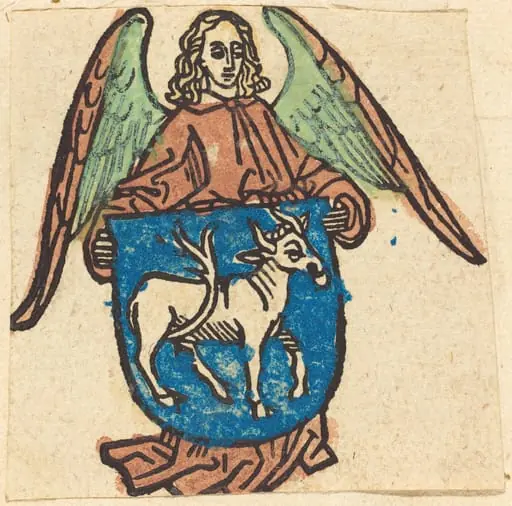 Bookplate of Hilprand Brandenburg of Bibrach
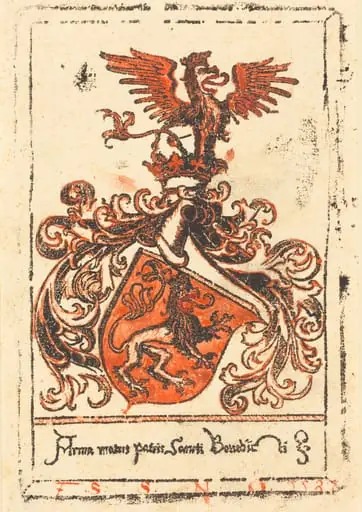 Bookplate of the Abbey of Ottobeuren
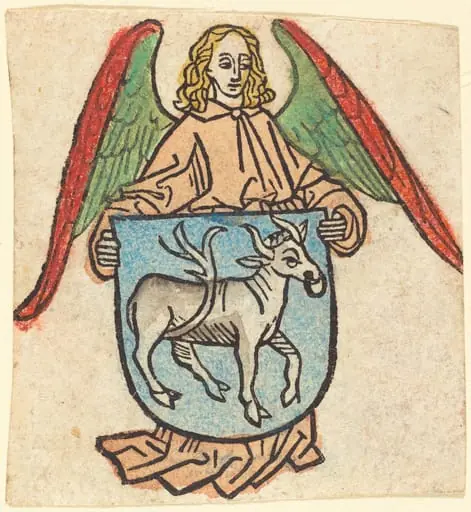 Bookplate of Hilprand Brandenburg of Bibrach
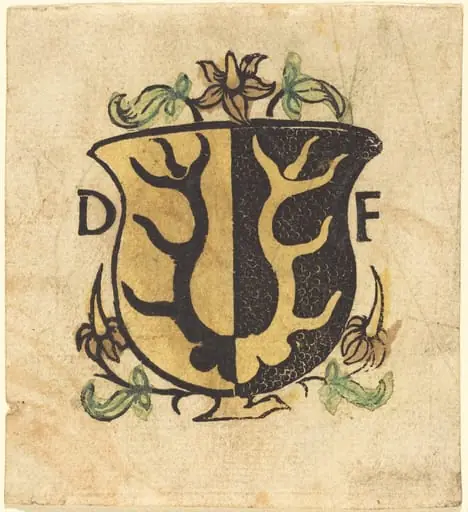 Bookplate of Dominicus Frauenfelder
![Studies for Six Figures (sheet from a model book) [recto], by German 15th Century](https://artifactworldgallery.com/img/german-15th-century--studies-for-six-figures-sheet-from-a-model-book-recto--4837429e0755bc3f-w320.webp) Studies for Six Figures (sheet from a model book) [recto]
Studies for Six Figures (sheet from a model book) [recto]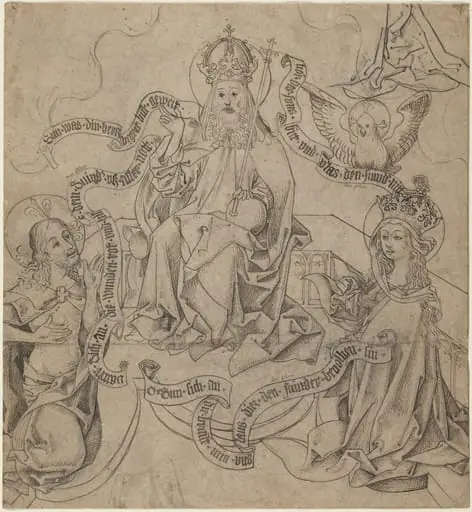 Christ and Mary Interceding with God the Father