Artwork
Charita (Charity)
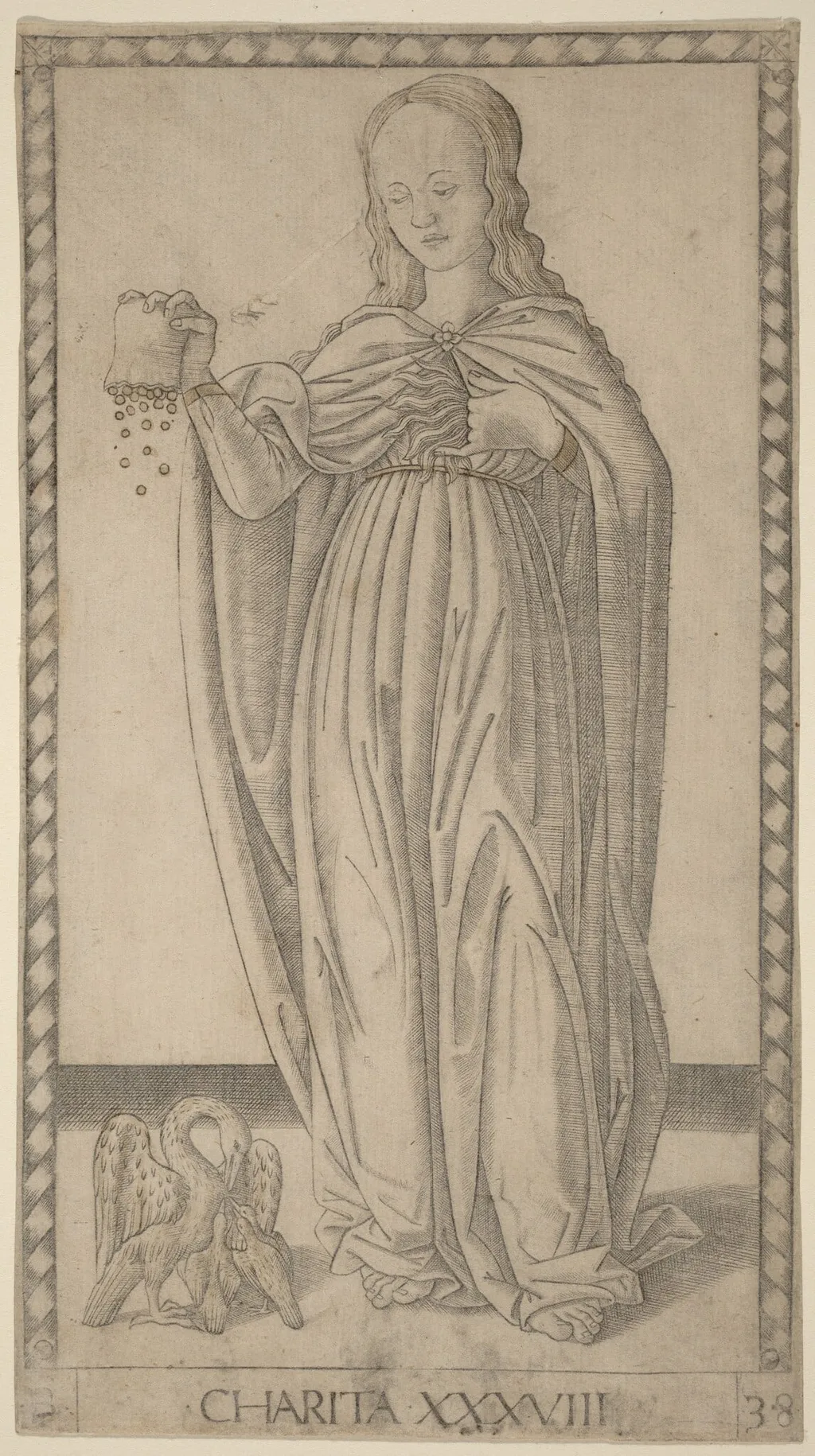
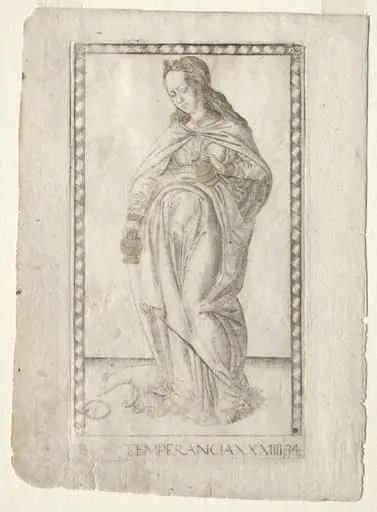
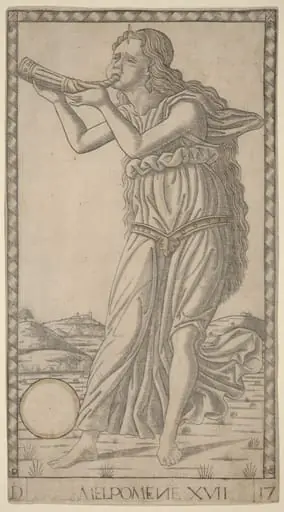
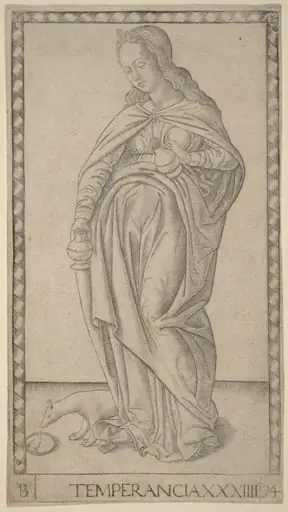
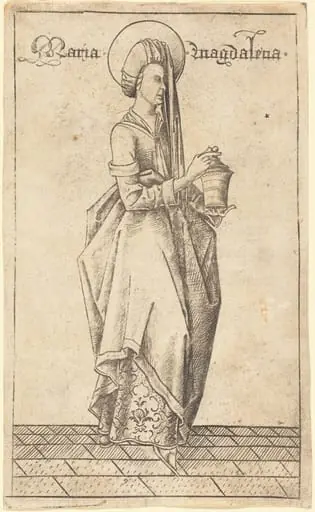
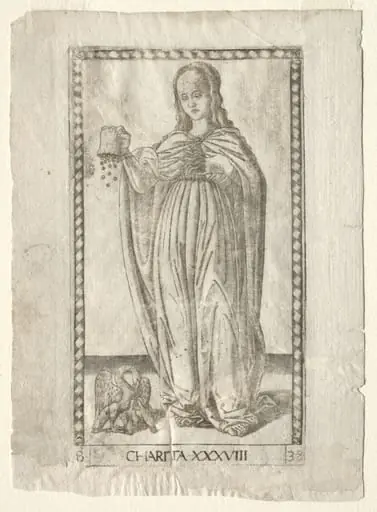
Charita (Charity) is an ink print by the Renaissance artist Master of the E-Series Tarocchi. It dates from 1465 and is held in the collection of the National Gallery of Art.
About this work
Overview
Created around 1465, this engraving with faint gilding is attributed to the Master of the E-Series Tarocchi, an anonymous artist active in northern Italy.
Created around 1465, this engraving with faint gilding is attributed to the Master of the E-Series Tarocchi, an anonymous artist active in northern Italy. The work belongs to a small group of prints that likely illustrated moral or allegorical themes, possibly as part of a larger series. Its delicate lines and subtle metallic accents suggest it was intended for a refined, possibly ecclesiastical audience.
Subject & Meaning
The central figure represents Charita, Latin for Charity, depicted as a serene woman cradling an infant in one arm and holding a cluster of grapes in the other. The grapes symbolize abundance and the spiritual nourishment associated with benevolence. Two small angels sit at her feet, gazing downward, reinforcing the theme of divine grace expressed through human compassion.
Technique & Style
The image was produced using fine engraving on metal, with incised lines that capture subtle textures in fabric and form. Traces of gilding, now faded, once highlighted details such as the robe’s folds or the angels’ wings, adding luminosity. The composition is balanced and intimate, with careful attention to drapery and spatial depth, typical of early Italian printmaking.
History & Provenance
The print’s origin is tied to a limited group of works by the Master of the E-Series Tarocchi, whose identity remains unknown. Few impressions survive, and most are held in institutional collections. Its early date places it among the first generation of Italian engravings, made before the widespread use of the printing press for artistic imagery.
Context
This engraving emerged during a period when religious allegories were commonly rendered in visual form to instruct the faithful. Similar themes appear in contemporary frescoes and manuscript illuminations. The use of Latin terminology and the inclusion of angels reflect a devotional culture that linked moral virtues with celestial observation.
Legacy
Though not widely circulated, the print contributes to the understanding of early Italian engraving’s development. It demonstrates how symbolic imagery was adapted for small-scale, reproducible formats, paving the way for later moral and religious prints. Its quiet dignity influenced subsequent depictions of Charity in Northern European art.
Artist & collection
Artist
Master of the E-Series Tarocchi
Master of the E-Series Tarocchi (b. 1400) was an Italian artist.