Artwork
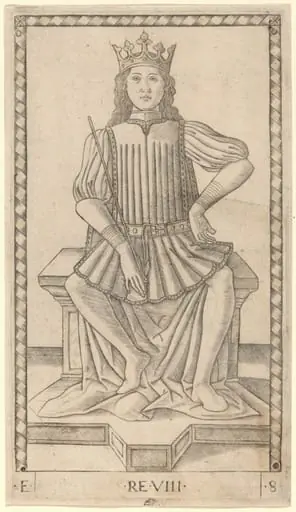
The King (from the Tarocchi, series E: Conditions of Man, #8)
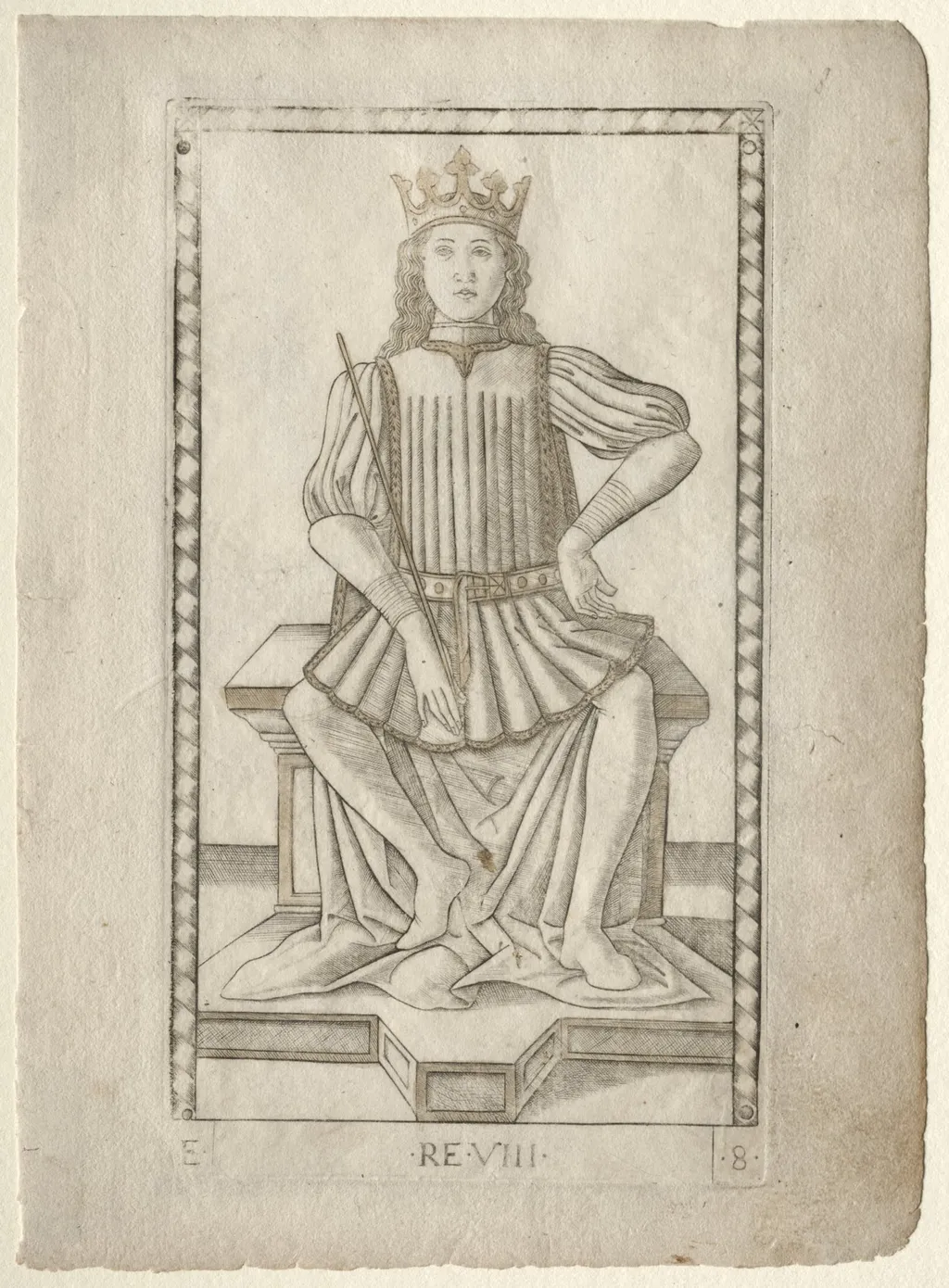
The King (from the Tarocchi, series E: Conditions of Man, #8) is a print by the Renaissance artist Master of the E-Series Tarocchi. It dates from 1467 and is held in the collection of the Cleveland Museum of Art. The engraving belongs to the “E” group of the Tarocchi series, titled Conditions of Man.
About this work
Overview
The engraving belongs to the “E” group of the Tarocchi series, titled Conditions of Man. It depicts a crowned male figure seated on a throne, holding a scepter and looking directly forward. The work is a print held in the collection of the Cleveland Museum of Art.
Subject & Meaning
The figure represents the King, one of ten hierarchical personae that the series arranges from the lowest social rank, a beggar, to the highest, the Pope. As the eighth position, the King illustrates the sovereign level of authority within the depicted social order.
Technique & Style
Executed as an engraving, the image relies on line work to render the regal attire, crown, throne, and scepter. The frontal pose and clear delineation of status symbols reflect the didactic purpose of the series, emphasizing hierarchy through visual clarity.
History & Provenance
The Tarocchi prints were produced in the early sixteenth century, likely in Italy, as part of a broader tradition of allegorical card-like series. This particular print entered the Cleveland Museum of Art’s collection through acquisition in the twentieth century, though the exact purchase details are recorded in the museum’s acquisition files.
Context
The series mirrors contemporary Renaissance concerns with social stratification and the moral ordering of society. By arranging figures from beggar to Pope, the prints functioned as visual essays on the gradations of human condition, echoing similar hierarchical iconography found in civic and religious art of the period.
Artist & collection
Artist
Master of the E-Series Tarocchi
Master of the E-Series Tarocchi (b. 1400) was an Italian artist.

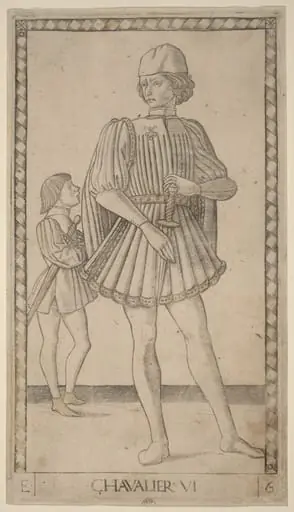
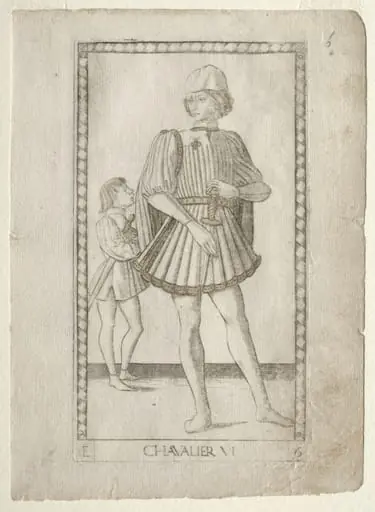 The Knight (from the Tarocchi, series E: Conditions of Man, #6)
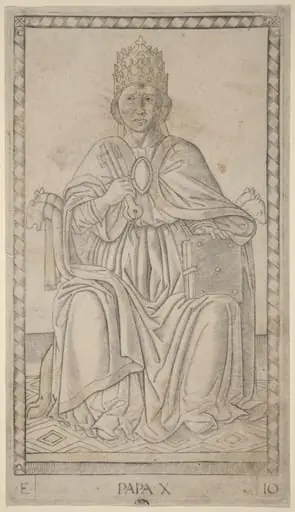
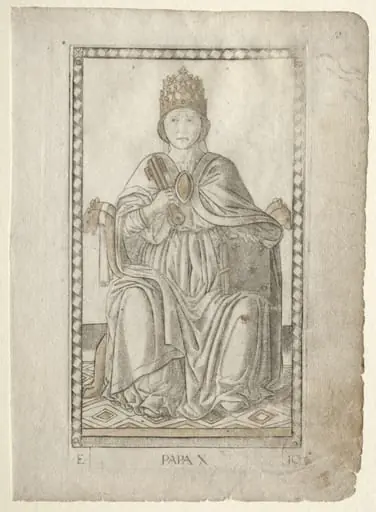 The Pope (from the Tarocchi, series E: Conditions of Man, #10)
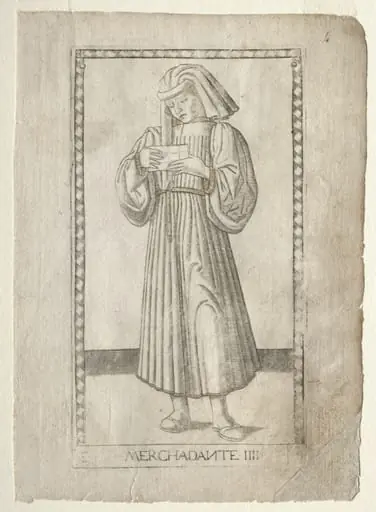 The Merchant (from the Tarocchi, series E: Conditions of Man, #4)
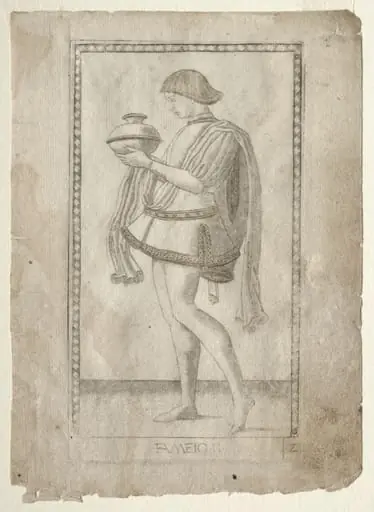 The Servant (from the Tarocchi, series E: Conditions of Man, #2)
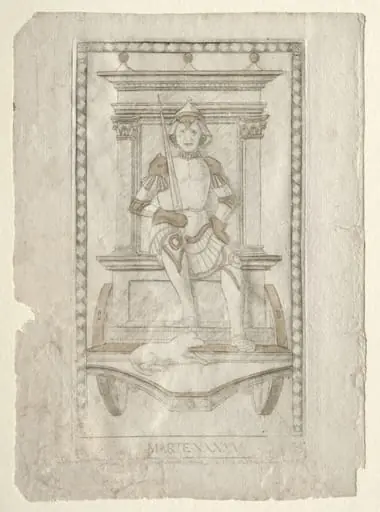 Mars (from the Tarocchi, series A: Firmaments of the Universe, #45)
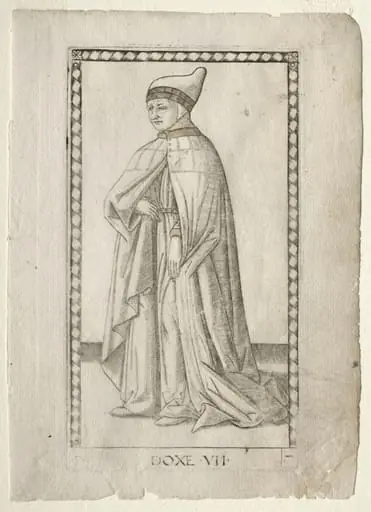 The Doge (from the Tarocchi, series E: Conditions of Man, #7)
 Re (King)
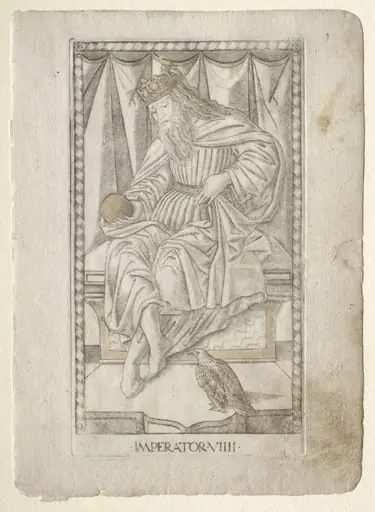 The Emperor (from the Tarocchi, series E: Conditions of Man, #9)
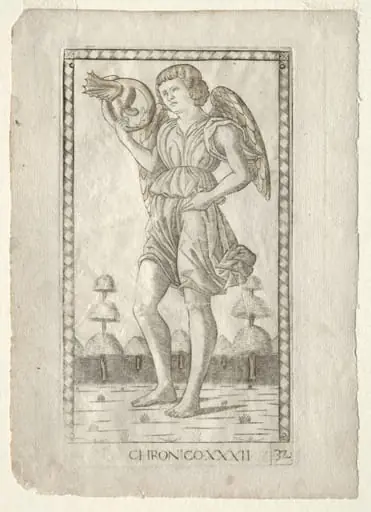 Genius of Time (from the Tarocchi, series B: Cosmic Principles & Virtues, #32)
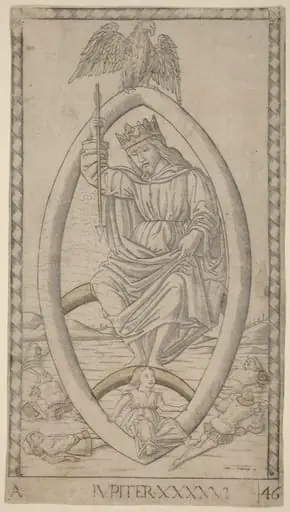
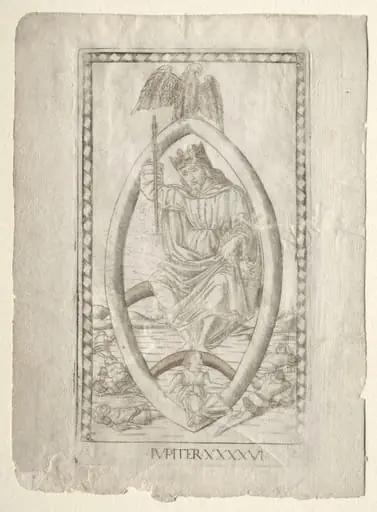 Jupiter (from the Tarocchi, series A: Firmaments of the Universe, #46)
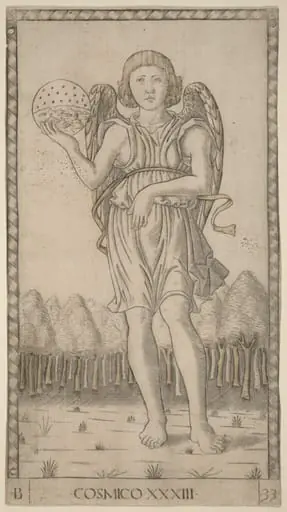
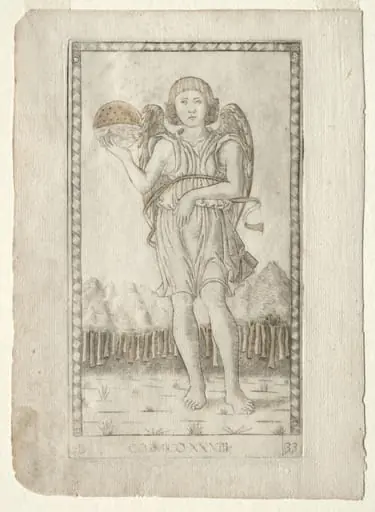 Genius of the World (from the Tarocchi, series B: Cosmic Principles & Virtues, #33)