Artwork
Fameio (Servant)
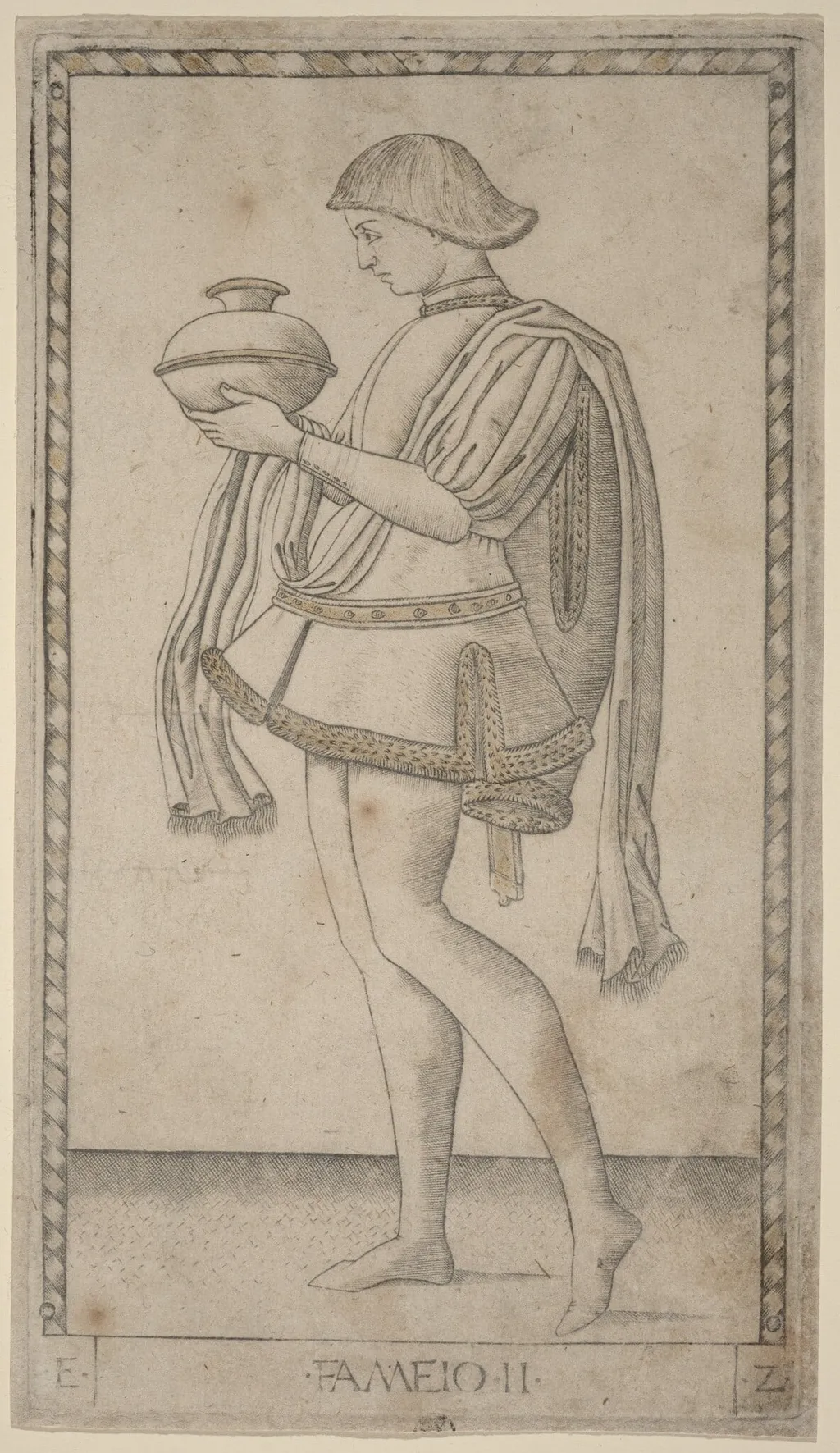
Fameio (Servant) is an ink print by the Renaissance artist Master of the E-Series Tarocchi. It dates from 1465 and is held in the collection of the National Gallery of Art. Fameio, also known as the Servant, is an early print executed in copper engraving around 1465.
About this work
Overview
Its composition centers on a single standing figure, rendered with the linear clarity characteristic of mid‑15th‑century Northern European prints.
Fameio, also known as the Servant, is an early print executed in copper engraving around 1465. Attributed to the anonymous hand identified as the Master of the E‑Series Tarocchi, the work measures a modest size typical of portable devotional or instructional images. Its composition centers on a single standing figure, rendered with the linear clarity characteristic of mid‑15th‑century Northern European prints.
Subject & Meaning
The image portrays a male figure bearing a large jug beneath one arm, his attire consisting of a short tunic cinched at the waist, a draped cloak, and a low‑set hat. Bare below the knees, the servant’s posture and the vessel he carries suggest a role of labor or service, echoing medieval iconography that linked everyday tasks with moral or allegorical themes.
Technique & Style
Engraved with a burin, the work displays sharp, precise incisions that define the figure’s outline and interior shading. Areas of deeper incision create tonal variation, producing a subtle modeling of light and shadow. Traces of gilding on the surface hint at a later embellishment, a practice sometimes employed to heighten the visual impact of prints intended for affluent patrons.
History & Provenance
The print belongs to the corpus of the so‑called E‑Series Tarocchi, a group of allegorical cards produced in mid‑15th‑century Italy. Though the artist’s identity remains unknown, the Master of the E‑Series is recognized through stylistic consistency across related works. The piece has survived in several collections, indicating its circulation among collectors of early printed images during the Renaissance.
Artist & collection
Artist
Master of the E-Series Tarocchi
Master of the E-Series Tarocchi (b. 1400) was an Italian artist.

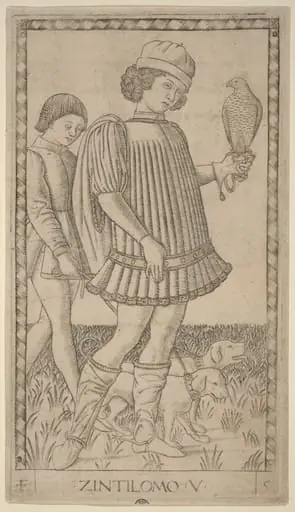 Zintilomo (Gentleman)
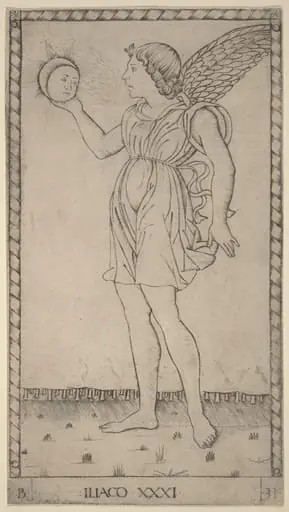 Iliaco (Genius of the Sun)
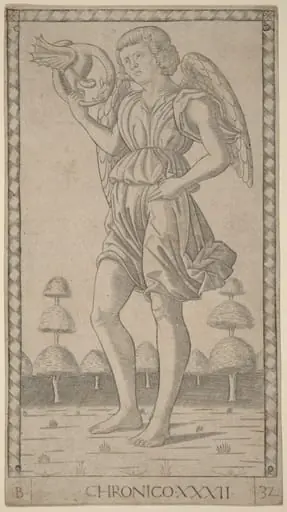 Chronico (Genius of Time)
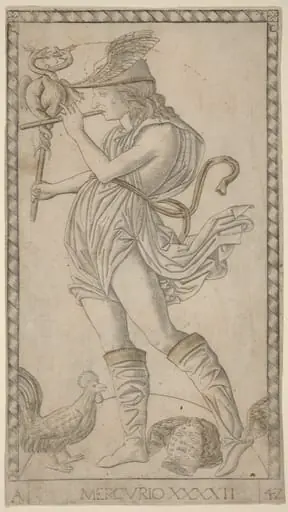 Mercurio (Mercury)
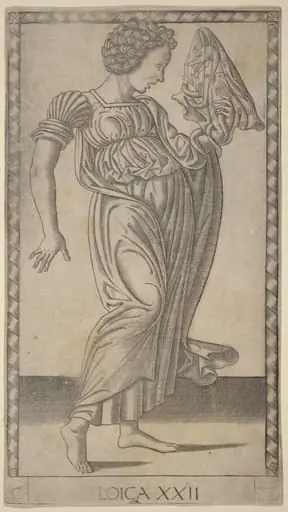 Loica (Logic)
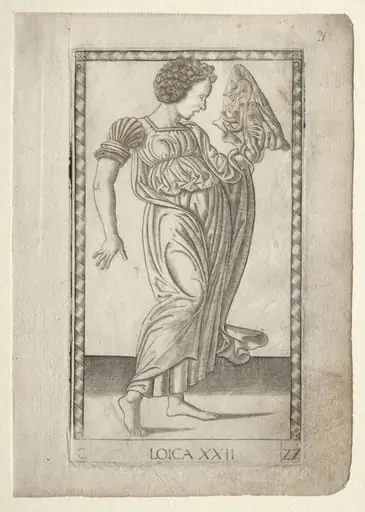 Logic (from the Tarocchi, series C: Liberal Arts, #22)
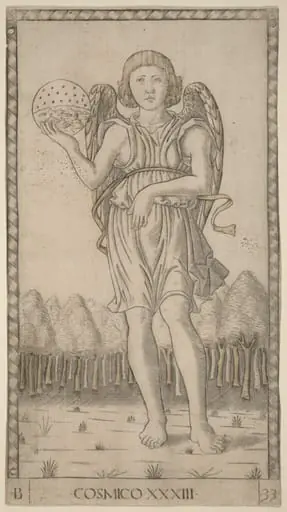
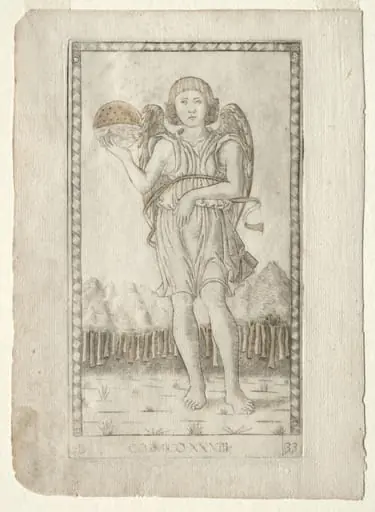 Genius of the World (from the Tarocchi, series B: Cosmic Principles & Virtues, #33)
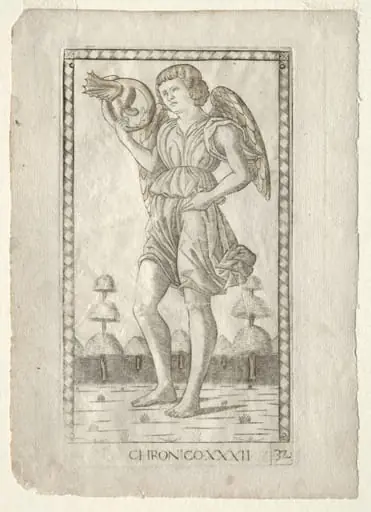 Genius of Time (from the Tarocchi, series B: Cosmic Principles & Virtues, #32)
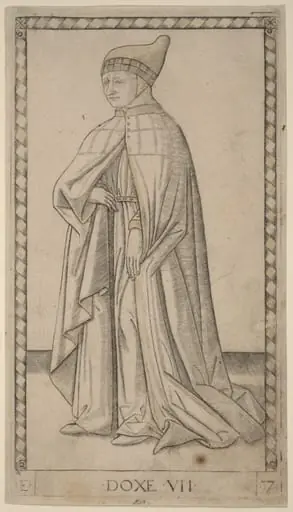 Doxe (Doge)
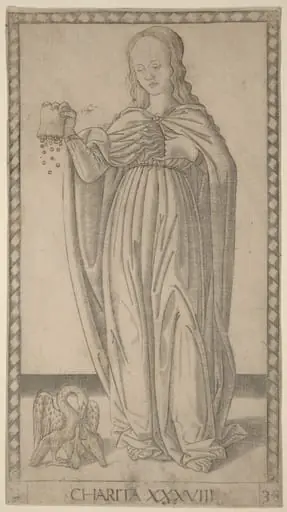 Charita (Charity)
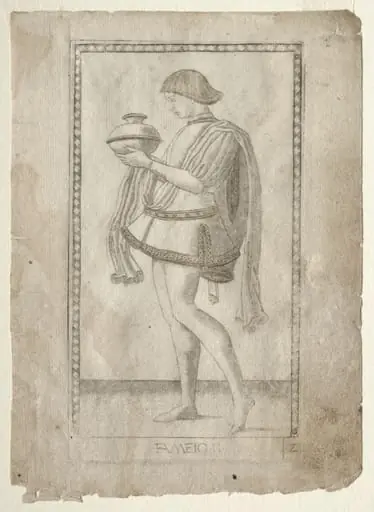 The Servant (from the Tarocchi, series E: Conditions of Man, #2)