Artwork
Astrology (from the Tarocchi, series C: Liberal Arts, #29)
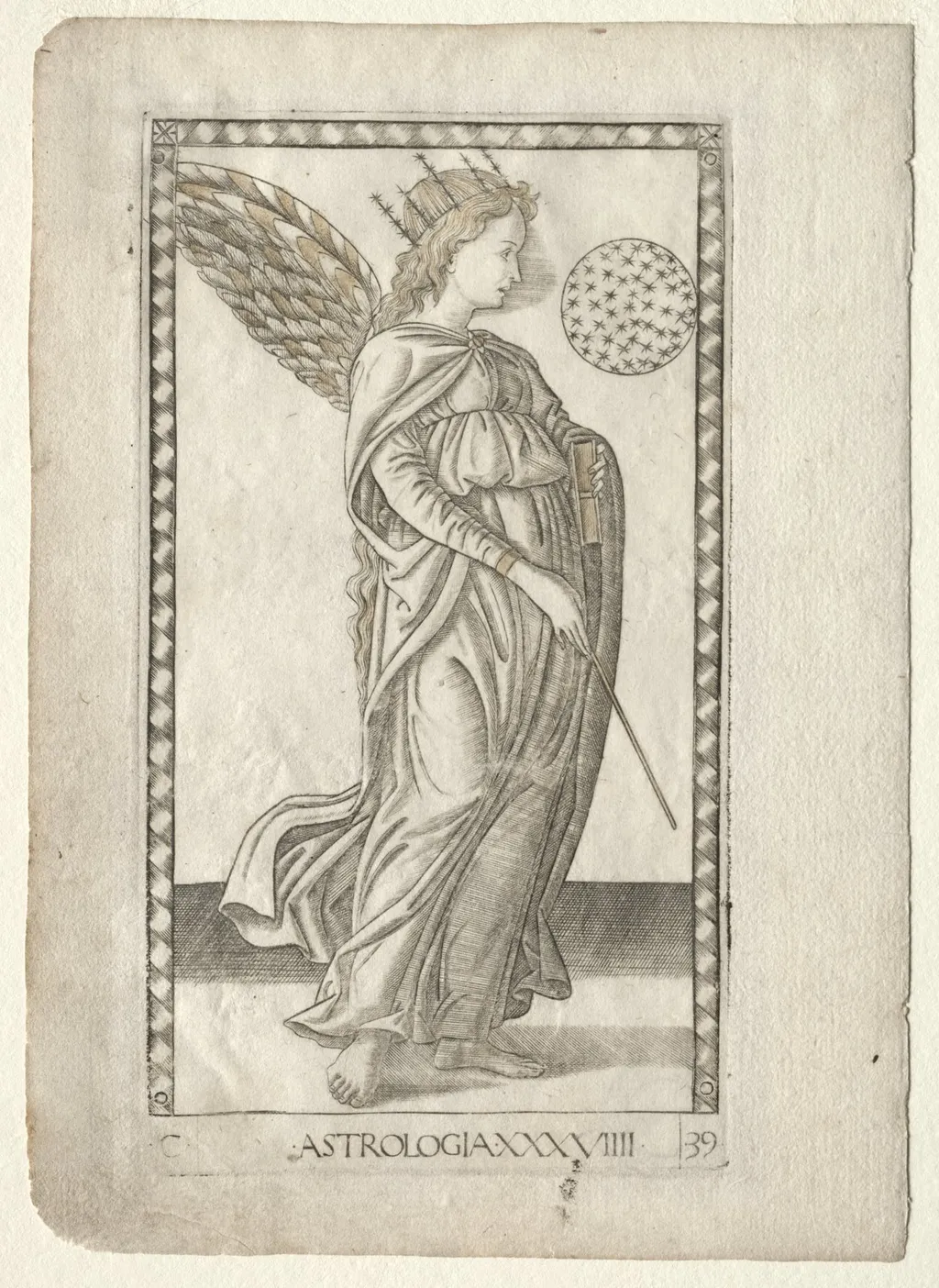
Astrology (from the Tarocchi, series C: Liberal Arts, #29) is a print by the Renaissance artist Master of the E-Series Tarocchi. It dates from 1467 and is held in the collection of the Cleveland Museum of Art. The engraving belongs to a fifteenth‑century series titled Tarocchi, group C, which illustrates the liberal arts.
About this work
This print is part of a 15th-century series showing the seven liberal arts, once key subjects for education in Europe.
A woman sits at a desk, studying a star chart. Above her, a blue circle shows zodiac signs like Aries and Cancer. She holds a tool that looks like a compass.
This print is part of a 15th-century series showing the seven liberal arts, once key subjects for education in Europe. Here, astronomy stands for human efforts to understand the skies using math and observation.
The scene reflects how people in 15th century Italy linked science, belief, and the stars.
(Word count: 86)
Overview
The engraving belongs to a fifteenth‑century series titled Tarocchi, group C, which illustrates the liberal arts. In this set each discipline is rendered as an allegorical figure, and the work identified as Astrologia depicts the study of the heavens through a personified woman.
Subject & Meaning
The image shows a full‑length female figure, turned in profile, holding a staff and a compass‑like instrument while a celestial sphere bearing zodiac signs hovers above her. She embodies the medieval concept of astrology as the knowledge of celestial motions, conjunctions, and their influence on earthly affairs.
Technique & Style
Executed as a print, the engraving employs fine line work to delineate the figure’s drapery, the intricate star chart, and the surrounding symbols. The composition follows the conventional allegorical format of the period, with the figure positioned at a desk and the celestial sphere placed in the upper right, creating a balanced, didactic visual narrative.
Context
During the late Middle Ages the liberal arts—originally the Trivium and Quadrivium—were expanded to ten categories, adding poetry, philosophy and theology. These subjects were deemed essential for participation in a free society and were frequently represented as women in visual culture, reflecting the educational ideals of fifteenth‑century Italy.
Legacy
The Tarocchi series, including this Astrologia print, offers insight into how Renaissance scholars integrated scientific observation, mathematical calculation, and astrological belief. It remains a valuable reference for understanding the period’s interdisciplinary approach to knowledge and its visual articulation in printed media.
Artist & collection
Artist
Master of the E-Series Tarocchi
Master of the E-Series Tarocchi (b. 1400) was an Italian artist.

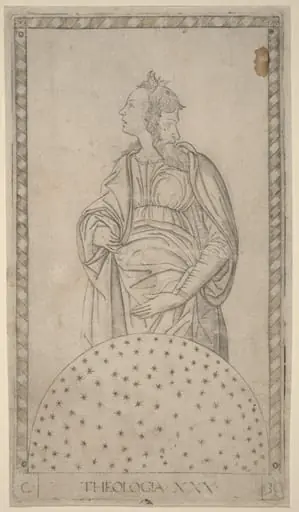
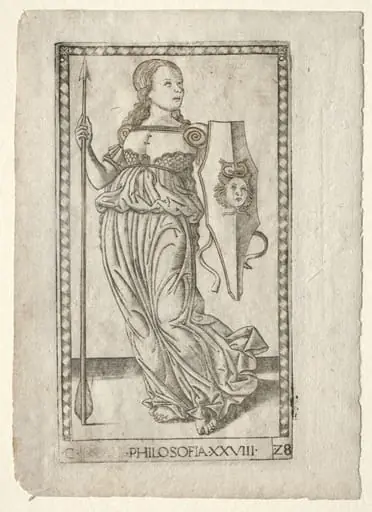 Philosophy (from the Tarocchi, series C: Liberal Arts, #28)
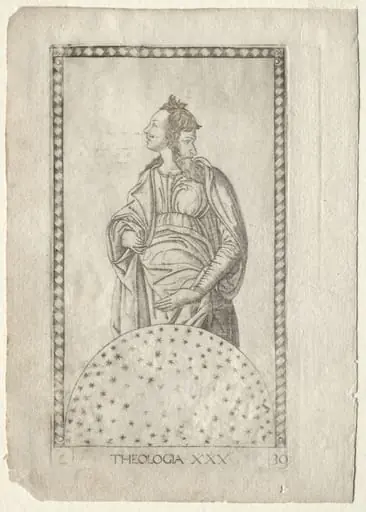 Theology (from the Tarocchi, series C: Liberal Arts, #30)
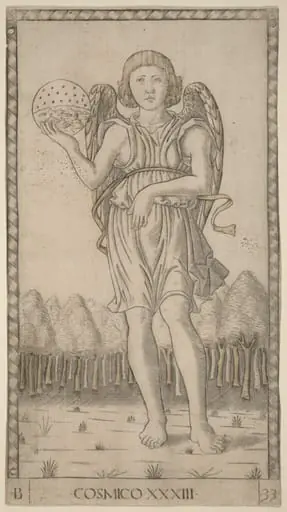
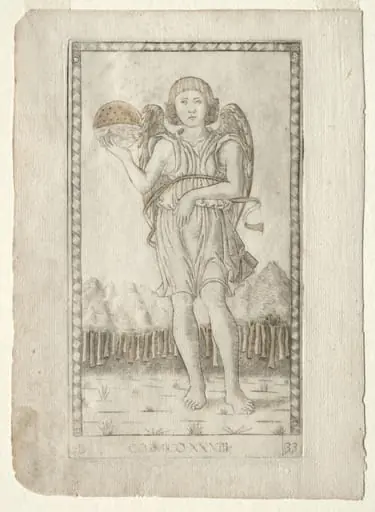 Genius of the World (from the Tarocchi, series B: Cosmic Principles & Virtues, #33)
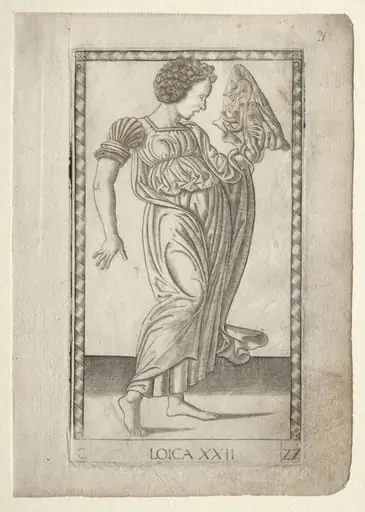 Logic (from the Tarocchi, series C: Liberal Arts, #22)
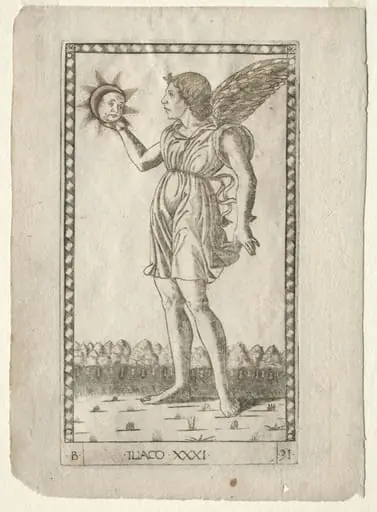 Genius of the Sun (from the Tarocchi, series B: Cosmic Principles & Virtues, #31)
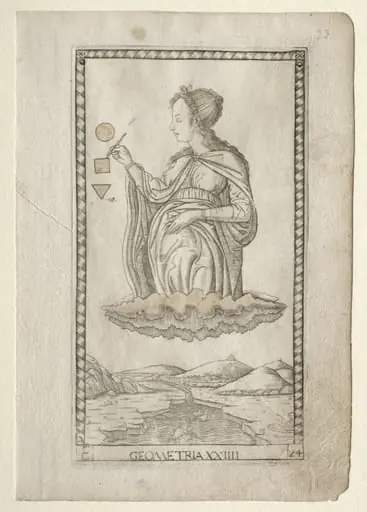 Geometry (from the Tarocchi, series C: Liberal Arts, #24)
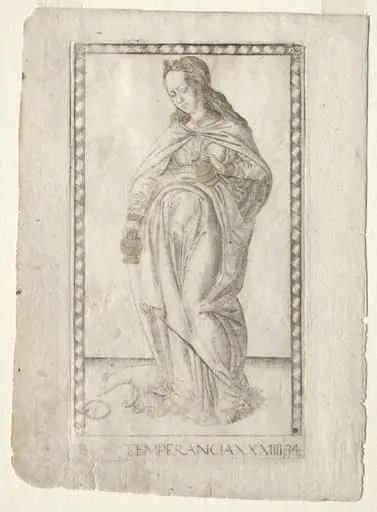 Temperance (from the Tarocchi, Series B: Cosmic Principles & Virtues, #34)