Artwork
Clio (history) (from the Tarocchi series D: Apollo and the Muses, #19)
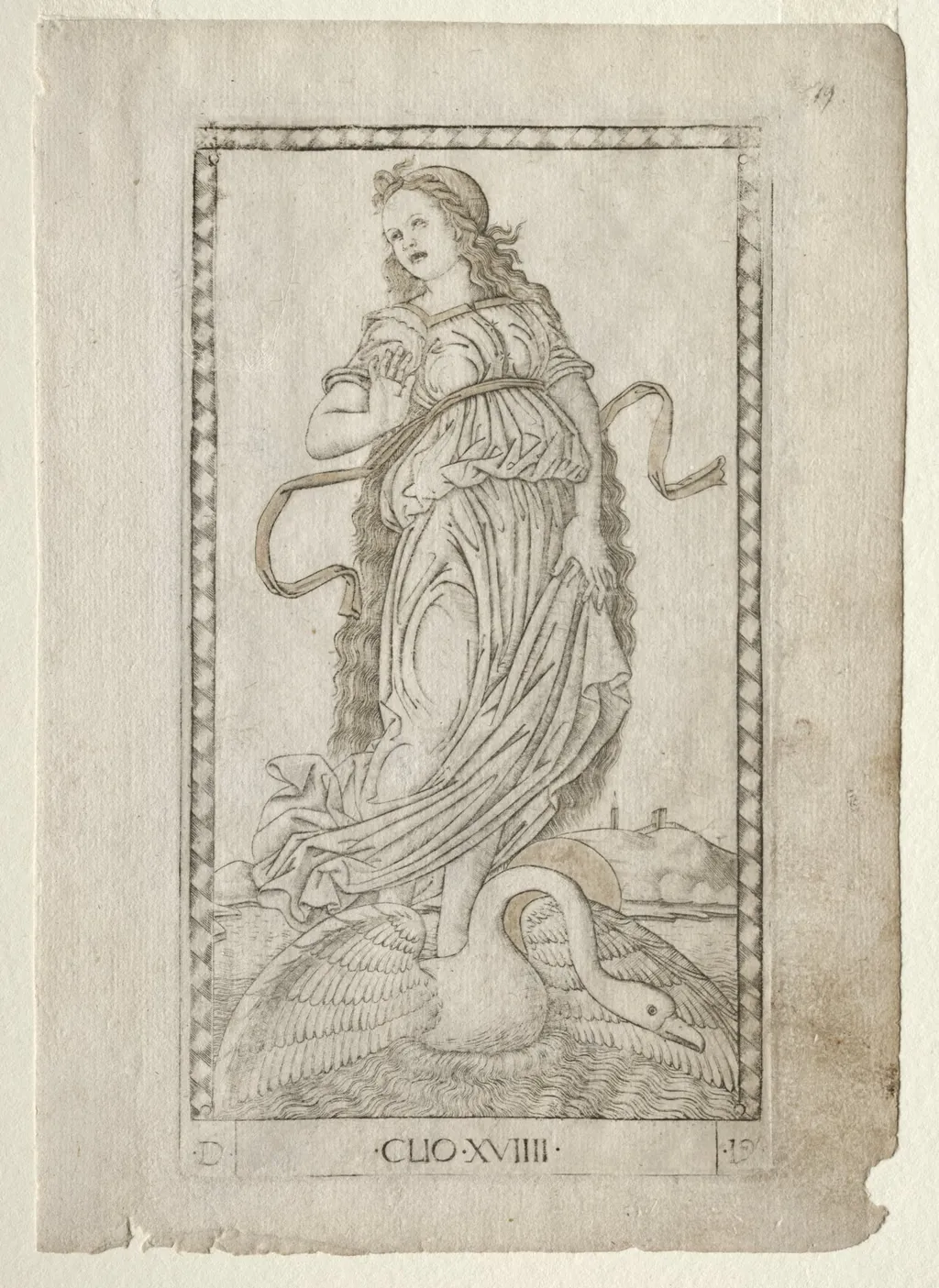
Clio (history) (from the Tarocchi series D: Apollo and the Muses, #19) is a print by the Renaissance artist Master of the E-Series Tarocchi. It dates from 1467 and is held in the collection of the Cleveland Museum of Art. This engraving is one of nineteen prints from the Tarocchi series labeled 'D,' known as Apollo and the Muses.
About this work
Overview
Clio, the Muse of history, is rendered with meticulous detail, reflecting the period’s fascination with intellectual lineage and artistic instruction.
This engraving is one of nineteen prints from the Tarocchi series labeled 'D,' known as Apollo and the Muses. Created in the early 16th century, the set was not intended for card games but as an educational tool for elite audiences. Each plate depicts a Muse alongside symbolic attributes, blending classical mythology with Renaissance humanist ideals. Clio, the Muse of history, is rendered with meticulous detail, reflecting the period’s fascination with intellectual lineage and artistic instruction.
Subject & Meaning
Clio, the Muse of history, is portrayed as a dignified female figure, crowned with a laurel wreath to signify her elevated status among the Muses. She holds an open book and a rolled scroll—traditional emblems of recorded knowledge and historical documentation. Standing atop a swan in a stylized seascape, her pose suggests contemplation and authority. The imagery reinforces the Renaissance view of history as a noble pursuit, guided by divine inspiration and intellectual discipline.
Technique & Style
The engraving employs fine, precise lines to articulate the folds of Clio’s garment, the texture of the scroll, and the delicate feathers of the swan. The artist’s control over the burin allows for subtle gradations of light and shadow, enhancing the three-dimensionality of the figure. The background, though imaginary, is rendered with atmospheric depth, balancing mythic symbolism with naturalistic detail. This technical refinement reflects the high standards of Northern Renaissance printmaking.
History & Provenance
The Tarocchi series 'D' was likely produced in northern Italy around 1510–1520, possibly by a workshop connected to the circle of Albrecht Dürer. Though the exact engraver remains unidentified, the prints circulated among aristocratic collectors as objects of cultural refinement. Several examples from the series are held in major institutions, including The Cleveland Museum of Art, where they are studied for their role in disseminating classical knowledge during the early Renaissance.
Context
During the early 1500s, the revival of classical antiquity influenced artistic production across Europe. The Muses, as embodiments of intellectual domains, became popular subjects in humanist circles. This series aligned with the educational goals of noble households, where art served as a vehicle for moral and intellectual formation. The inclusion of Apollo as their overseer reinforced the connection between artistic excellence and divine order, a theme central to Renaissance thought.
Legacy
The Tarocchi series 'D' contributed to the visual vocabulary of the Muses in Western art, influencing later iconographic traditions. Its emphasis on allegory, scholarly symbolism, and technical precision set a standard for didactic prints. Though not widely known today, these engravings remain important artifacts of how Renaissance society conceptualized knowledge, memory, and the arts as interconnected, elevated pursuits.
Artist & collection
Artist
Master of the E-Series Tarocchi
Master of the E-Series Tarocchi (b. 1400) was an Italian artist.

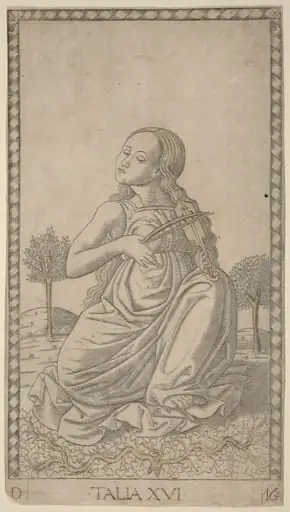
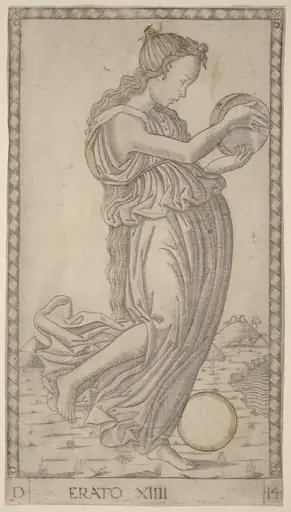
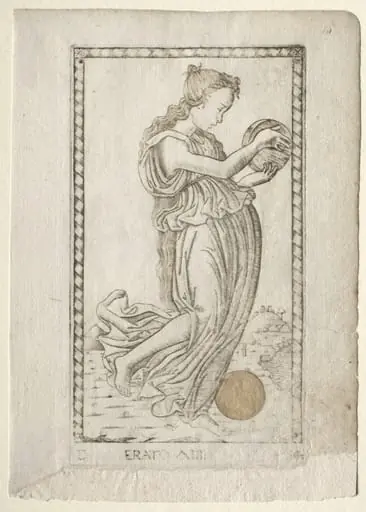 Erato (lyric and love poetry) (from the Tarocchi series D: Apollo and the Muses, #14)
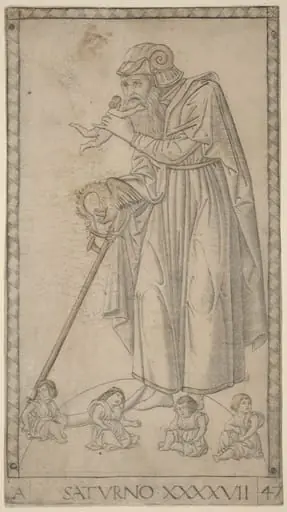
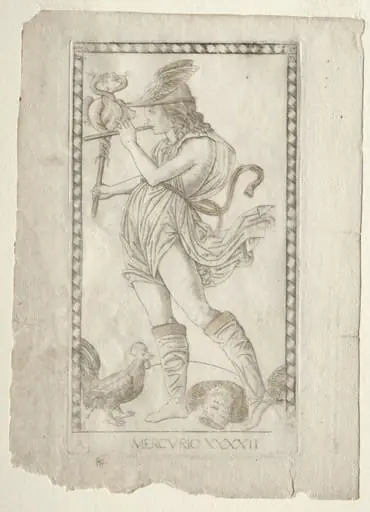 Mercury (from the Tarocchi, series A: Firmaments of the Universe, #42)
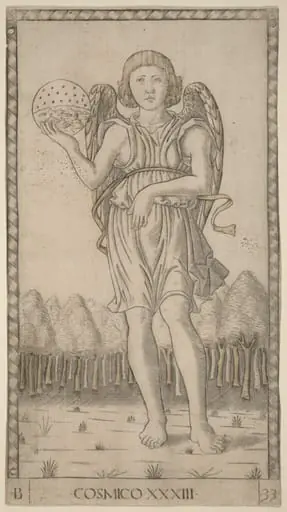
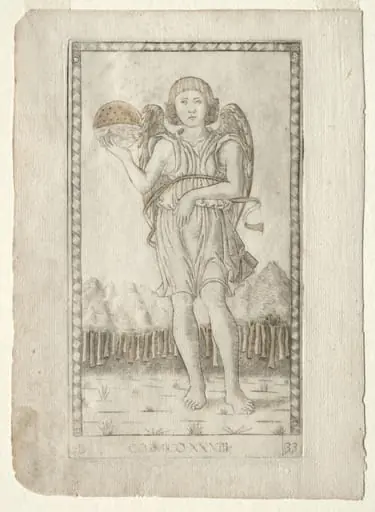 Genius of the World (from the Tarocchi, series B: Cosmic Principles & Virtues, #33)
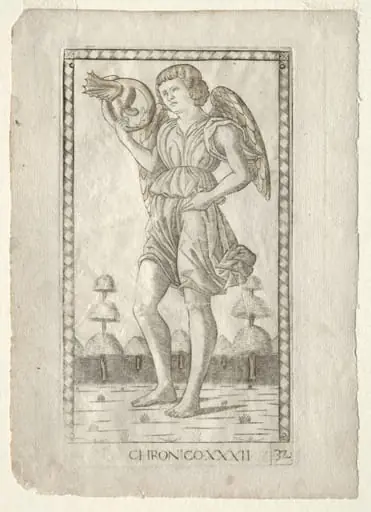 Genius of Time (from the Tarocchi, series B: Cosmic Principles & Virtues, #32)
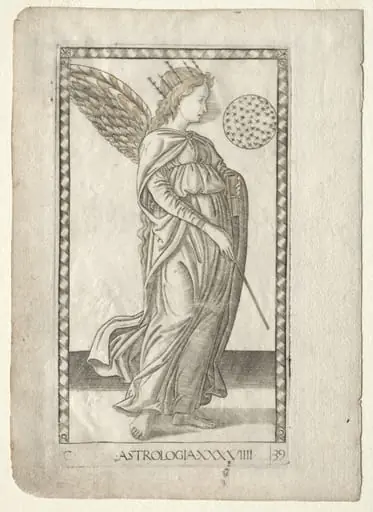 Astrology (from the Tarocchi, series C: Liberal Arts, #29)
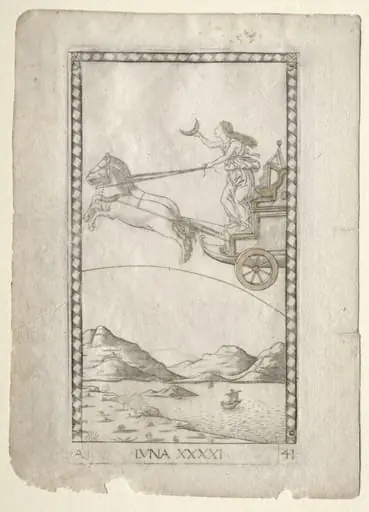 Luna (from the Tarocchi, series A: Firmaments of the Universe, #41)