Artwork
Genius of Time (from the Tarocchi, series B: Cosmic Principles & Virtues, #32)
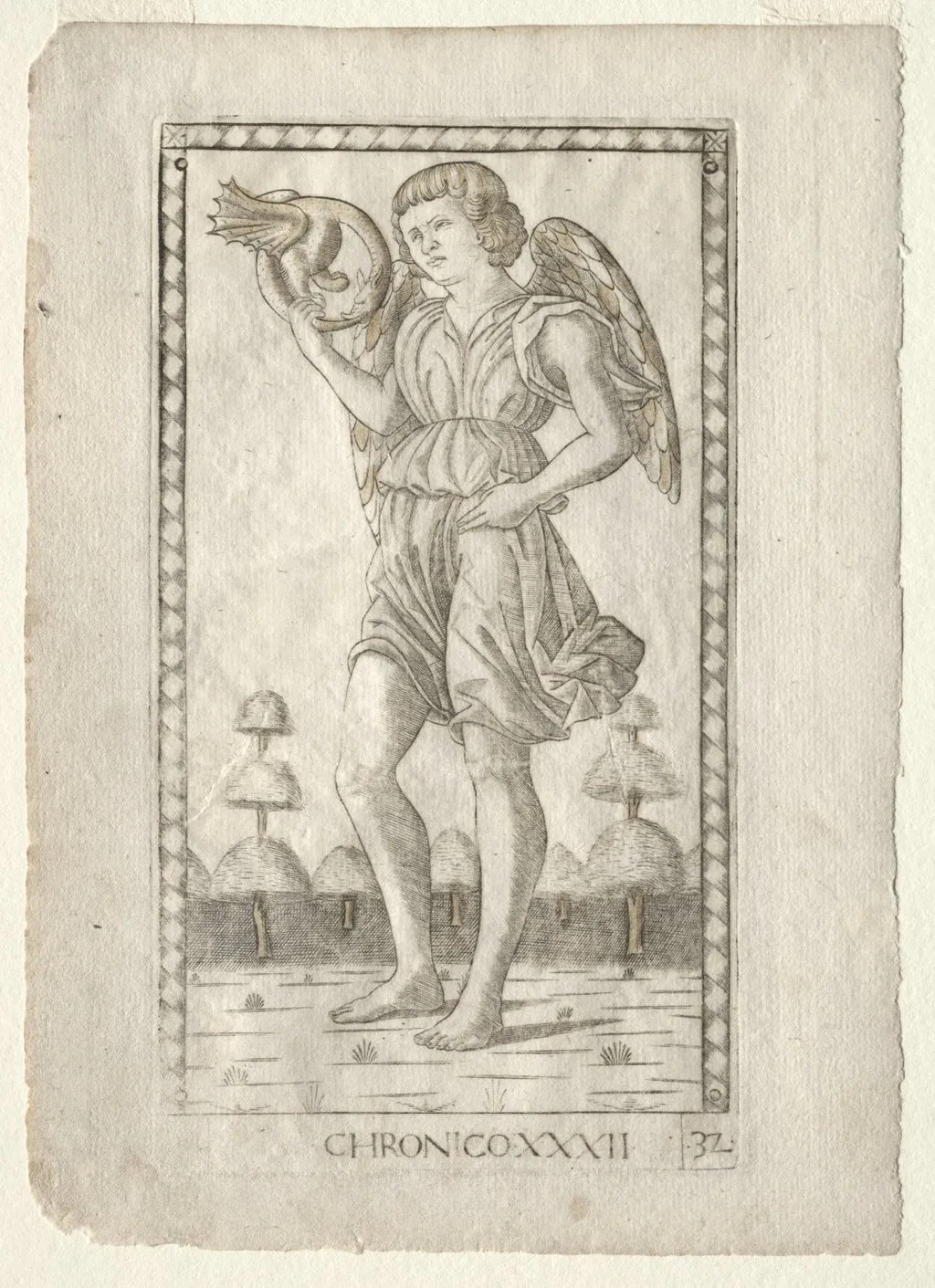
Genius of Time (from the Tarocchi, series B: Cosmic Principles & Virtues, #32) is a print by the Renaissance artist Master of the E-Series Tarocchi. It dates from 1467 and is held in the collection of the Cleveland Museum of Art.
About this work
Overview
Genius of Time is the third engraving in Series B of the Tarocchi, a set of allegorical prints centered on cosmic principles and moral virtues.
Genius of Time is the third engraving in Series B of the Tarocchi, a set of allegorical prints centered on cosmic principles and moral virtues. It belongs to a group that introduces three abstract forces—Light, Time, and Space—followed by the seven cardinal and theological virtues. The figure of Chronico, representing Time, opens this sequence, establishing a thematic foundation for the series’ philosophical framework.
Subject & Meaning
Chronico, the personification of Time, is depicted as a youthful male figure in profile, turning left with wings suggesting transcendence. He holds a ouroboros—a serpent devouring its own tail—symbolizing time’s cyclical and inexorable nature. The forest behind him evokes the natural world subject to time’s passage, reinforcing the idea that all earthly things are governed by its flow, a common motif in Renaissance moral allegory.
Technique & Style
The engraving employs fine, precise lines typical of late 15th-century Italian printmaking. The figure is rendered with elegant contours and subtle shading, emphasizing grace over realism. The background forest is suggested with minimal, rhythmic strokes, allowing the central figure and symbolic object to dominate. The composition reflects a balance between idealized form and symbolic clarity, characteristic of the Tarocchi series’ didactic intent.
History & Provenance
The Tarocchi engravings were produced in northern Italy around 1470–1480, attributed to an anonymous artist known as the Master of the E-Series Tarocchi. Though no original documentation survives, the prints were likely commissioned by a learned patron for private contemplation. Their survival in scattered collections suggests they circulated among humanist circles, valued for their intellectual symbolism rather than decorative appeal.
Context
These prints emerged during a period when Renaissance thinkers revived classical allegory to explore moral and metaphysical ideas. The Tarocchi series aligns with contemporary interest in Neoplatonism and the symbolic language of medieval and humanist texts. By pairing cosmic forces with virtues, the artist created a visual taxonomy of order, reflecting the era’s belief in a structured, morally intelligible universe.
Legacy
The Tarocchi engravings, including Genius of Time, influenced later allegorical imagery in print culture, particularly in the depiction of abstract concepts as human figures. Though not widely known today, they remain important examples of how Renaissance artists translated philosophical ideas into visual form. Their quiet precision and symbolic depth offer insight into the intellectual currents shaping early modern European visual culture.
Artist & collection
Artist
Master of the E-Series Tarocchi
Master of the E-Series Tarocchi (b. 1400) was an Italian artist.

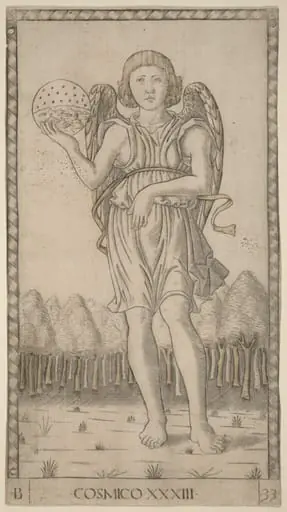
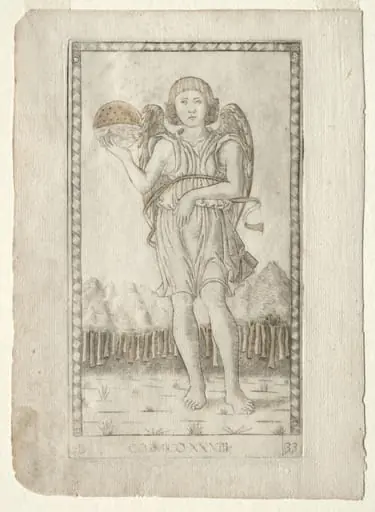 Genius of the World (from the Tarocchi, series B: Cosmic Principles & Virtues, #33)
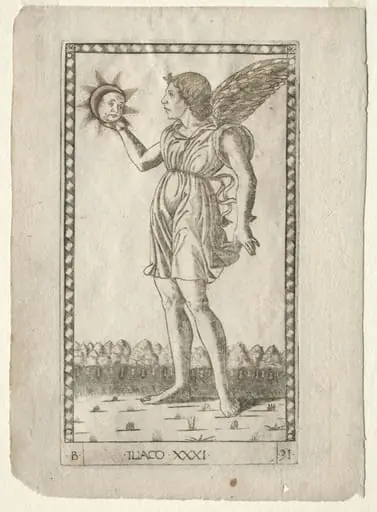 Genius of the Sun (from the Tarocchi, series B: Cosmic Principles & Virtues, #31)
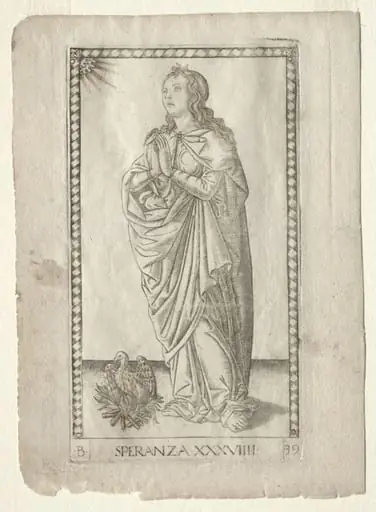 Hope (from the Tarocchi, series B: Cosmic Principles & Virtues, #39)
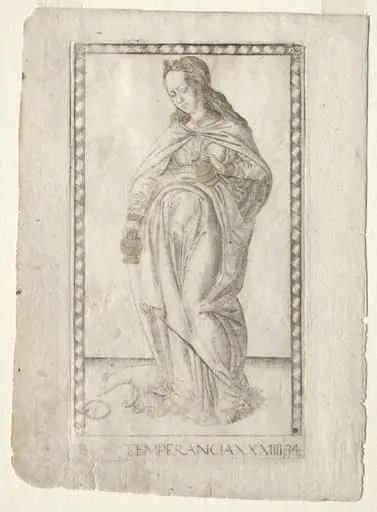 Temperance (from the Tarocchi, Series B: Cosmic Principles & Virtues, #34)
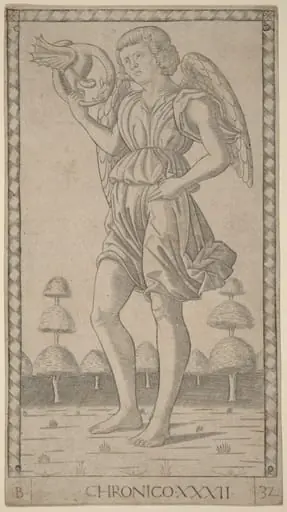 Chronico (Genius of Time)
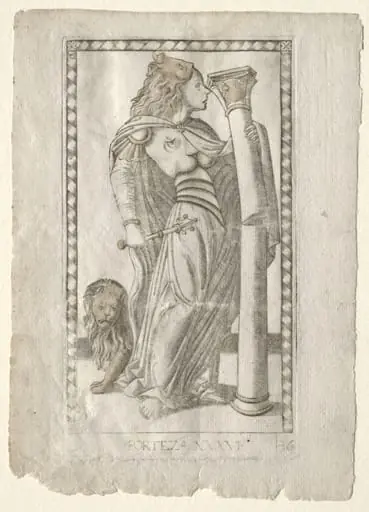 Forteza (from the Tarocchi, series B: Cosmic Principles & Virtues, #36)
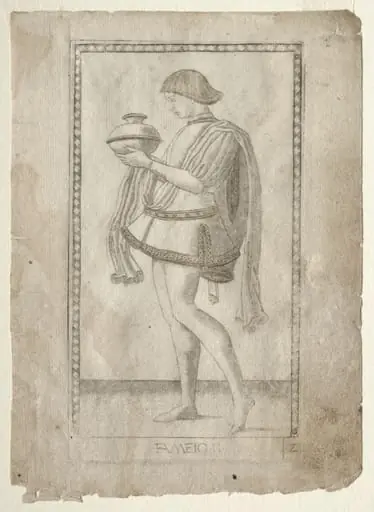 The Servant (from the Tarocchi, series E: Conditions of Man, #2)
 Logic (from the Tarocchi, series C: Liberal Arts, #22)
 Mercury (from the Tarocchi, series A: Firmaments of the Universe, #42)