Artwork
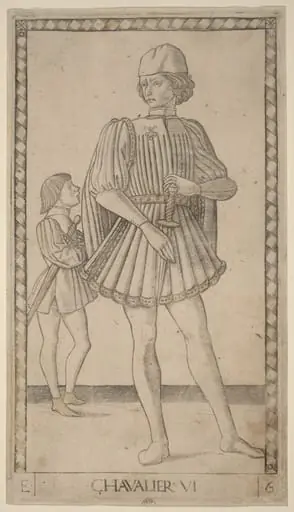
The Knight (from the Tarocchi, series E: Conditions of Man, #6)
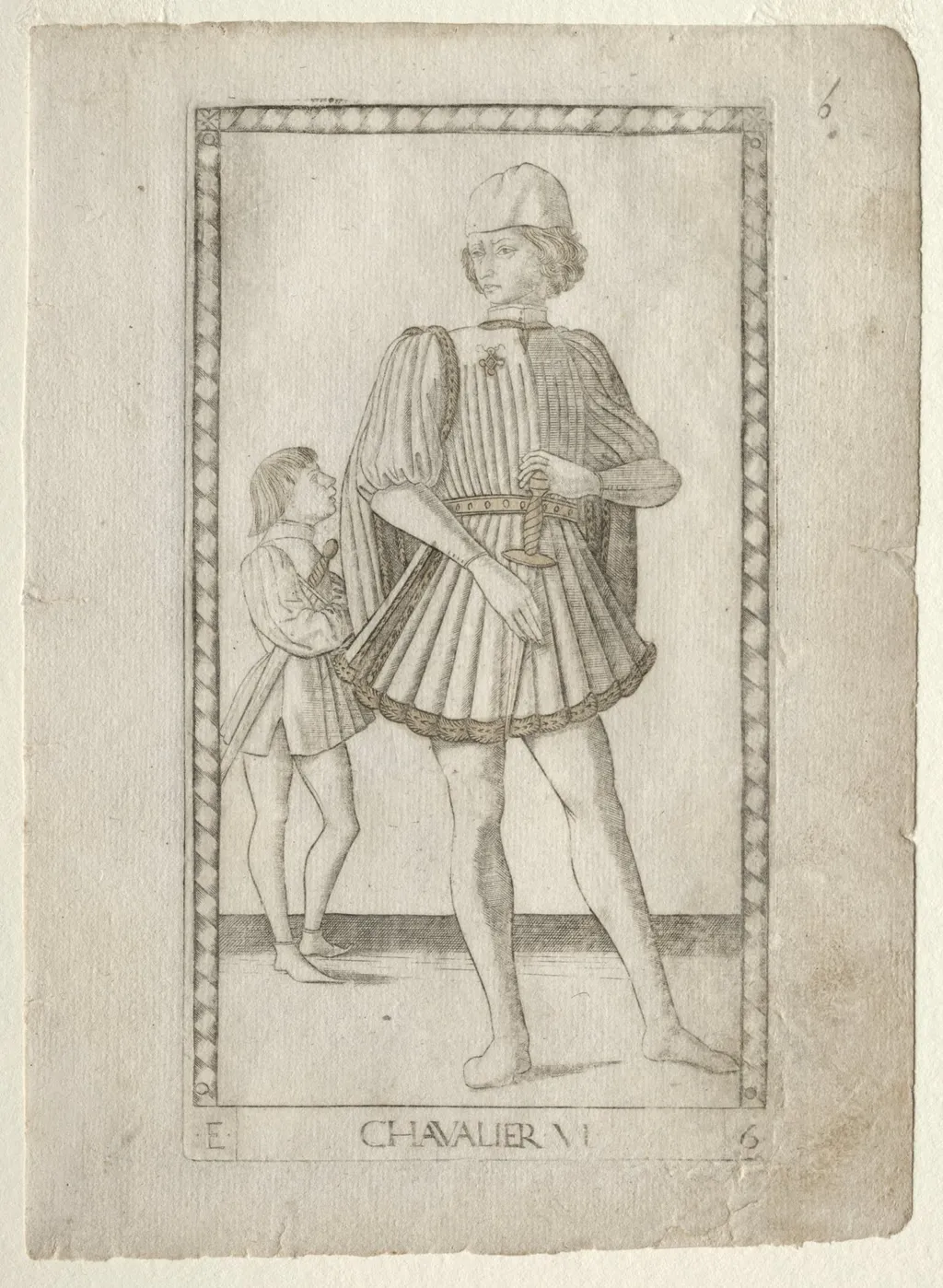
The Knight (from the Tarocchi, series E: Conditions of Man, #6) is a print by the Renaissance artist Master of the E-Series Tarocchi. It dates from 1467 and is held in the collection of the Cleveland Museum of Art. This engraving belongs to the “E” group of the Tarocchi series, titled Conditions of Man.
About this work
Overview
This engraving belongs to the “E” group of the Tarocchi series, titled Conditions of Man. The set presents ten figures that illustrate a hierarchical ladder of social status, ranging from a beggar at the base to a pope at the summit. The work is executed as a print and is held in the collection of the Cleveland Museum of Art.
Subject & Meaning
The sixth figure in the series depicts the Knight, a full‑length male rendered in profile, turned to the left. He is dressed in refined attire and holds a dagger, symbols that convey his martial role and elevated rank within the depicted hierarchy. A subordinate servant, positioned behind him on the left, carries a sword, reinforcing the Knight’s authority.
Technique & Style
Engraved with fine lines, the image relies on careful hatching to model the folds of the elegant costume and the gleam of the weapons. The composition balances the central figure with the attendant in the background, a typical approach in early modern printmaking that emphasizes clarity of narrative and social distinction.
History & Provenance
The Tarocchi cards were produced in the early sixteenth century, likely in northern Italy, as part of a didactic series used for moral instruction. This particular print entered the Cleveland Museum of Art’s collection through acquisition in the twentieth century, though the exact path of ownership prior to that remains undocumented.
Context
The series reflects contemporary preoccupations with social order and the moral virtues associated with each rank. By arranging the figures from beggar to pope, the prints functioned as visual allegories of societal progression, echoing similar hierarchical depictions found in emblem books and civic art of the period.
Artist & collection
Artist
Master of the E-Series Tarocchi
Master of the E-Series Tarocchi (b. 1400) was an Italian artist.

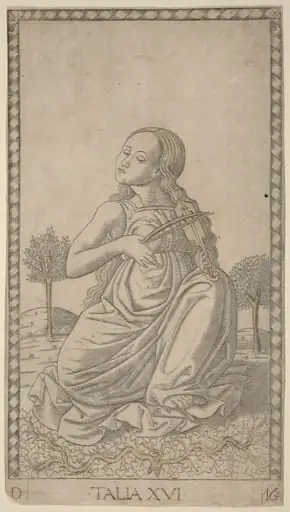
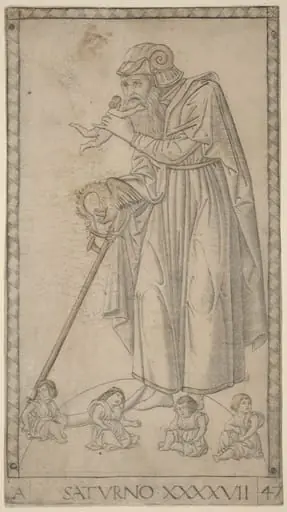
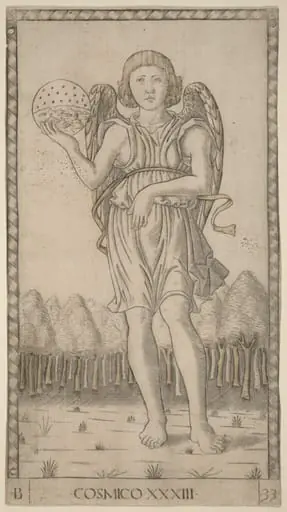
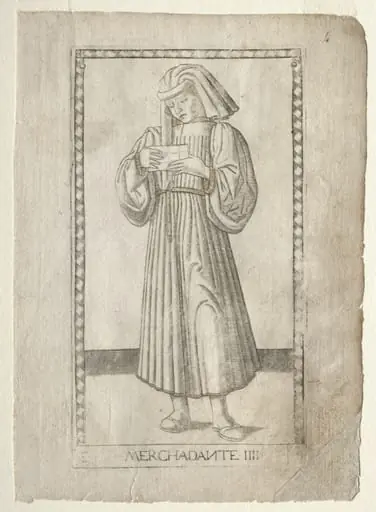 The Merchant (from the Tarocchi, series E: Conditions of Man, #4)
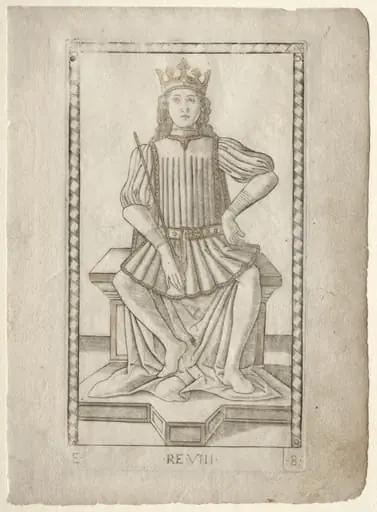 The King (from the Tarocchi, series E: Conditions of Man, #8)
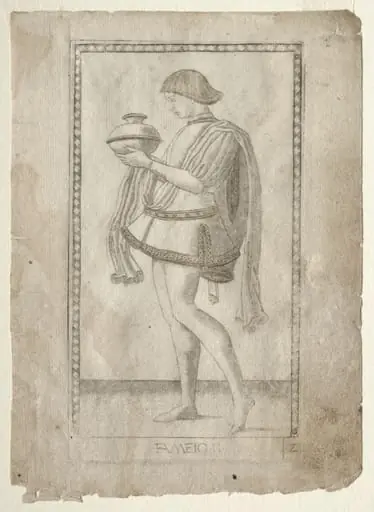 The Servant (from the Tarocchi, series E: Conditions of Man, #2)
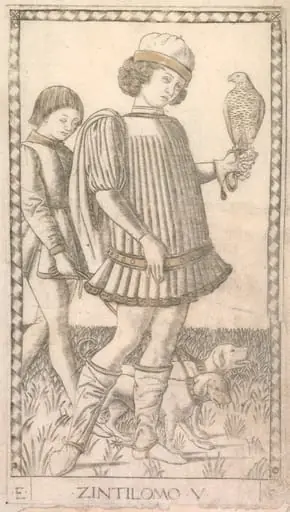 Gentleman (from the Tarocchi series E: Conditions of Man, #5)
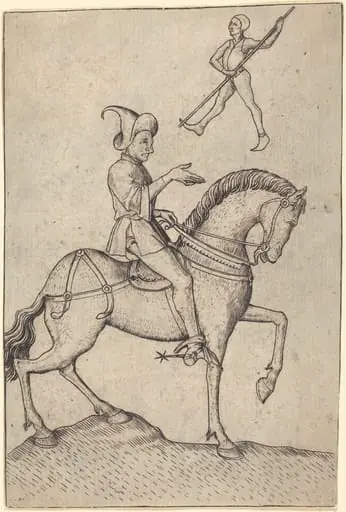 The Knight of Men
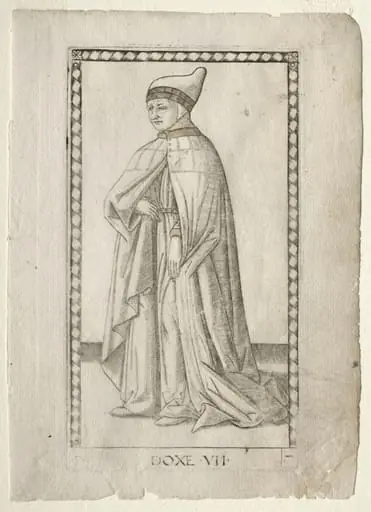 The Doge (from the Tarocchi, series E: Conditions of Man, #7)
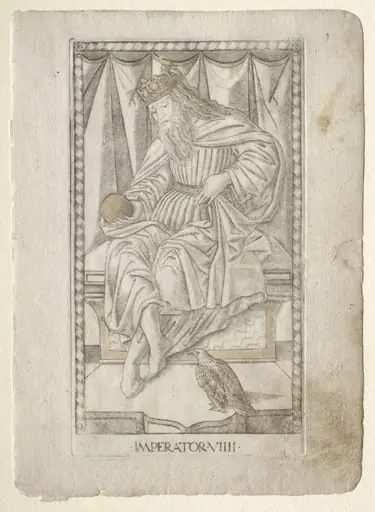 The Emperor (from the Tarocchi, series E: Conditions of Man, #9)