Artwork
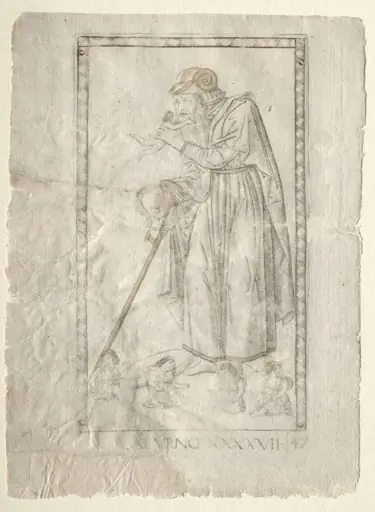
The Servant (from the Tarocchi, series E: Conditions of Man, #2)
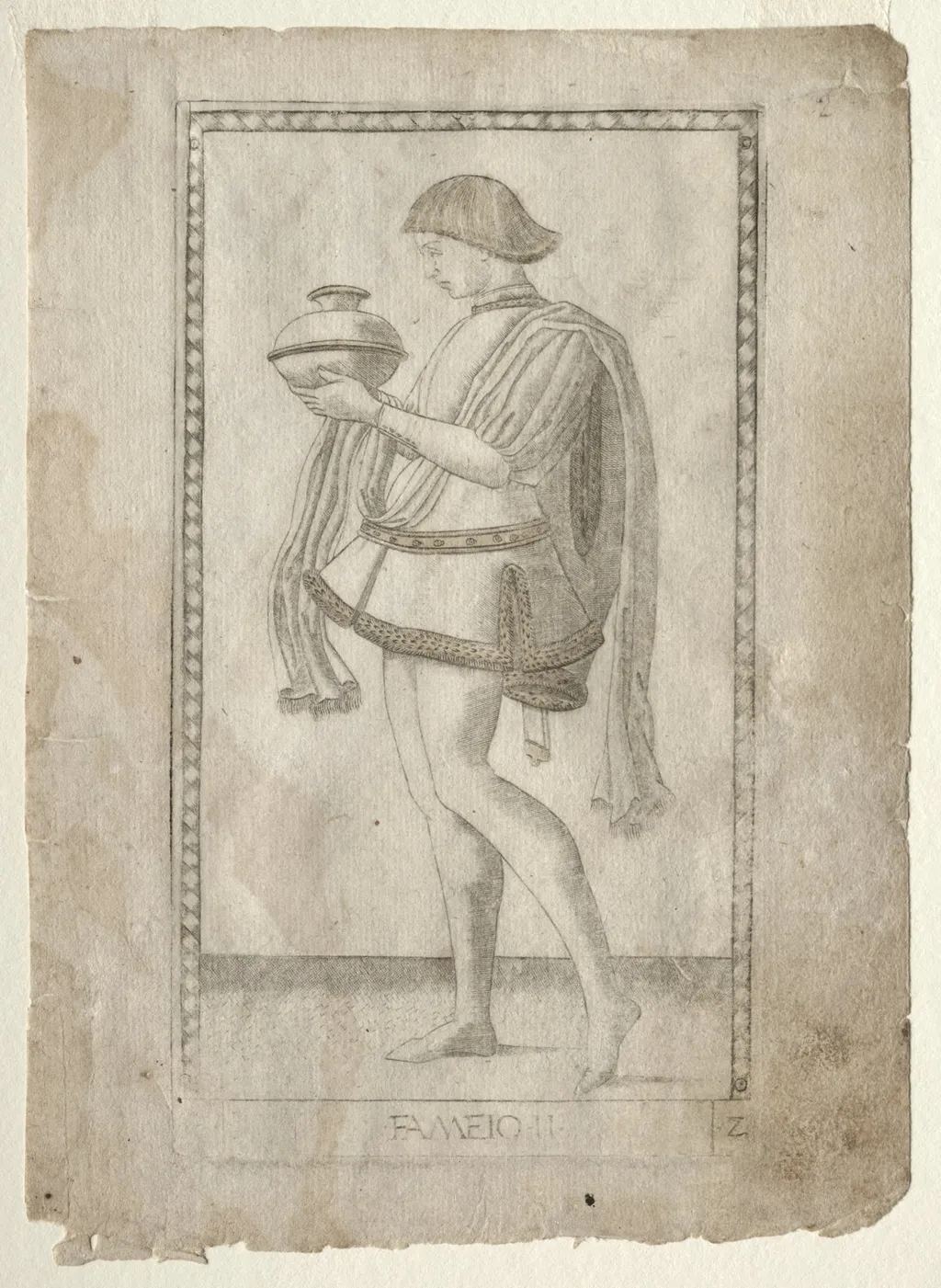
The Servant (from the Tarocchi, series E: Conditions of Man, #2) is a print by the Renaissance artist Master of the E-Series Tarocchi. It dates from 1467 and is held in the collection of the Cleveland Museum of Art. This early‑15th‑century engraving belongs to the so‑called “E” group of the Tarocchi series, titled Conditions of Man.
About this work
Overview
This early‑15th‑century engraving belongs to the so‑called “E” group of the Tarocchi series, titled Conditions of Man. The set presents ten figures arranged in ascending order of social rank, from a beggar to the pope. The present plate depicts the figure known as the Servant, positioned as the second step in the hierarchy.
Subject & Meaning
The Servant is rendered as a full‑length male standing in left profile, his posture dignified despite his modest station. He holds a vessel in one hand and a piece of cloth in the other, symbols that allude to his role in serving and providing for higher‑status individuals.
Technique & Style
Executed as a copper engraving, the image displays the fine line work characteristic of the Master of the E‑Series Tarocchi. The figure is clothed in elegant attire, complete with a hat, and rendered with careful attention to the folds of the fabric and the reflective quality of the metal plate.
History & Provenance
The plate was produced in Italy during the 1400s by the anonymous artist known as the Master of the E‑Series Tarocchi. The work circulated as part of a printed series that functioned both as a didactic tool and a visual representation of contemporary social order.
Context
The Tarocchi series reflects the hierarchical worldview of late medieval Italy, where each social class was assigned a specific visual iconography. By arranging the figures from the lowest to the highest rank, the series offers insight into the period’s perception of status, duty, and the moral order.
Artist & collection
Artist
Master of the E-Series Tarocchi
Master of the E-Series Tarocchi (b. 1400) was an Italian artist.

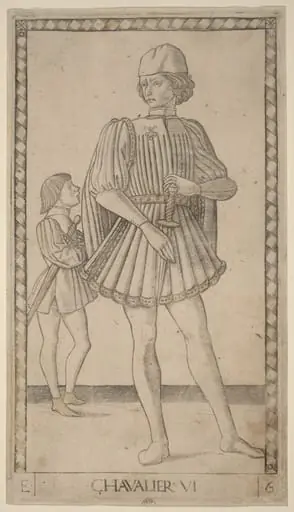
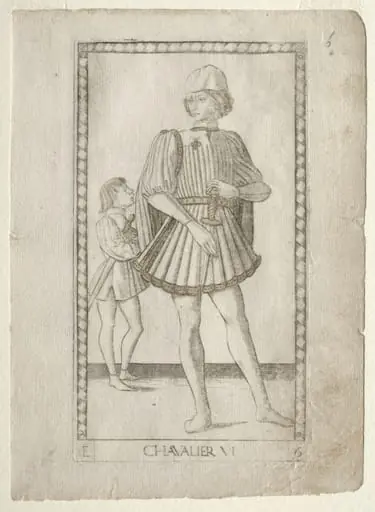 The Knight (from the Tarocchi, series E: Conditions of Man, #6)
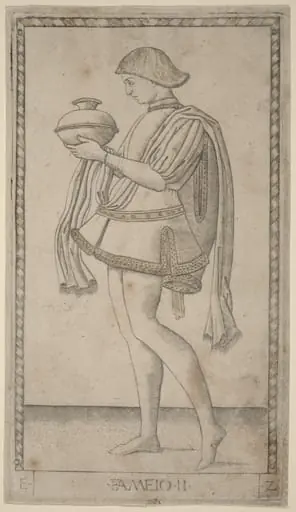 Fameio (Servant)
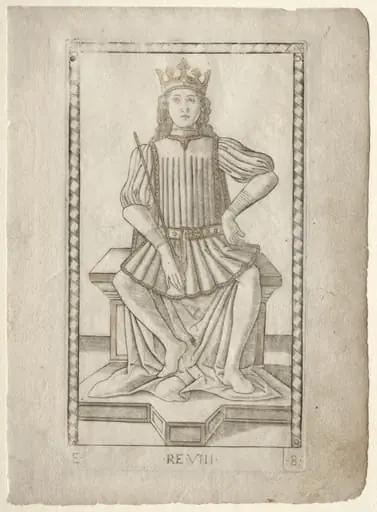 The King (from the Tarocchi, series E: Conditions of Man, #8)
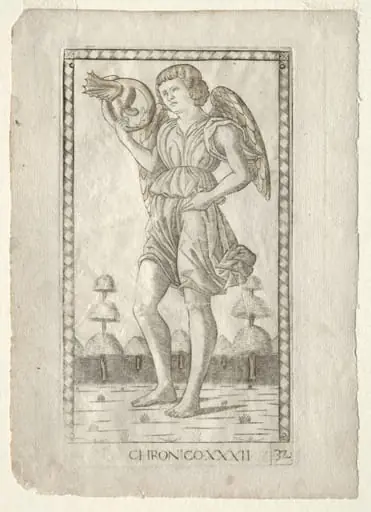 Genius of Time (from the Tarocchi, series B: Cosmic Principles & Virtues, #32)
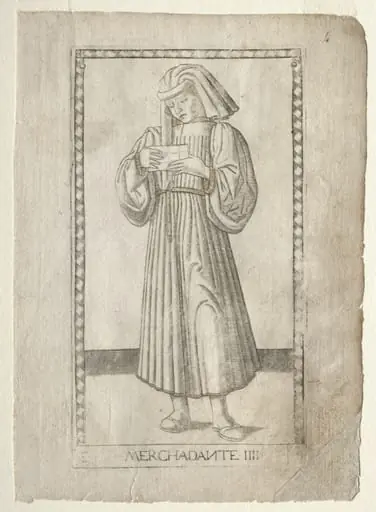 The Merchant (from the Tarocchi, series E: Conditions of Man, #4)
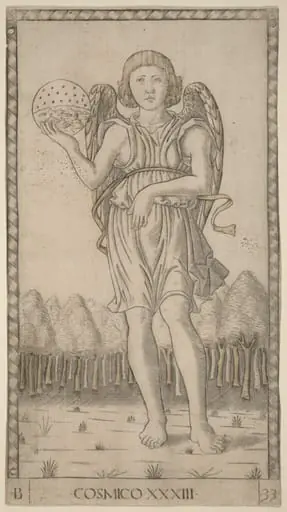
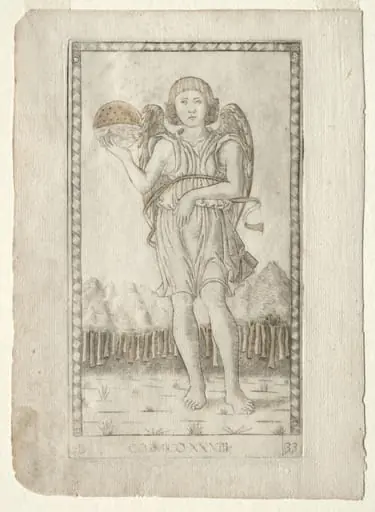 Genius of the World (from the Tarocchi, series B: Cosmic Principles & Virtues, #33)
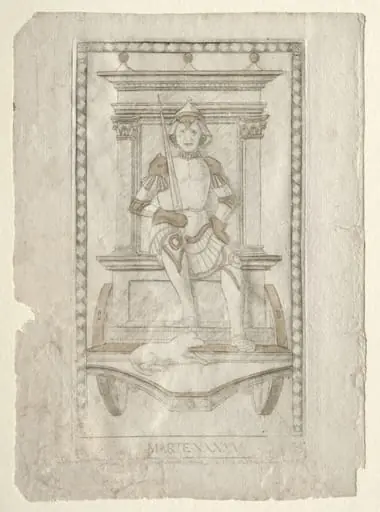 Mars (from the Tarocchi, series A: Firmaments of the Universe, #45)
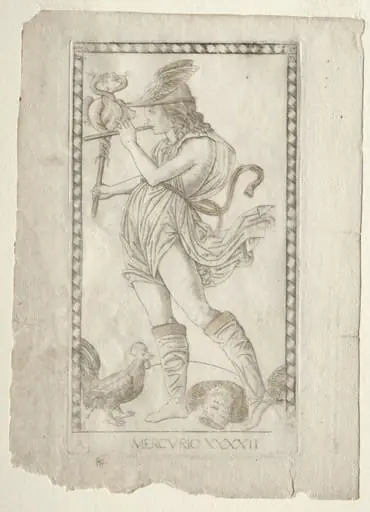 Mercury (from the Tarocchi, series A: Firmaments of the Universe, #42)
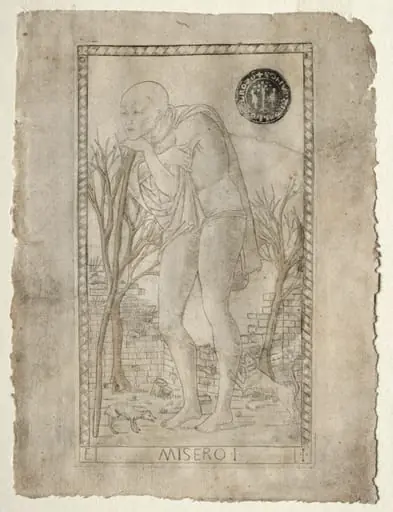 The Beggar (from the Tarocchi, series E: Conditions of Man, #1)
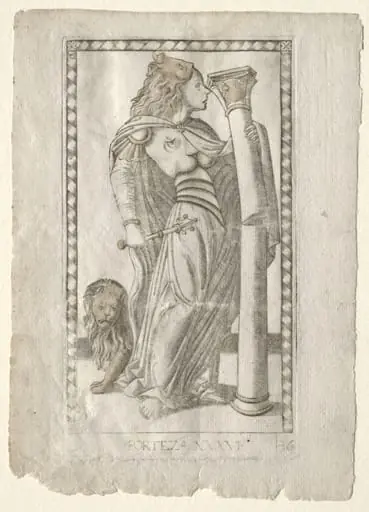 Forteza (from the Tarocchi, series B: Cosmic Principles & Virtues, #36)
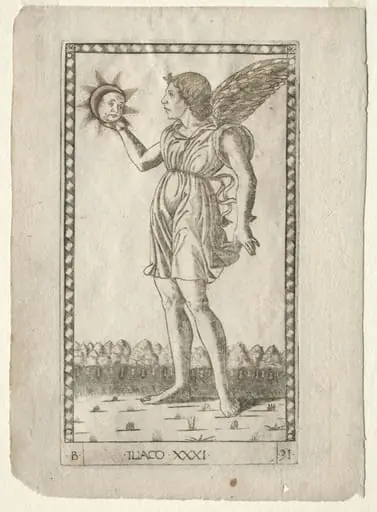 Genius of the Sun (from the Tarocchi, series B: Cosmic Principles & Virtues, #31)
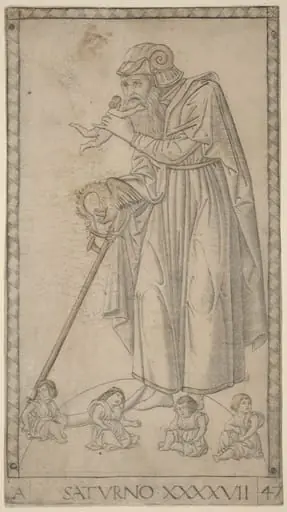
 Saturn (from the Tarocchi, series A: Firmaments of the Universe, #47)