Artwork
The Merchant (from the Tarocchi, series E: Conditions of Man, #4)
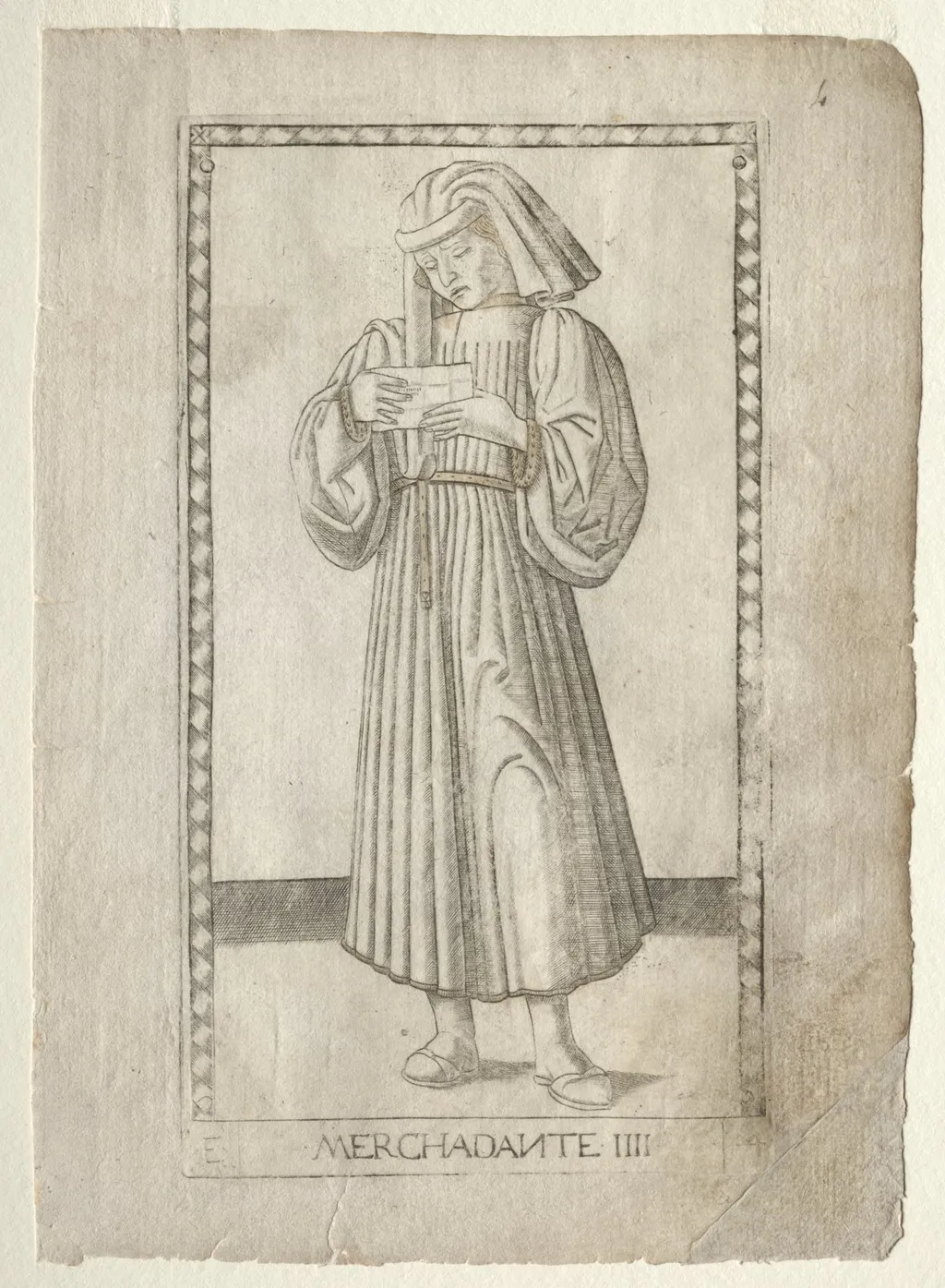
The Merchant (from the Tarocchi, series E: Conditions of Man, #4) is a print by the Renaissance artist Master of the E-Series Tarocchi. It dates from 1467 and is held in the collection of the Cleveland Museum of Art. This engraving belongs to a series of ten prints labeled 'E: Conditions of Man,' which depict social roles in ascending hierarchical order.
About this work
Overview
This engraving belongs to a series of ten prints labeled 'E: Conditions of Man,' which depict social roles in ascending hierarchical order. The Merchant is the fourth figure in this sequence, positioned between the Artisan and the Gentleman. Each print presents a single figure in full length, embodying a distinct societal station through posture, attire, and activity.
Subject & Meaning
His posture and attire reflect rising urban prosperity in early modern Europe, distinguishing him from laborers below and nobility above.
The Merchant is portrayed as a literate, engaged figure, holding and reading a document—likely a ledger or correspondence—suggesting commerce as a disciplined, intellectual pursuit. His posture and attire reflect rising urban prosperity in early modern Europe, distinguishing him from laborers below and nobility above. The image frames economic activity as a respectable, structured role within society’s hierarchy.
Technique & Style
Executed in fine-line engraving, the figure is rendered with precise, controlled strokes that define fabric folds and facial features without excessive ornament. The composition is frontal and static, emphasizing clarity over dynamism. Background elements are minimal, directing focus to the figure’s gesture and costume, consistent with the series’ didactic intent.
History & Provenance
The print originates from a mid-15th-century Italian engraving series, likely produced in northern Italy. It was collected by the Cleveland Museum of Art, where it remains part of their holdings of early Renaissance graphic works. Its attribution to a specific artist remains uncertain, though stylistic parallels suggest ties to workshops active in Venice or Brescia.
Context
The Tarocchi series reflects contemporary anxieties and affirmations about social mobility in Renaissance Italy. As trade expanded, merchants gained influence without noble birth, prompting visual representations that legitimized their place in the social order. These prints may have served as educational tools or decorative sets for elite households.
Legacy
The series influenced later iconographic traditions depicting social classes in print culture, particularly in Northern Europe. While not widely reproduced in its time, its structured hierarchy prefigures Enlightenment-era classifications of labor and status. Today, it remains a key reference for understanding how visual art mediated social identity in the early modern period.
Artist & collection
Artist
Master of the E-Series Tarocchi
Master of the E-Series Tarocchi (b. 1400) was an Italian artist.

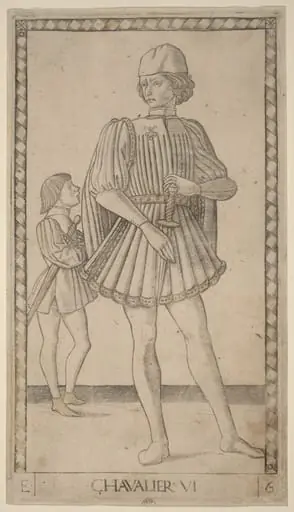
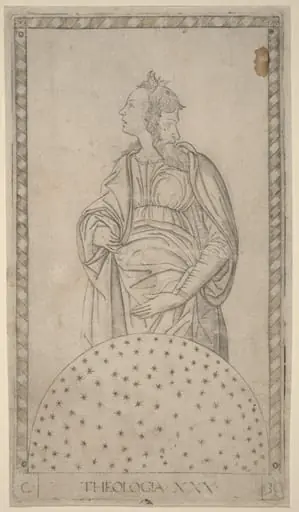
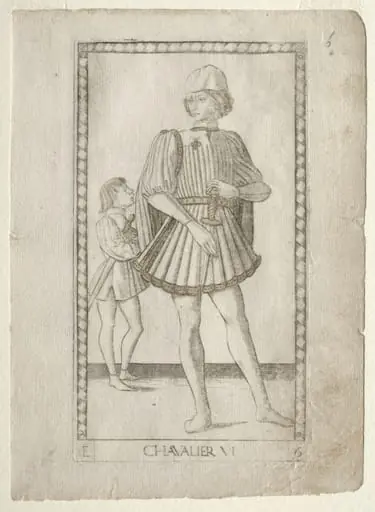 The Knight (from the Tarocchi, series E: Conditions of Man, #6)
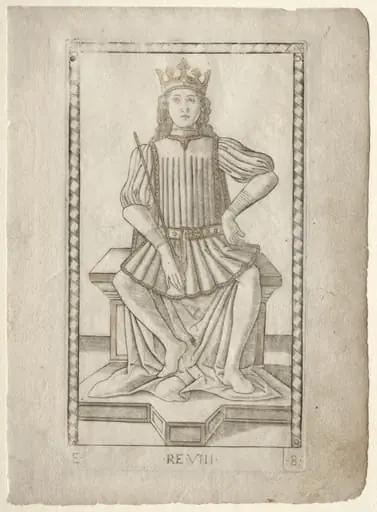 The King (from the Tarocchi, series E: Conditions of Man, #8)
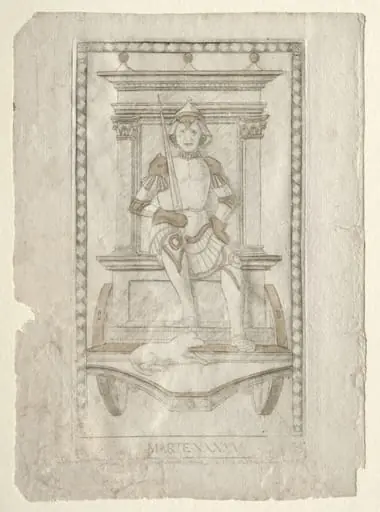 Mars (from the Tarocchi, series A: Firmaments of the Universe, #45)
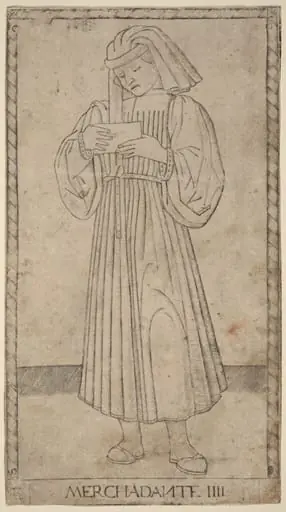 Merchadante (Merchant)
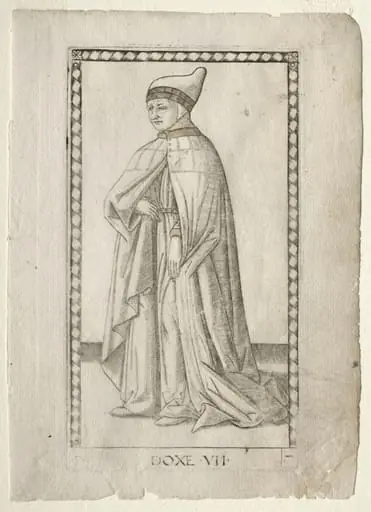 The Doge (from the Tarocchi, series E: Conditions of Man, #7)
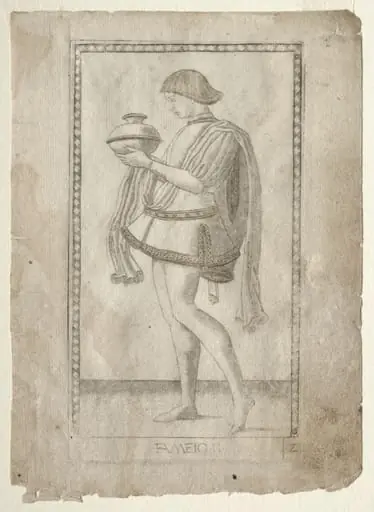 The Servant (from the Tarocchi, series E: Conditions of Man, #2)
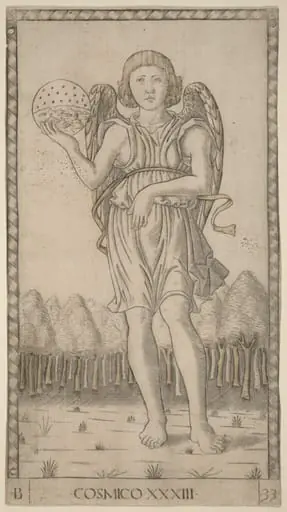
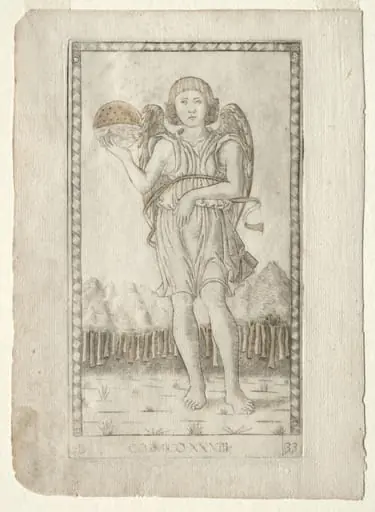 Genius of the World (from the Tarocchi, series B: Cosmic Principles & Virtues, #33)
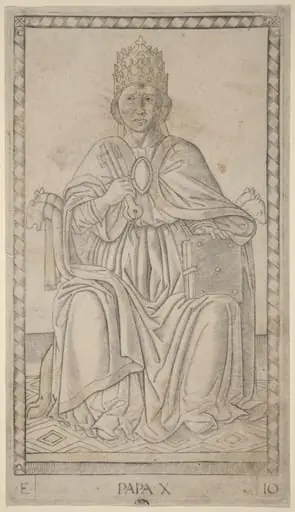
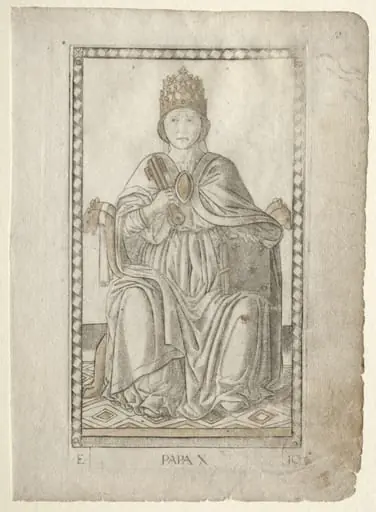 The Pope (from the Tarocchi, series E: Conditions of Man, #10)
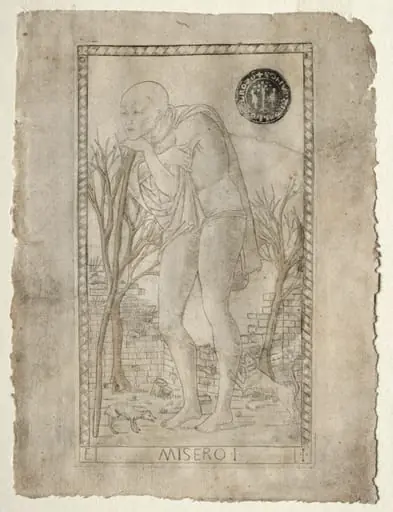 The Beggar (from the Tarocchi, series E: Conditions of Man, #1)
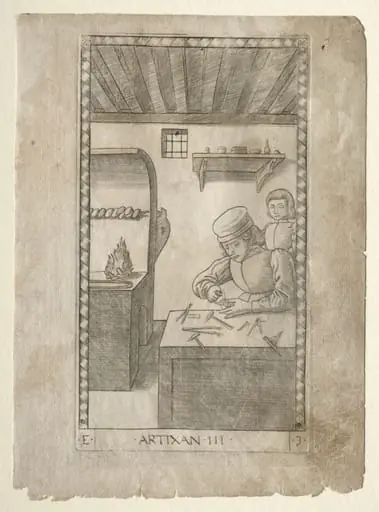 The Artisan (from the Tarocchi, series E: Conditions of Man, #3)