Artwork
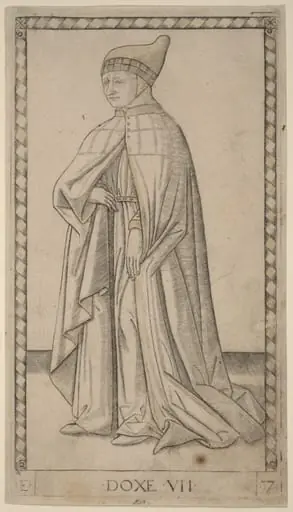
The Doge (from the Tarocchi, series E: Conditions of Man, #7)
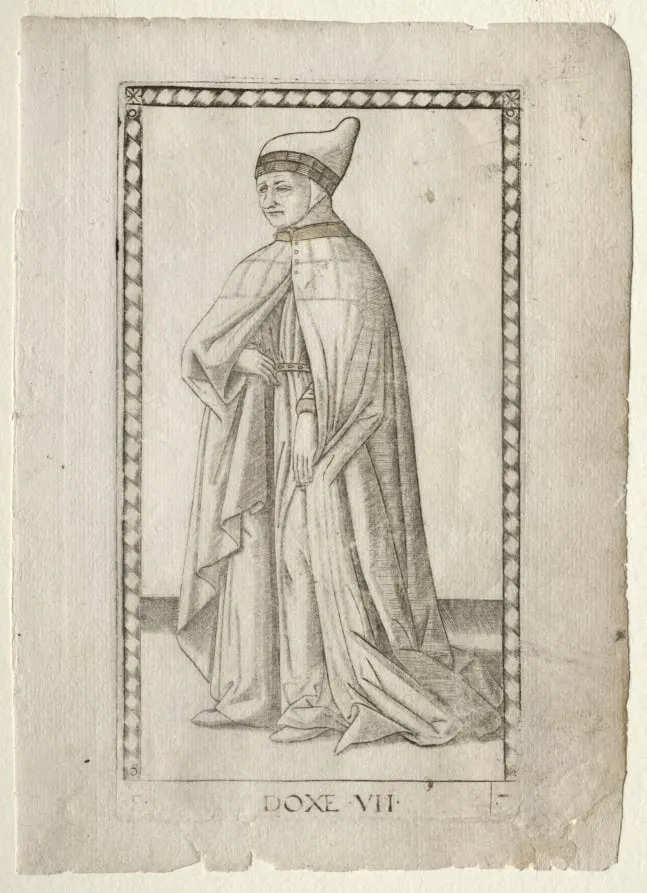
The Doge (from the Tarocchi, series E: Conditions of Man, #7) is a print by the Renaissance artist Master of the E-Series Tarocchi. It dates from 1467 and is held in the collection of the Cleveland Museum of Art. The work is an engraving from the mid‑15th century, forming part of the Tarocchi series identified by the letter “E.
About this work
You see a tall man in a long, pointed hat and heavy cloak, standing sideways like a playing-card king.
You see a tall man in a long, pointed hat and heavy cloak, standing sideways like a playing-card king.
This is a Doge—Venice’s elected ruler—carved into a tiny metal plate around 1465. The print was part of a deck that showed every rank in society, from beggar to pope. Each figure is stripped down to a few lines, yet the hat and cloak still shout “boss.”
If you like these sharp little portraits, look up the subject italy, ferrara, 15th century.
Overview
The work is an engraving from the mid‑15th century, forming part of the Tarocchi series identified by the letter “E.” This group, titled Conditions of Man, presents a graduated hierarchy of ten societal roles, ranging from the beggar at the base to the pope at the summit.
Subject & Meaning
In this plate the figure represents the Doge, the elected chief magistrate of Venice. He is depicted in full length, turned toward the left, his status signaled by a long cloak and the distinctive pointed hat known as a zoggia, which together convey his authority within the ordered sequence.
Technique & Style
The image is incised on a small metal plate, producing a stark, linear rendering typical of early printmaking. The composition relies on a minimal set of lines to outline the cloak, hat, and posture, achieving a recognizable portrait with economical detail.
History & Provenance
Created around 1465, the engraving was intended as one card in a deck that illustrated each rank of society. The series functioned both as a didactic tool and as a visual representation of the social ladder prevalent in Renaissance Italy.
Context
The Tarocchi cards, though later associated with gaming, originally served allegorical purposes, reflecting contemporary notions of hierarchy and virtue. The Doge’s placement near the top of the series underscores Venice’s political prominence during the period.
Artist & collection
Artist
Master of the E-Series Tarocchi
Master of the E-Series Tarocchi (b. 1400) was an Italian artist.

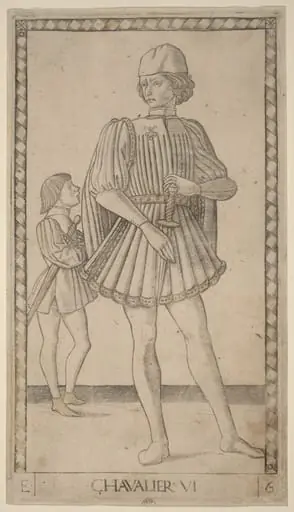
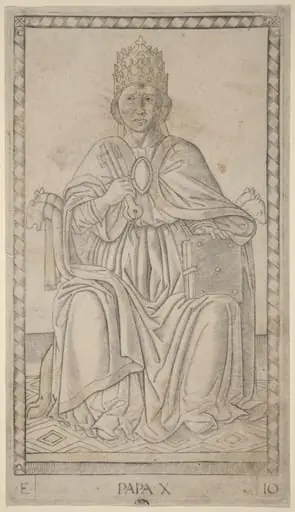
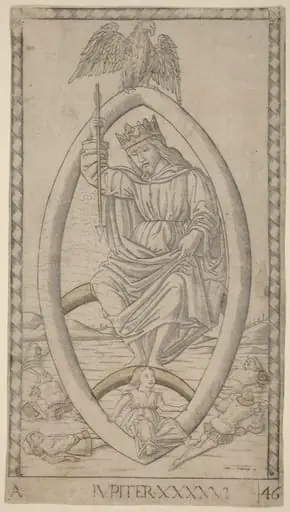
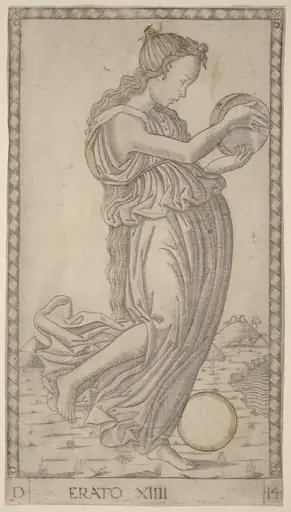
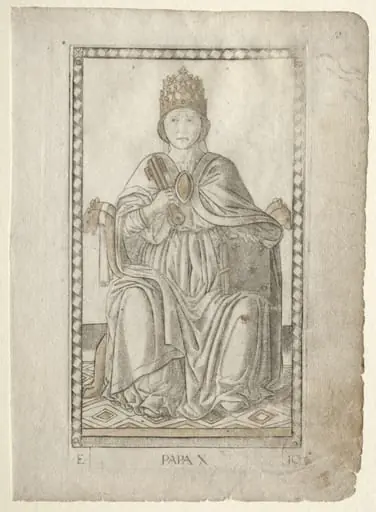 The Pope (from the Tarocchi, series E: Conditions of Man, #10)
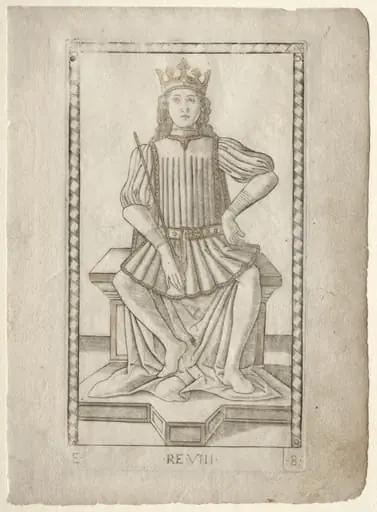 The King (from the Tarocchi, series E: Conditions of Man, #8)
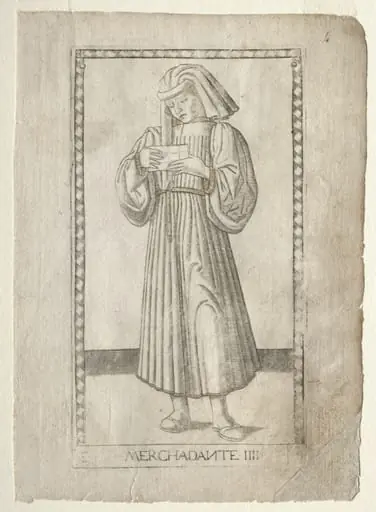 The Merchant (from the Tarocchi, series E: Conditions of Man, #4)
 Doxe (Doge)
 The Knight (from the Tarocchi, series E: Conditions of Man, #6)
 Faith (from the Tarocchi, series B: Cosmic Principles & Virtues, #40)